Color Identification Social Studies Worksheets for Ages 4-9
3 filtered results
-
From - To
Explore our engaging Color Identification Social Studies Worksheets designed for children ages 4-9! These fun and interactive worksheets help young learners develop essential color recognition skills while integrating important social studies concepts. Through vibrant and captivating activities, children will discover the world around them as they identify colors in various cultural contexts. Each worksheet is thoughtfully crafted to reinforce cognitive development, promote observational skills, and encourage creativity. Perfect for both classroom and at-home learning, these resources make color exploration a delightful experience. Dive into a colorful learning adventure today and watch your child's understanding of colors and cultures expand!

Fireman Worksheet
 Assign to My Students
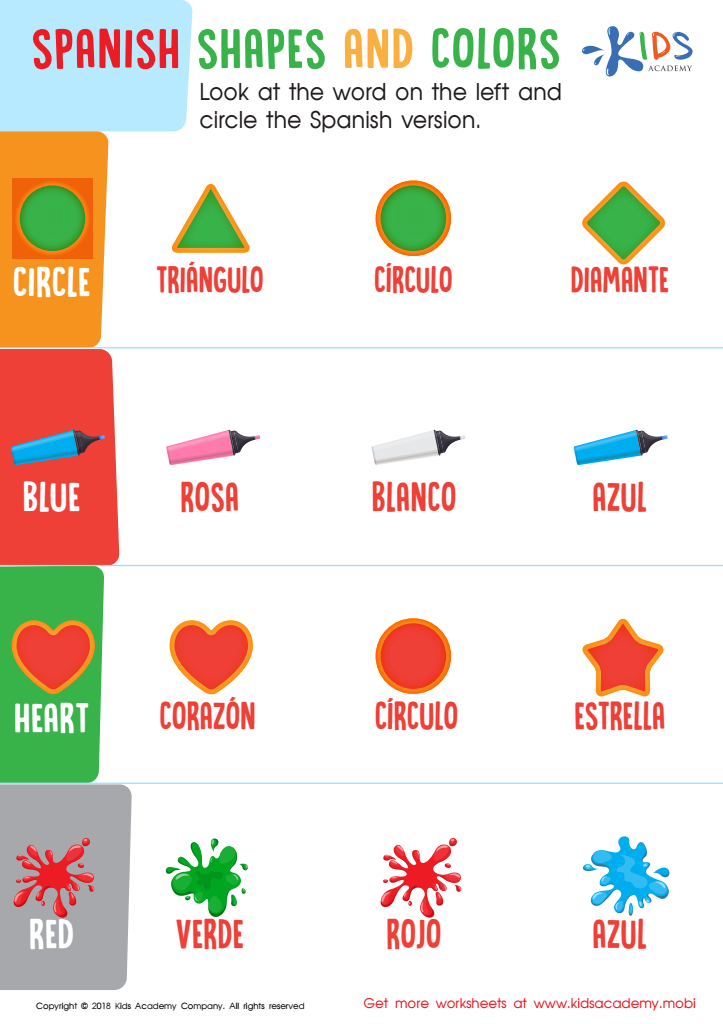
Spanish Shapes and Colors Worksheet

Playground Worksheet








Parents and teachers should care about color identification in social studies for ages 4-9 because it serves as a foundational skill that enhances children's cognitive and social development. Understanding colors helps children interpret and understand the world around them, making it crucial for their visual learning. In social studies, identifying colors allows young learners to engage with maps, flags, and cultural symbols, fostering a sense of connection to diverse communities and global cultures.
Color identification also promotes critical thinking and creativity. Through discussions about different cultures and their associated colors, children learn to appreciate diversity and respect differences. When exploring social studies topics, parents and teachers can leverage colors to initiate conversations about traditions, environments, and historical events, making learning more engaging and relatable.
Moreover, mastering color identification encourages fine motor skills and emotional expression. Children can use colors in art projects, storytelling, and role-play to communicate feelings and ideas. Ultimately, nurturing this skill lays the groundwork for further education, encouraging young learners to investigate and explore the wider world with curiosity and confidence. Supporting color identification within a social studies context equips children with tools for lifelong learning and understanding of their place in a diverse society.