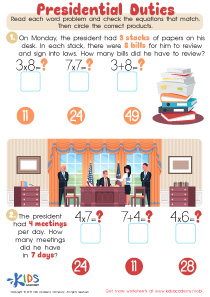
Geographic knowledge Social Studies Worksheets for Ages 4-9
3 filtered results
Difficulty Level
Grade
Age
-
From - To
Subject
Activity
Standards
Explore our engaging Geographic Knowledge Social Studies Worksheets, designed specifically for kids ages 4-9. These worksheets provide a fun and interactive way to introduce young learners to essential geography concepts. Through colorful maps, exciting activities, and age-appropriate exercises, children will develop a fundamental understanding of places, regions, and spatial relationships. Perfect for home or classroom use, our worksheets build foundational geographic skills while fostering curiosity about the world. Start your child's journey to geographic literacy with Kids Academy's expertly crafted materials.
Favorites
With answer key
Interactive
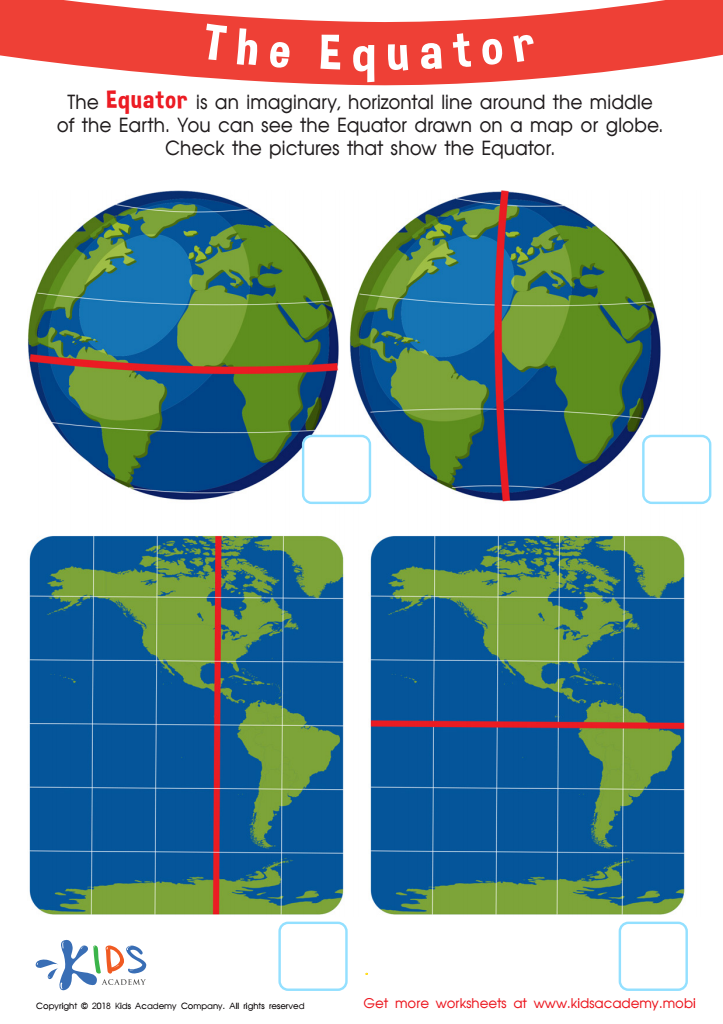
The Equator Worksheet
Young geographers can learn about the Equator with this free, colorful worksheet! They will understand the concept better with picture representation: what the Equator may look like if the Earth could be seen in its entirety, and then check off which one is accurate on a flat world map.
The Equator Worksheet
Worksheet
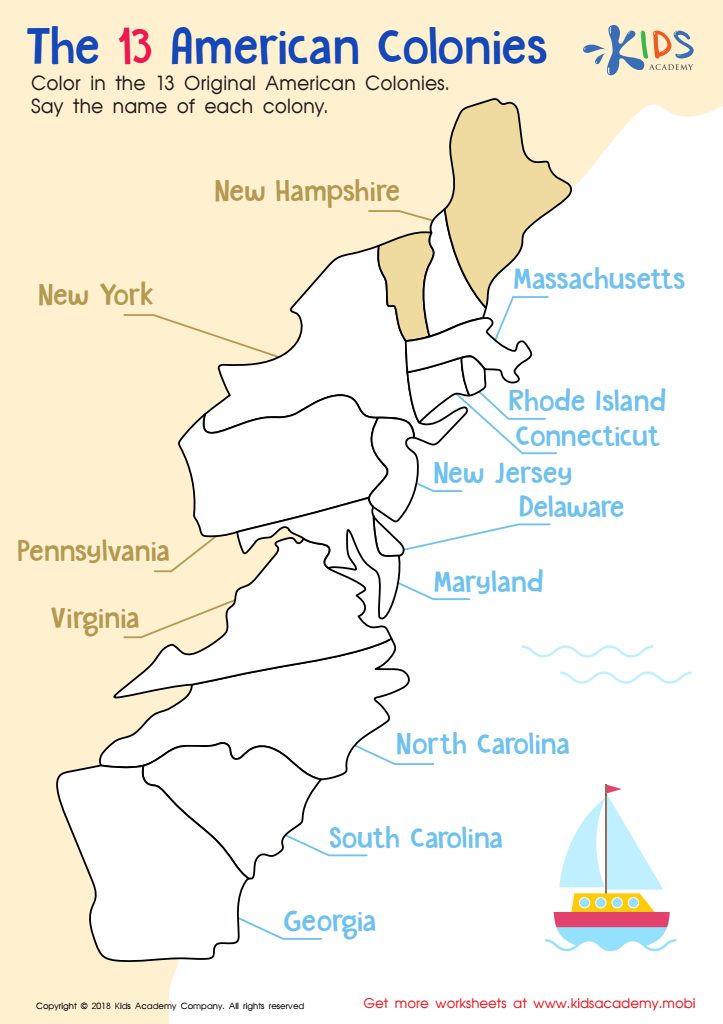
The 13 American Colonies Worksheet
Ensure kids are knowledgeable in maths, English, science, history, and geography. Test their American knowledge: Can they name the 13 Original American Colonies? Use the worksheet; have them color each colony and name it out loud.
Download (PDF)
 Assign to My Students
Assign to My Students
The 13 American Colonies Worksheet
Worksheet
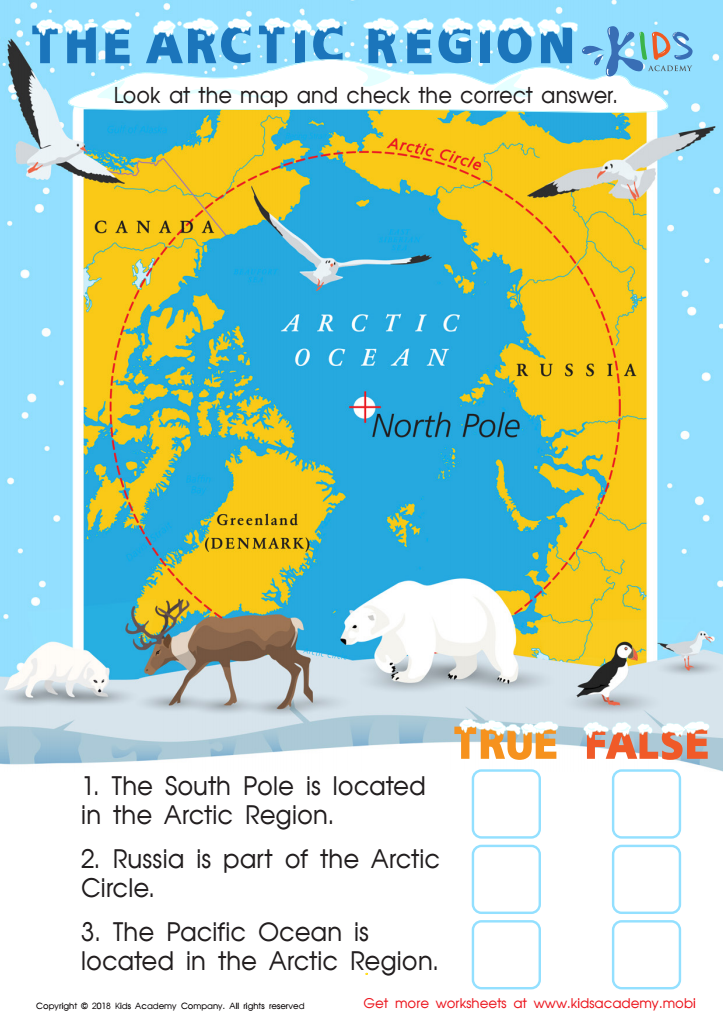
The Arctic Region Worksheet
Kids who love geography will enjoy this worksheet. On the printout there's a map. Show your child the landmarks and read them aloud. Have them take note of the locations. Then, ask them to answer the questions at the bottom using the map; check the answers.
The Arctic Region Worksheet
Worksheet
Join Kids Academy for Free
Who is primarily going to use this learning content?





Geographic knowledge in Social Studies is essential for children aged 4-9 as it lays a foundational understanding of the world around them. At this critical age, children develop cognitive skills and start to comprehend their place in the broader environment. Teaching geography fosters curiosity about diverse cultures, countries, and ecological systems, helping them appreciate global diversity and interconnectedness.
Introducing geographic concepts early enhances spatial thinking, an important cognitive skill for problem-solving and understanding spatial relationships. Children learn to read maps, recognize landforms, and grasp distance, which supports mathematical reasoning and literacy skills. For instance, understanding directions and locations can improve navigational abilities in real life and academics.
Moreover, geography education encourages social and environmental responsibility. By learning about different communities and their natural surroundings, children develop empathy and awareness about global issues such as climate change, resource distribution, and cultural conflicts. This awareness can cultivate informed, socially conscious individuals who value sustainability and respect for all cultures.
Parent and teacher involvement in this learning process ensures that kids receive relatable and engaging information. Interactive activities, such as using maps and globes or virtual tours, make learning tangible. By investing in geographic knowledge, adults help children build a well-rounded perspective, equipping them with essential skills and values for future academic and personal success.