Map reading Social Studies Worksheets for Ages 4-9
3 filtered results
Difficulty Level
Grade
Age
-
From - To
Subject
Activity
Standards
Discover the wonders of geography with our engaging Map Reading Social Studies Worksheets for ages 4-9. Designed to introduce young learners to essential map reading skills, these interactive worksheets help kids understand directions, symbols, landmarks, and more. Through fun activities and colorful visuals, children will develop their spatial awareness and critical thinking skills, setting a strong foundation for future learning. Our expertly crafted worksheets cater to various learning styles, ensuring each child can explore and enjoy the world of maps. Ignite your child's interest in geography today and watch their knowledge and confidence grow!
Favorites
With answer key
Interactive
 Assign to My Students
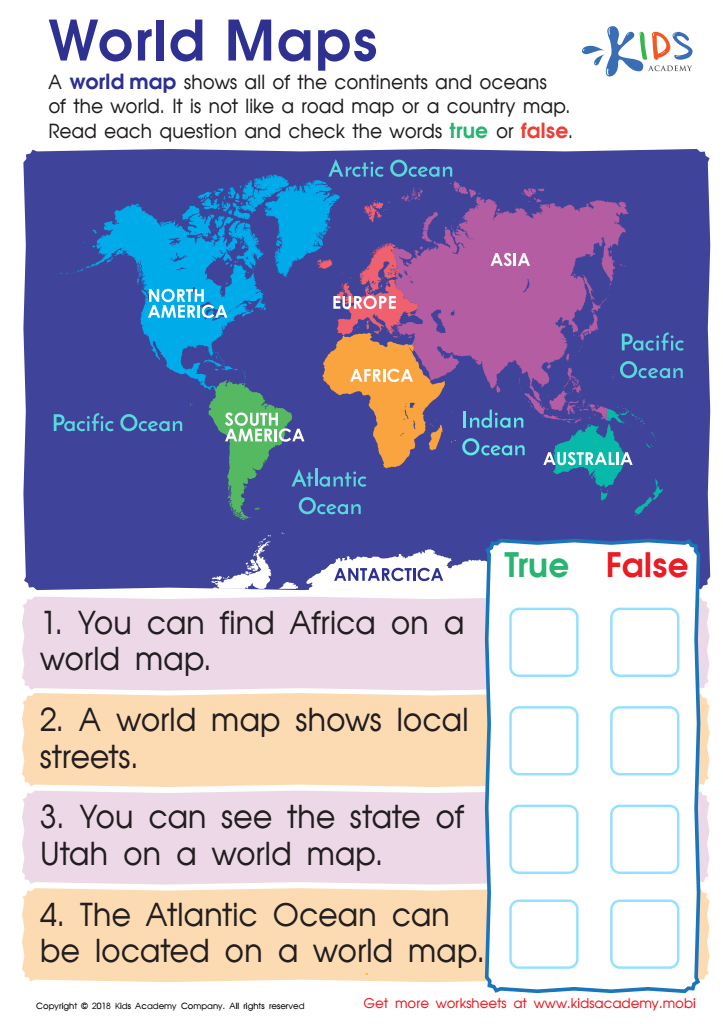
World Maps Worksheet
Help your young geographer learn about world maps. Show them that it displays all the oceans, continents and is distinct from other maps. Challenge them to answer the true/false questions on this free worksheet, and help them become a global citizen who understands the purpose of world maps.
World Maps Worksheet
Worksheet
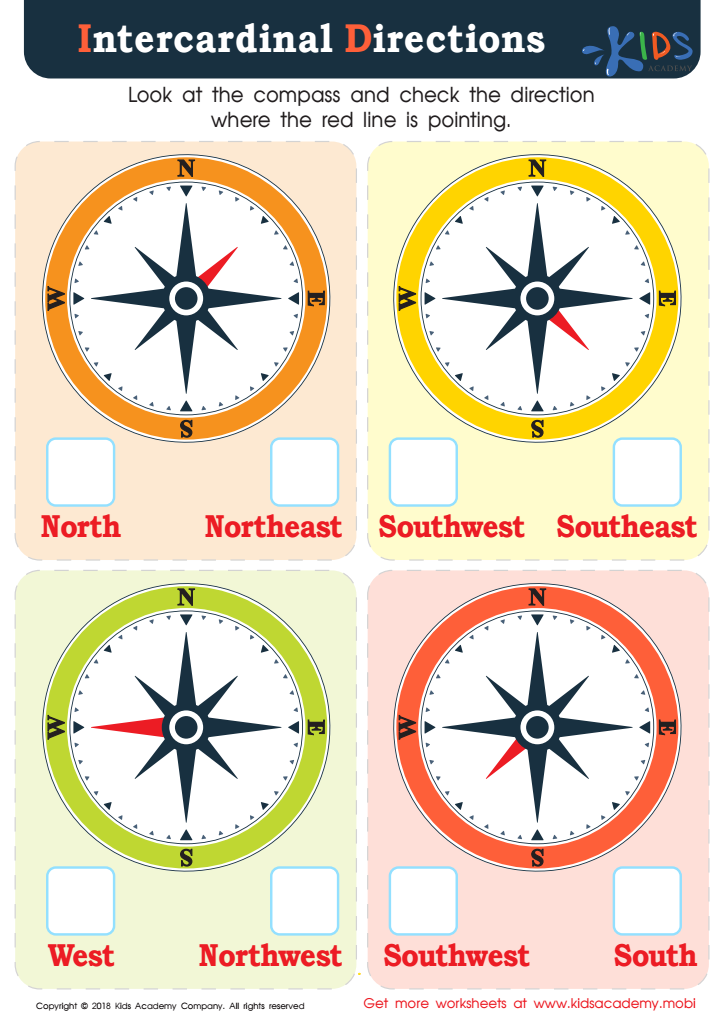
Intercardinal Directions Worksheet
Young students often don't get to practice cardinal and intercardinal directions in the digital age, but it's an important social studies and geography concept to learn. This PDF provides colorful compasses for them to practice with, giving them a real-world skill for common curriculum and independent living.
Intercardinal Directions Worksheet
Worksheet
Join Kids Academy for Free
Who is primarily going to use this learning content?






Understanding map reading in social studies for children aged 4-9 plays a crucial role in children's cognitive and practical development. Maps introduce young learners to the concept of spatial relationships, promoting their ability to visualize locations, directions, and distances. This fundamental geographic literacy aids in enhancing problem-solving skills and understanding of the world’s structure.
For parents and teachers, emphasizing map reading cultivates several academic and life skills in children. It reinforces mathematical concepts like shapes, measurements, and coordinates, seamlessly bridging geography with numeracy. Additionally, map reading strengthens memory and concentration as children learn to recognize symbols and follow mapped paths.
Maps also introduce a sense of global awareness and curiosity. By learning about different places, children become more aware of diverse cultures, fostering empathy and open-mindedness from a young age. This cultural literacy gives children a broader perspective of the world, making them more informed and responsible global citizens.
Furthermore, map reading acclimates children to real-world navigation skills. Whether traveling or understanding their local neighborhood, these practical abilities ensure children are better equipped for future independence.
By integrating map reading into the curriculum, parents and teachers invest in a foundational skillset that connects academic subjects, nurtures global understanding, and enhances everyday life skills, setting up a strong groundwork for lifelong learning and adaptability.