Shape Recognition Social Studies Worksheets for Ages 4-9
4 filtered results
-
From - To
Enhance your child's learning with our Shape Recognition Social Studies Worksheets, designed for ages 4-9. These engaging activities seamlessly blend foundational geometry skills with essential social studies concepts. Perfect for young learners, the worksheets help children identify and differentiate shapes while exploring historical landmarks, community helpers, and cultural symbols. Through fun and interactive exercises, kids improve their cognitive abilities, enrich their social knowledge, and develop a love for learning. Ideal for both classroom and at-home use, our worksheets make education enjoyable and effective, setting the stage for academic success. Browse our collection today and unlock your child's potential!
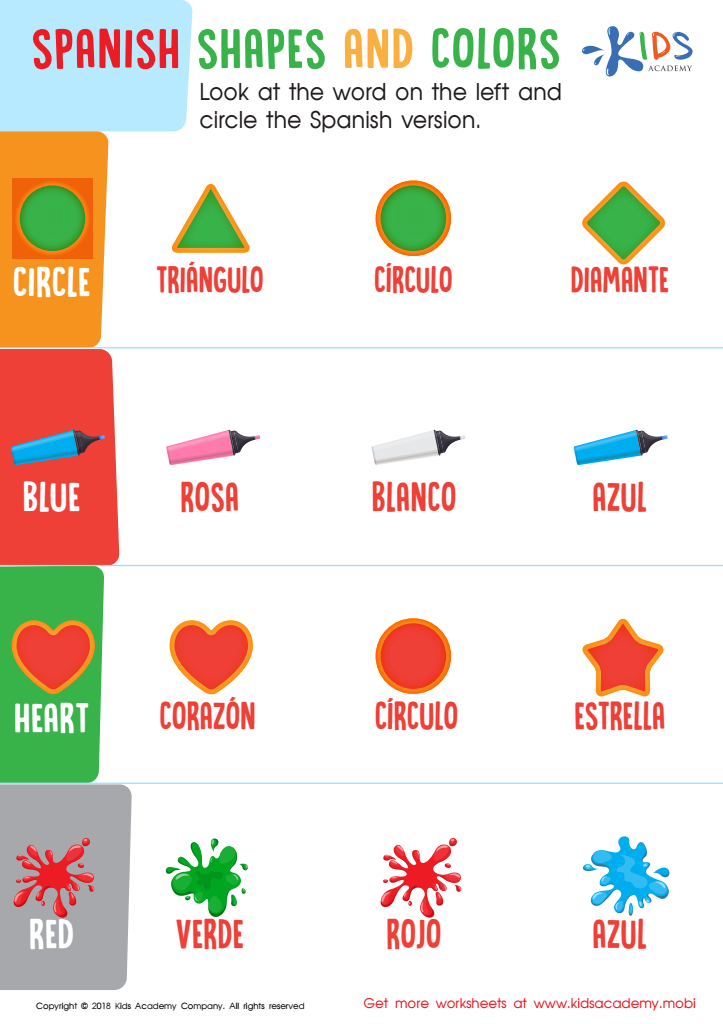
Spanish Shapes and Colors Worksheet
 Assign to My Students

Let's Check! Assessment Worksheet

Playground Worksheet
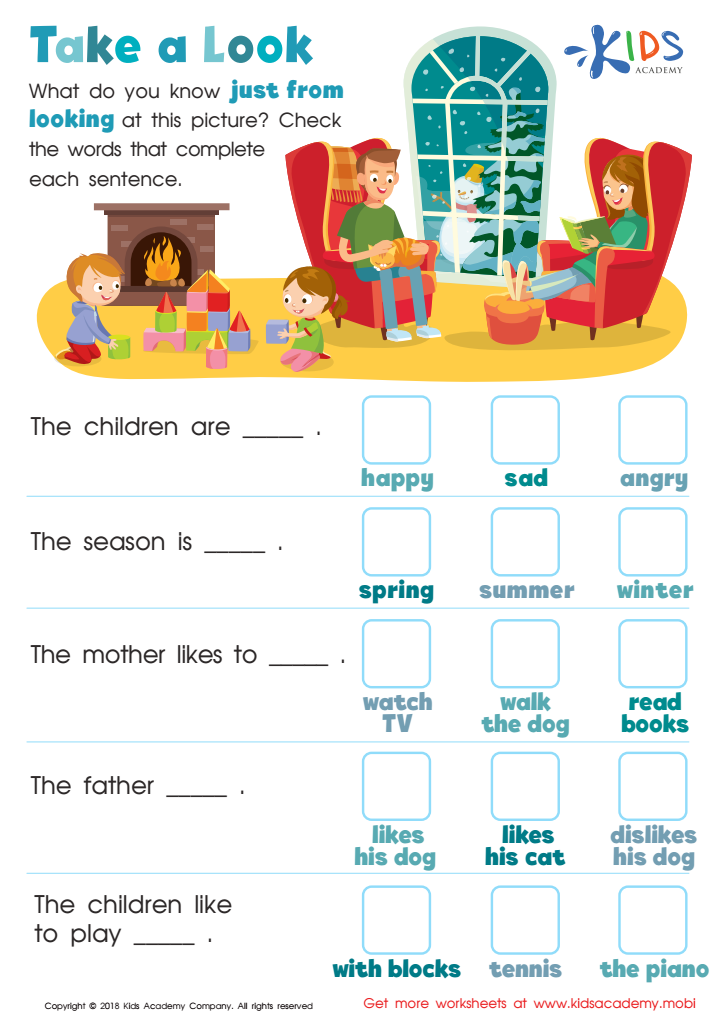
Take a Look - Part 1 Worksheet





.jpg)


Shape recognition in social studies for children aged 4-9 is more significant than it might initially appear, serving as a foundational tool for cognitive and social development. Recognizing and naming shapes — whether they are geometric patterns in quilts from different cultures, architectural elements from historical buildings, or shapes found in maps — helps children develop key skills in observation, comparative thinking, and categorization.
Incorporating shape recognition into social studies fosters spatial awareness and fine motor skills, providing a solid groundwork for later academic pursuits in mathematics and science. Understanding shapes also supports comprehension of symbols in maps and diagrams, aiding children in grasping more complex geographical concepts as they grow.
From a social and cultural perspective, learning shapes can be integrated with exploring cultural artifacts and global architectural styles. For example, identifying triangles in Egyptian pyramids or rectangles in European castles bridges visual recognition with historical context, creating a more engaging and holistic learning experience.
Moreover, early exposure to map-reading utilizes shape recognition, enhancing children’s ability to decode visual information, which is crucial in today's image-centric world. By teaching shape recognition within social studies, educators and parents foster not only academic skills but also an appreciation for cultural diversity and history, establishing a well-rounded foundation for young learners.








