Color Identification Writing Worksheets for Ages 4-9
4 filtered results
-
From - To
Discover our engaging color identification writing worksheets designed for children ages 4-9! These interactive printables help young learners explore the vibrant world of colors while improving their writing skills. Each worksheet features fun and creative exercises that encourage students to identify, trace, and write color words. With engaging illustrations and age-appropriate tasks, kids will enhance their vocabulary, fine motor skills, and critical thinking while having fun. Perfect for use at home or in the classroom, our worksheets provide an excellent resource for parents and educators looking to foster creativity and learning in early childhood education. Start your color adventure today!
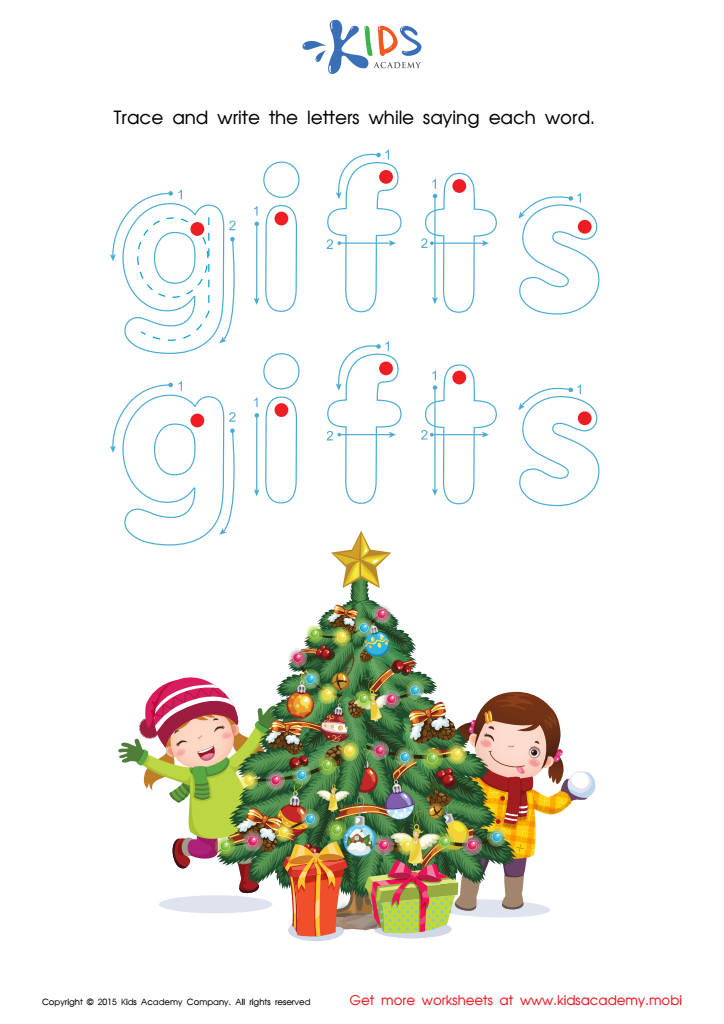
Christmas Tree Tracing Winter Words Worksheet
 Assign to My Students
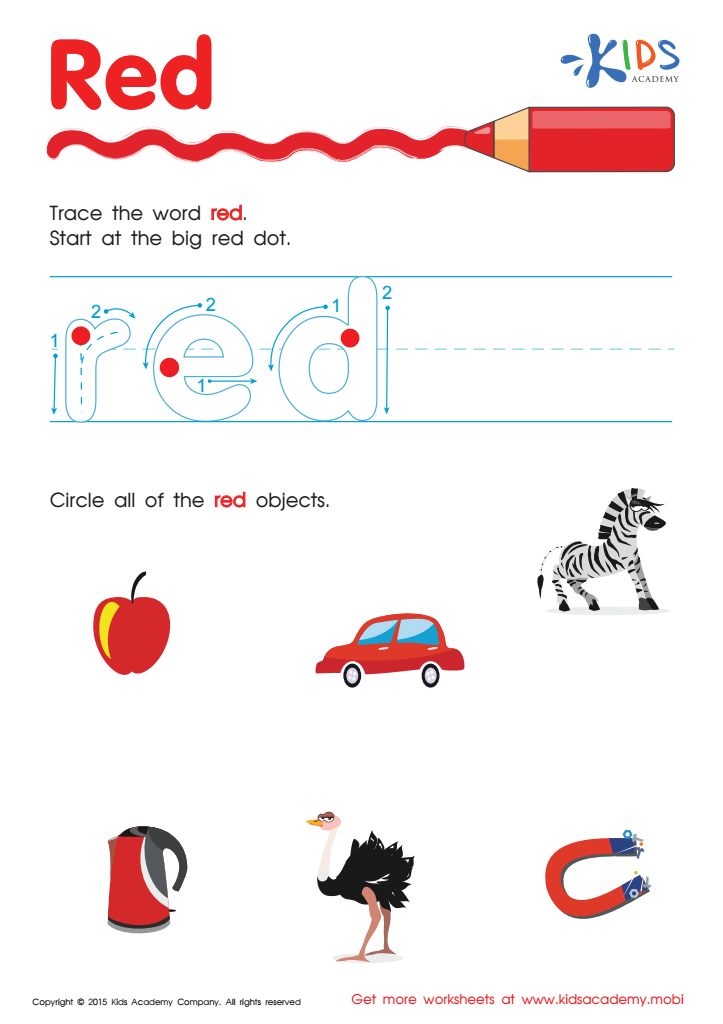
Red Tracing Color Words Printable
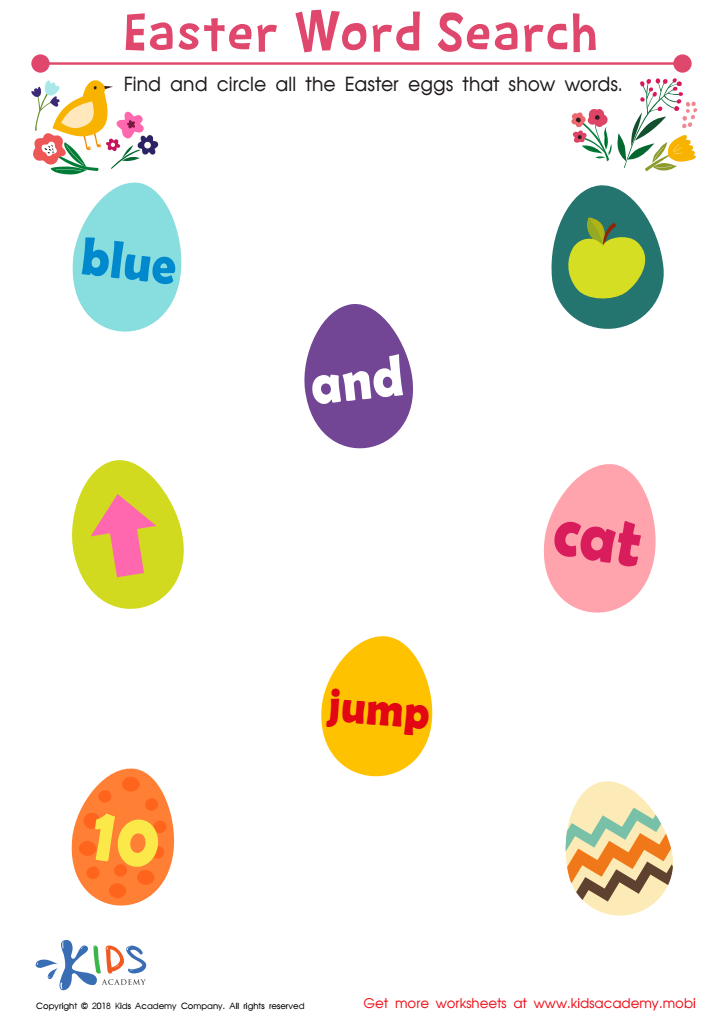
Easter Word Search Worksheet
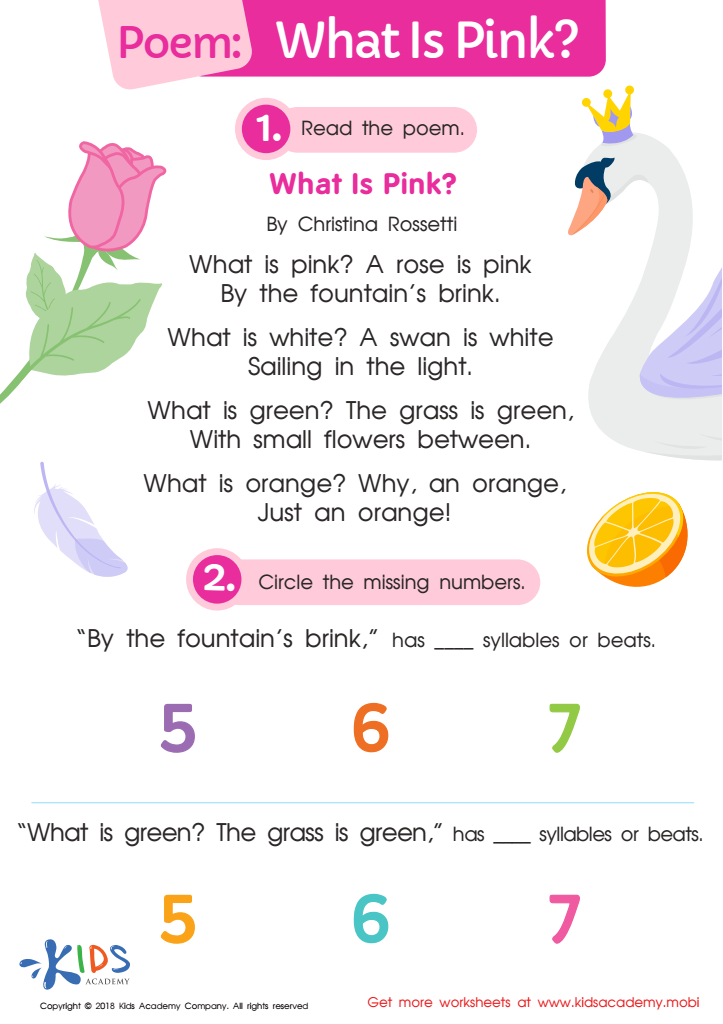
Poem: What Is Pink? Worksheet








Color identification is more than just recognizing colors; it's a foundational skill for young children that significantly influences their cognitive and developmental growth. For parents and teachers working with children aged 4 to 9, fostering color identification skills helps to enhance a child's vocabulary and encourages language development as they learn to describe and categorize objects and their attributes. Engaging in color activities, such as sorting objects, coloring books, or using flashcards, provides opportunities for sensory exploration and hands-on learning.
Moreover, understanding colors can bolster early literacy skills. Children often encounter colors in stories, art, and educational settings, allowing them to make observations and connections to the world around them. This process aids in critical thinking and enhances memory development as children recall colors in various contexts.
Color identification also supports self-expression. For instance, as children engage in art activities, they use colors to convey emotions and ideas. Parents and teachers can implement fun games or creative tasks that encourage children to identify, mix, and blend colors, fostering both their creative skills and their confidence. Hence, parents and teachers should prioritize color identification writing as a valuable component of early education to cultivate well-rounded, expressive, and confident learners.








