Phonics recognition Writing Worksheets for Ages 4-9
5 filtered results
-
From - To
Discover our engaging Phonics Recognition Writing Worksheets designed specifically for children ages 4-9! These worksheets help early learners develop essential phonics skills, enhancing their reading and writing abilities. With a variety of interactive activities that include letter sounds, word recognition, and fun writing exercises, kids will enjoy learning the foundational principles of phonics. Our user-friendly resources are perfect for both classroom instruction and at-home practice, fostering a love for reading and writing. Perfect for supporting literacy development, these worksheets empower young learners to build confidence and mastery in their phonics journey. Explore our collection today and watch your child's skills flourish!
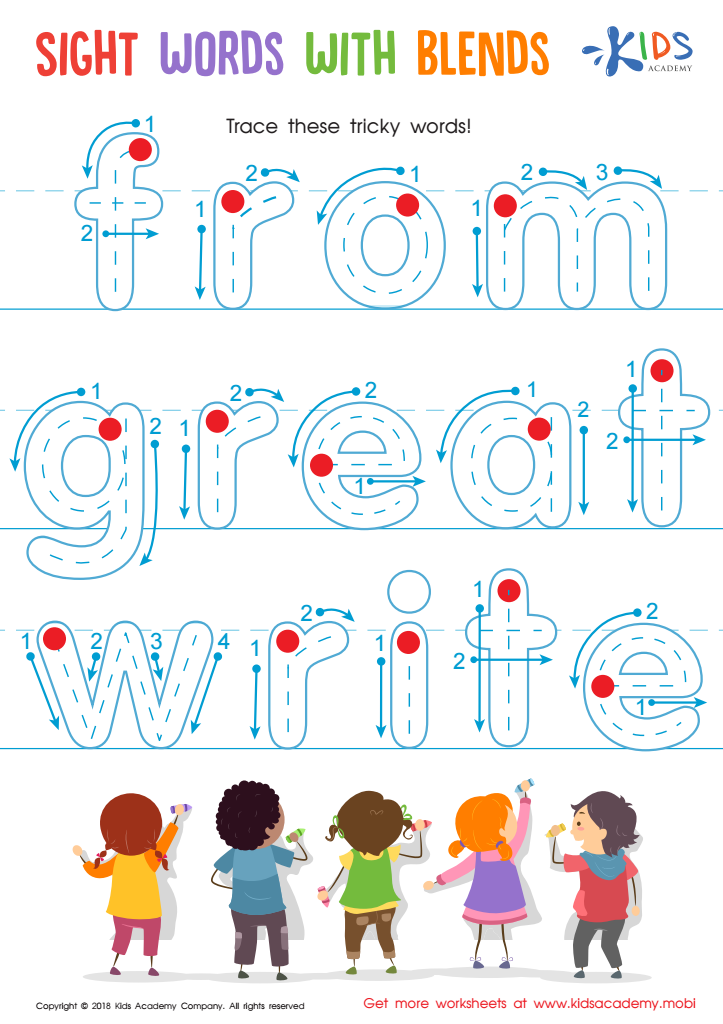
Sight Words with Blends Worksheet
 Assign to My Students
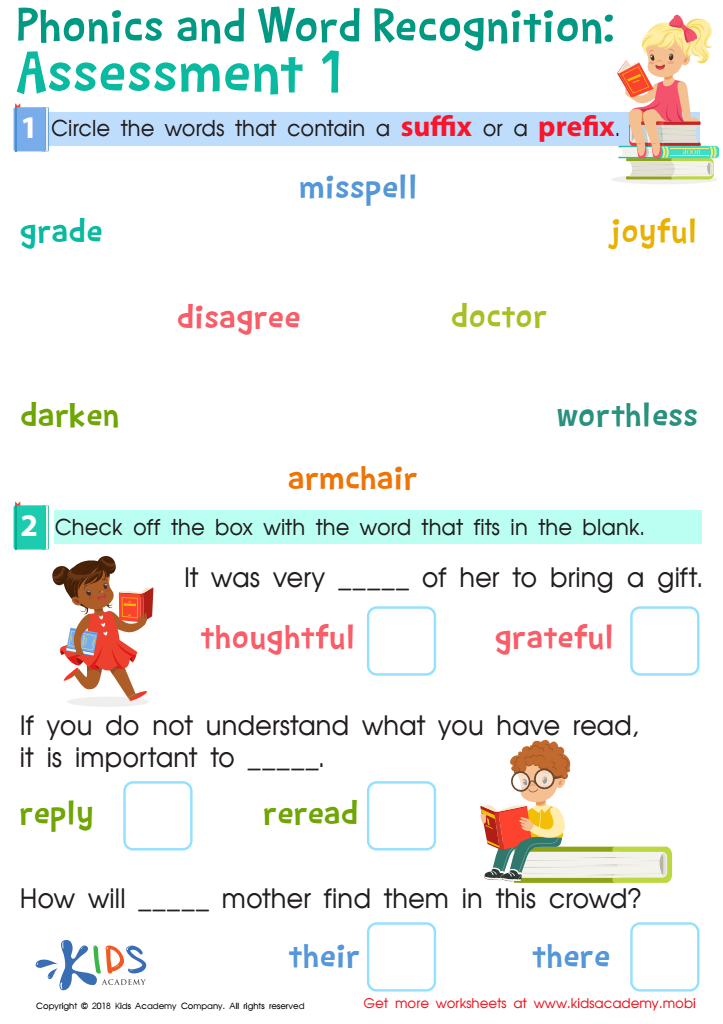
Phonics and Word Recognition: Assessment 1 Worksheet
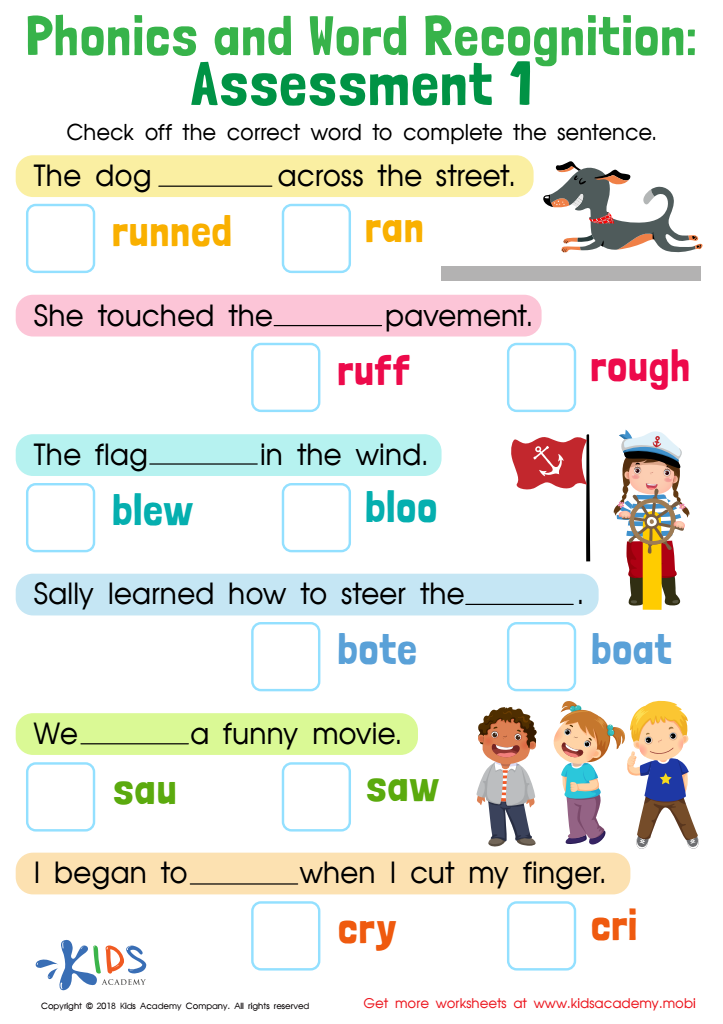
Phonics and Word Recognition: Assessment 1 Worksheet
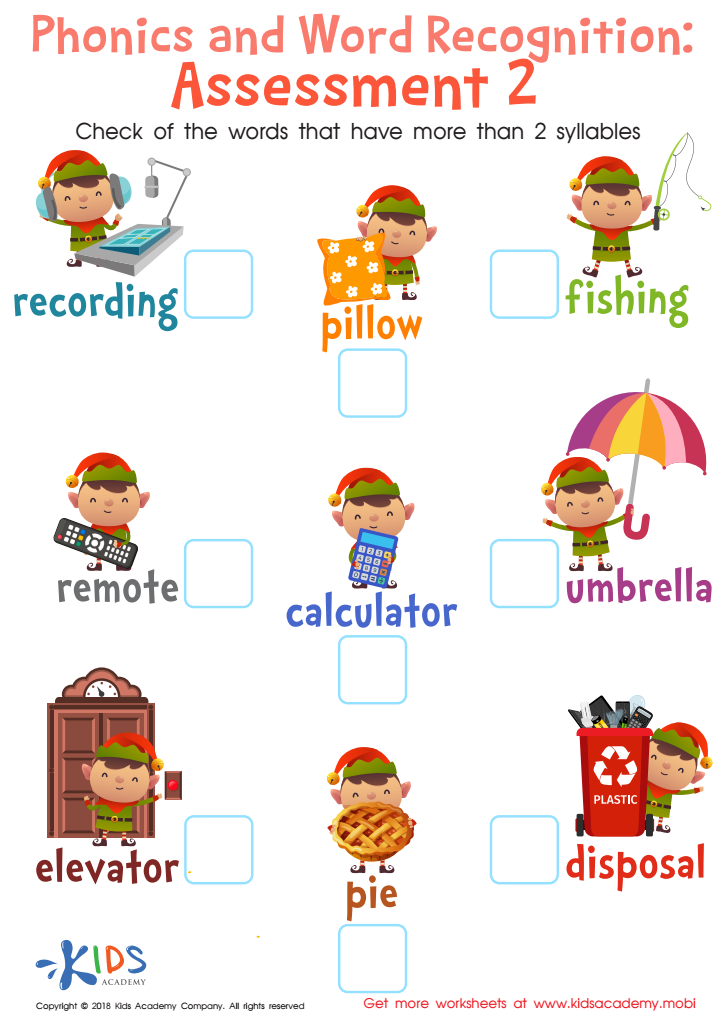
Phonics and Word Recognition: Assessment 2 Worksheet
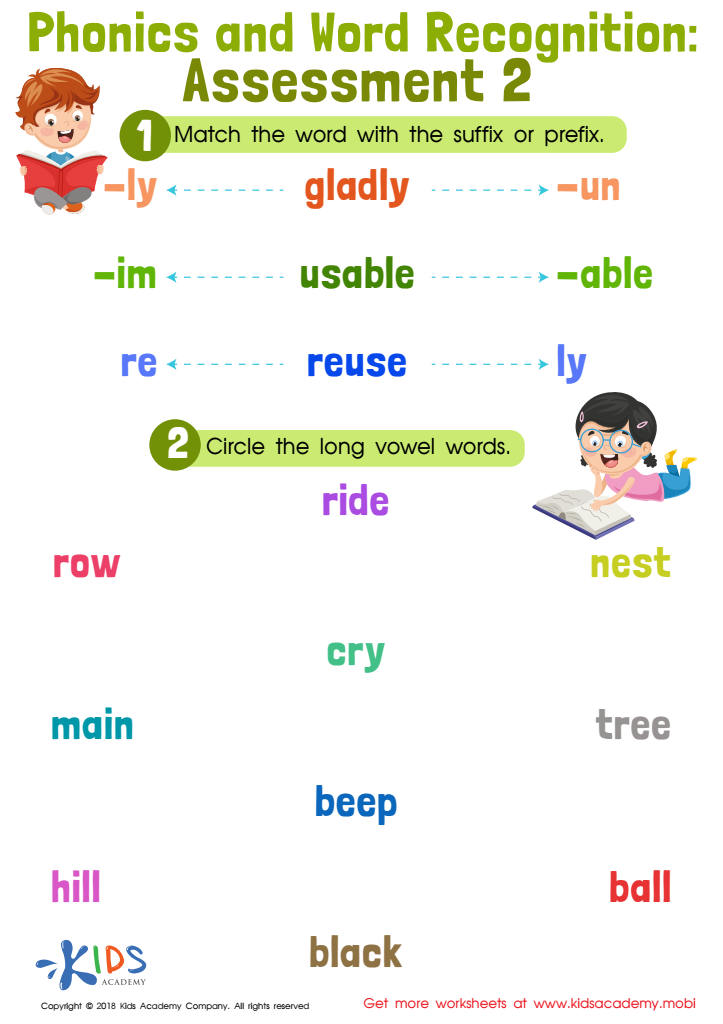
Phonics and Word Recognition: Assessment 2








Phonics recognition and writing are crucial components of early literacy development for children aged 4-9. First and foremost, phonics teaches children the relationship between letters and sounds, enabling them to decode words independently. This foundational skill is essential for reading fluency, comprehension, and overall academic success. When children grasp phonics, they gain the confidence to tackle new words, fostering a love for reading that lasts a lifetime.
Moreover, phonics recognition supports writing skills by helping children understand how to represent sounds with letters. This skill allows them to spell words accurately and express their thoughts creatively on paper. As children learn to blend sounds into words, they also develop their vocabulary, which enriches both their spoken and written communication.
Teachers and parents play a vital role in guiding children through this learning process. By emphasizing the importance of phonics, they can create a strong literacy foundation. Engaging activities such as phonics games, reading together, and writing exercises can reinforce these skills further. Investing time and resources into phonics recognition for young learners not only enhances their literacy abilities but also serves to instill a lifelong passion and appreciation for language.








