Reading proficiency Writing Worksheets for Ages 4-9
3 filtered results
-
From - To
Boost your child's reading proficiency with our engaging Writing Worksheets, specially designed for ages 4-9. Our worksheets blend fun activities with essential writing skills, encouraging young learners to enhance their reading comprehension and expression. Each worksheet targets key literacy concepts, offering a variety of exercises tailored to different learning levels. From interactive story prompts to vocabulary development activities, our resources make reading enjoyable while supporting skill retention. Perfect for classroom use or at-home learning, these worksheets will nurture your child's confidence in reading and writing. Explore our collection today and watch your child thrive in their literacy journey!
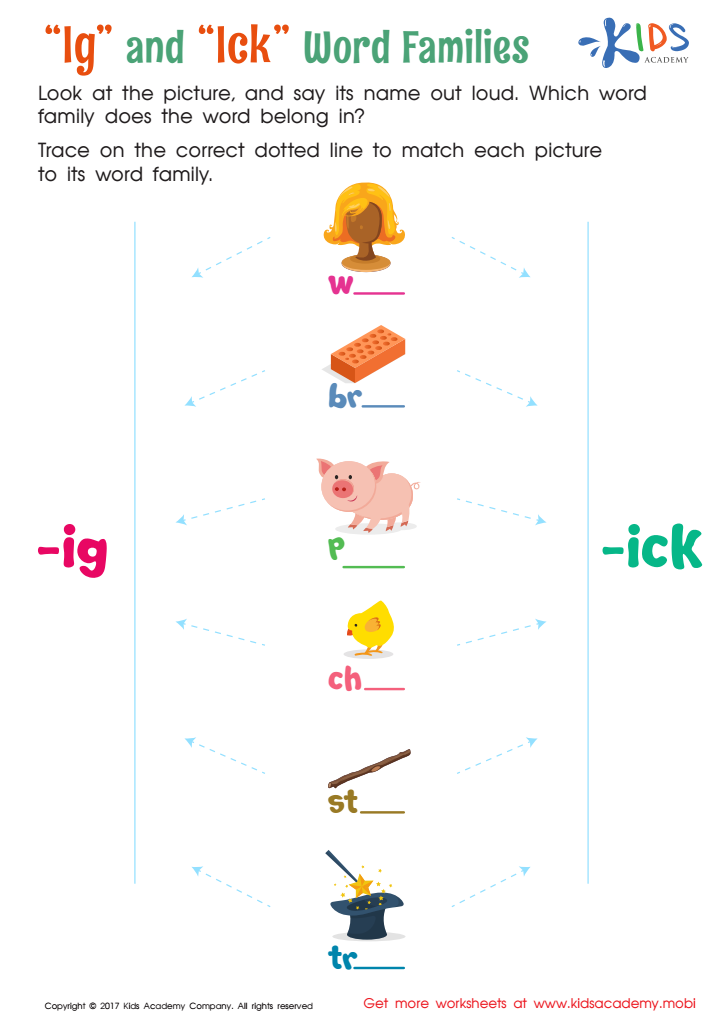
Words Families "ig" and "ick" Spelling Worksheet
 Assign to My Students
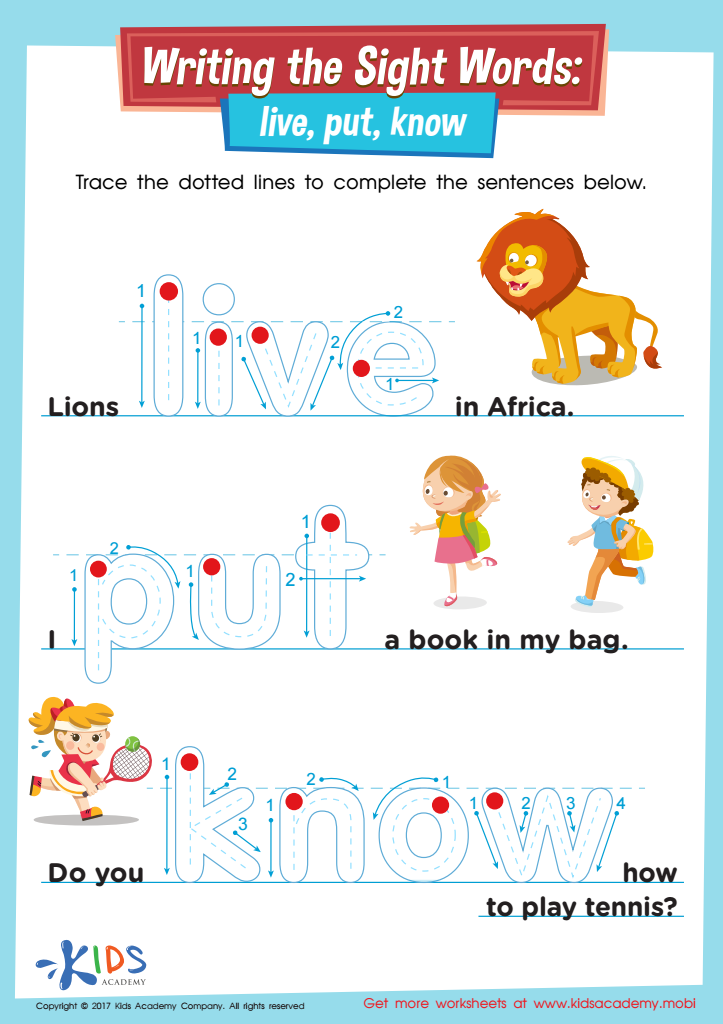
Live, Put, Know Printable Sight Words Worksheet







.jpg)
Reading proficiency and writing skills are critical for children aged 4-9 as they lay the groundwork for lifelong learning and communication. During these formative years, children develop the cognitive and linguistic abilities that shape their academic success and personal development.
Firstly, strong reading and writing skills enhance comprehension and critical thinking. When children can read effectively, they can engage with a variety of texts, promoting understanding of different concepts, cultures, and perspectives. This builds not only knowledge but also empathy and social awareness.
Moreover, proficiency in reading and writing is closely linked to overall academic performance. Students who struggle with these skills often face challenges in subjects like math and science, as these areas require understanding of complex texts and the ability to express ideas clearly.
Additionally, fostering reading and writing during these ages helps build confidence and self-esteem. When children learn to articulate their thoughts and share stories, they develop a sense of ownership over their ideas.
Finally, as digital literacy becomes increasingly essential, foundational reading and writing skills are crucial for navigating and contributing to an information-rich world. Supporting children in developing these skills ensures a brighter, more promising future for them both academically and socially.








