Vocabulary enhancement Writing Worksheets for Ages 4-9 - Page 4
75 filtered results
-
From - To
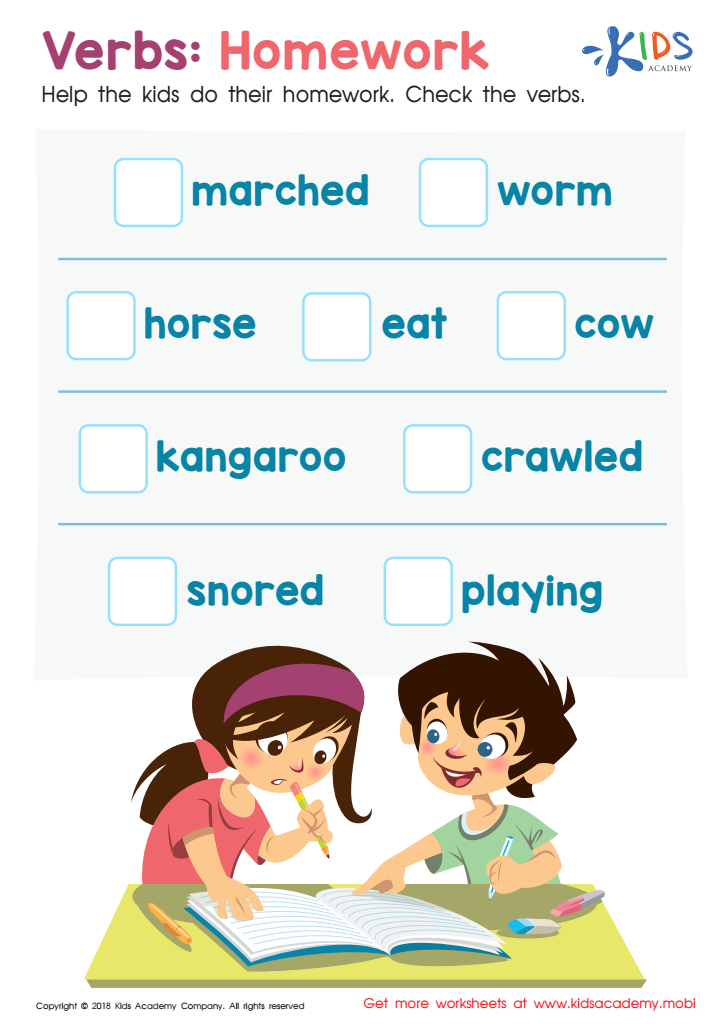
Verbs Homework Worksheet
 Assign to My Students
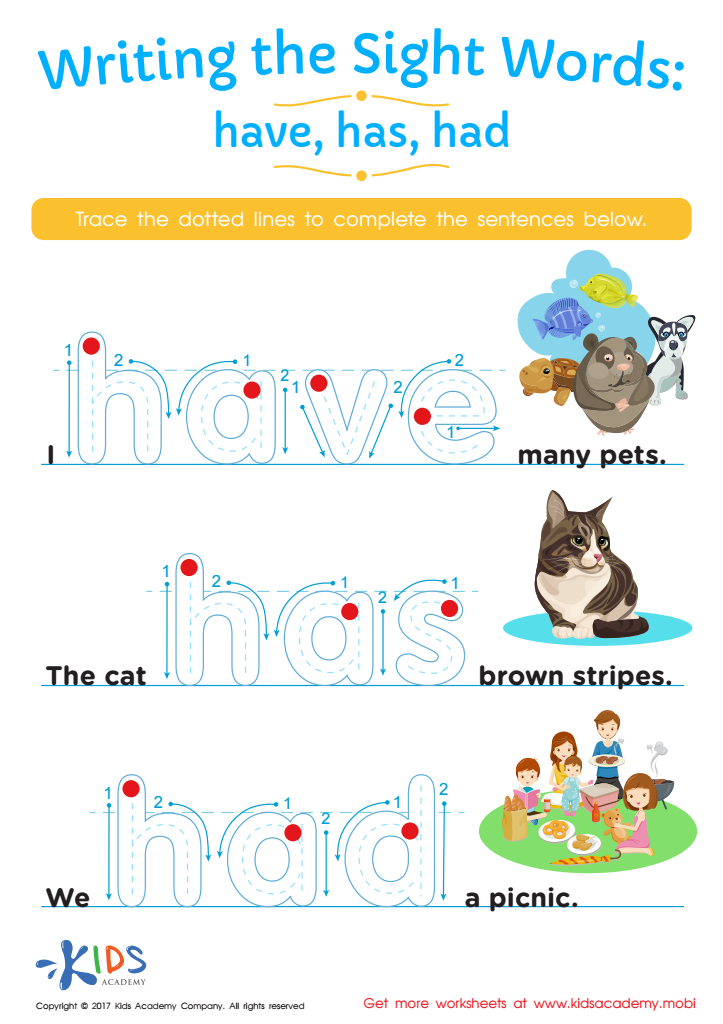
Have, Has, Had Worksheet Sight Words Worksheet
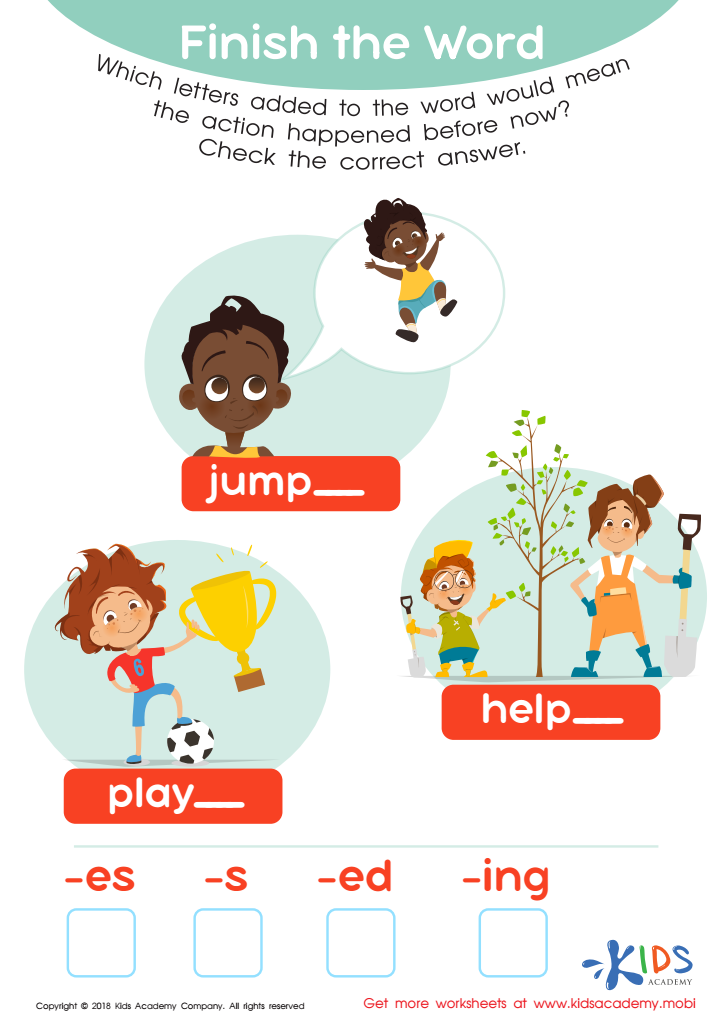
Finish the Word Worksheet


.jpg)





Vocabulary enhancement in writing for children aged 4-9 is crucial for several reasons. First, a rich vocabulary enables young learners to express their thoughts and ideas clearly. When children can accurately articulate their feelings or narrate experiences, they develop confidence and a love for learning. This strong foundation in language not only improves writing skills but enhances overall communication abilities, vital in social interactions and future educational success.
Additionally, expansive vocabulary exposure enriches understanding and comprehension. When parents and teachers focus on enhancing vocabulary, children can grasp complex concepts and engage with various subjects. This enhanced comprehension is particularly important at this age, as it is a pivotal stage for cognitive development.
Moreover, vocabulary growth directly correlates with academic achievement. Studies show that children with strong language skills tend to perform better in reading and other subjects. By prioritizing vocabulary enhancement, caregivers and educators equip children with tools for lifelong learning, setting the stage for future success in academics and beyond.
In those formative years, it is important for adults to foster an environment rich in language, where children can explore words, storytelling, and writing to cultivate both their cognitive growth and creativity.








