Shape Recognition Geometry Worksheets for 4-Year-Olds - Page 2
34 filtered results
-
From - To
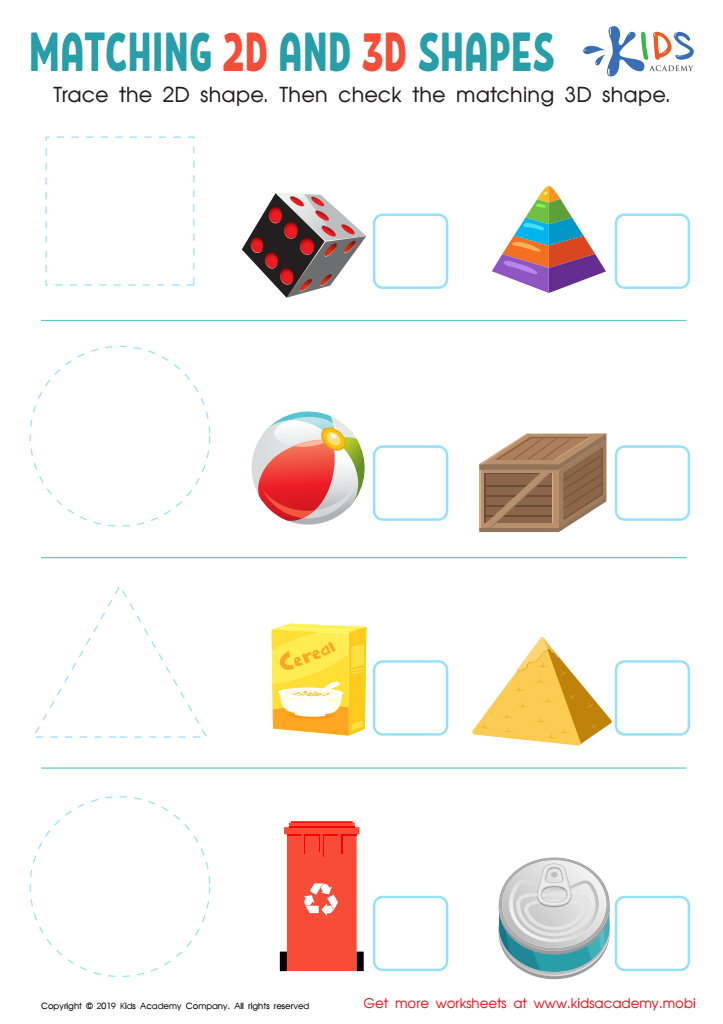
Matching 2D and 3D Shapes Worksheet
 Assign to My Students











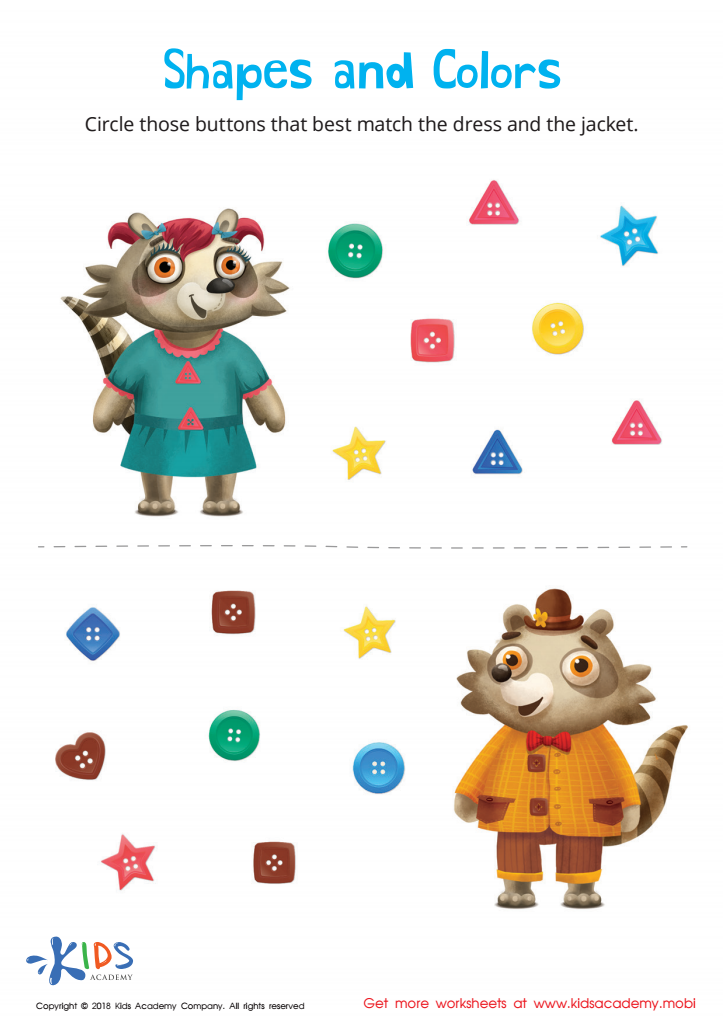
Shapes and Colors Worksheet
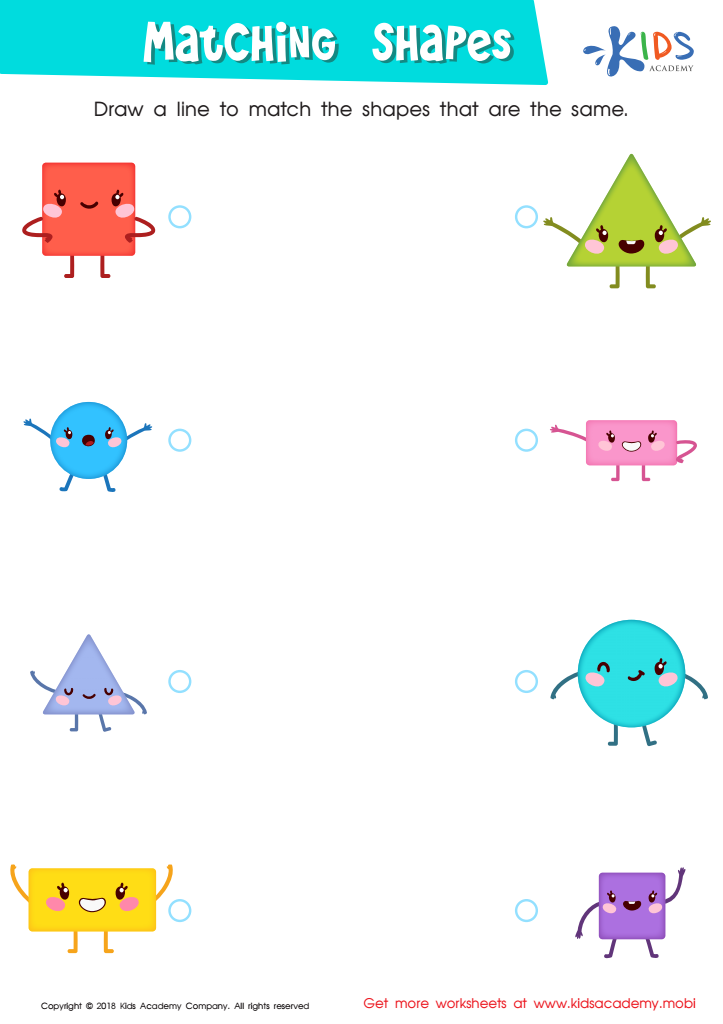
Matching Shapes Worksheet
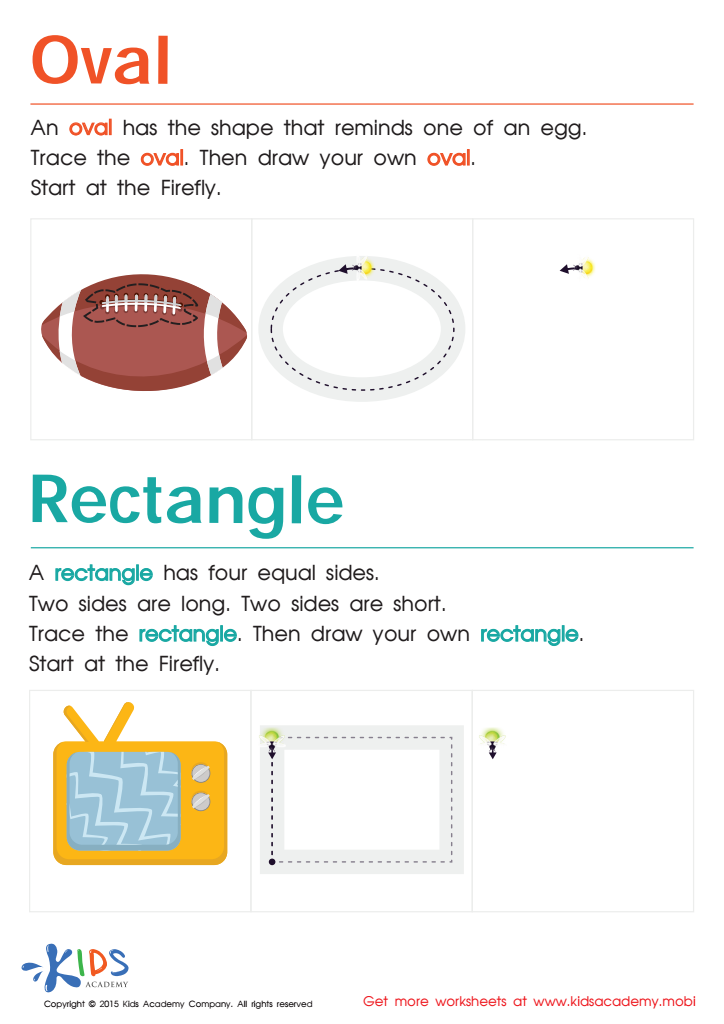
Easy Drawing of Ovals And Rectangles Worksheet
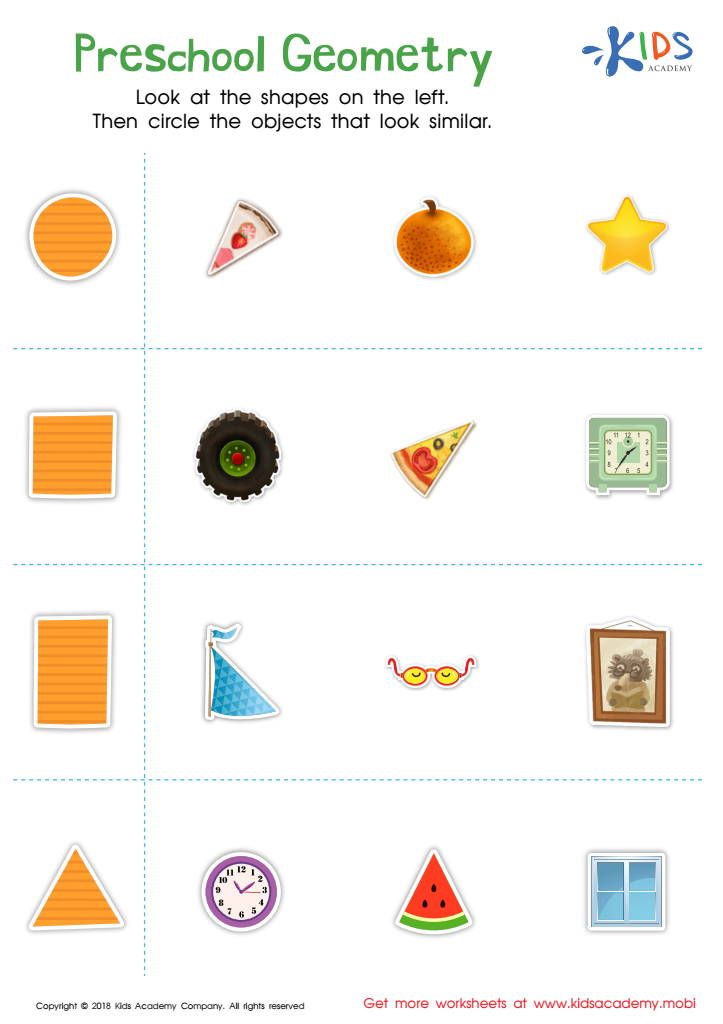
Preschool Geometry Worksheet
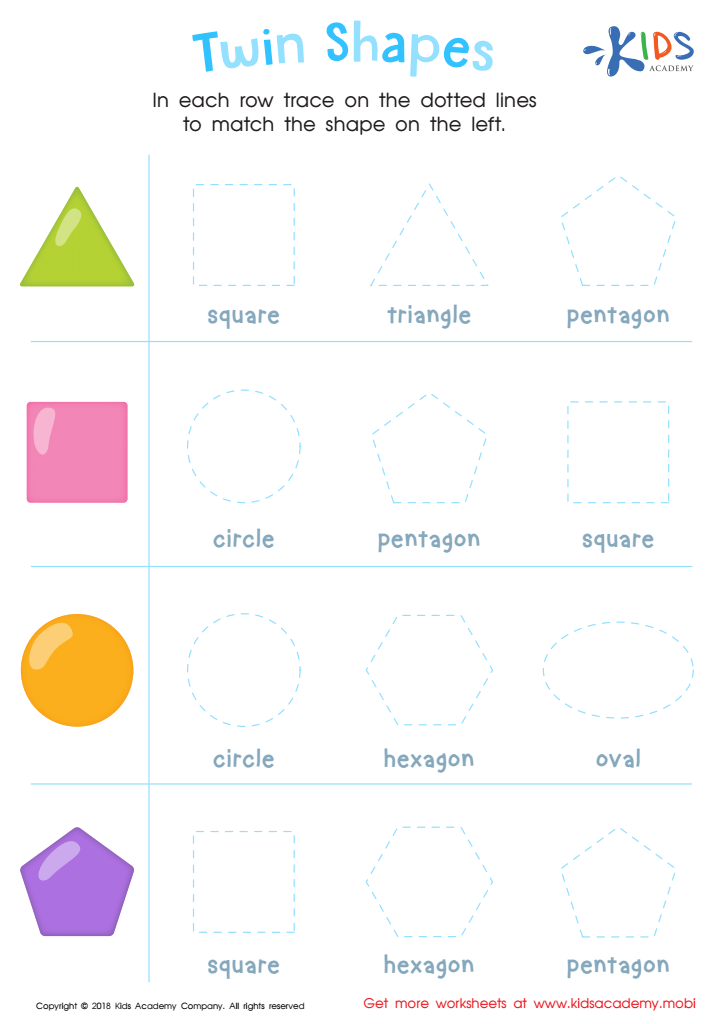
Twin Shapes Dot-to-Dot Worksheet
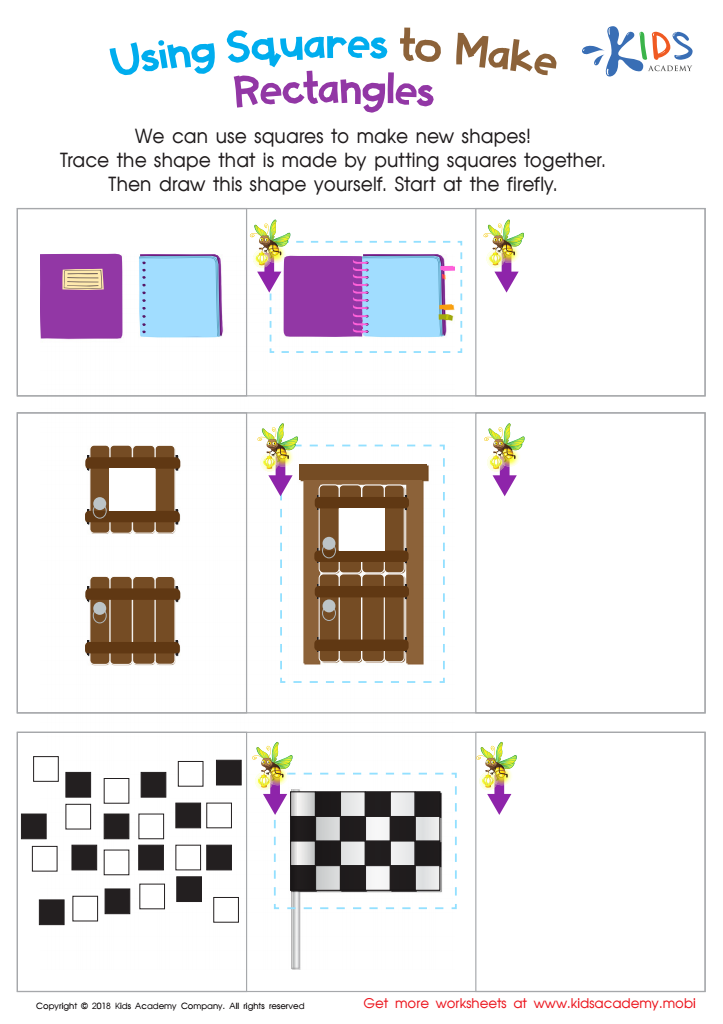
Using Squares to Make Rectangles Worksheet
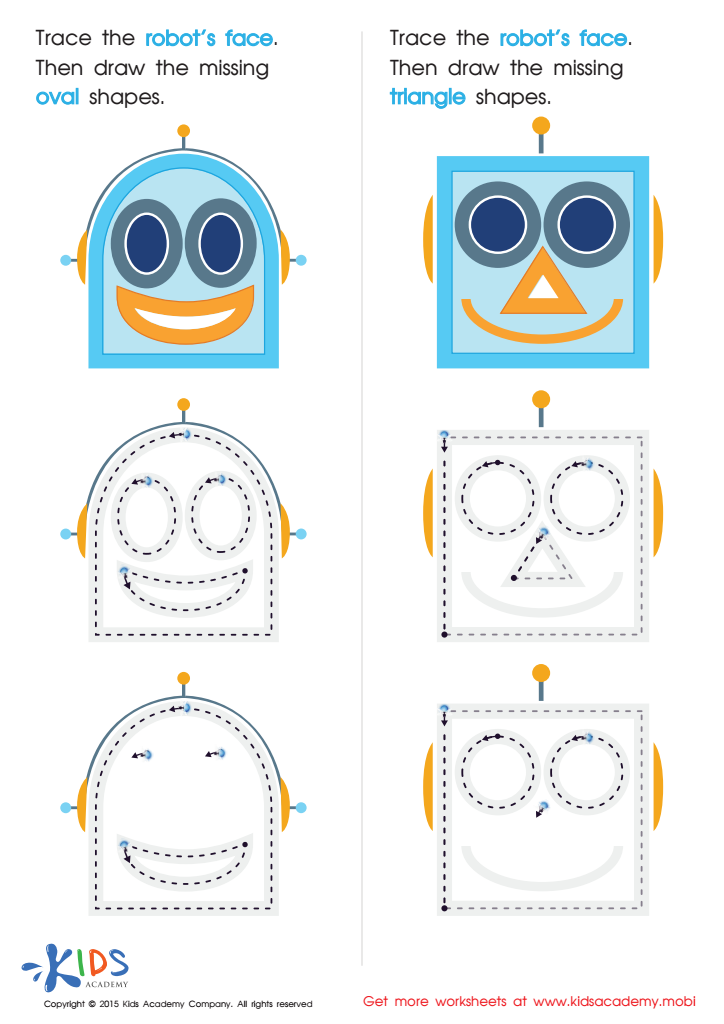
Drawing Ovals And Triangles with Fun Printable
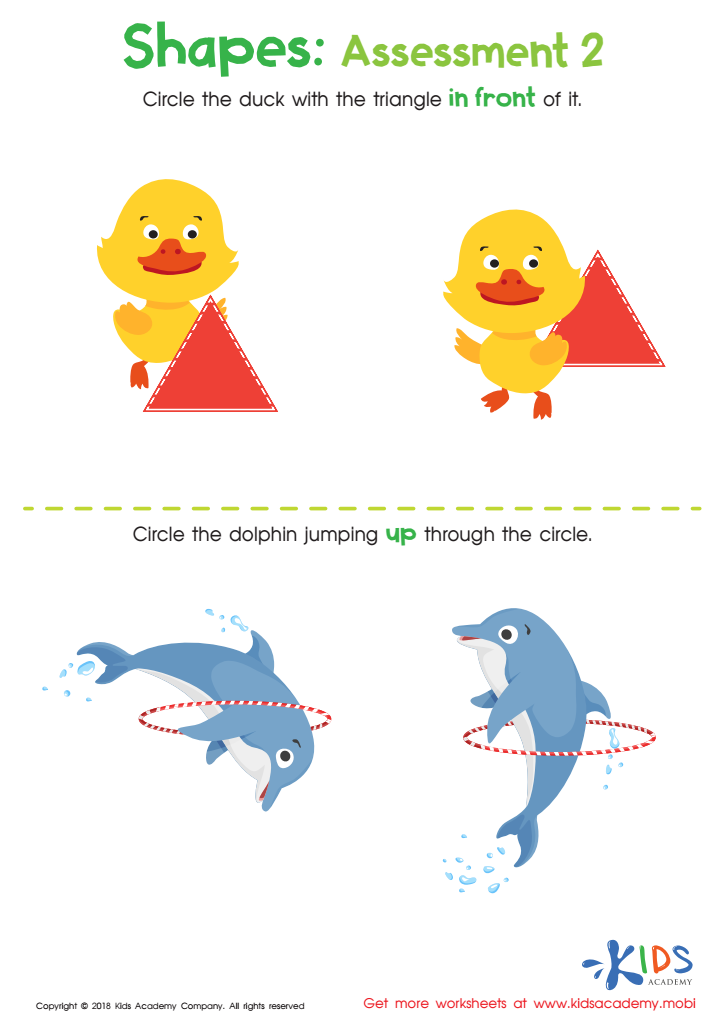
Geometry – Assessment 2 Worksheet
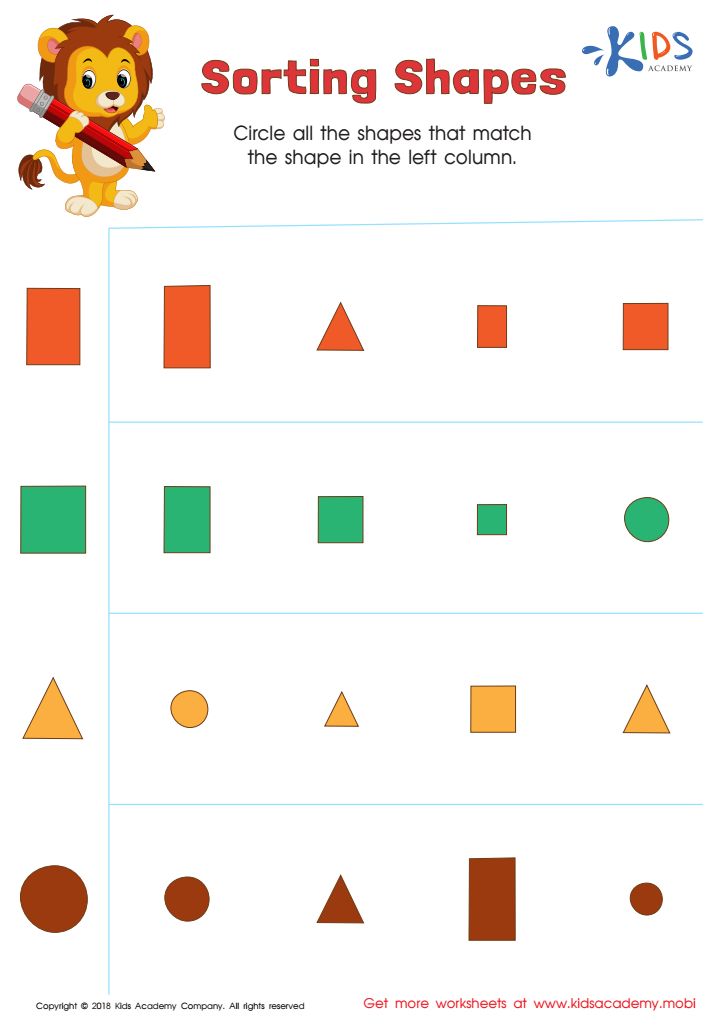
Sorting Shapes - Part 2 Worksheet








Shape recognition is a fundamental component of early childhood education, particularly for 4-year-olds. Understanding shapes lays the groundwork for more complex mathematical concepts and critical thinking skills. At this age, children are naturally curious and eager to explore their environment, making it an ideal time for shape recognition activities.
First, recognizing shapes helps children develop their spatial awareness, allowing them to understand how objects relate to one another in space. This is crucial not only in math but also in everyday tasks and problem-solving situations. Second, shape recognition encourages language development; children learn specific vocabulary related to shapes, like "circle," "square," and "triangle." This boosts their communication skills and cognitive development.
In addition, activities involving shapes facilitate fine motor skills as children manipulate and create with various shapes during crafts or play. Engaging with shapes can also nurture a child’s creativity, as they learn to combine and transform different shapes into new forms.
Therefore, parents and teachers play an essential role in nurturing this learning through fun, interactive experiences that foster a love for learning while solidifying foundational skills critical for future academic success. Emphasizing shape recognition not only enhances math abilities but also enriches overall cognitive development.








