Check out this FREE Trial Lesson on Math for age 4!

L

Favorites
With answer key
Interactive
  • 4
  • Basic Addition Skills
  • Math
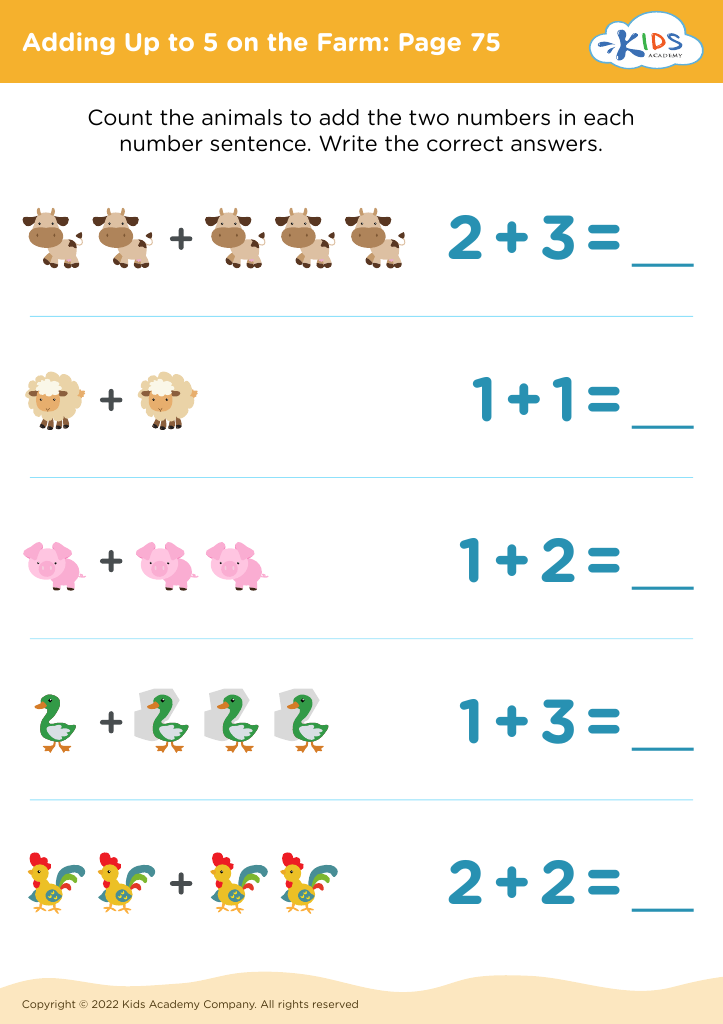
Adding Up to 5 on the Farm: Page 75
Worksheet
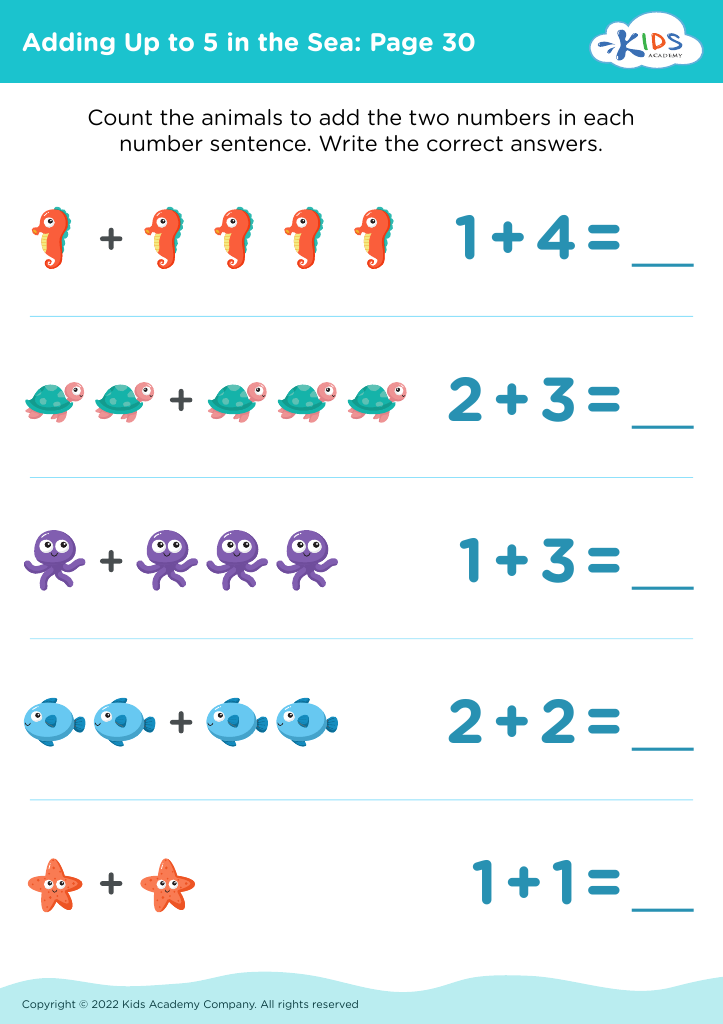
Adding Up to 5 in the Sea: Page 30
Worksheet
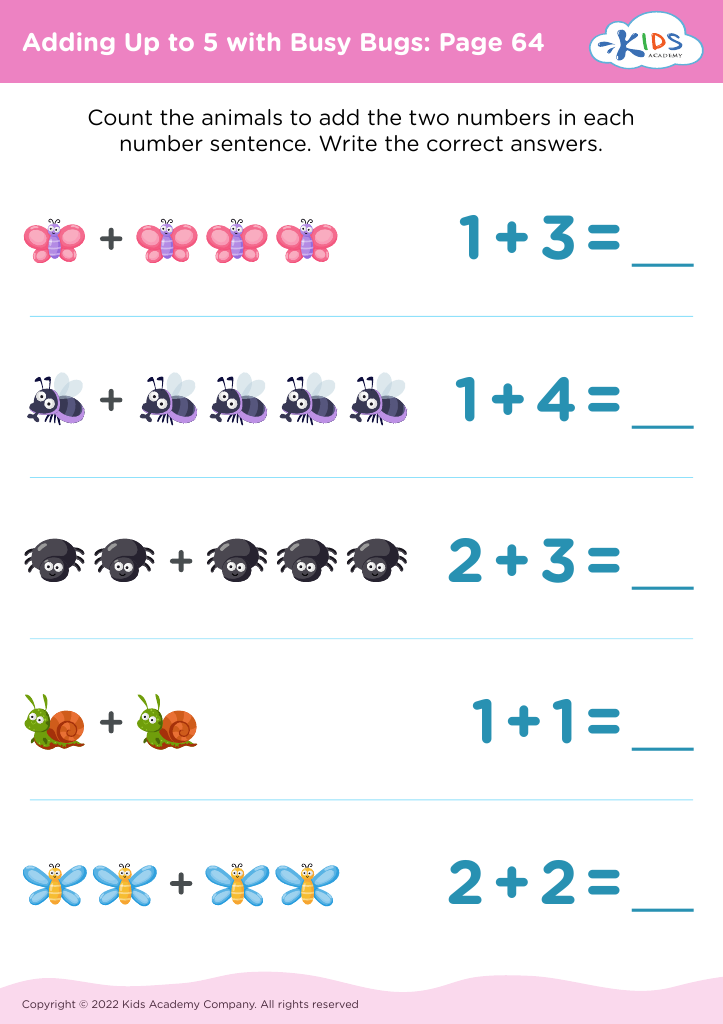
Adding Up to 5 with Busy Bugs: Page 64
Worksheet
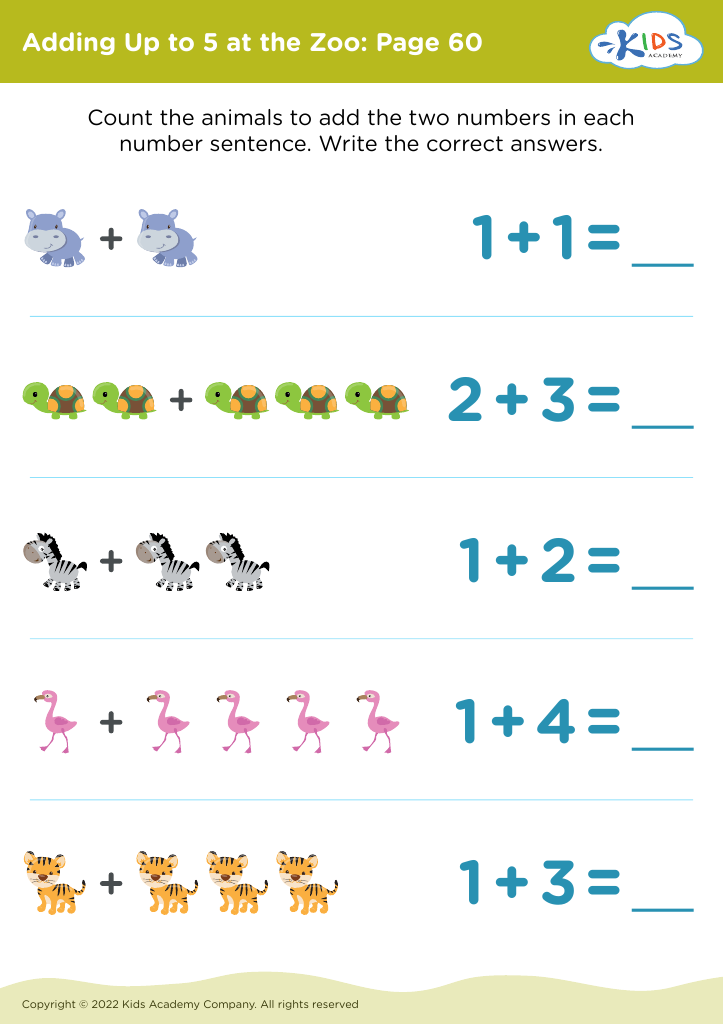
Adding Up to 5 at the Zoo: Page 60
Worksheet
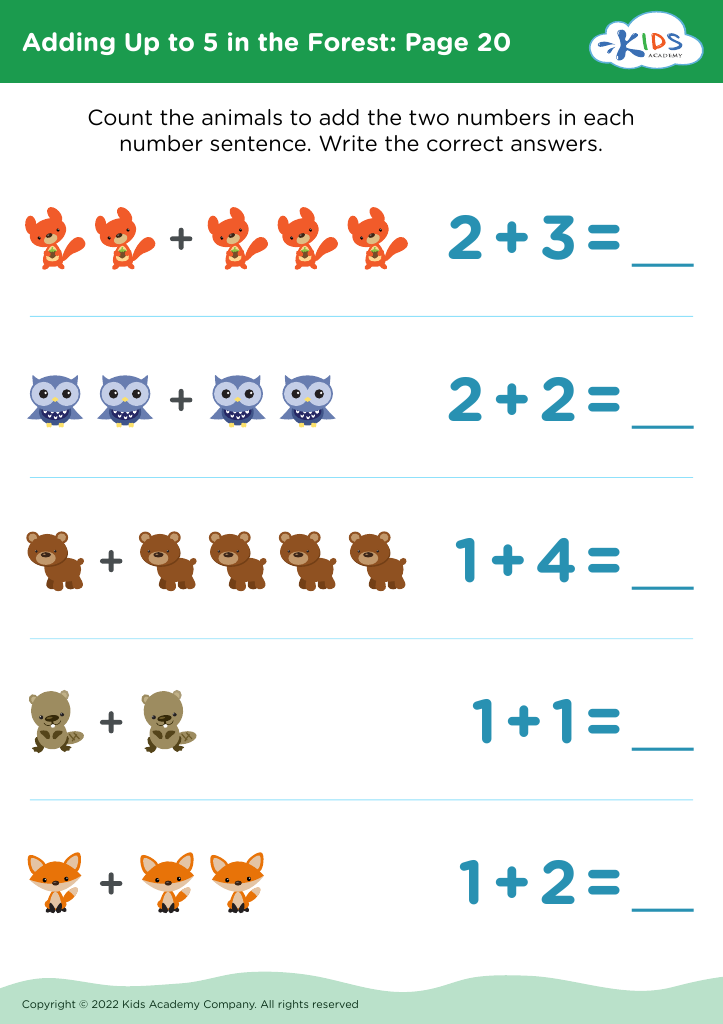
Adding Up to 5 in the Forest: Page 20
Worksheet
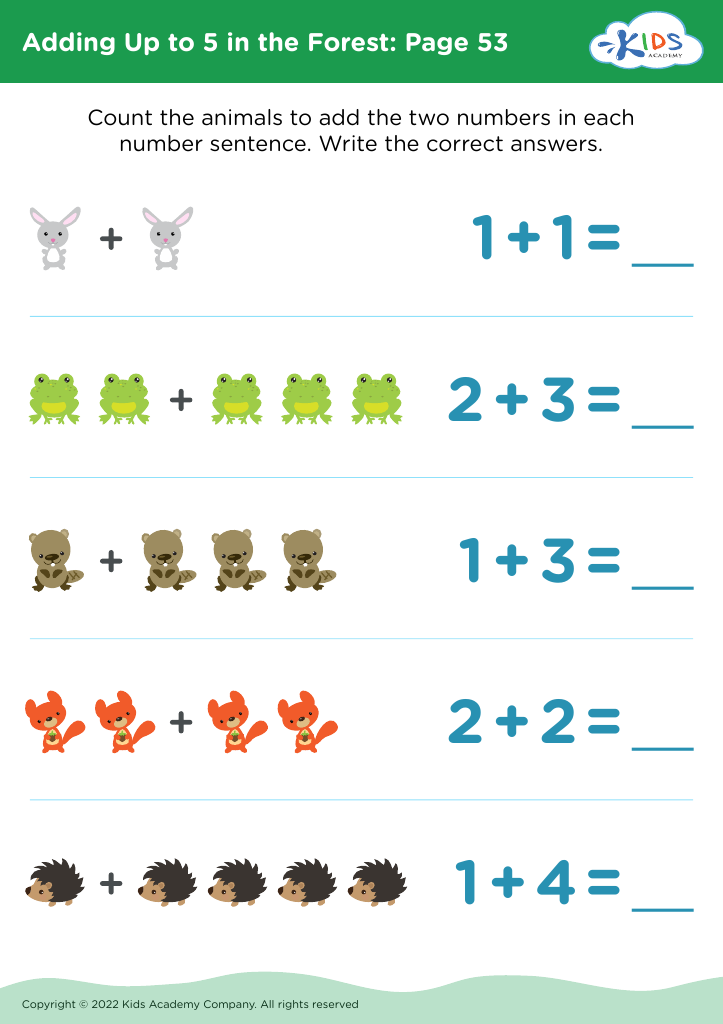
Adding Up to 5 in the Forest: Page 53
Worksheet
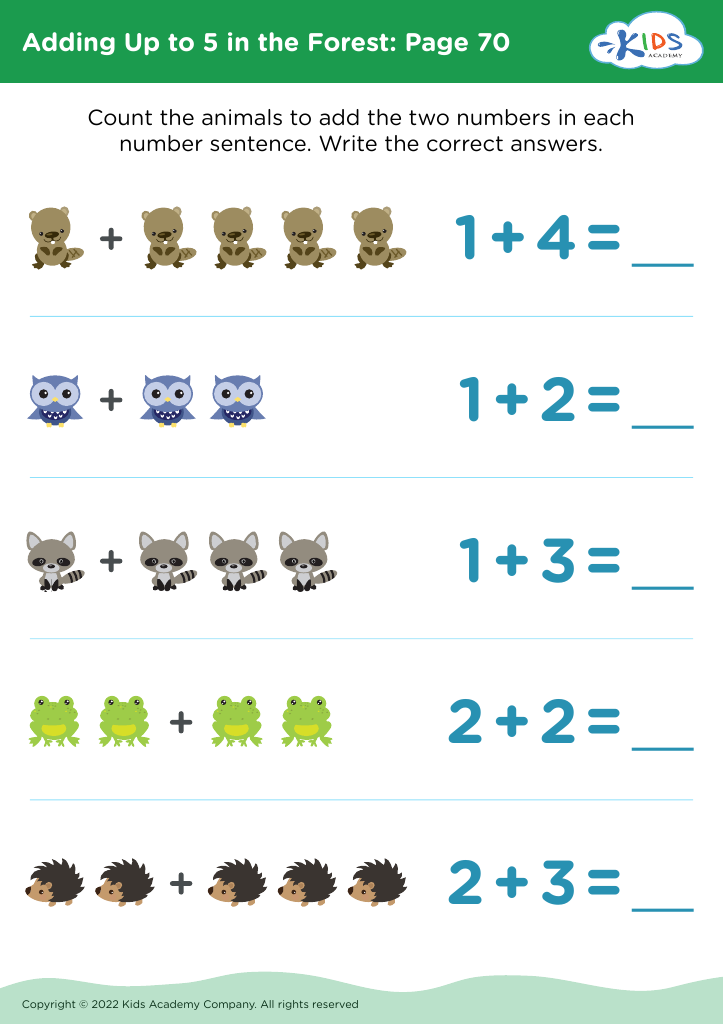
Adding Up to 5 in the Forest: Page 70
Worksheet
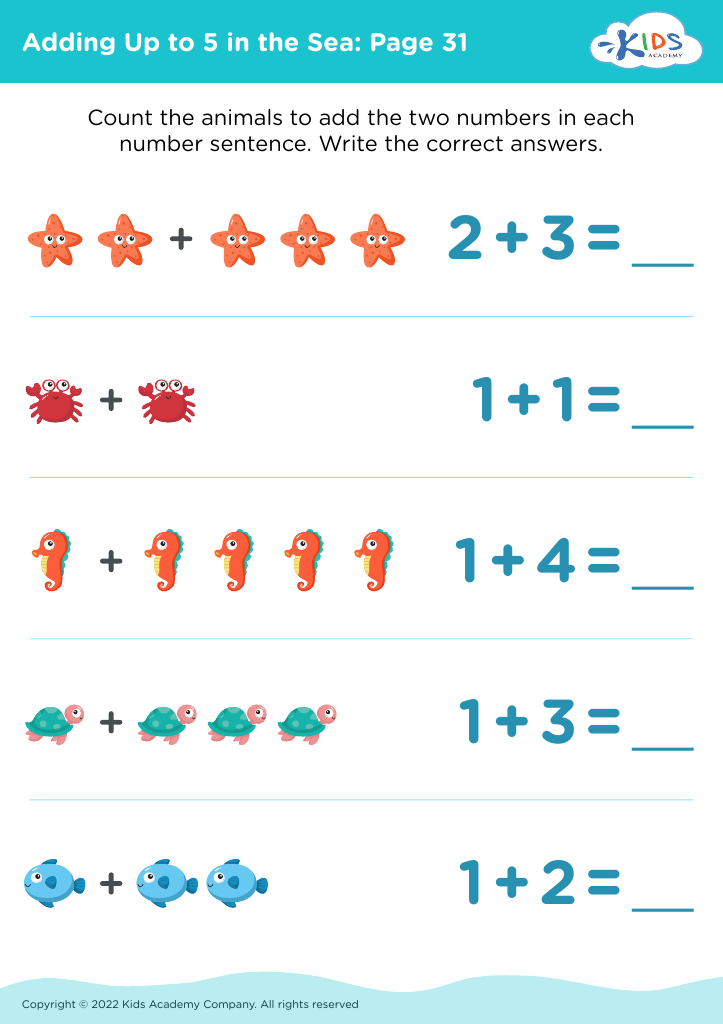
Adding Up to 5 in the Sea: Page 31
Worksheet
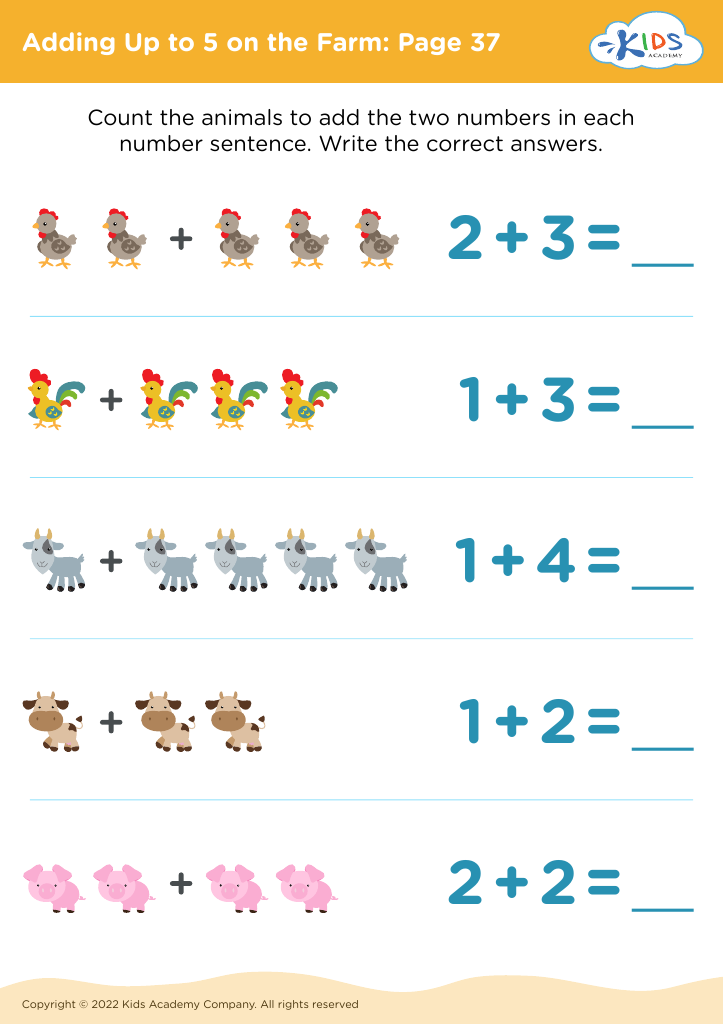
Adding Up to 5 on the Farm: Page 37
Worksheet
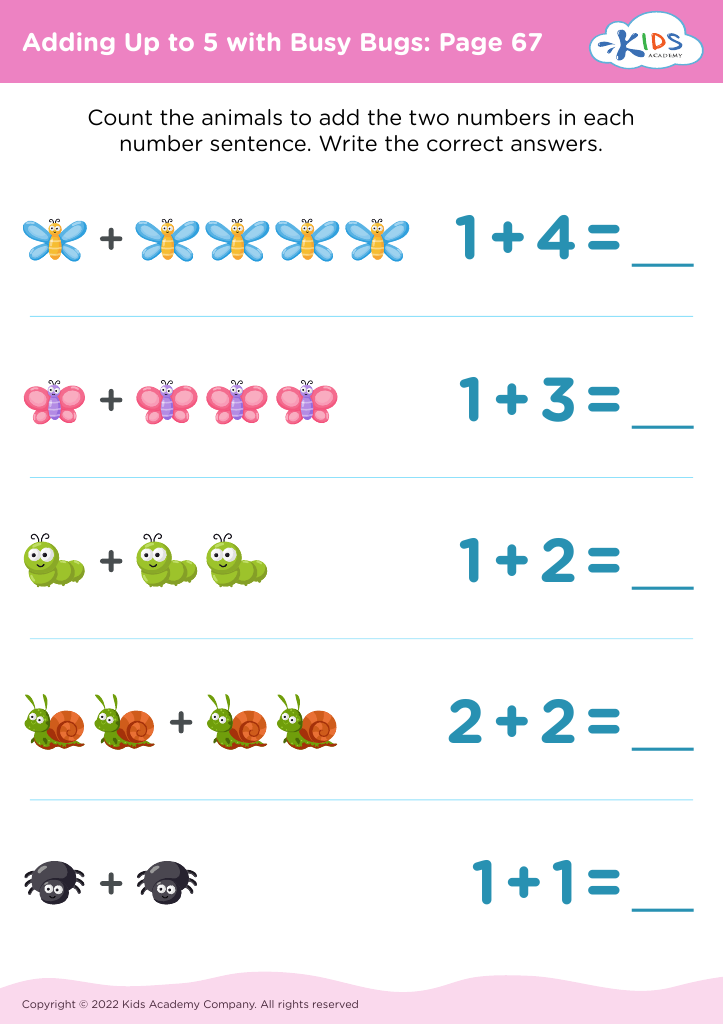
Adding Up to 5 with Busy Bugs: Page 67
Worksheet
Dot to Dot Numbers Printables

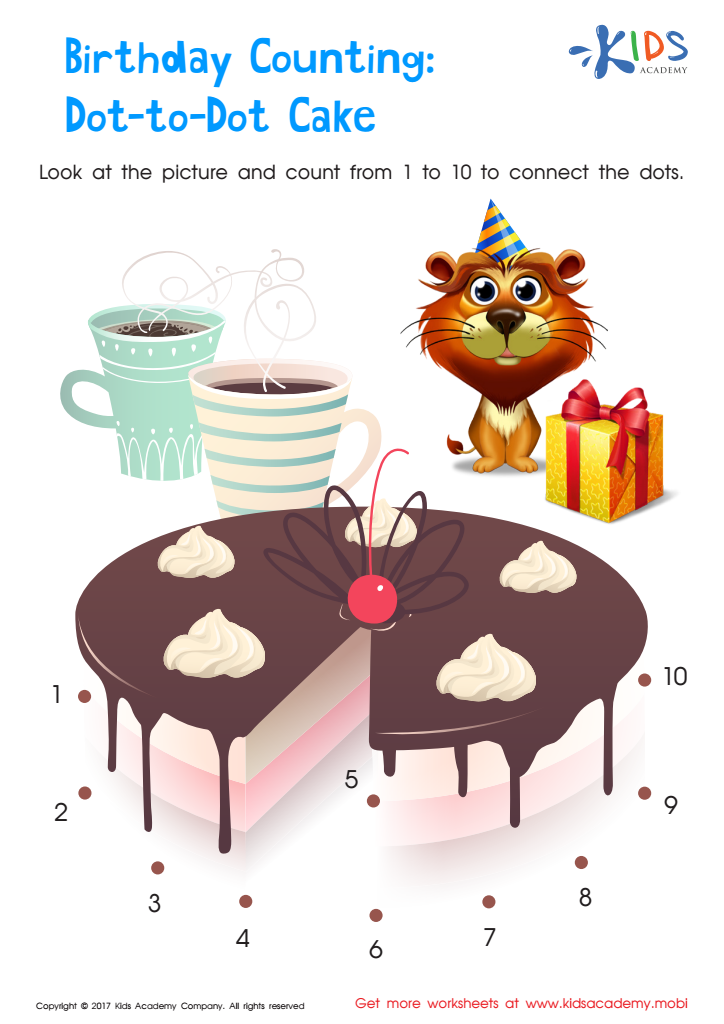
Birthday Counting Connect Dots Worksheet

Help your child count to ten and draw curved lines with this birthday cake dot to dot! Practice numeracy and problem solving skills, and enjoy the fun of creating a picture. Then, use it as a reminder for your child’s birthday and learn about the days and months of the year.
Birthday Counting Connect Dots Worksheet
Worksheet
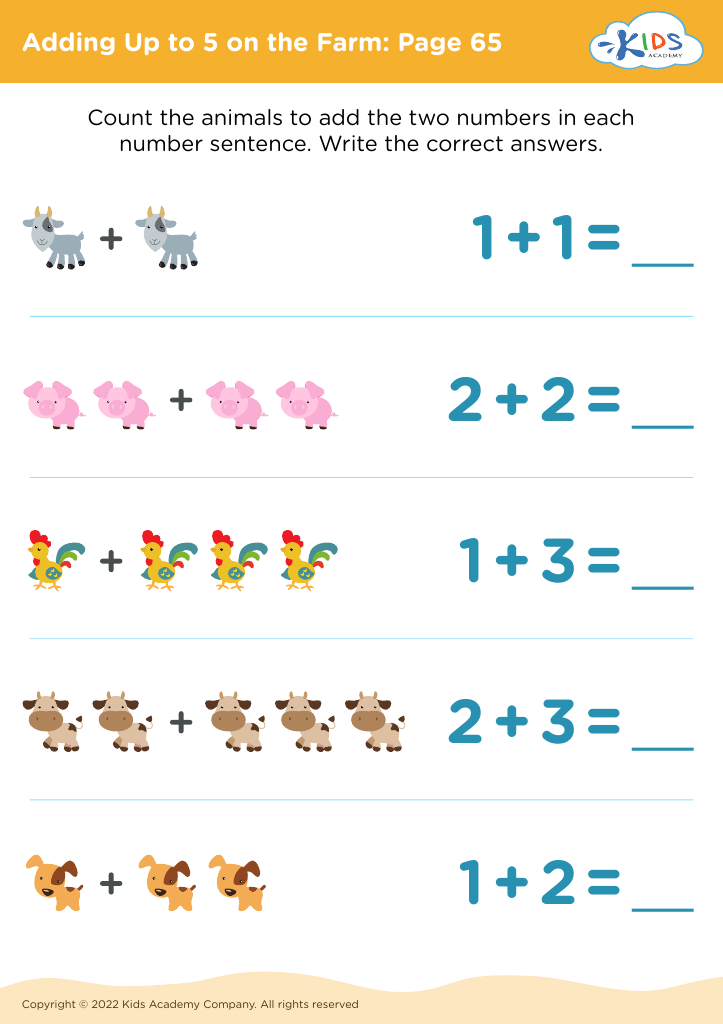
Adding Up to 5 on the Farm: Page 65
Worksheet
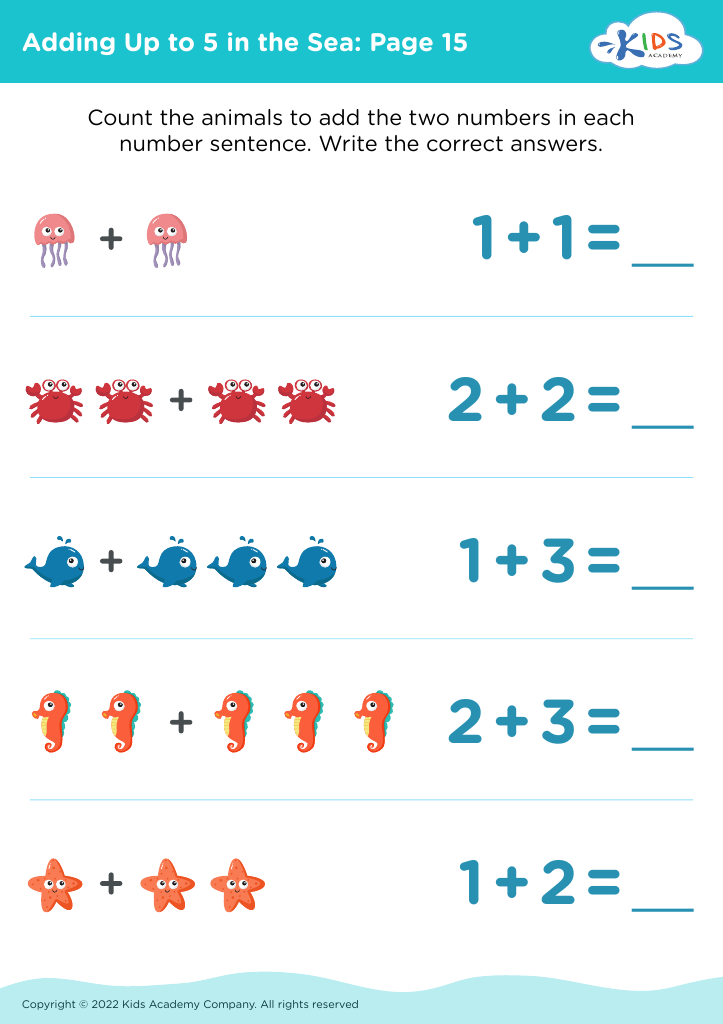
Adding Up to 5 in the Sea: Page 15
Worksheet
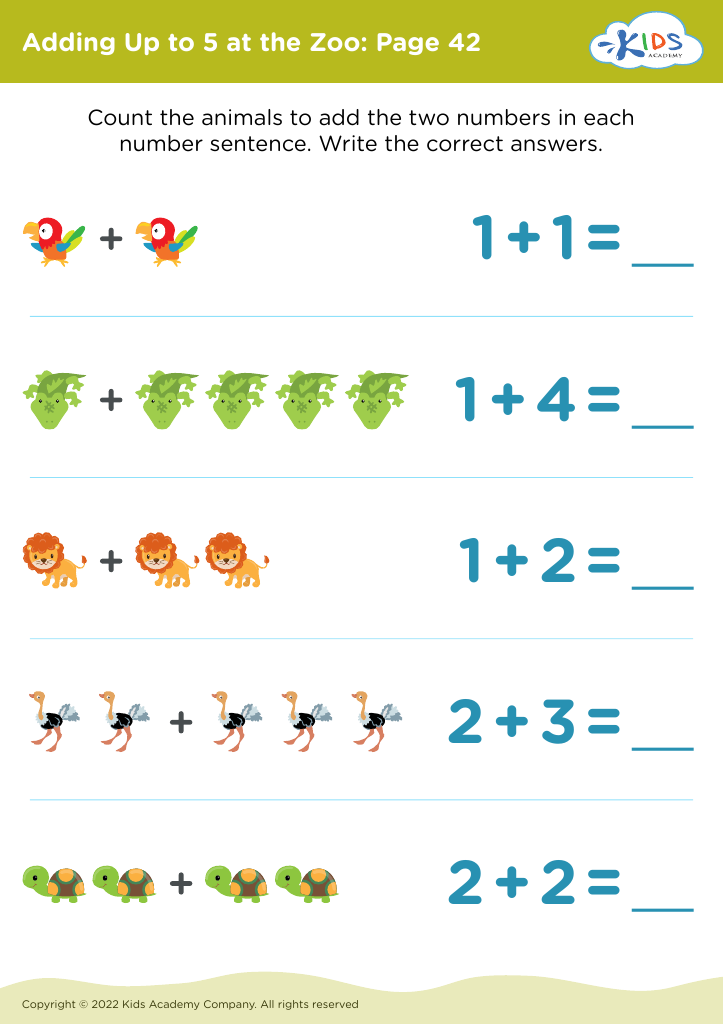
Adding Up to 5 at the Zoo: Page 42
Worksheet
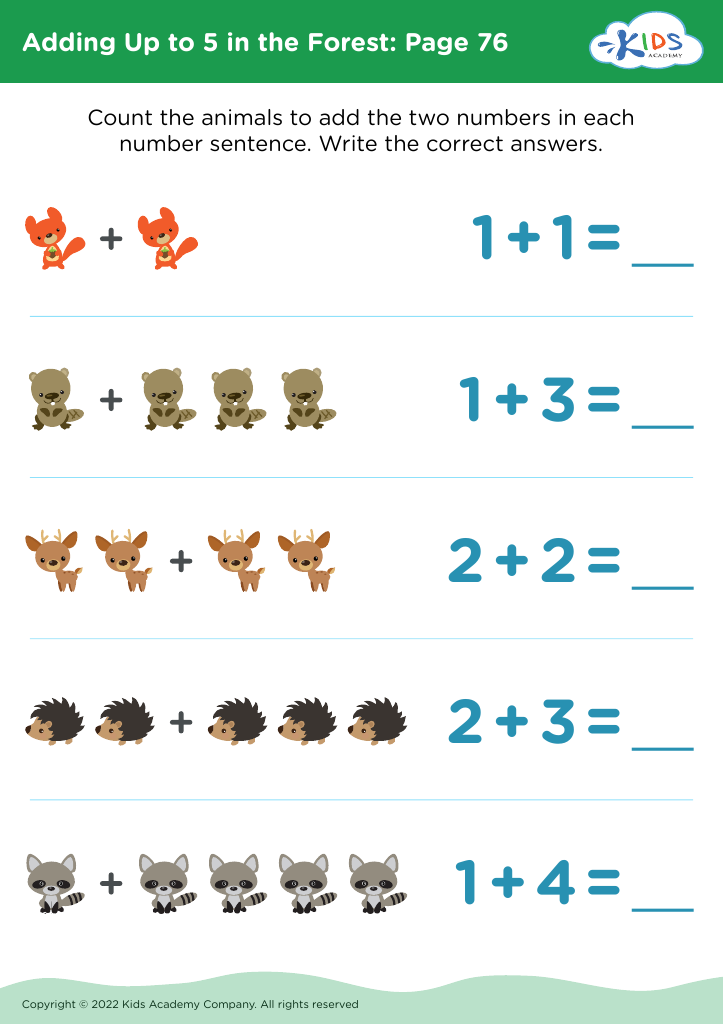
Adding Up to 5 in the Forest: Page 76
Worksheet
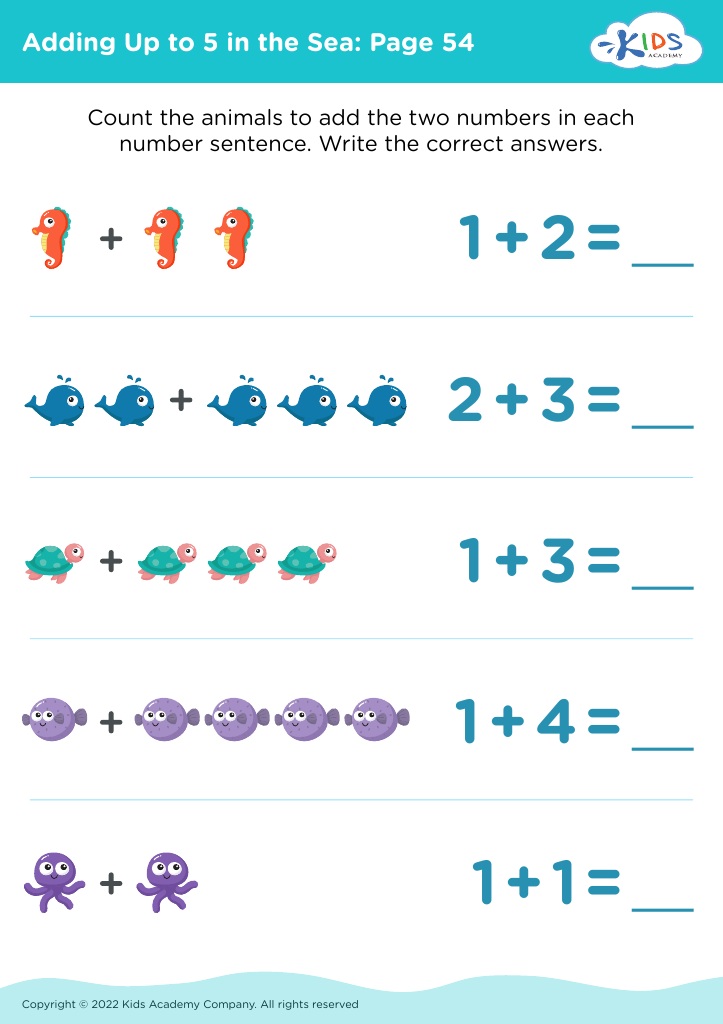
Adding Up to 5 in the Sea: Page 54
Worksheet
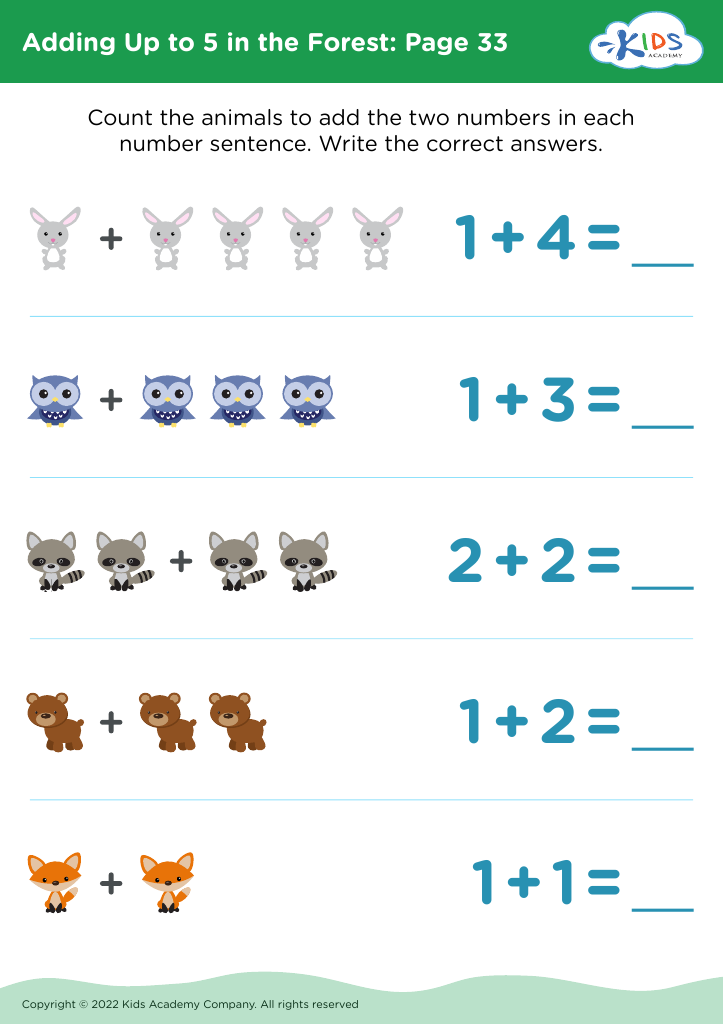
Adding Up to 5 in the Forest: Page 33
Worksheet
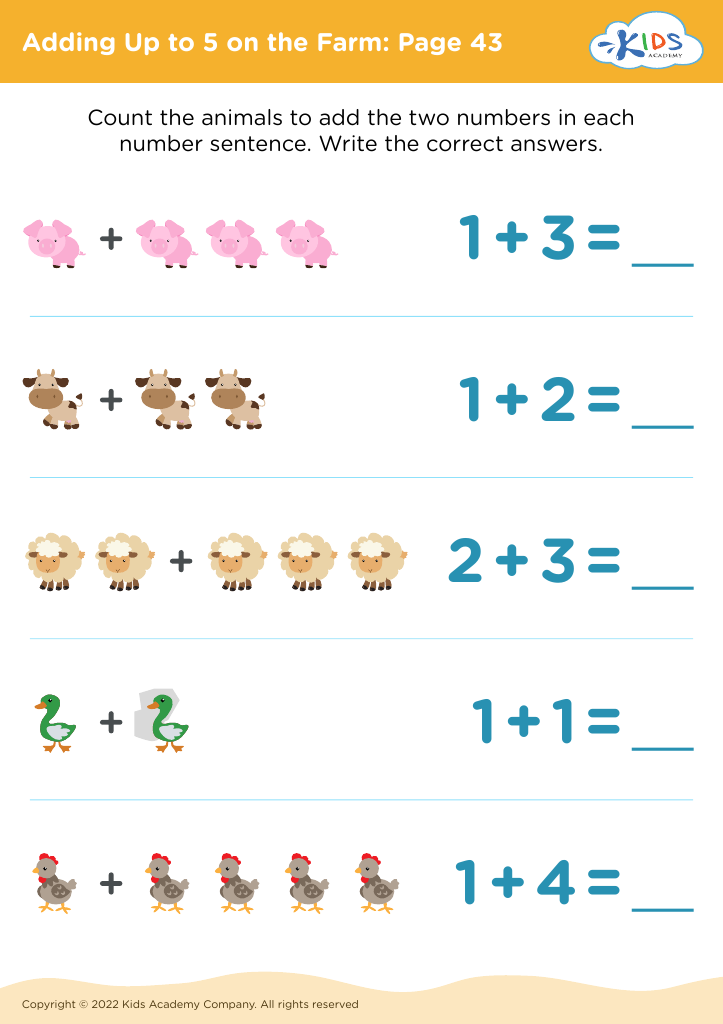
Adding Up to 5 on the Farm: Page 43
Worksheet
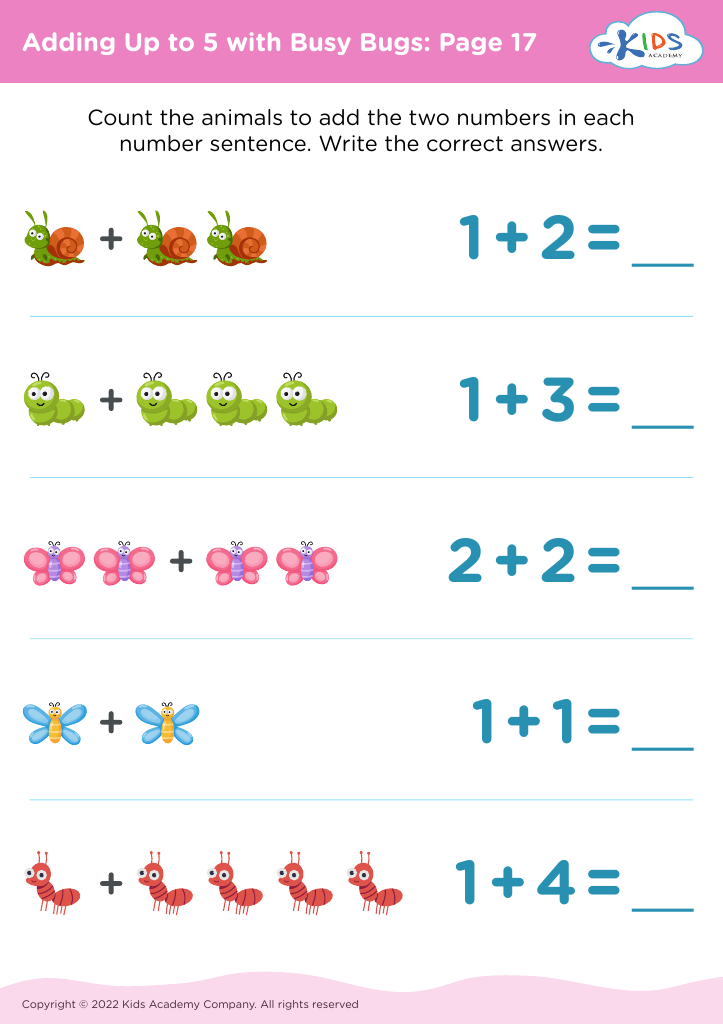
Adding Up to 5 with Busy Bugs: Page 17
Worksheet
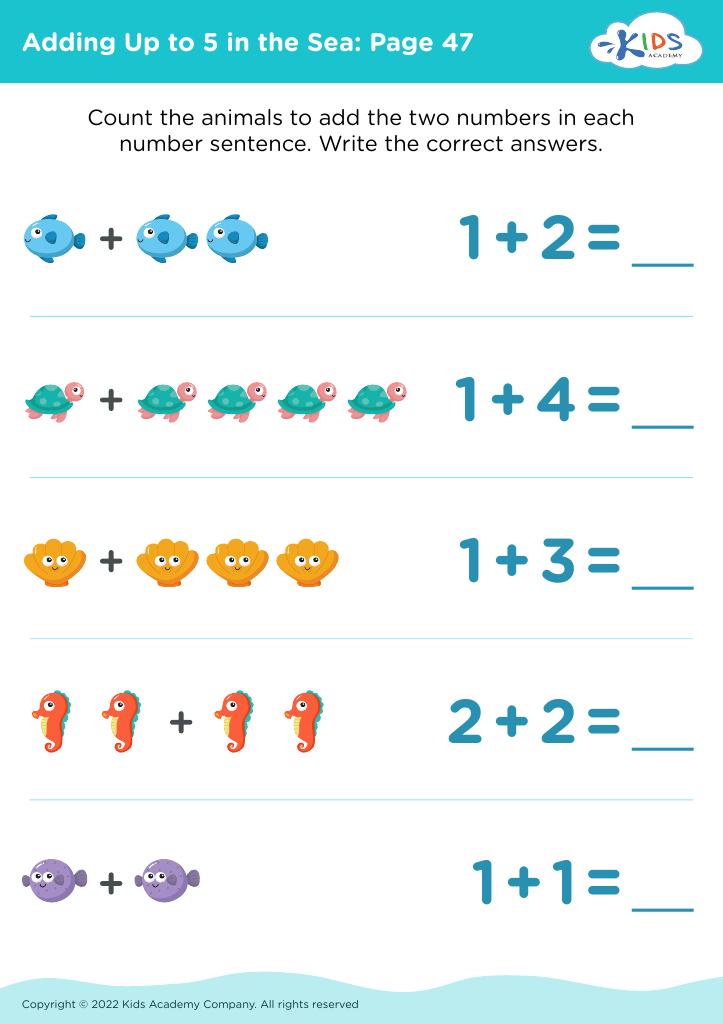
Adding Up to 5 in the Sea: Page 47
Worksheet
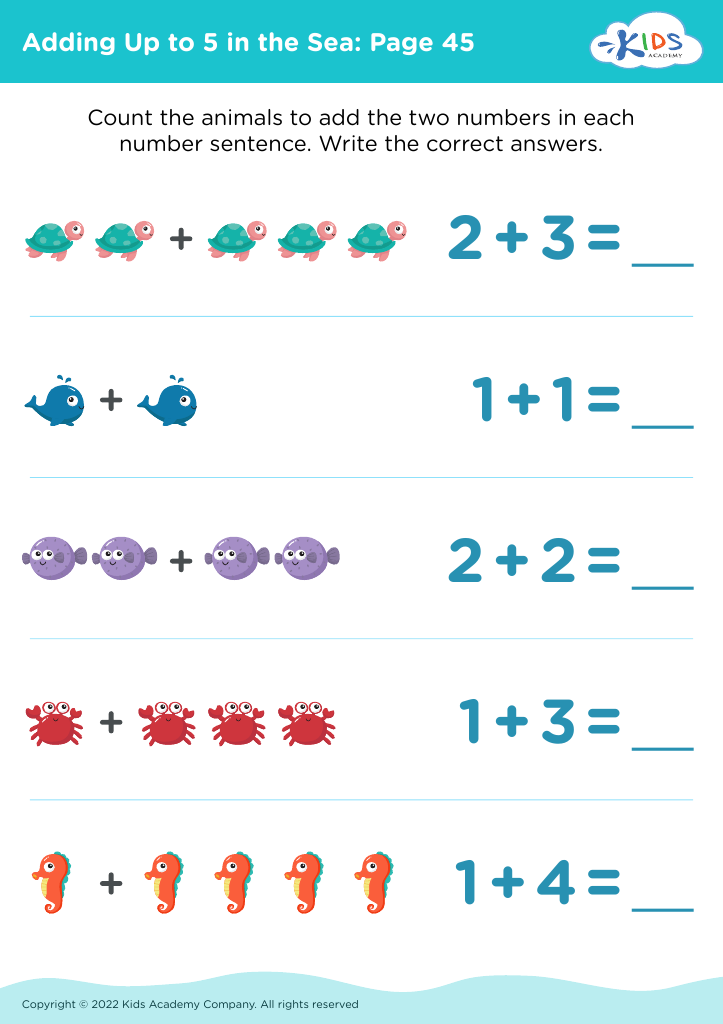
Adding Up to 5 in the Sea: Page 45
Worksheet
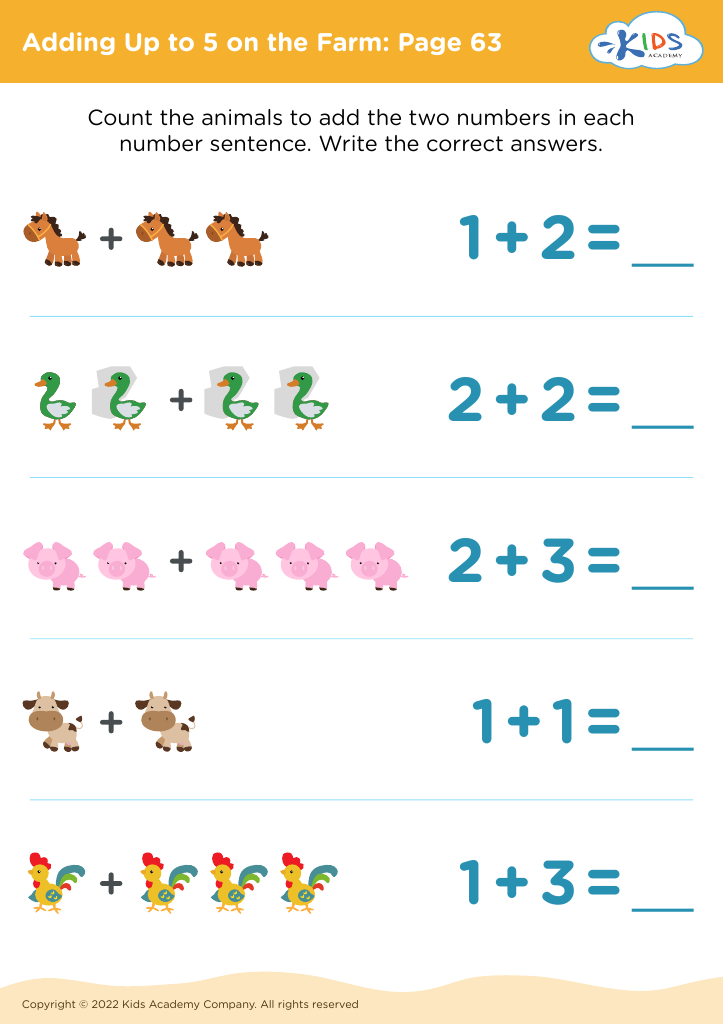
Adding Up to 5 on the Farm: Page 63
Worksheet
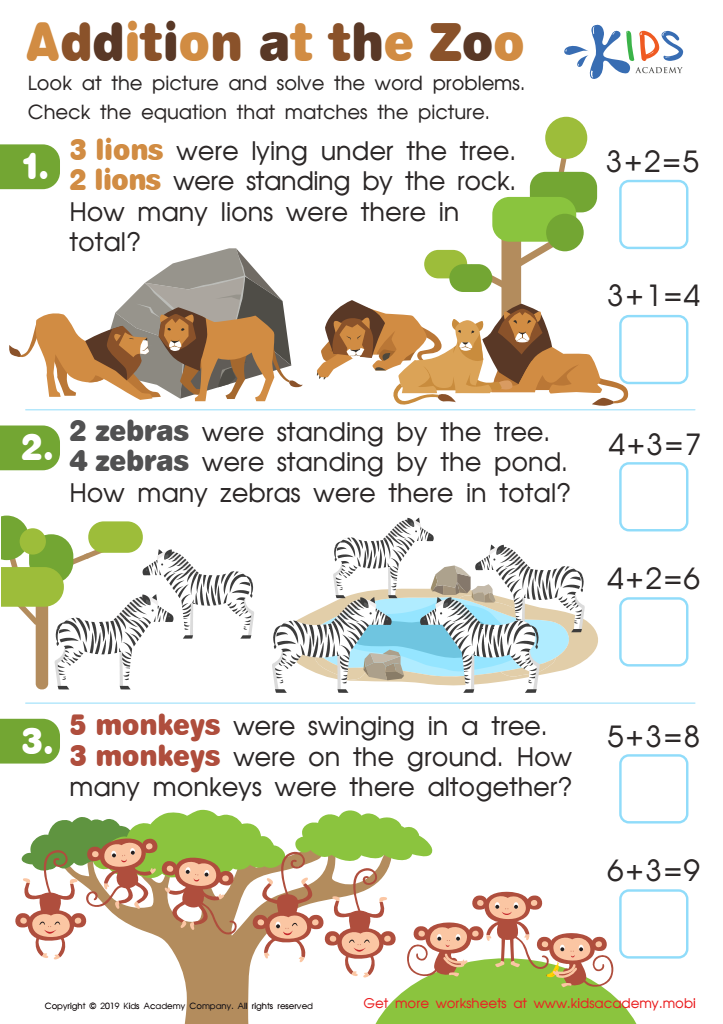
Addition at the Zoo Worksheet

Addition at the Zoo Worksheet

Visit the zoo with your kids and point out all the different animals. Ask them to name their favorites and identify animals on a worksheet. Challenge them to solve word problems related to the pictures. Ask them for the equation that fits the picture and check the answer.
Addition at the Zoo Worksheet

Worksheet
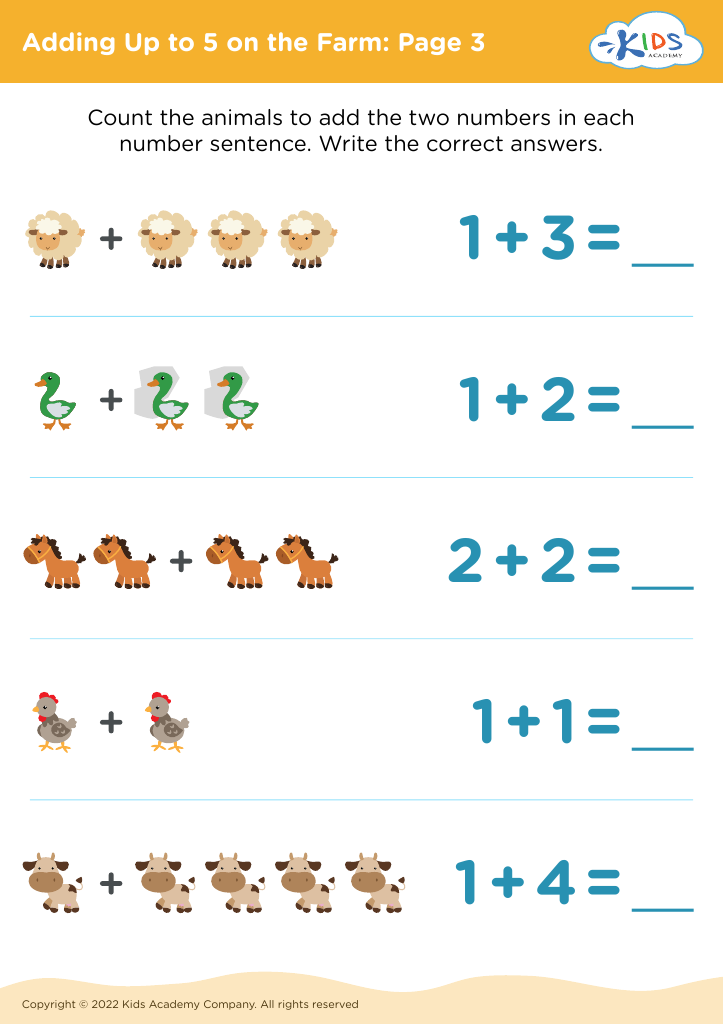
Adding Up to 5 on the Farm: Page 3
Worksheet


Basic addition skills are foundational to a child's overall mathematical understanding and cognitive development. For parents and teachers of 4-year-olds, nurturing these skills early on can pay dividends in a child's confidence and love for learning. Introducing simple addition concepts helps children recognize patterns and relationships between quantities, which fosters critical thinking.

Moreover, acquiring basic addition skills aids in developing fine motor skills and social-emotional skills as children engage in activities with peers or adults, such as using counting blocks or playing interactive math games. These experiences promote cooperation and communication, essential skills beyond academics.

Additionally, children who develop strong mathematical foundations early are often better prepared for future learning, reducing anxiety and challenges as they progress through grades. They begin to see math as an enjoyable and relevant part of life rather than a daunting subject.

Ultimately, consistent attention to basic addition not only enhances mathematical proficiency but also builds a child's ability to tackle daily tasks involving counting and problem-solving, laying the groundwork for their future academic success. By fostering these skills early, parents and teachers can help cultivate a positive and enthusiastic attitude toward mathematics in young learners.