
Understanding ecosystems Science Worksheets for 4-Year-Olds
4 filtered results
Difficulty Level
Grade
Age
-
From - To
Subject
Activity
Standards
Introducing our "Understanding Ecosystems Science Worksheets for 4-Year-Olds"! These fun, engaging worksheets are designed to help young learners explore the basics of ecosystems. With colorful illustrations and simple exercises, 4-year-olds will learn about different plants, animals, and their habitats. These activities foster early science skills and curiosity about the world around them, laying a strong foundation for future learning. Perfect for preschool teachers and parents, our worksheets make science discovery an exciting adventure. Spark your child's interest in nature today with our thoughtfully crafted resources! Explore, learn, and grow with our engaging science worksheets.
Favorites
With answer key
Interactive
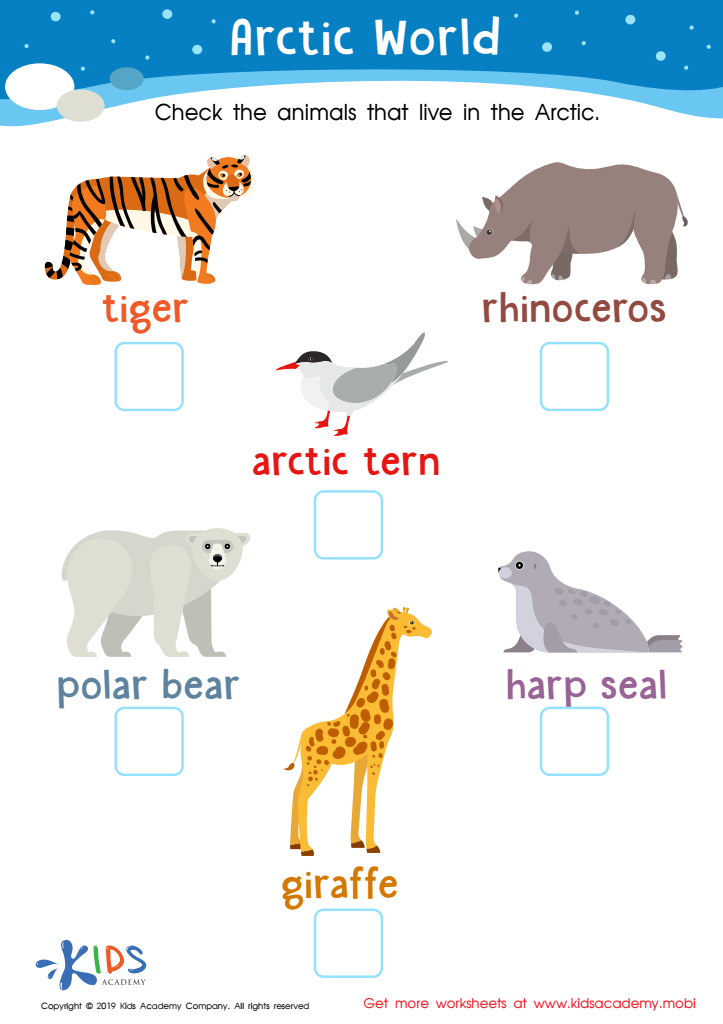
Arctic World Worksheet
Ask your students if they know where the Arctic is located and what lives there. If not, use a world atlas to show them. The Arctic is very cold and snow-covered; native animals have adapted to survive the harsh conditions. Look at the animals in the worksheet and help your students decide which ones live in the Arctic.
 Assign to My Students
Arctic World Worksheet
Worksheet
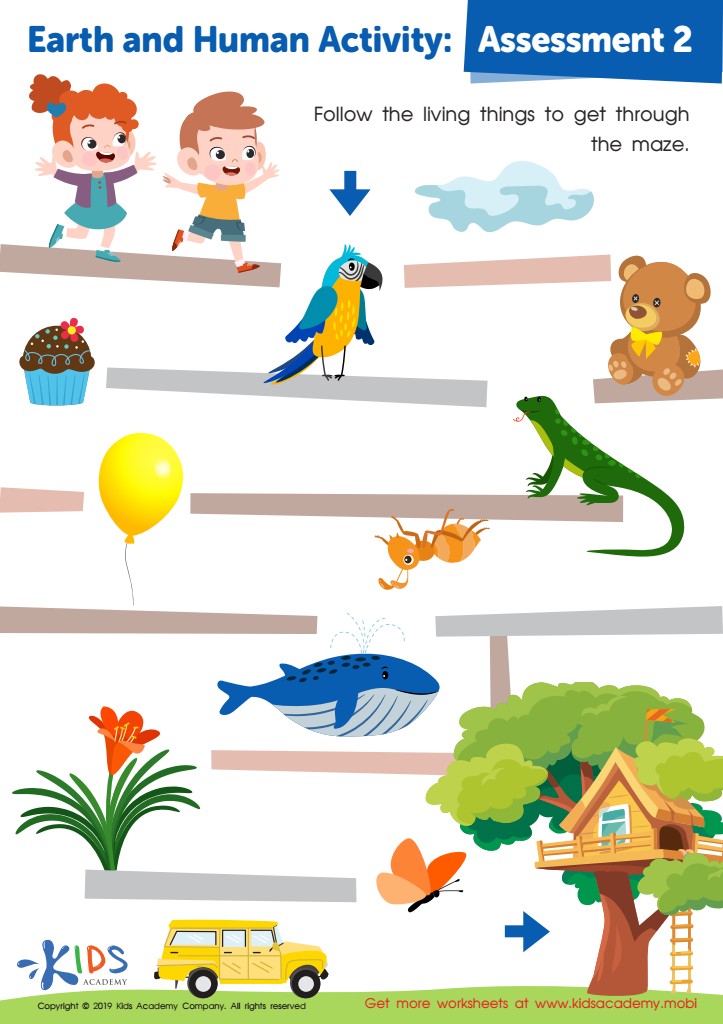
Earth and Human Activity: Assessment 2 Worksheet
Earth is alive with birds, trees, insects, and animals. Explain to your kids that the environment on Earth supports life. Ask for examples, then use the worksheet pictures to help them identify living things and complete the maze.
Earth and Human Activity: Assessment 2 Worksheet
Worksheet
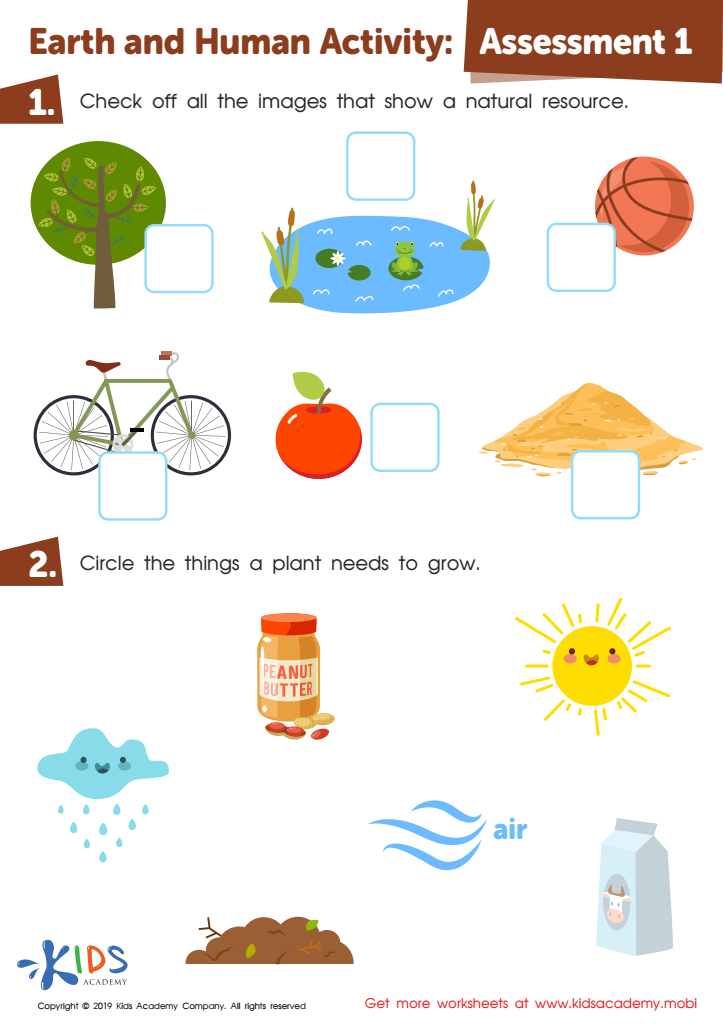
Earth and Human Activity: Assessment 1 Worksheet
Natural resources are gifts from Mother Nature that exist without man-made intervention. We use them to make essential items we use daily. Ask your kids for examples and have them check off images of natural resources on this worksheet.
Earth and Human Activity: Assessment 1 Worksheet
Worksheet
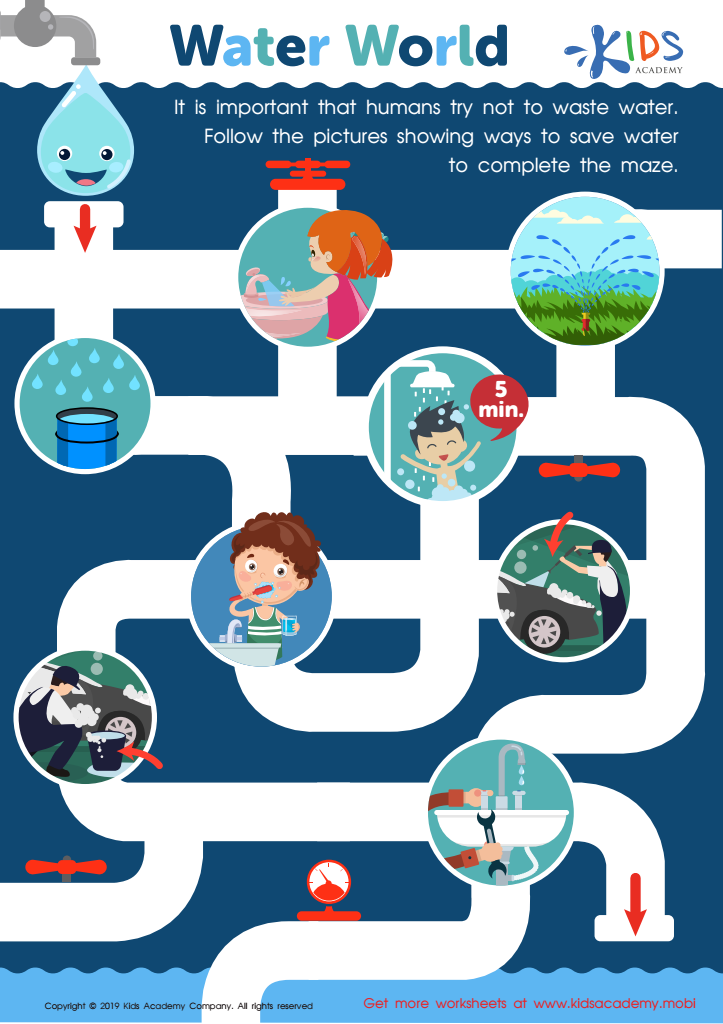
Water World Worksheet
Water is a vital necessity for living. Our bodies depend on it to stay healthy and survive. When we don't drink enough water, we become thirsty and run the risk of getting sick. Luckily, our planet is full of water and natural sources to stay hydrated. To prevent water waste, use this worksheet to teach your students how to conserve it and complete the maze.
Water World Worksheet
Worksheet
Join Kids Academy for Free
Who is primarily going to use this learning content?



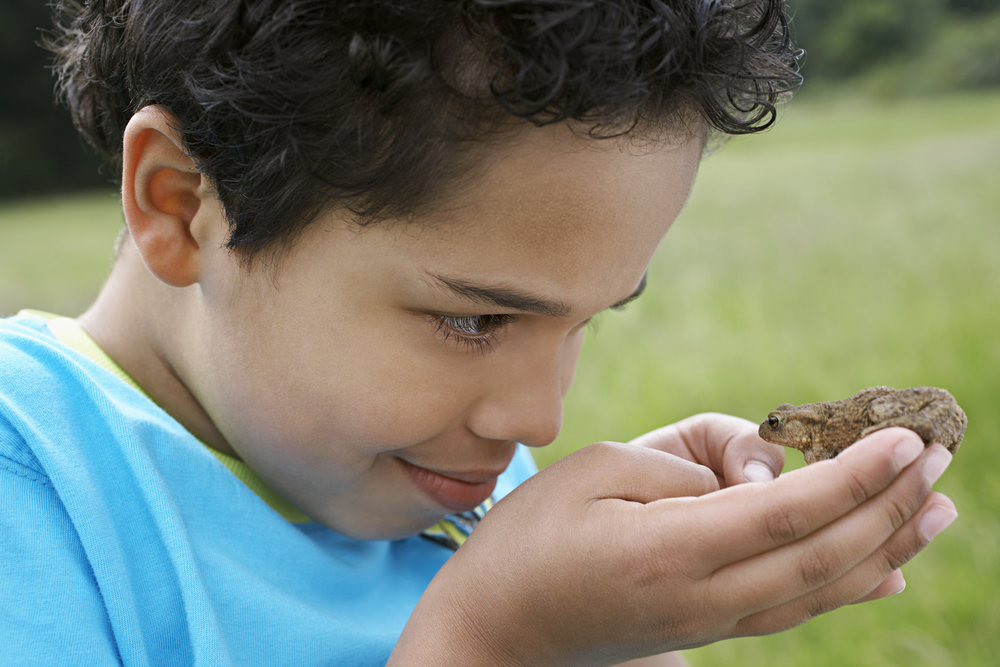




Understanding ecosystems is crucial for young children, even at the tender age of four, because it lays the foundation for environmental literacy and fosters a sense of responsibility towards nature. Early educational experiences greatly shape children's perspectives, and introducing them to ecosystems teaches interdependence, respect for living things, and the importance of biodiversity.
When parents and teachers invest time in explaining ecosystems, they help children grasp that every organism plays a vital role in its environment – from birds and bees to plants and even decomposers like fungi. This fosters empathy and curiosity, encouraging young minds to observe and appreciate the beauty and complexity of the natural world from an early age.
Furthermore, understanding ecosystems can enhance cognitive skills such as critical thinking, problem-solving, and pattern recognition. When children understand how various elements of nature interact, they begin to appreciate the delicate balance required to sustain life. This appreciation is essential not just for personal development but for cultivating future environmentally-conscious adults.
Incorporating ecosystems science into early childhood education can also make learning more engaging and hands-on. Activities like exploring a garden, observing insects, or taking nature walks can turn abstract concepts into tangible experiences, making the world of science accessible and enjoyable for young learners.







