Enhancing logical thinking Worksheets for Ages 5-6
6 filtered results
-
From - To
Unlock your child's potential with our "Enhancing Logical Thinking Worksheets for Ages 5-6"! Designed for early learners, these engaging worksheets help develop critical thinking and problem-solving skills through fun activities. Each worksheet prompts children to identify patterns, make connections, and solve puzzles, fostering a strong foundation for future learning. Tailored to be age-appropriate, our vibrant and playful designs captivate young minds while ensuring they grasp important logical concepts. Perfect for use at home or in the classroom, these worksheets offer a wonderful blend of education and entertainment for your little ones. Start enhancing your child's logical thinking today!
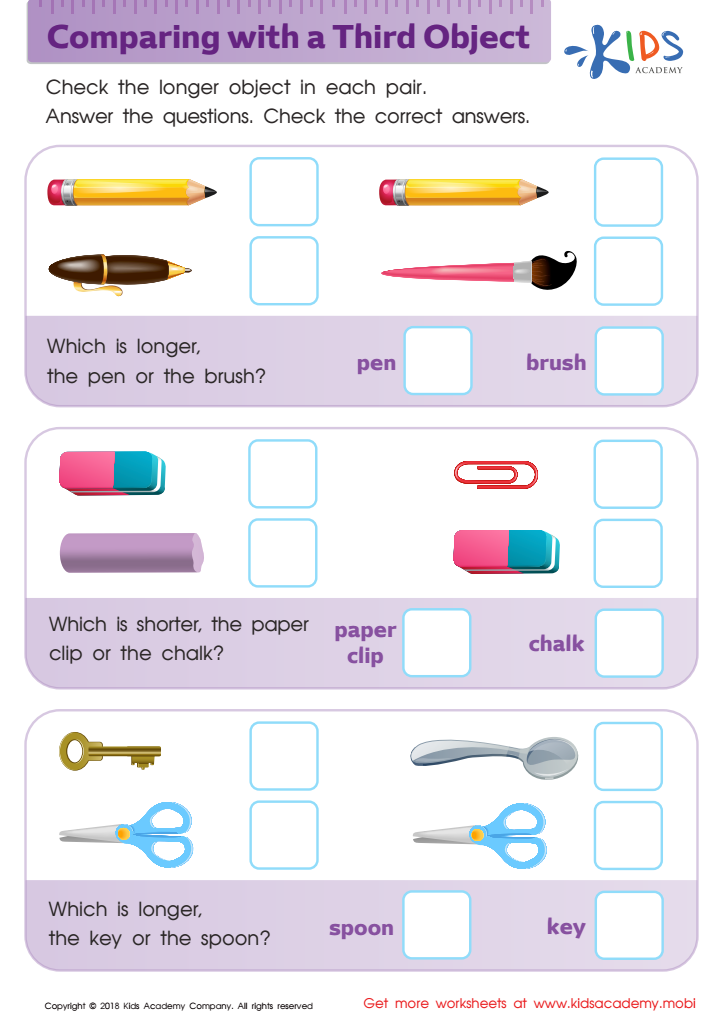
Comparing with a Third Object Worksheet
 Assign to My Students
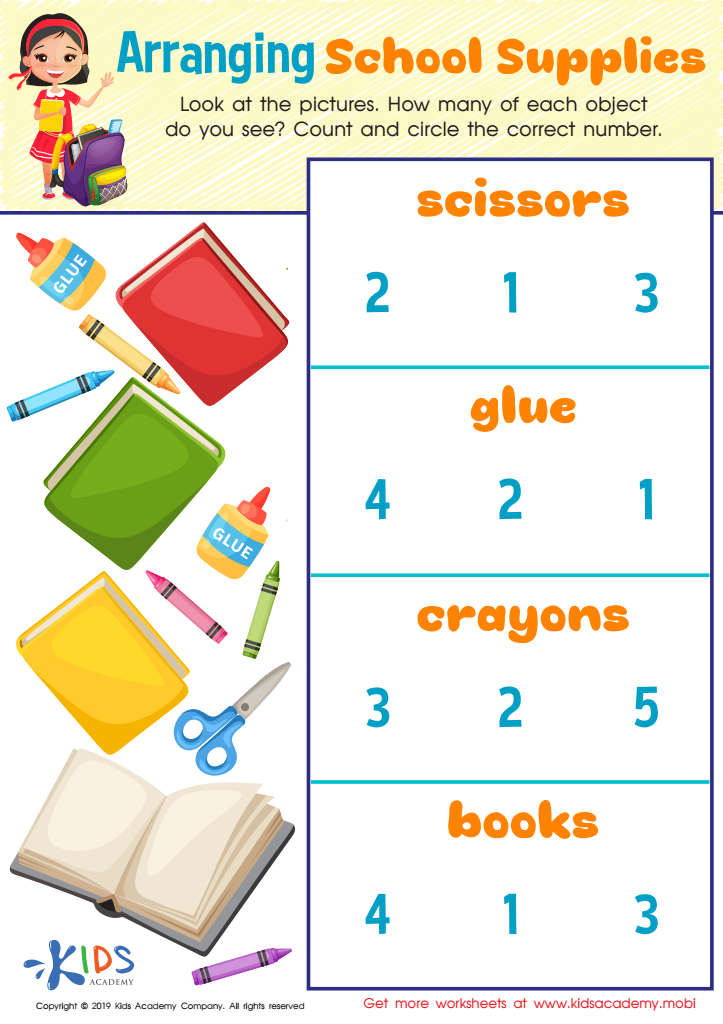
Arranging School Supplies Worksheet
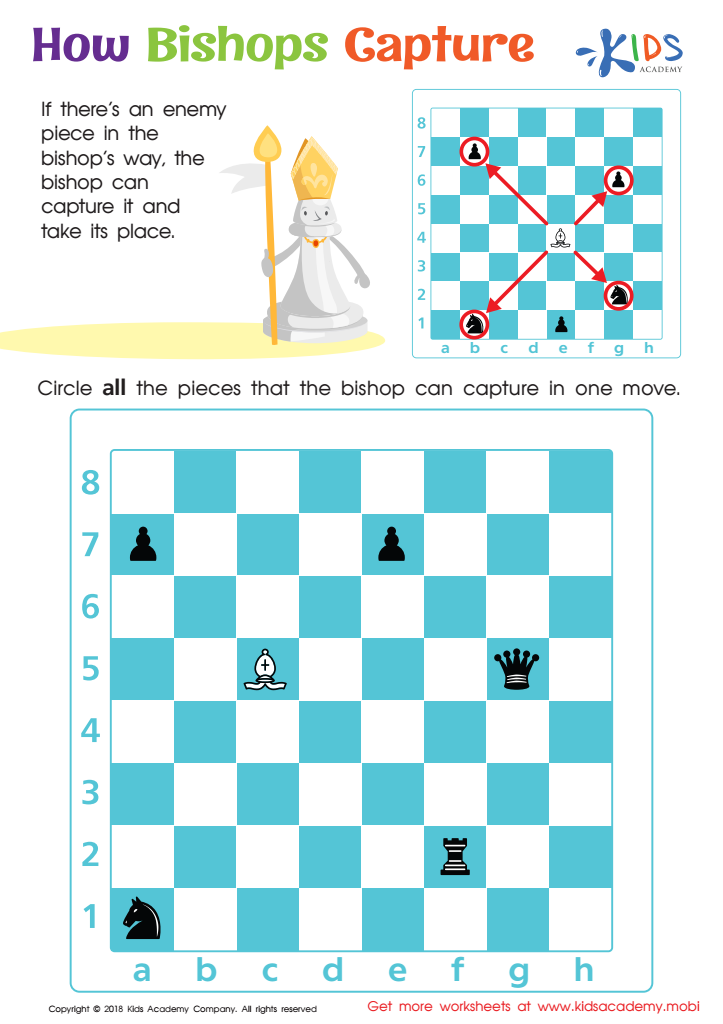
How Bishops Capture Worksheet
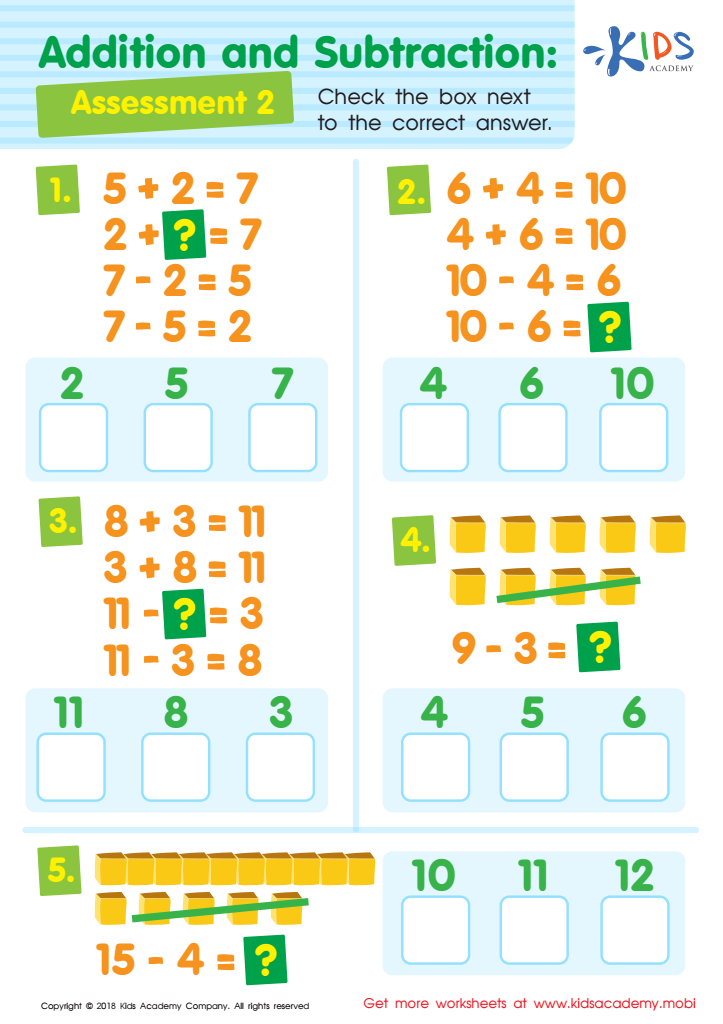
Addition and Subtraction Assessment 2 Worksheet
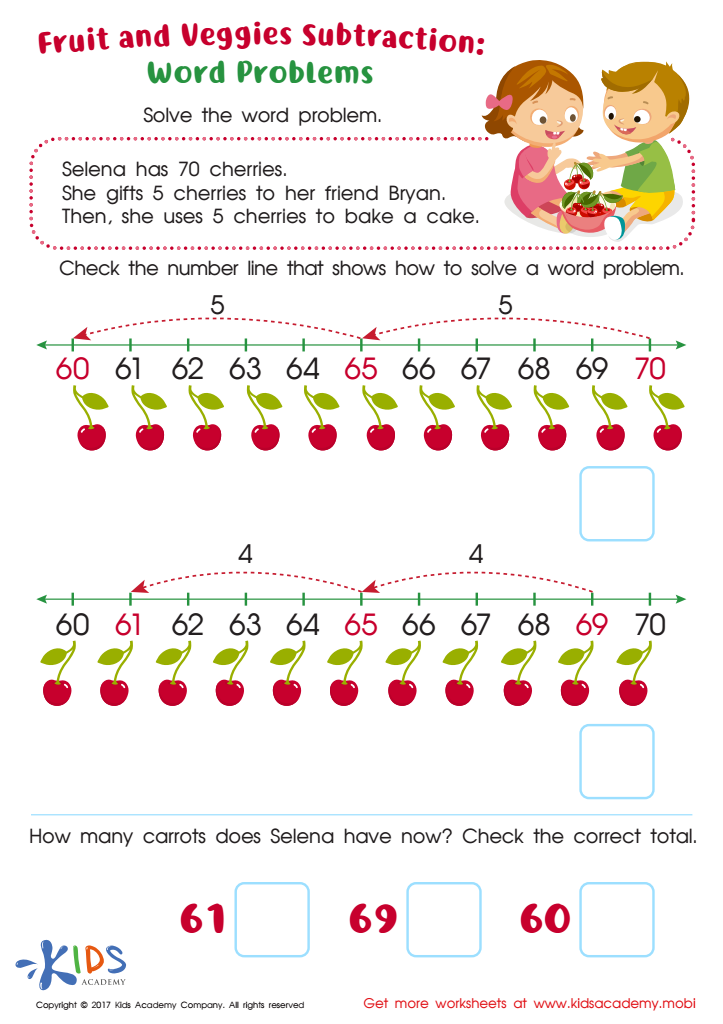
Subtraction Word Problems Free Printable
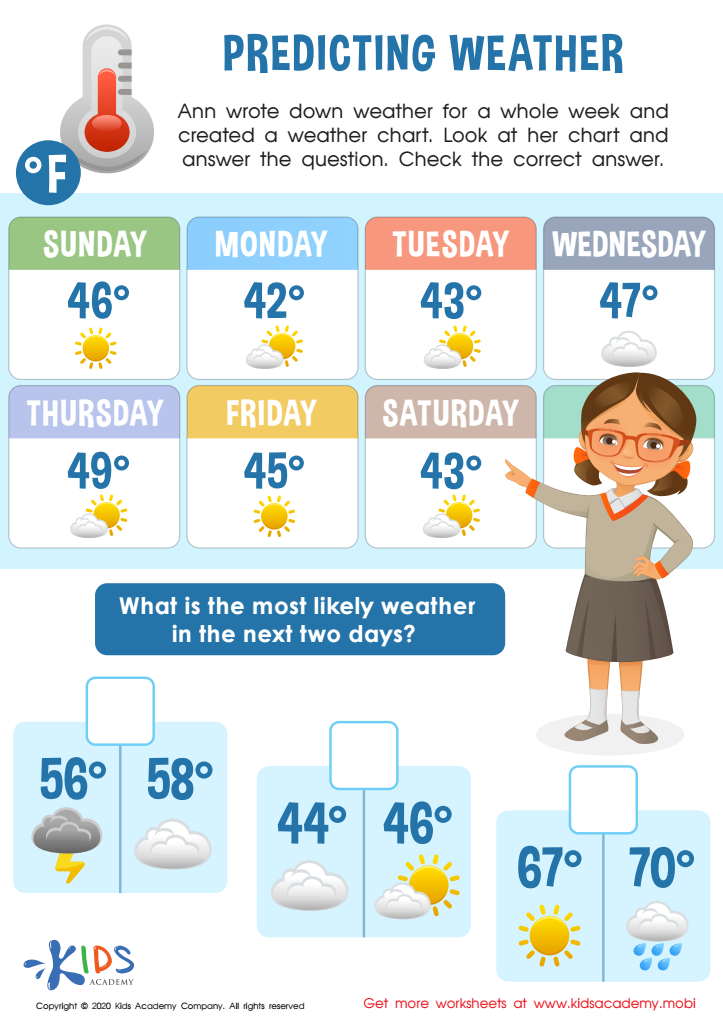
Predicting Weather Worksheet




.jpg)


Enhancing logical thinking skills in children aged 5-6 is crucial as it lays the foundation for critical cognitive development. At this tender age, children start to grasp basic concepts of cause and effect, categorization, and problem-solving. Supporting their logical thinking enhances their ability to understand complex ideas as they grow, contributing to better academic performance across subjects, especially mathematics and science.
Logical reasoning promotes effective decision-making skills, enabling young learners to analyze situations and come to sound conclusions. This skill can improve their everyday interactions, fostering teamwork, communication, and social understanding. Engaging in activities that stimulate logical thinking, such as puzzles, games, and open-ended questions, encourages creativity while helping children learn how to approach challenges methodically.
Furthermore, fostering logical thinking nurtures a sense of confidence and independence. Children learn that they can solve problems on their own, with the teacher or parent acting as a guide who facilitates the thinking process rather than providing direct answers. As children confront real-world problems, these skills help them adapt and thrive in both academic and everyday environments. Ultimately, investing in logical thinking at this age fosters lifelong learning skills, empowering future generations to navigate the complexities of our world.








