Cognitive Development 2D Shapes Worksheets for Ages 5-6
10 filtered results
-
From - To
Unlock your child's potential with our Cognitive Development 2D Shapes Worksheets designed for ages 5-6. These engaging printable activities are crafted to enhance early math skills by helping young learners identify, differentiate, and understand basic 2D shapes such as circles, squares, triangles, and rectangles. Our worksheets combine fun with fundamental geometry, fostering spatial awareness and cognitive growth. Proven to support classroom learning and align with education standards, they are ideal for developing critical thinking and problem-solving skills in a playful, illustrative manner. Download today and make learning shapes an enjoyable adventure for your little one!
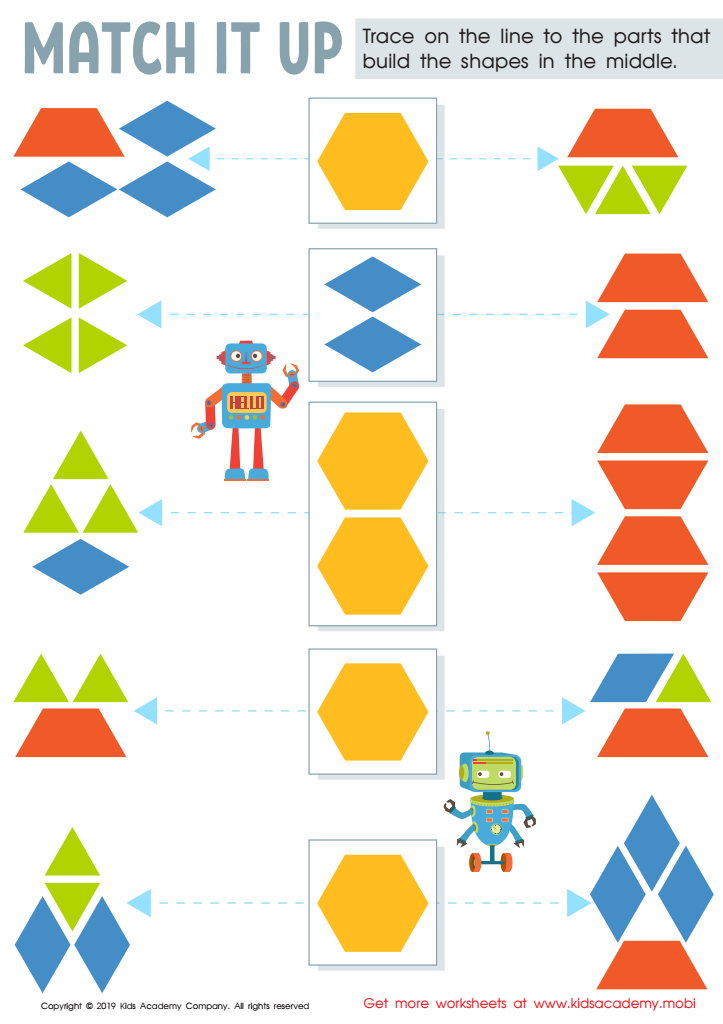
Match It up Worksheet
 Assign to My Students


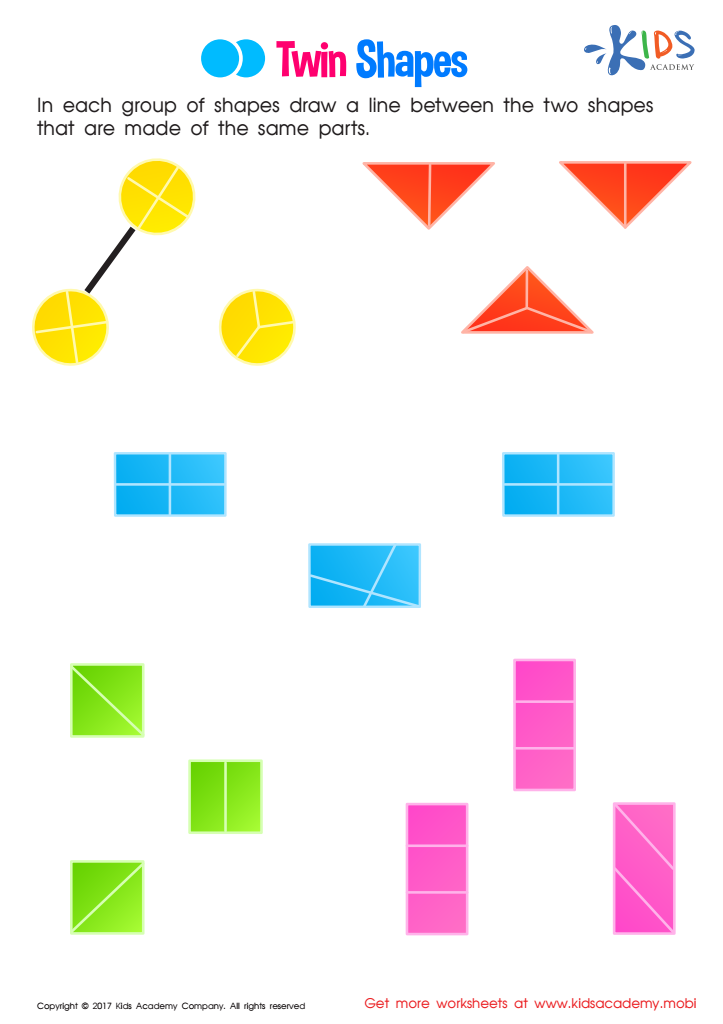
Twin Shapes Worksheet
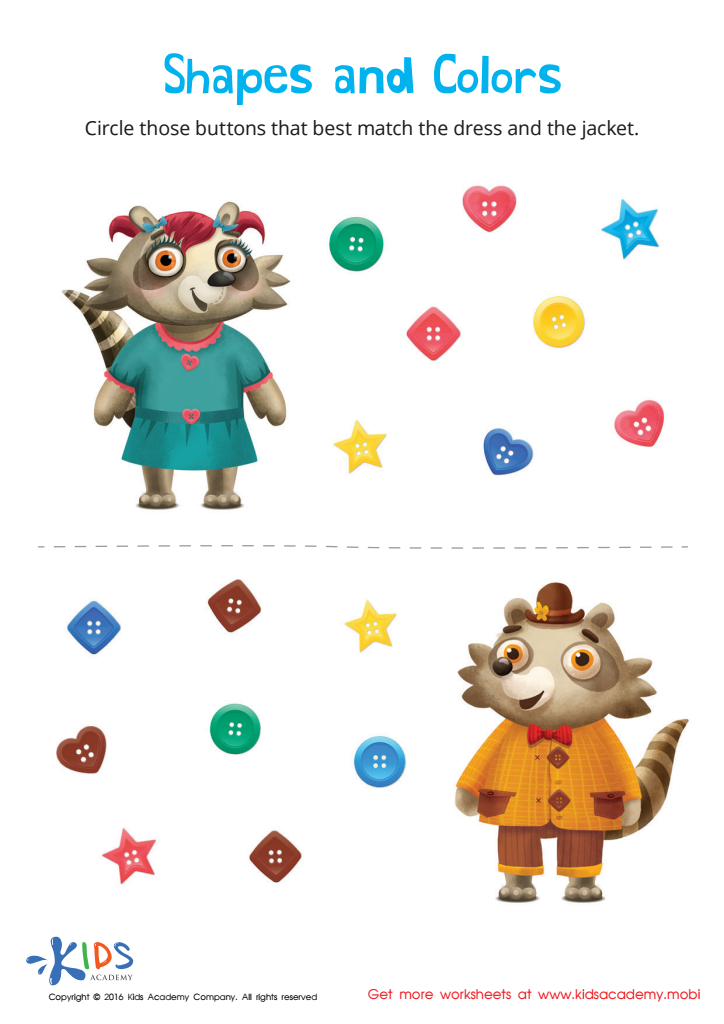
Matching: Shapes and Colors Worksheet
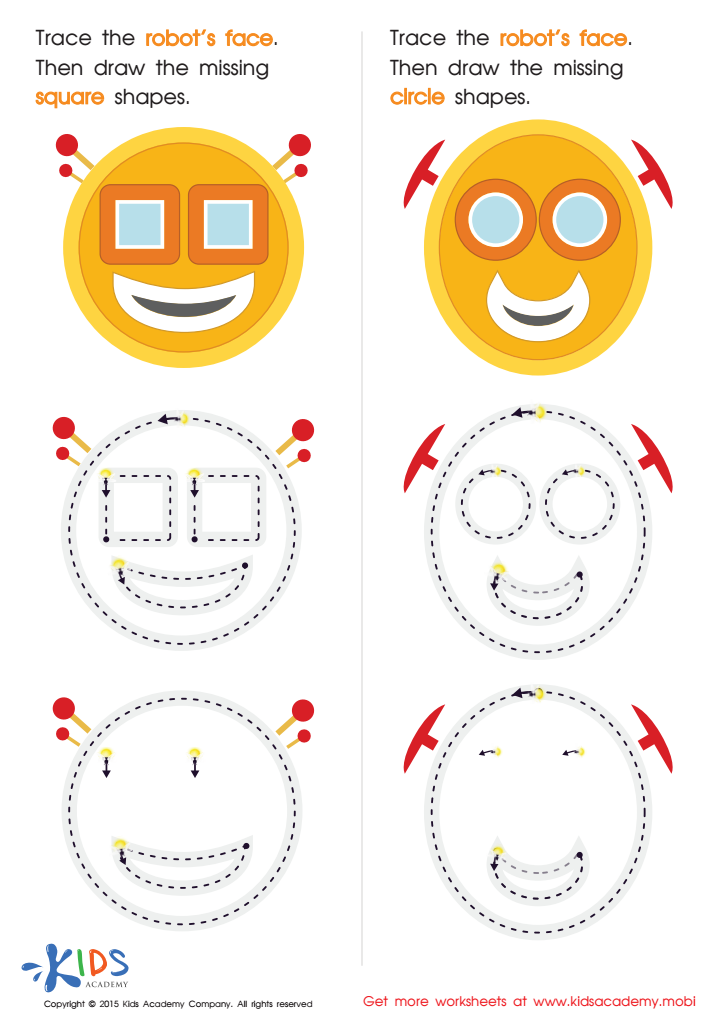
Practicing to Draw Circles And Squares Printable
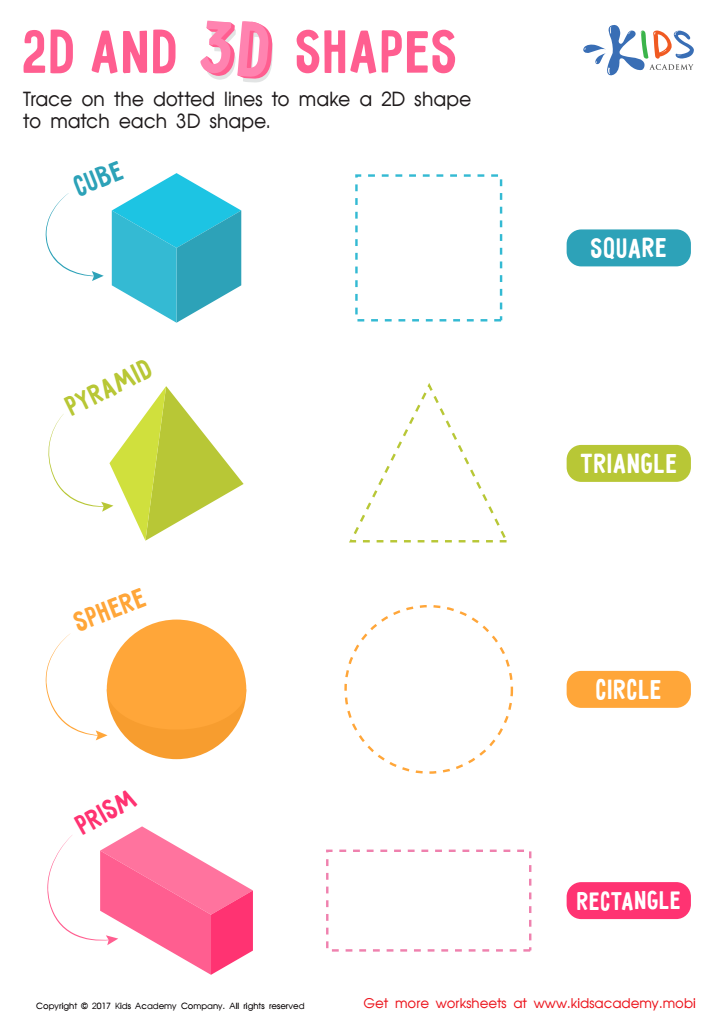
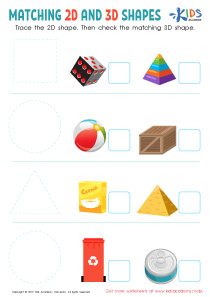
2D and 3D Shapes Worksheet
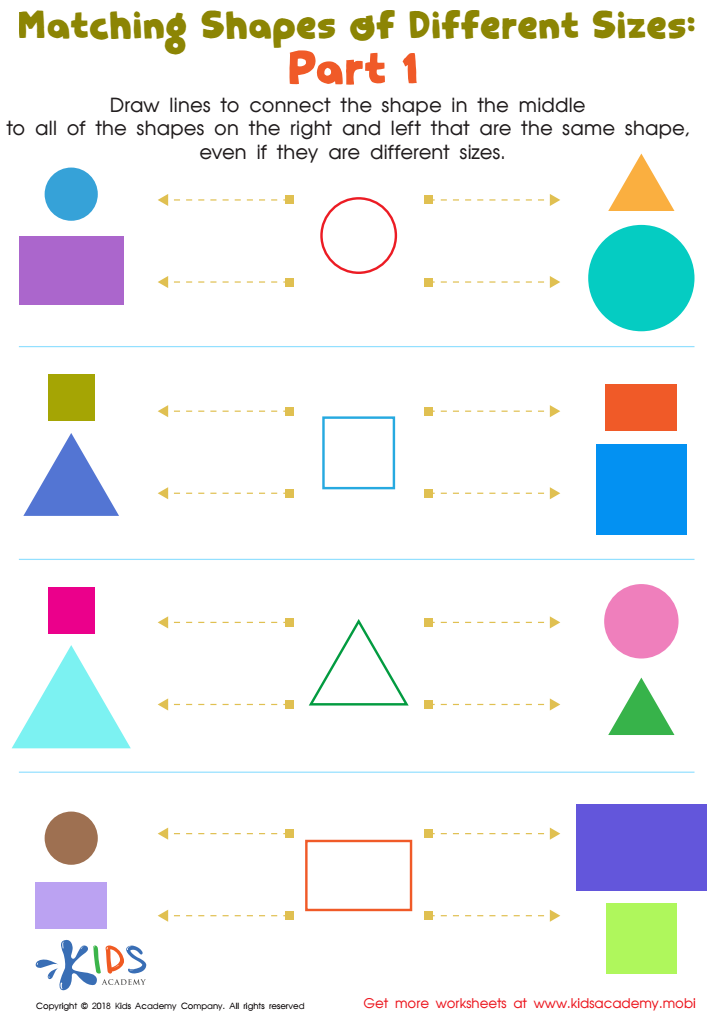
Geometry: part 1 Worksheet
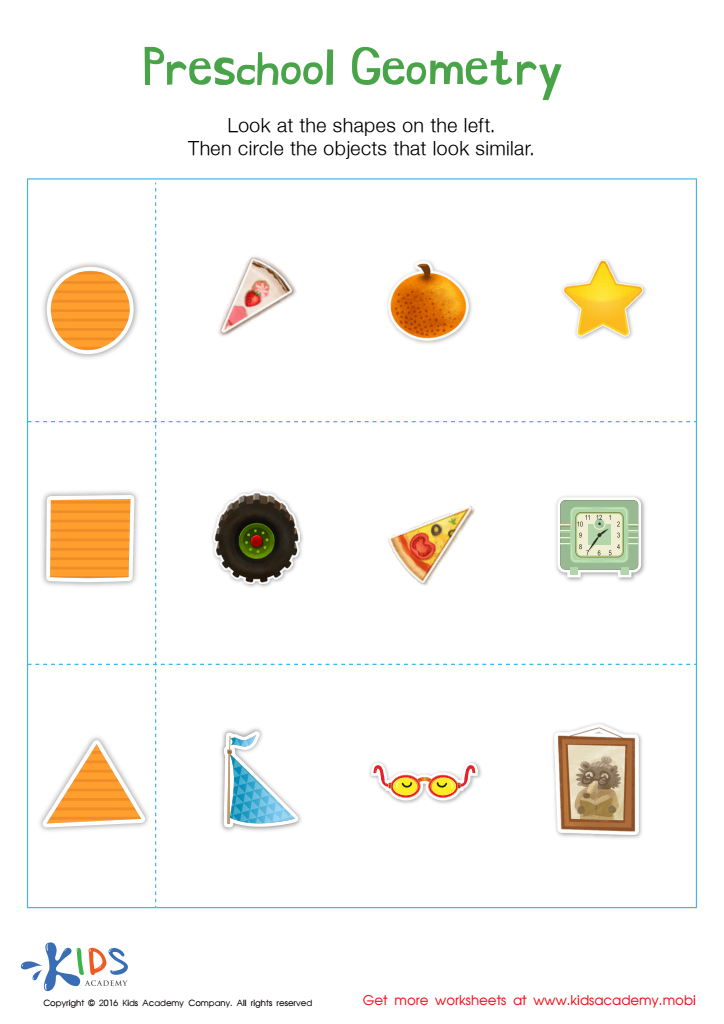
Preschool Geometry Match Up Worksheet
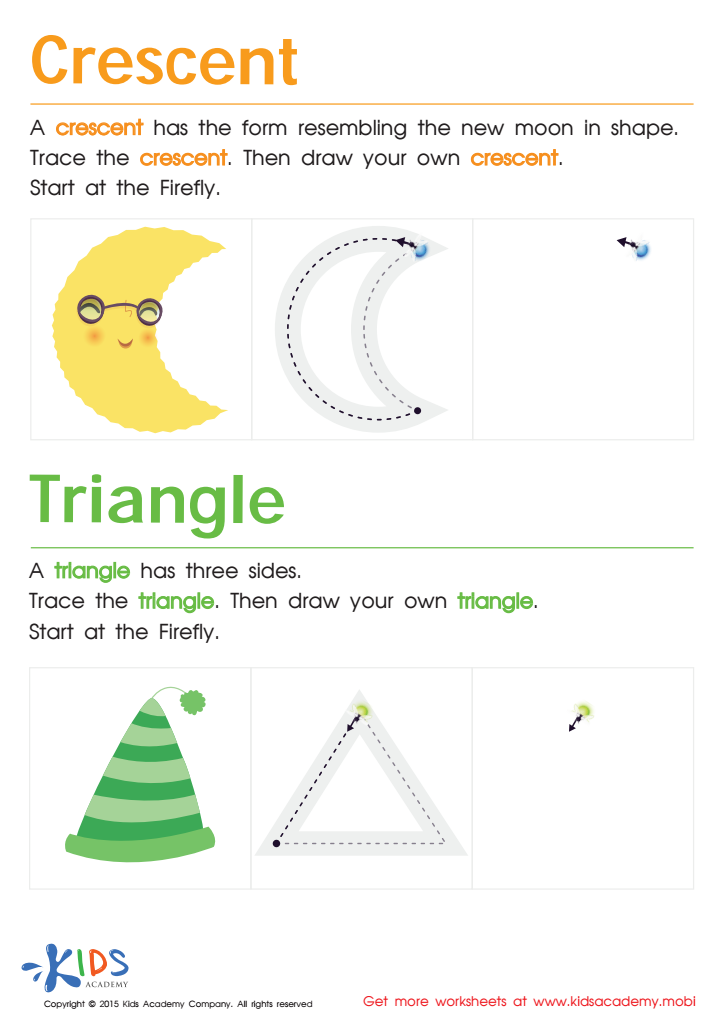
Learning to Draw Crescents And Triangles Worksheet
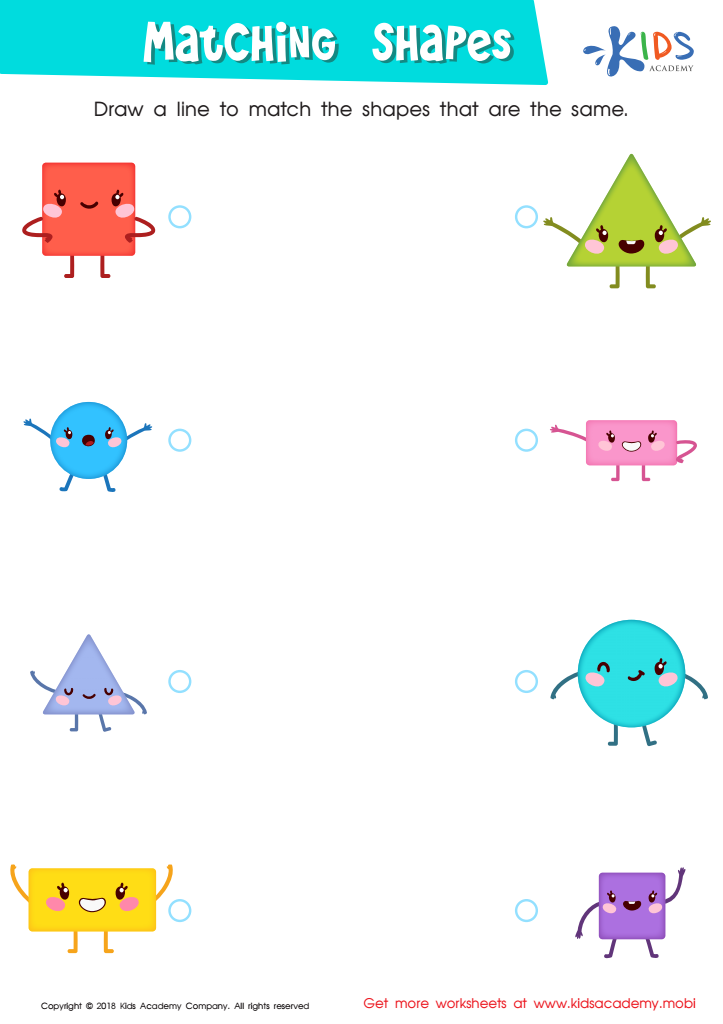
Matching Shapes Worksheet
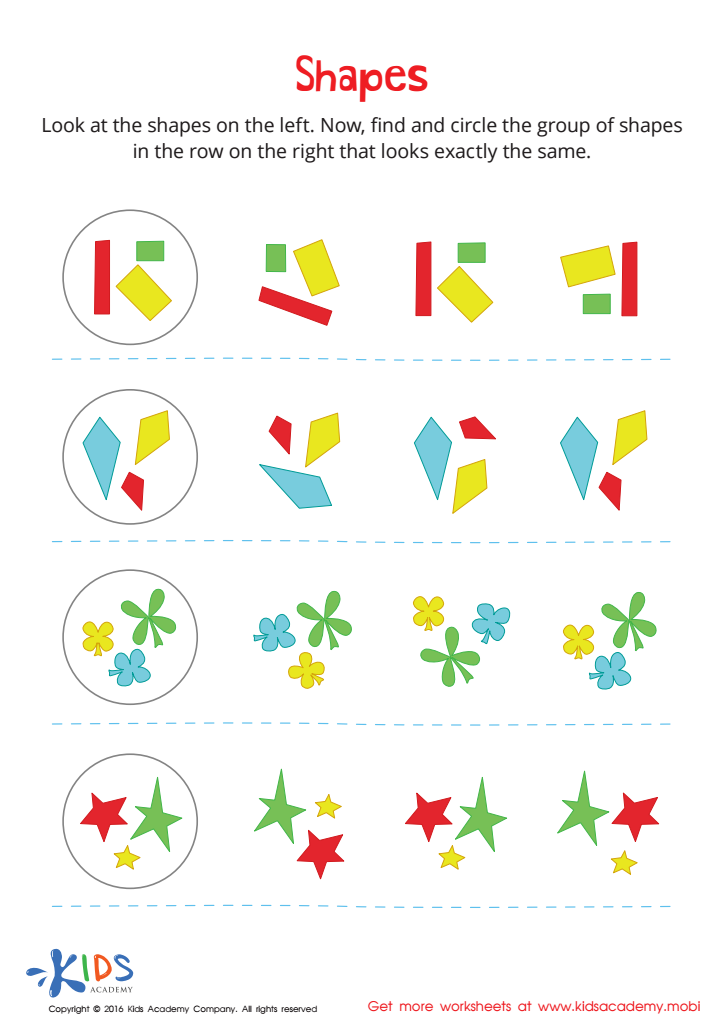
Shapes Worksheet








Cognitive development in early childhood is crucial for laying the foundation for lifelong learning, and recognizing 2D shapes plays a vital role in this process for children ages 5-6. At this stage, children's brains are rapidly growing and becoming more adept at processing information. Engaging with 2D shapes helps enhance their spatial awareness, a key component of cognitive development. Understanding shapes is foundational to geometry, an essential branch of mathematics, and it prepares children for more complex math skills in the future.
Moreover, familiarity with shapes fosters visual discrimination skills, helping children to observe, categorize, and make sense of the world around them. This skill is foundational not only in math but also in reading and writing, as it supports letter and number recognition.
Additionally, learning about shapes can boost a child’s problem-solving abilities. When children sort, classify, and identify shapes, they practice critical thinking and reasoning skills. These activities also enhance fine motor skills through drawing, cutting, and manipulating shapes, facilitating hand-eye coordination.
Parents and teachers should prioritize shape recognition activities because they are engaging, interactive, and can be seamlessly integrated into play. This approach not just supports cognitive development, but also keeps learning fun, which is essential for maintaining a child’s enthusiasm for education.