Problem-Solving Skills Addition & Subtraction Worksheets for Ages 5-6 - Page 4
113 filtered results
-
From - To
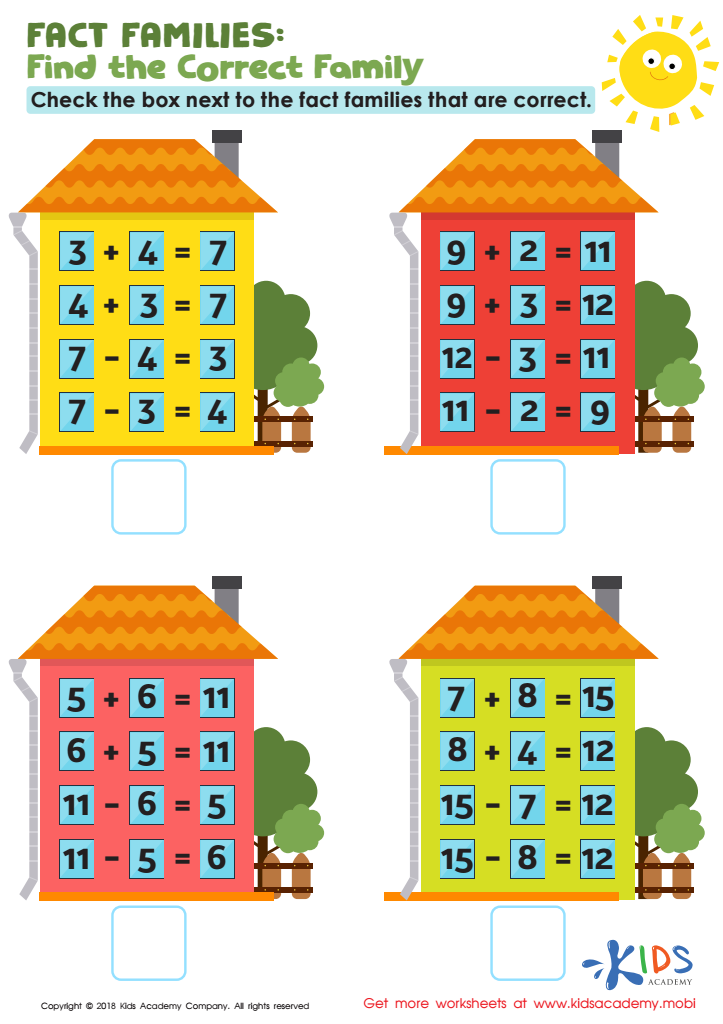
Fact Families: Find Correct Family Worksheet
 Assign to My Students
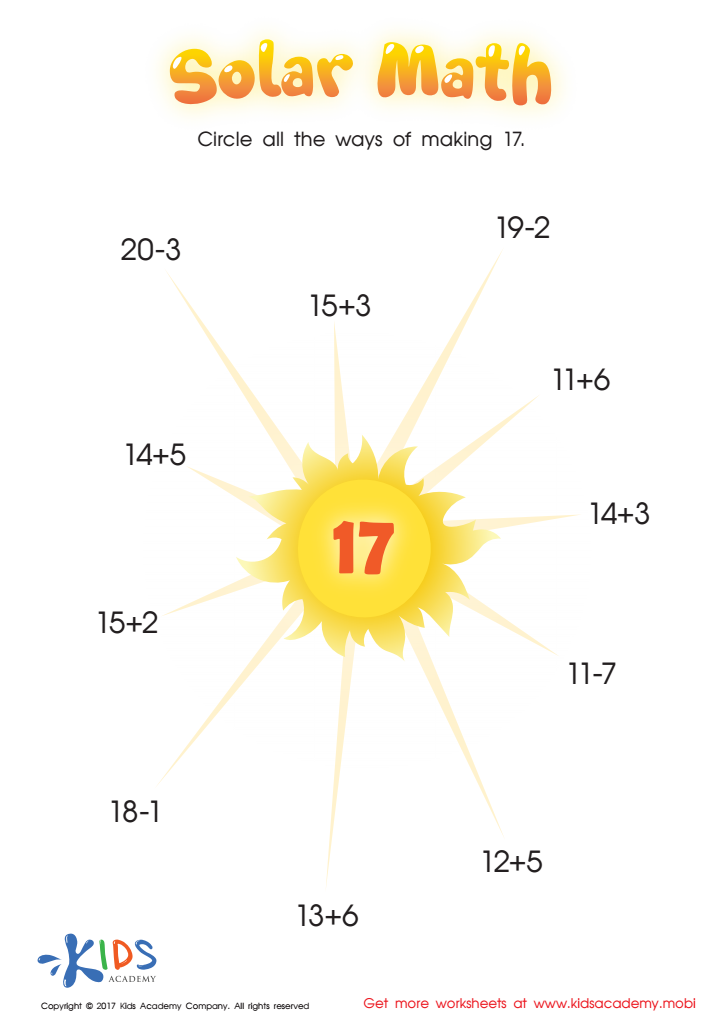
Solar Math Substraction Worksheet
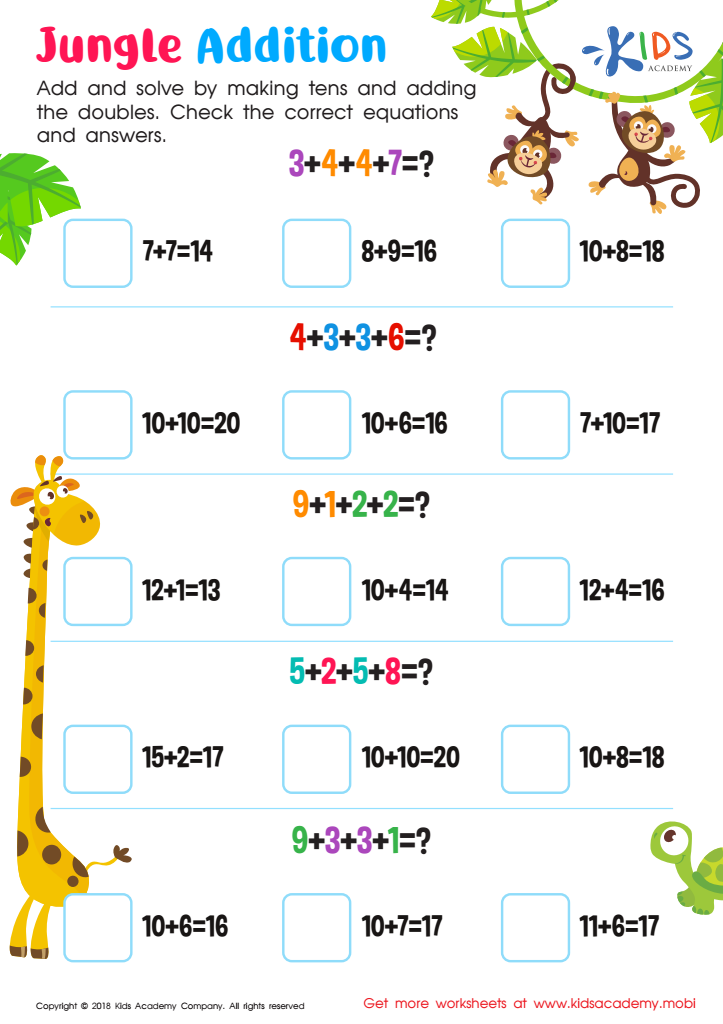
Jungle Addition Worksheet
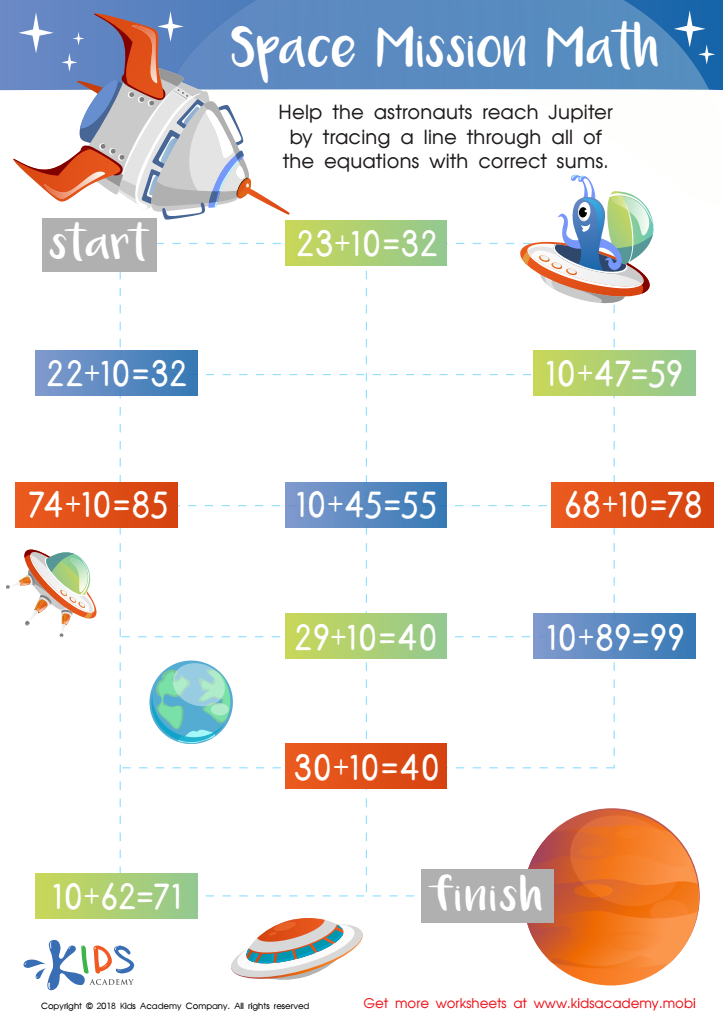
Space Mission Math Worksheet
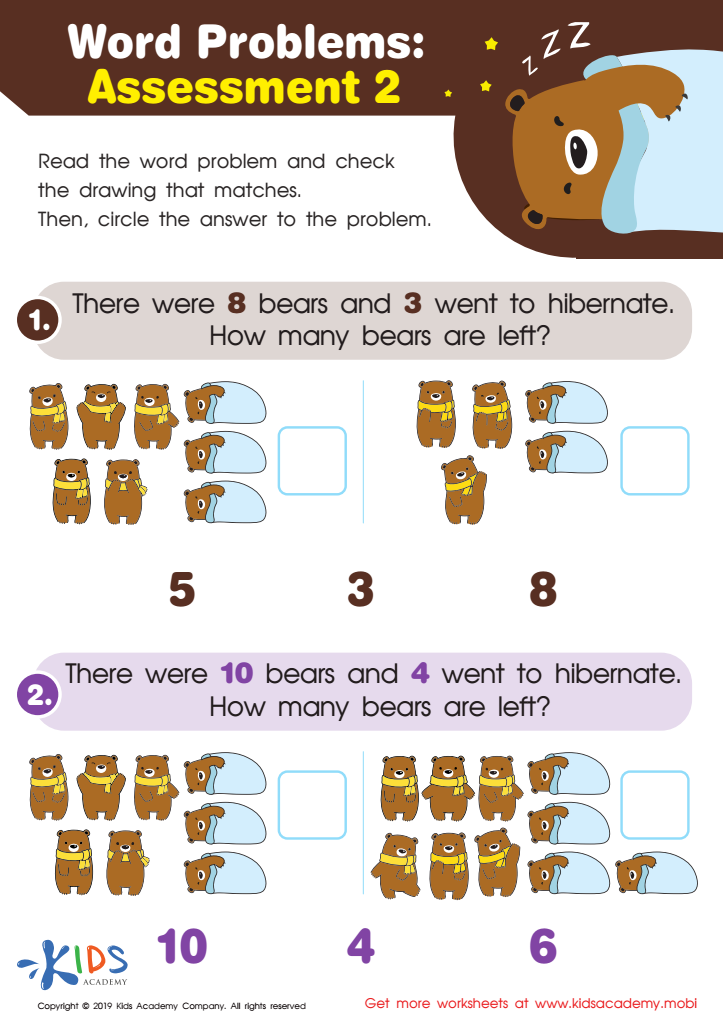
Word Problems: Assessment 2 Worksheet
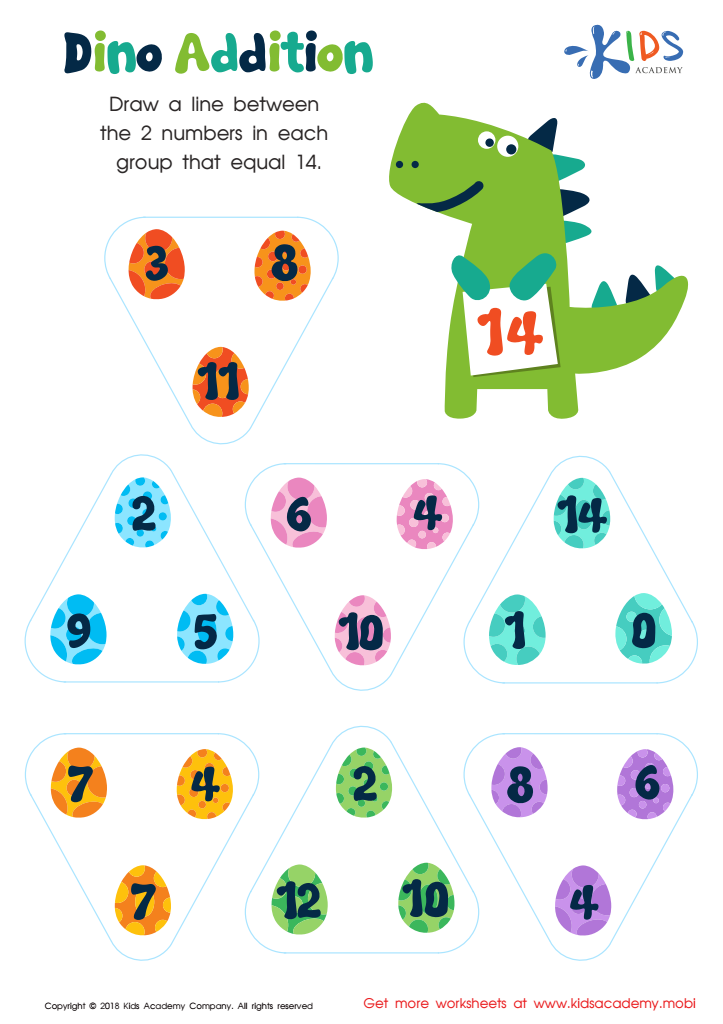
Dino Addition Worksheet
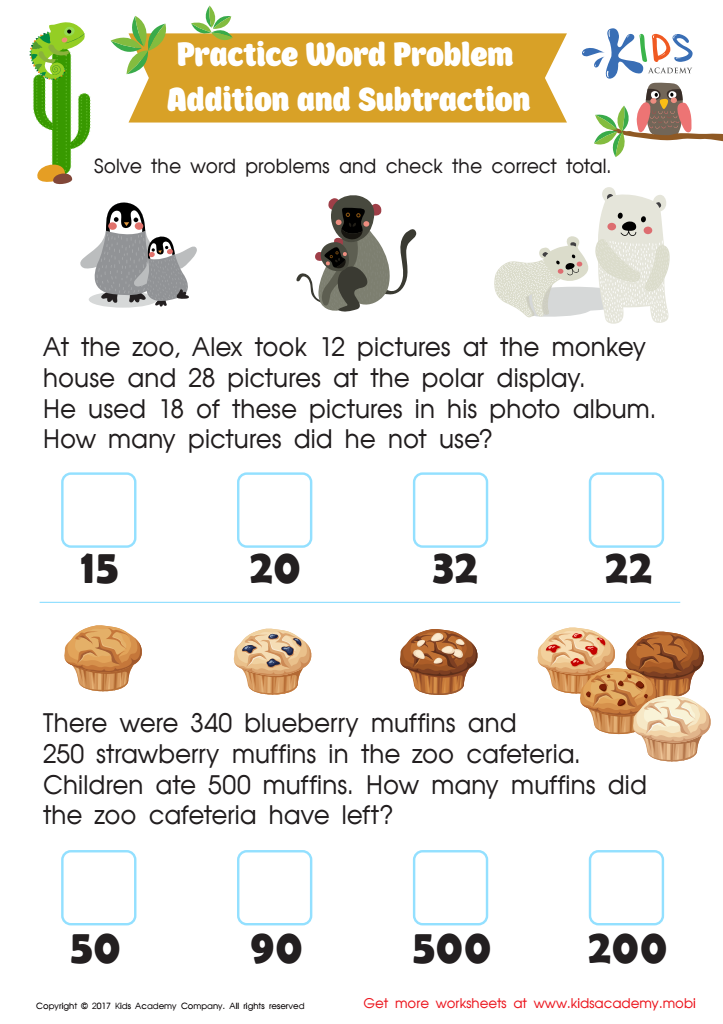
Addition and Subtraction: Word Problems Worksheet
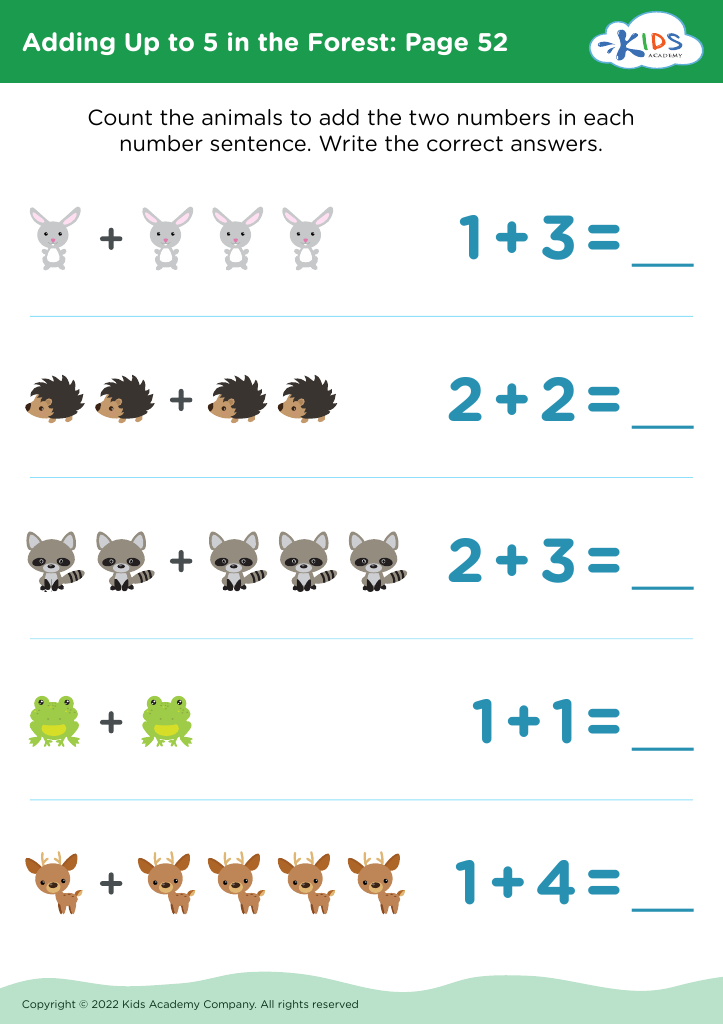
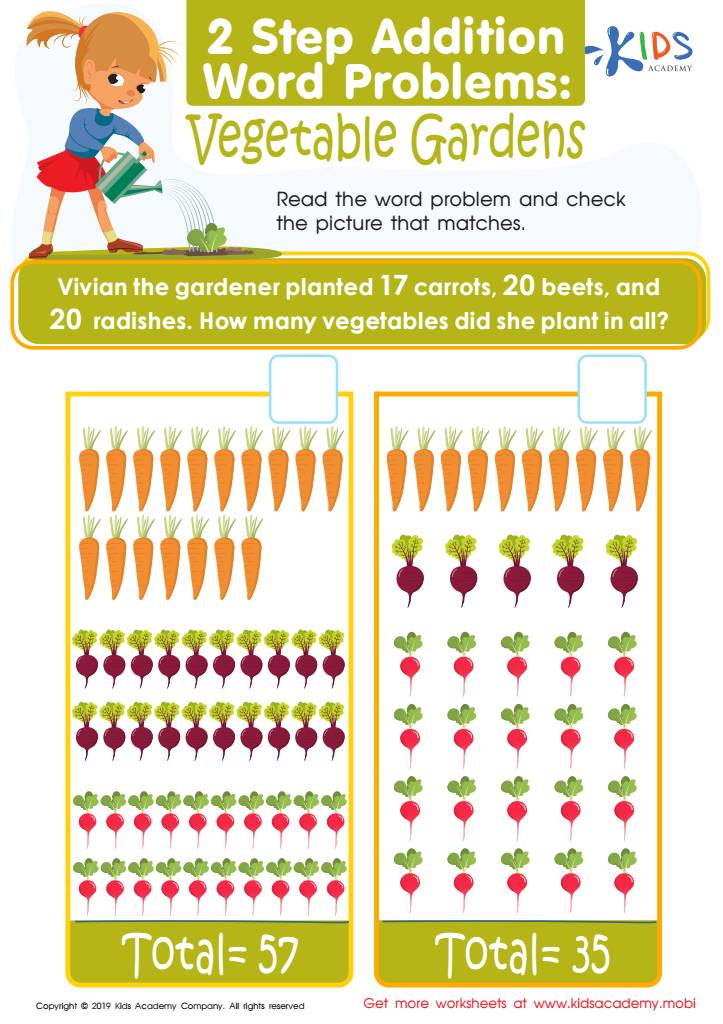
Vegetable Gardens Worksheet
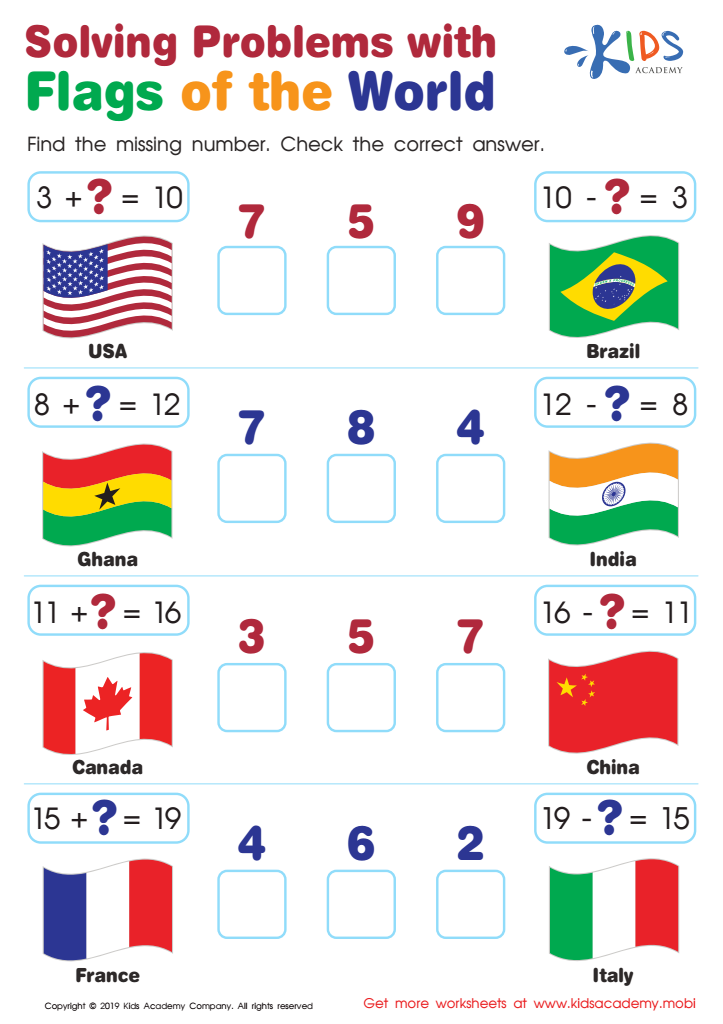
Solving Problems with Flags of the World Worksheet
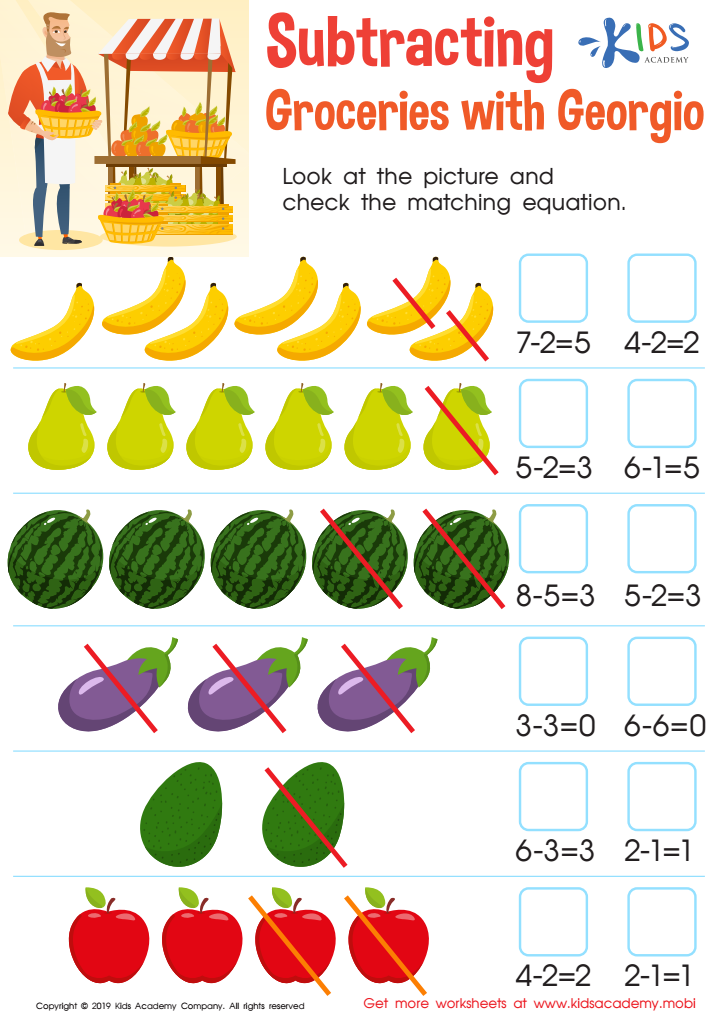
Subtracting: Groceries with Georgio Worksheet
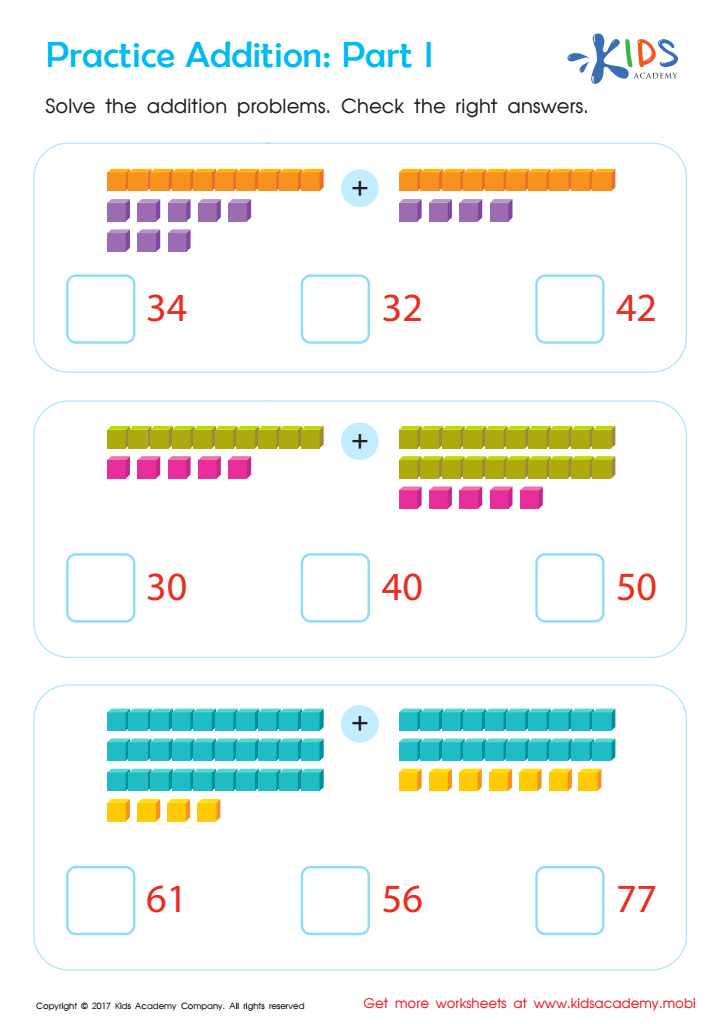
Practice Addition: Part 1 Worksheet
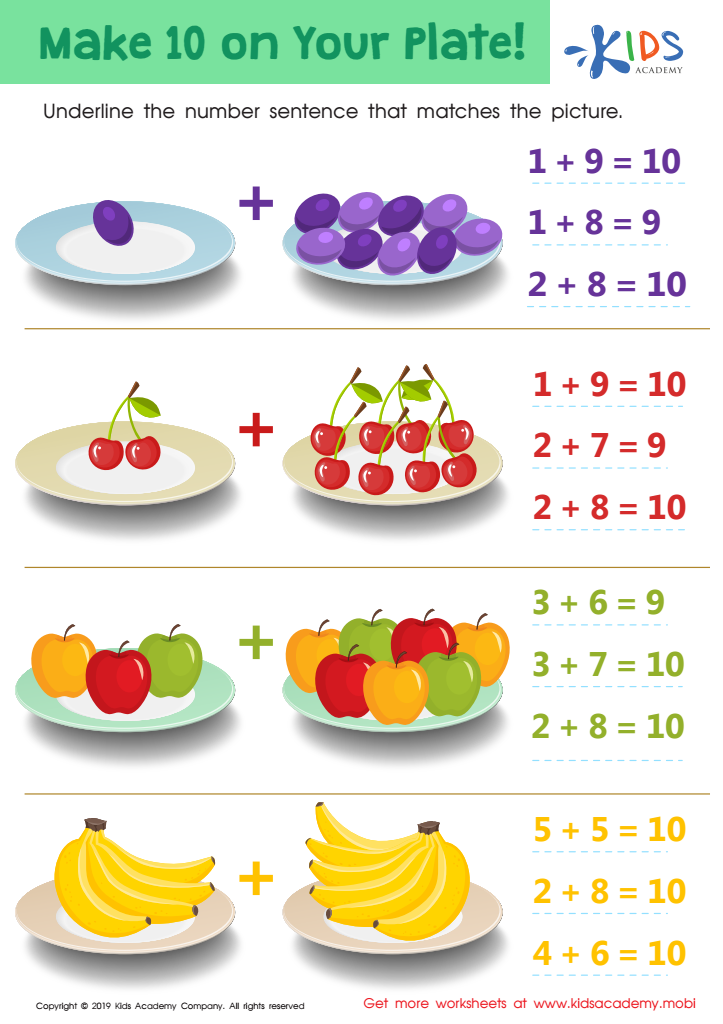
Make 10 on Your Plate! Worksheet
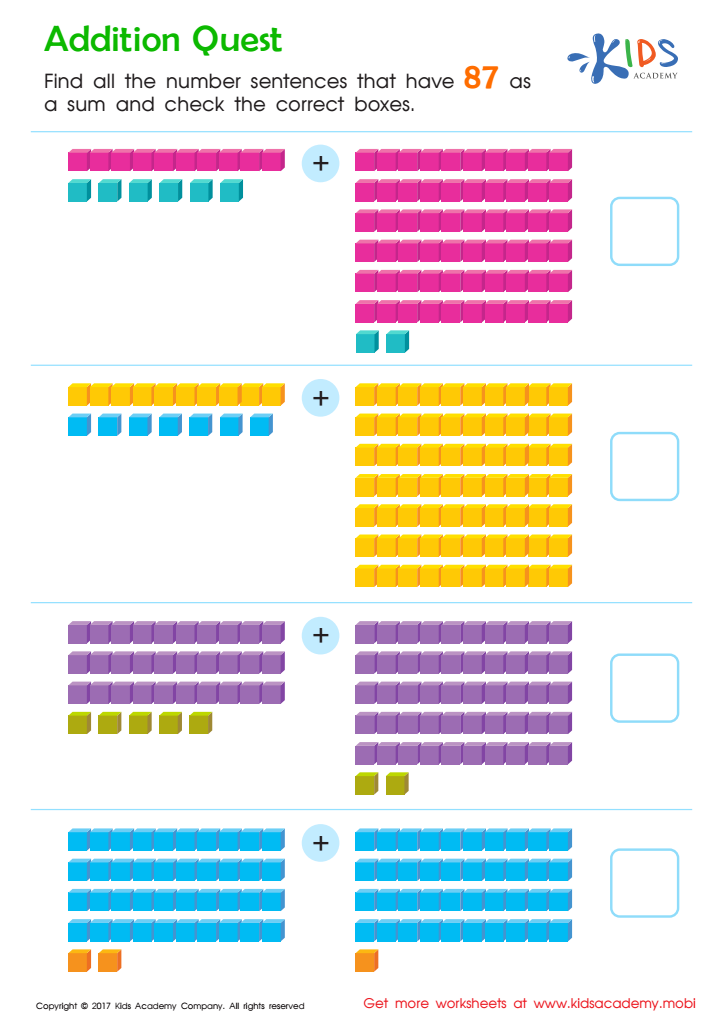
Addition Quest Worksheet: Part 1
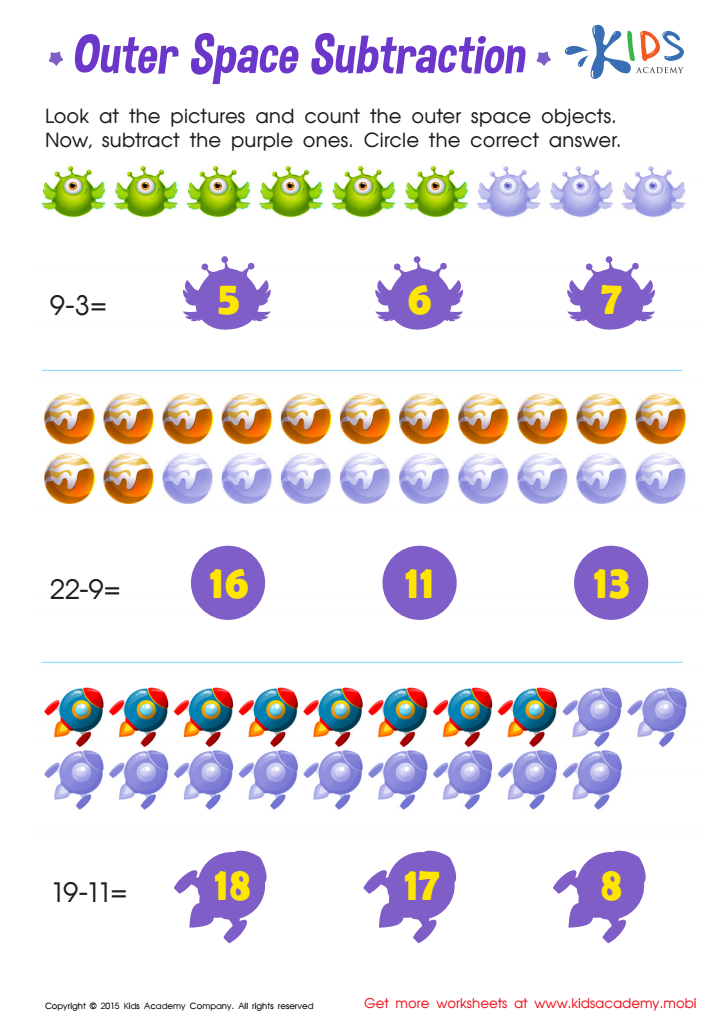
Outer Space Substraction Worksheet

Haystack Steps Worksheet








Parents and teachers should prioritize problem-solving skills in addition and subtraction for children aged 5-6 because these foundational skills are crucial for early mathematical development and overall cognitive growth. At this age, children begin to grasp the concepts of numbers and operations, making it an ideal time to foster these abilities.
Problem-solving encourages children to think critically and develop strategies for tackling mathematical challenges, helping to build their confidence. It allows them to see arithmetic not just as rote memorization but as a way to understand the world around them. Implementing games and hands-on activities keeps learning engaging and demonstrates that math is both fun and practical.
Moreover, developing these skills nurtures perseverance and resilience. When children encounter difficulties and learn to work through solutions, they cultivate a growth mindset, which is essential for all areas of learning. Problem-solving also enhances communication and collaboration skills when they solve problems together with peers or family members.
Overall, focusing on problem-solving with addition and subtraction lays a strong groundwork for future math-related coursework, fosters a love for learning, and equips children with essential life skills that extend beyond the classroom. Investing in these competencies supports not only academic success but also long-term intellectual engagement.








