Filters

32 filtered results

Clear all filters
Favorites
With answer key
Interactive

32 filtered results

Difficulty Level

Grade


Check out this FREE Trial Lesson on Numbers for age 5-6!

In the Sky

Favorites
With answer key
Interactive
  • 5-6
  • Cognitive Development
  • Numbers
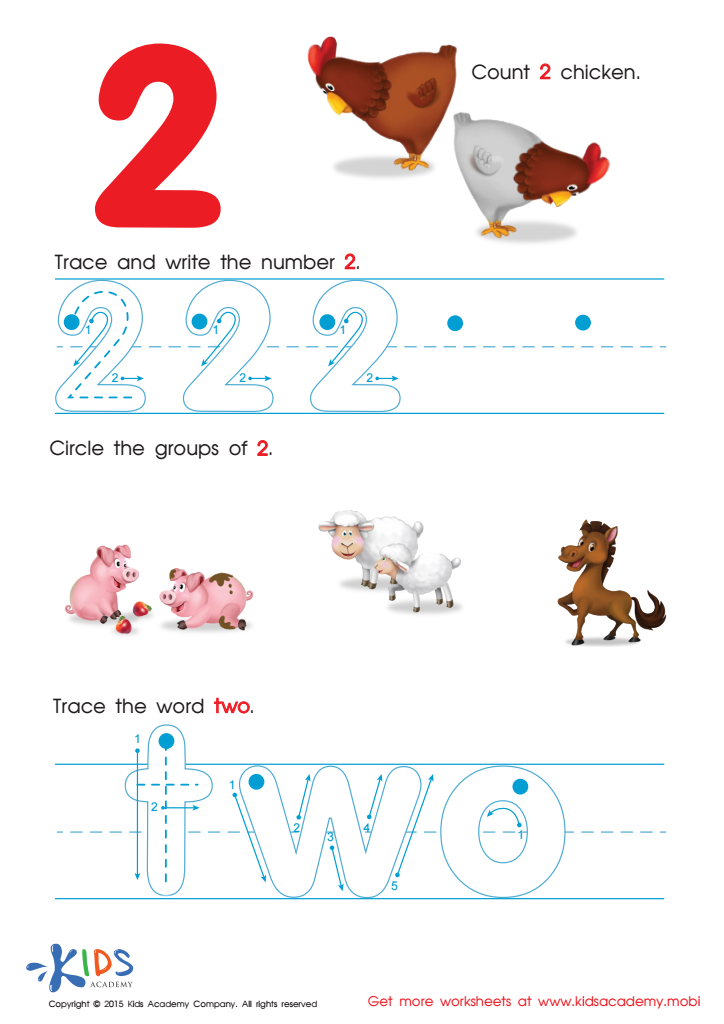
Learning Numbers Worksheets: Learn to Write the Number 2 PDF

Learn to Write the Number 2 Worksheet

Teaching numbers should be fun! Ask your kids to count the two chicks, circle the groups of two among the animals, then trace and write the number and word. Get more fun worksheets from Kids Academy.
Learn to Write the Number 2 Worksheet
Worksheet
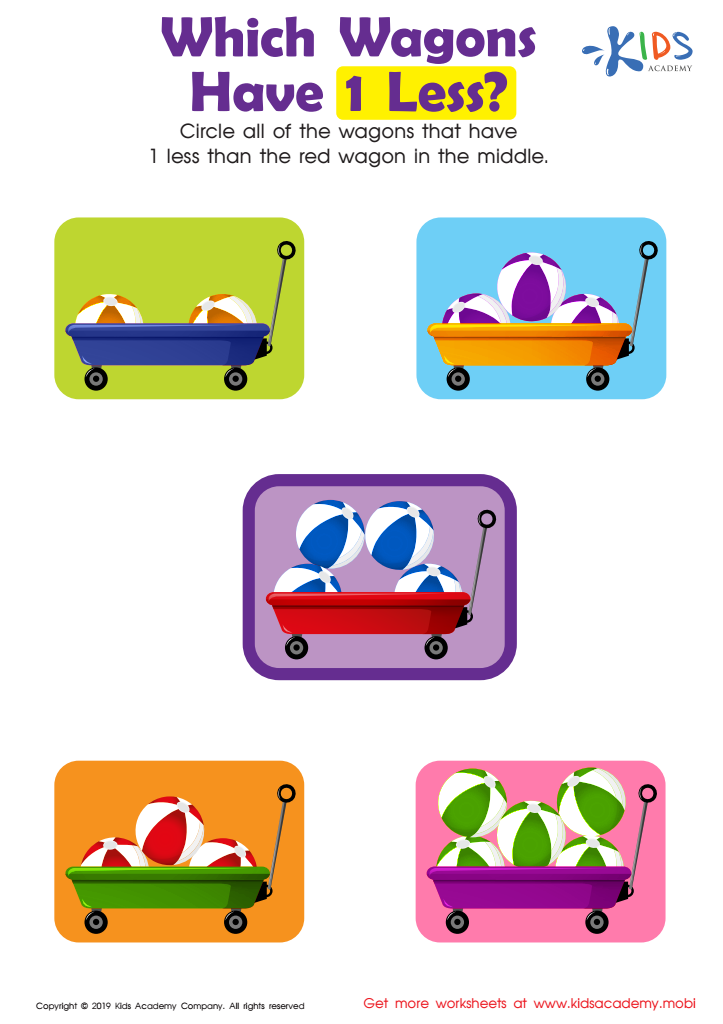
Which Wagons Have 1 Less? Worksheet

Which Wagons Have 1 Less? Worksheet

Test your kid's counting skills with a simple exercise. Ask them to count the balls in the five wagons shown and to circle the wagons with one less than the red wagon in the middle. This will give their brains a simple task that tests their knowledge of numbers.
Which Wagons Have 1 Less? Worksheet
Worksheet
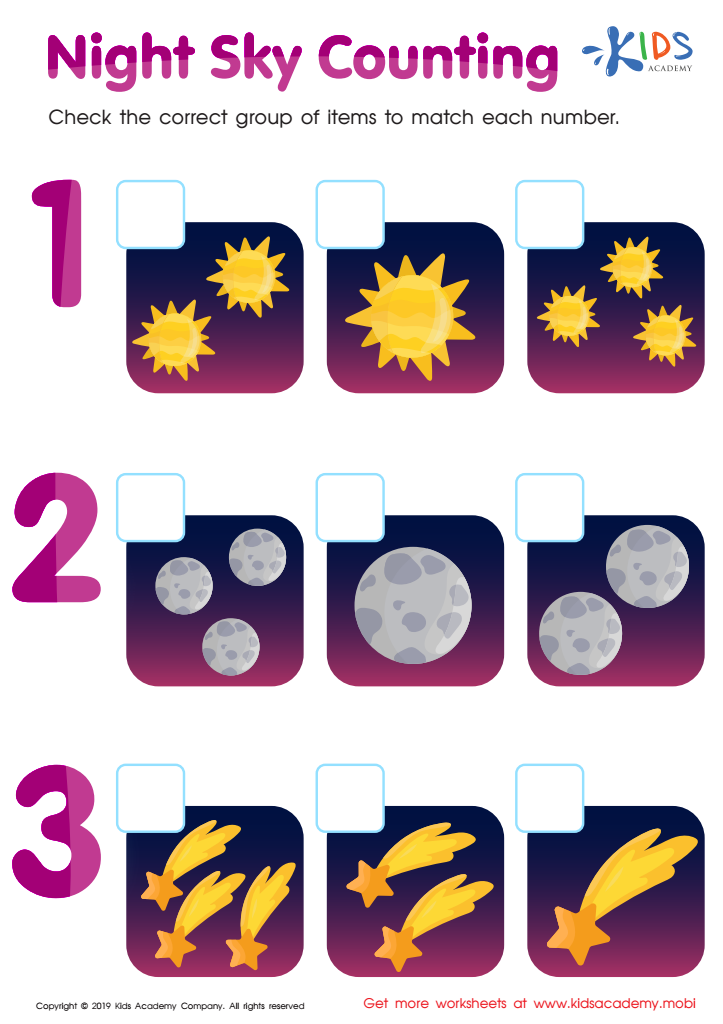
Night Sky Counting Worksheet

Night Sky Counting Worksheet

Twinkle, little star! Counting is fun with this Night Sky worksheet. Kids use colorful pictures and basic counting skills to match numerals with their corresponding group of items. It's a great way to let them practice number sense and one-to-one representation while having fun!
Night Sky Counting Worksheet
Worksheet
Kindergarten math worksheets

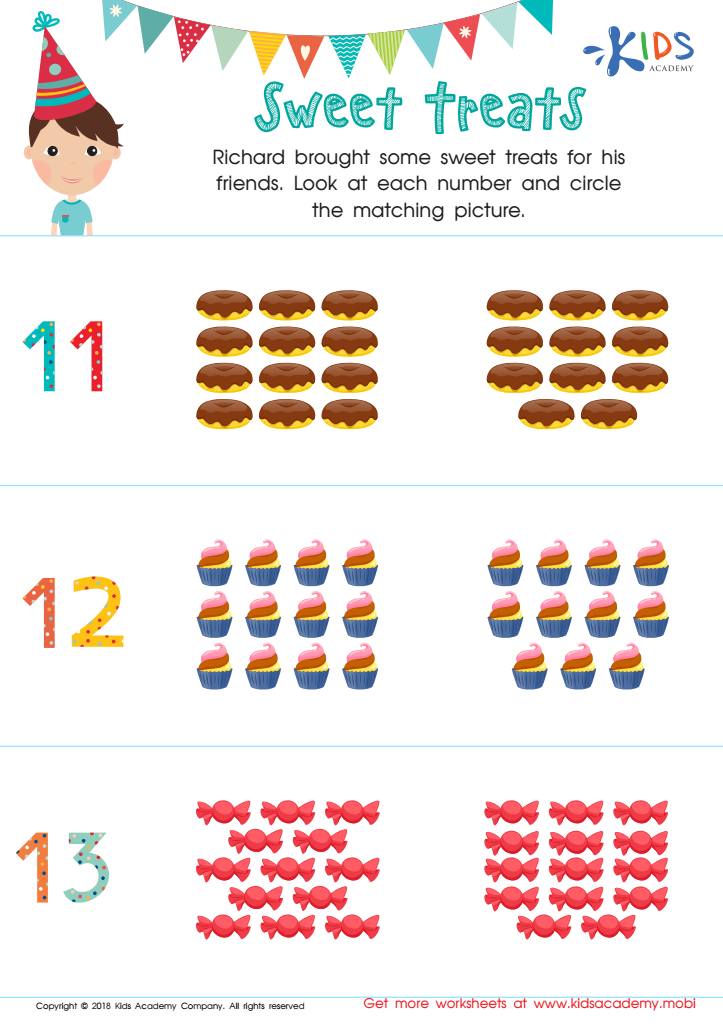
Kindergarten Math Worksheet Matching Numbers
Counting is fun with these kindergarten math worksheets! Richard brought cupcakes and candy - help your child count each treat and circle the picture that matches the number. Let the party begin!
Kindergarten Math Worksheet Matching Numbers
Worksheet
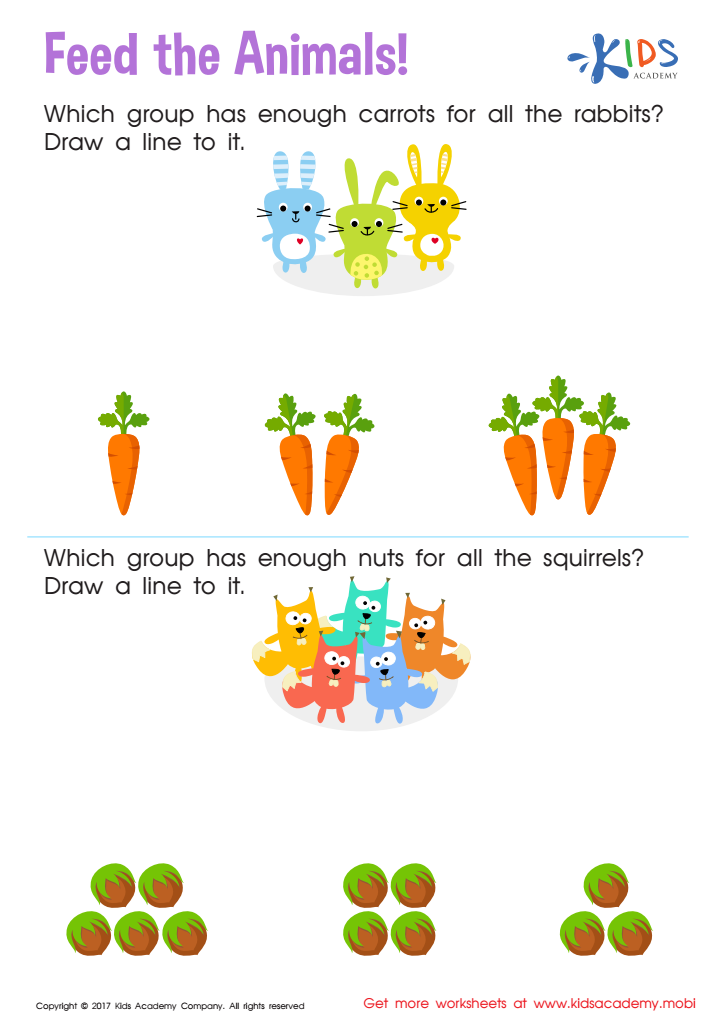
Count and Match: Feed the Animals Worksheet

Count and Match: Feed the Animals Worksheet

Learning and growing involves more than just numbers, phonics and comparison. This Feed the Animals worksheet helps kids to exercise their reasoning skills. They must work out how many rabbits and carrots there are, and then repeat the process for the squirrels. This encourages problem solving and counting skills.
Count and Match: Feed the Animals Worksheet
Worksheet
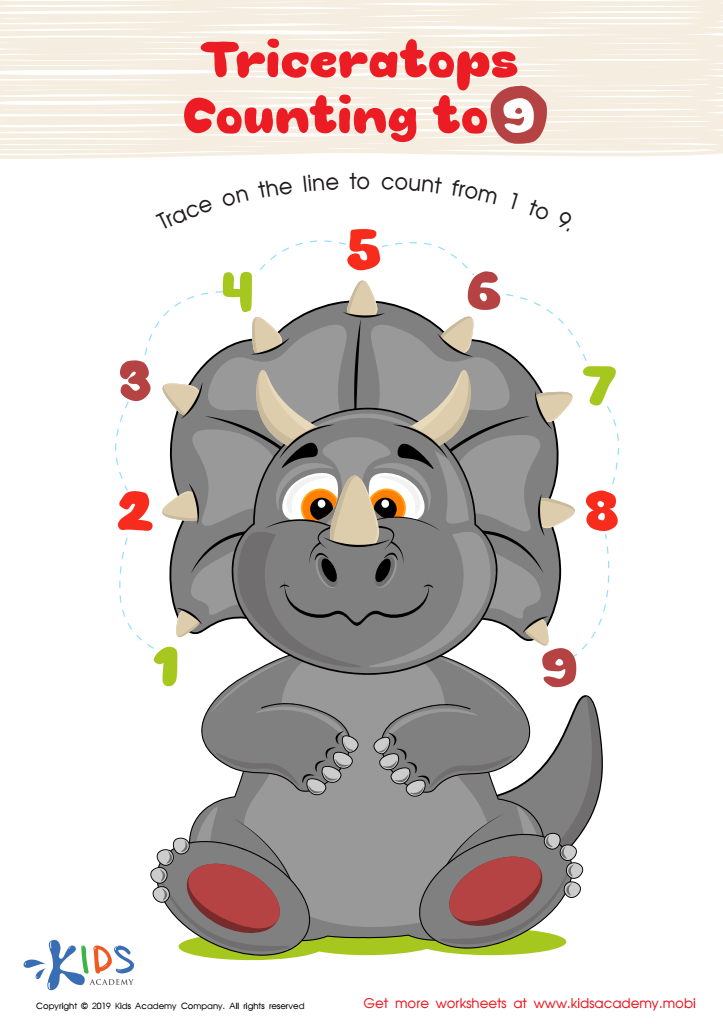
Triceratops Counting to 9 Worksheet

Triceratops Counting to 9 Worksheet

This little triceratops is here to help kids learn to count! Dinosaurs lived long before us and we've never seen one alive, but through research, we know a lot about them. Let the dinosaur help trace on the line from 1 to 9 for a fun counting practice.
Triceratops Counting to 9 Worksheet
Worksheet
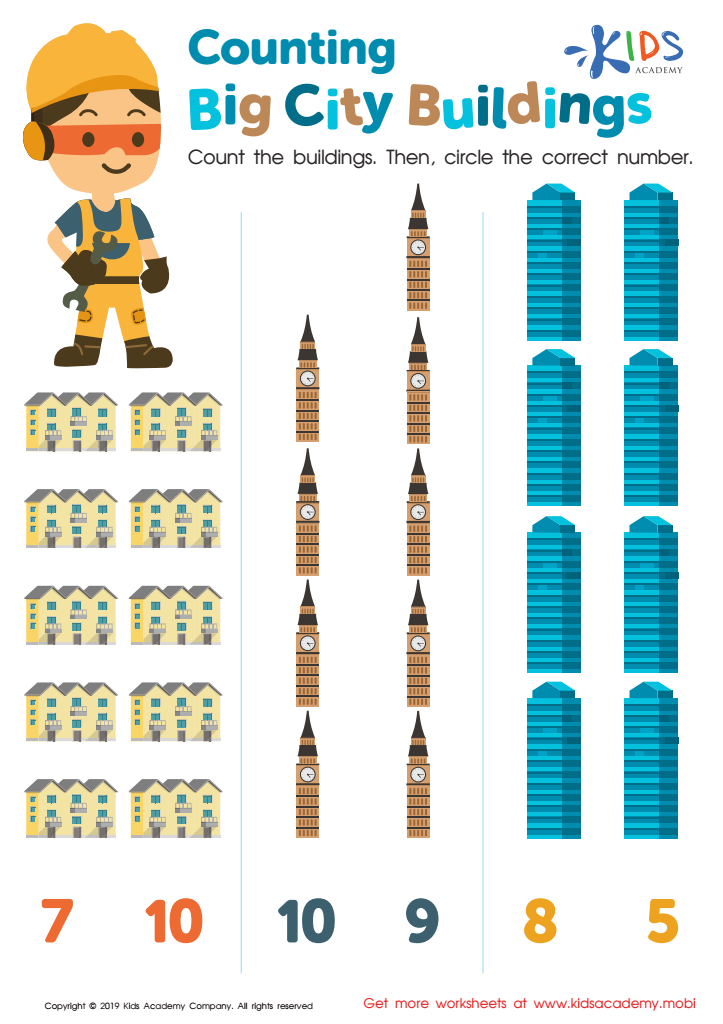
Counting Big City Buildings Worksheet

Counting Big City Buildings Worksheet

Test your child's counting skills! Ask them to count as high as they can and use the worksheet to brush up on any areas that need improvement. There are 3 sets of buildings in the picture; help your kids count them and circle the correct number. Mastering the art of counting is essential for advancing in math and solving equations, so take this opportunity to ensure your kids are ready!
Counting Big City Buildings Worksheet
Worksheet
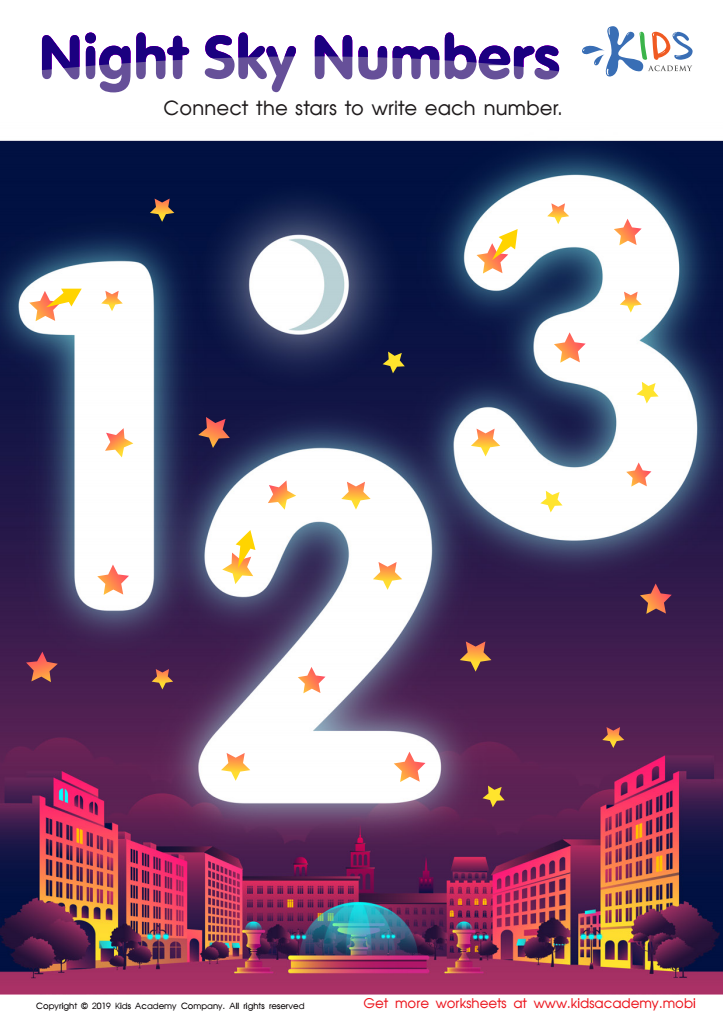
Night Sky Numbers Worksheet


Night Sky Numbers Worksheet

Help your child develop their writing skills with this fun PDF worksheet! Using guiding stars, it teaches them the correct patterns for numbers 1, 2 and 3. They'll have a great time tracing their way from the top and will feel a sense of achievement when they finish.
Night Sky Numbers Worksheet
Worksheet


Caring about cognitive development in numbers for children aged 5-6 is crucial because this period is foundational for their future mathematical understanding and academic success. At this age, children are in the preoperational stage according to Piaget, and their brains are highly receptive to learning basic numerical concepts. Introducing concepts such as counting, number recognition, and simple arithmetic enhances their cognitive development and helps them build critical problem-solving skills.

Early exposure to numbers promotes logical thinking and reasoning abilities, which are essential across all areas of learning and everyday life. For instance, understanding sequence, patterns, and the idea of quantity will not only help them in mathematics but also in organizing thoughts, following instructions, and comprehending the world around them.

Moreover, grasping numerical concepts early boosts children's confidence and enthusiasm for learning. Positive experiences with math at a young age can reduce math anxiety and create a strong foundation for more complex mathematical concepts in later years. Parents and teachers play a crucial role in nurturing this numerical understanding through playful and engaging activities, making learning enjoyable and ensuring children are well-prepared for future educational challenges. In essence, investing attention in cognitive development numbers at this stage promotes overall cognitive growth and academic readiness.