Number Sequencing Numbers up to 100 Worksheets for Ages 5-6
6 filtered results
-
From - To
Our "Number Sequencing Numbers up to 100 Worksheets for Ages 5-6" are designed to build a strong mathematical foundation for young learners. These engaging and interactive worksheets help children practice sequencing numbers in a fun and educational way. Perfectly suited for Kindergarten and Grade 1 students, the worksheets enhance logical thinking and problem-solving skills. By organizing numbers in a sequence, kids reinforce their counting abilities and numerical order understanding. With various exercises and vibrant illustrations, learning becomes enjoyable and efficient. Prepare your child for future math success with our expertly crafted number sequencing worksheets!
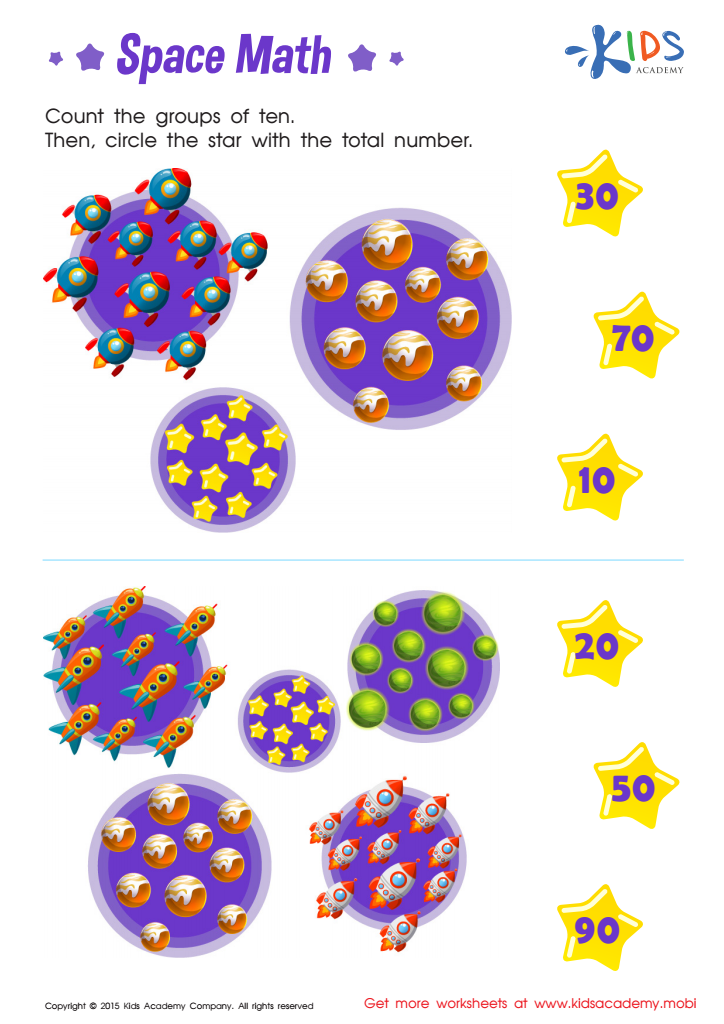
Learn dozens: Space math Worksheet
 Assign to My Students
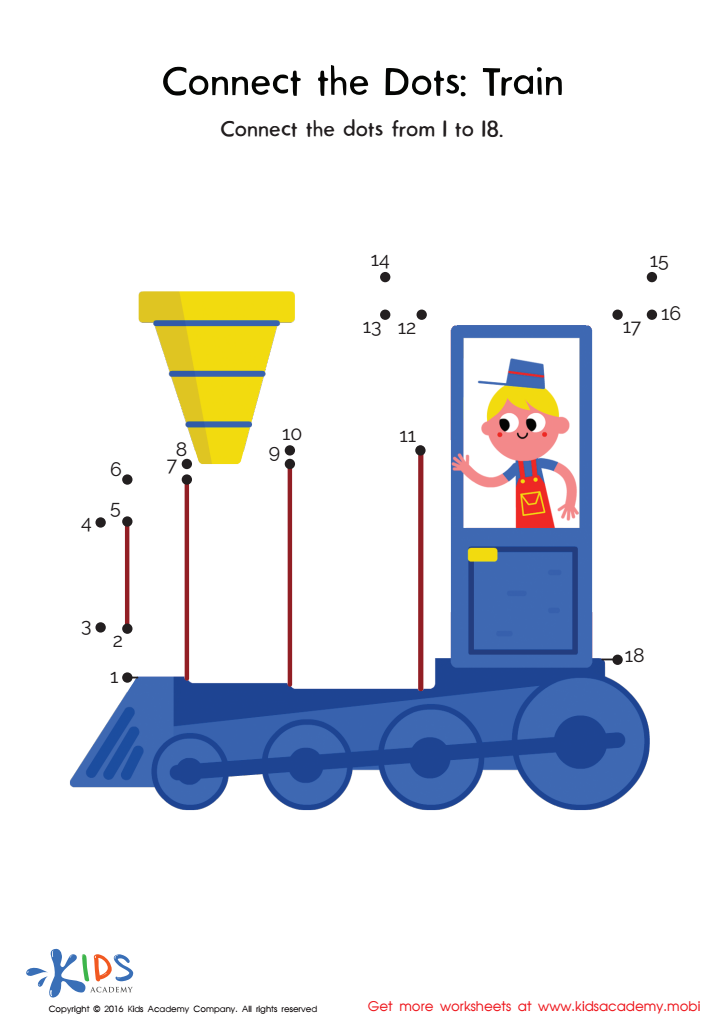
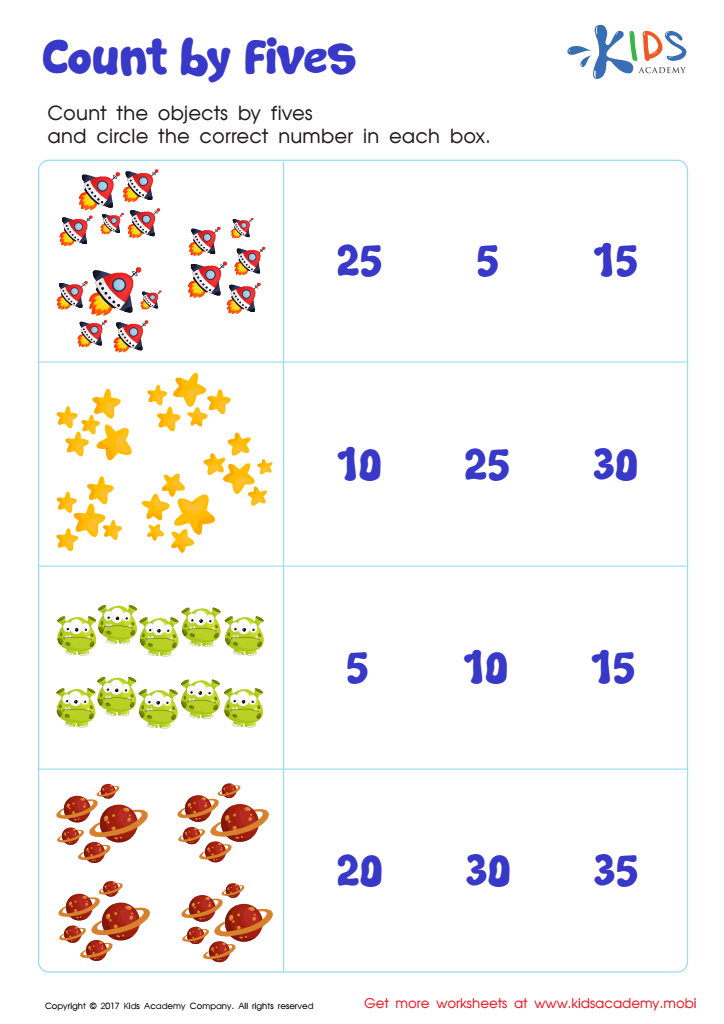
Skip Counting by 5s: Space Math Printable
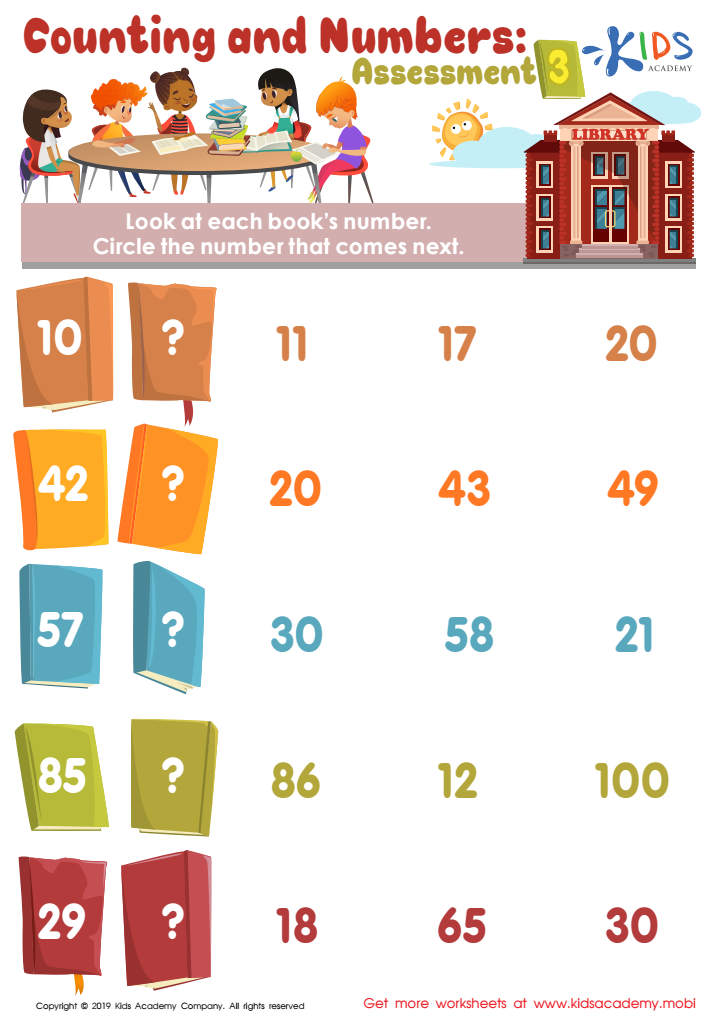
Counting and Numbers: Assessment Worksheet
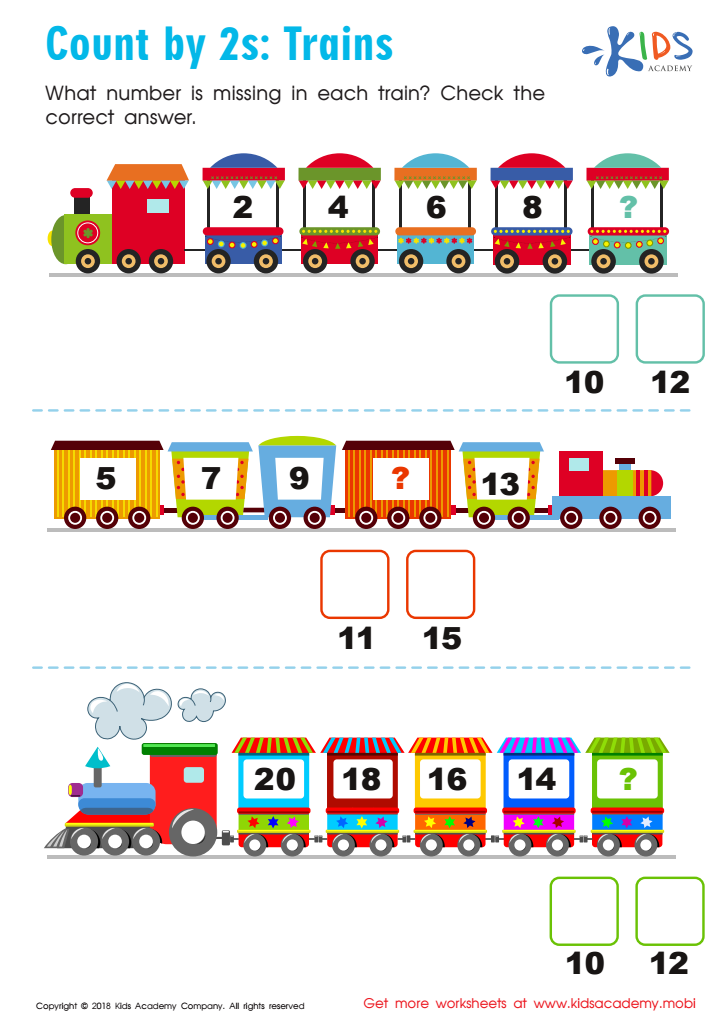
Count by 2's: Trains Worksheet
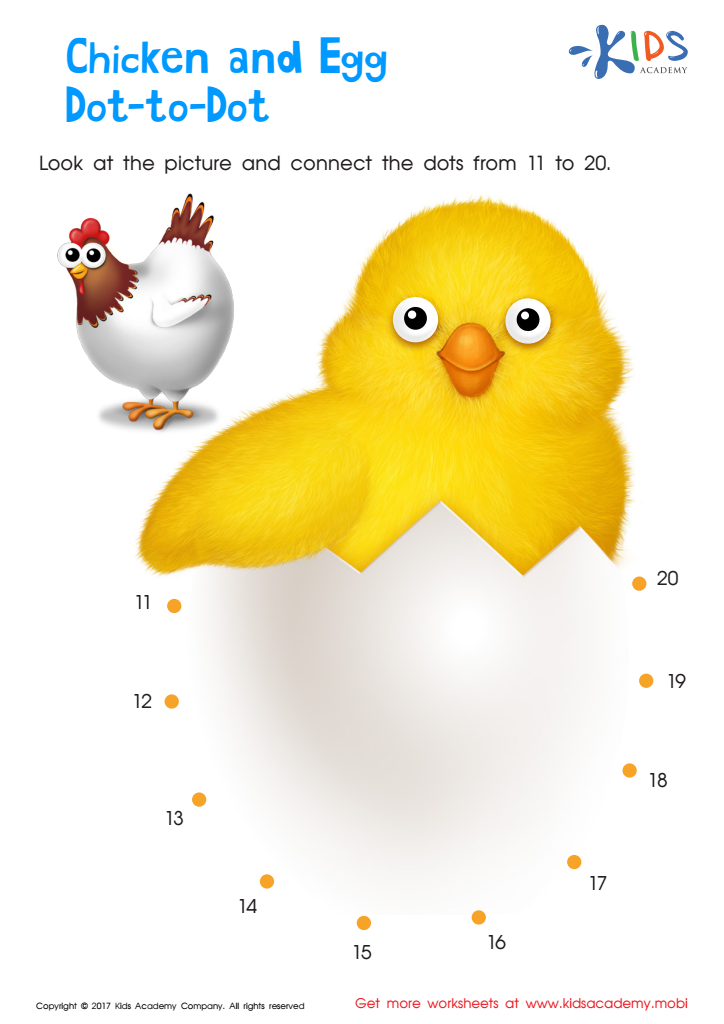
Ordering 11–20: Chicken & Egg Dot–to–dot Worksheet








Number sequencing up to 100 for children aged 5-6 years is vital for several fundamental reasons. First, it lays the groundwork for future mathematical learning. Understanding numbers in sequence helps children grasp concepts such as addition, subtraction, and number sense, which are crucial as they progress in their mathematical education.
Second, it aids in developing children's cognitive skills. Recognizing patterns and sequences enhances their problem-solving abilities and critical thinking. These skills are not only essential in mathematics but also in everyday decision-making and other academic subjects.
Third, mastering number sequences builds confidence. As children explore and become comfortable with numbers, their self-esteem improves. They feel more capable and eager to engage in class activities, fostering a positive attitude towards learning.
Lastly, it encourages logical reasoning. When children see numbers as a progression, they learn to predict, analyze, and understand logical sequences. This foundation in logical thinking boosts their capacity to approach complex tasks methodically.
Therefore, parents and teachers should prioritize number sequencing to create a robust mathematical foundation, enhance cognitive and reasoning skills, and build the child's confidence, thus setting them on a path to academic success and lifelong learning.