Cognitive Development Tracing Shapes Worksheets for Ages 5-6
4 filtered results
-
From - To
Discover our engaging "Cognitive Development Tracing Shapes Worksheets" designed specifically for children aged 5-6. These worksheets provide a fun way for young learners to enhance their fine motor skills while exploring basic geometric shapes. By tracing various shapes, children develop hand-eye coordination and spatial awareness, crucial building blocks for their cognitive development. Our vibrant and interactive worksheets stimulate creativity, making learning both enjoyable and effective. Ideal for home and classroom use, these resources foster independent learning and reinforce essential math skills. Equip your child with the confidence to recognize and utilize shapes in everyday life with our delightful tracing activities!
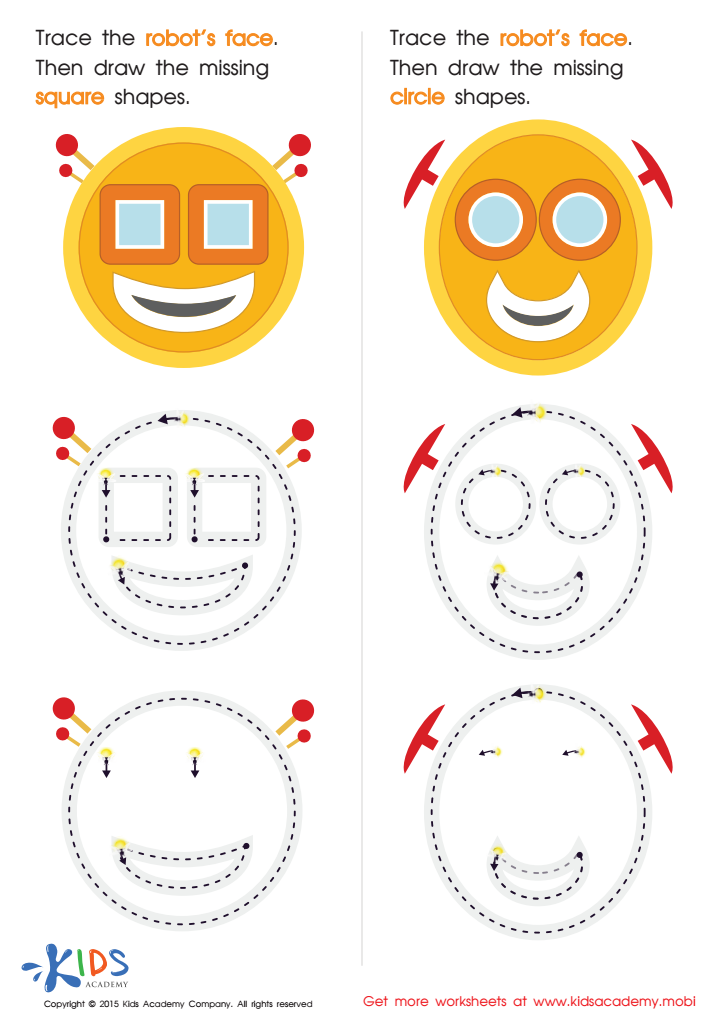
Practicing to Draw Circles And Squares Printable
 Assign to My Students
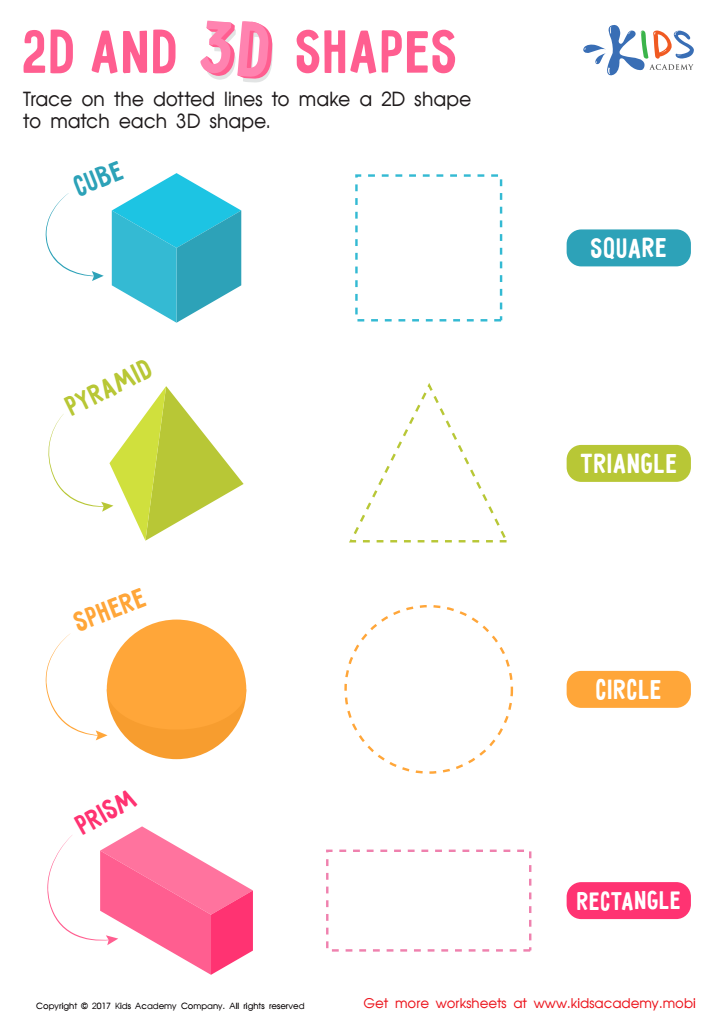
2D and 3D Shapes Worksheet
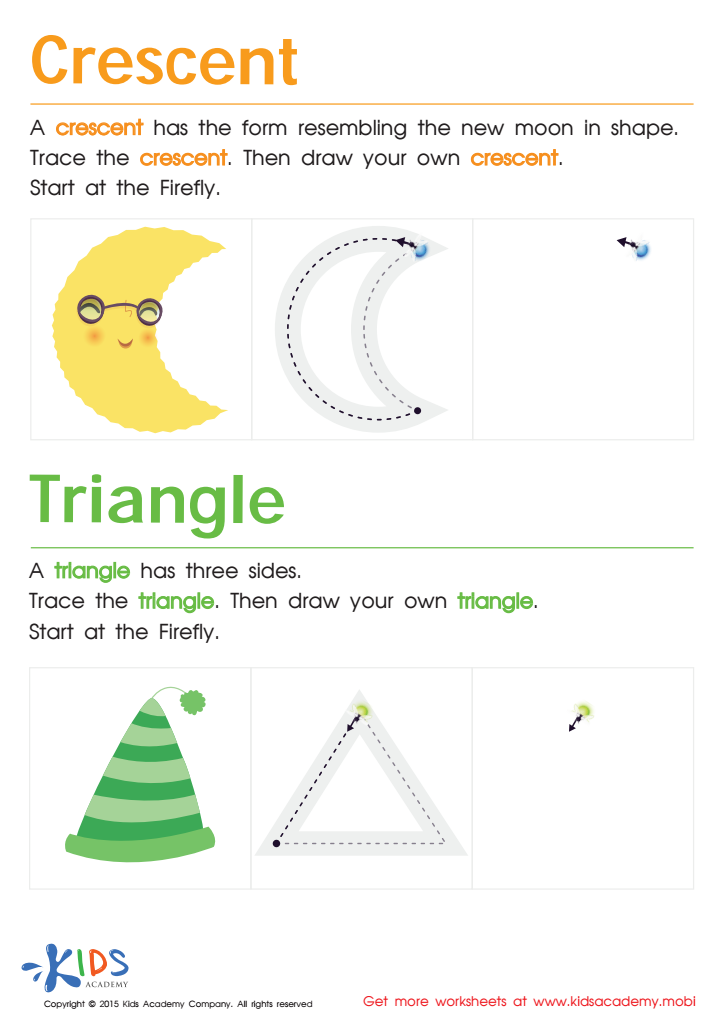
Learning to Draw Crescents And Triangles Worksheet
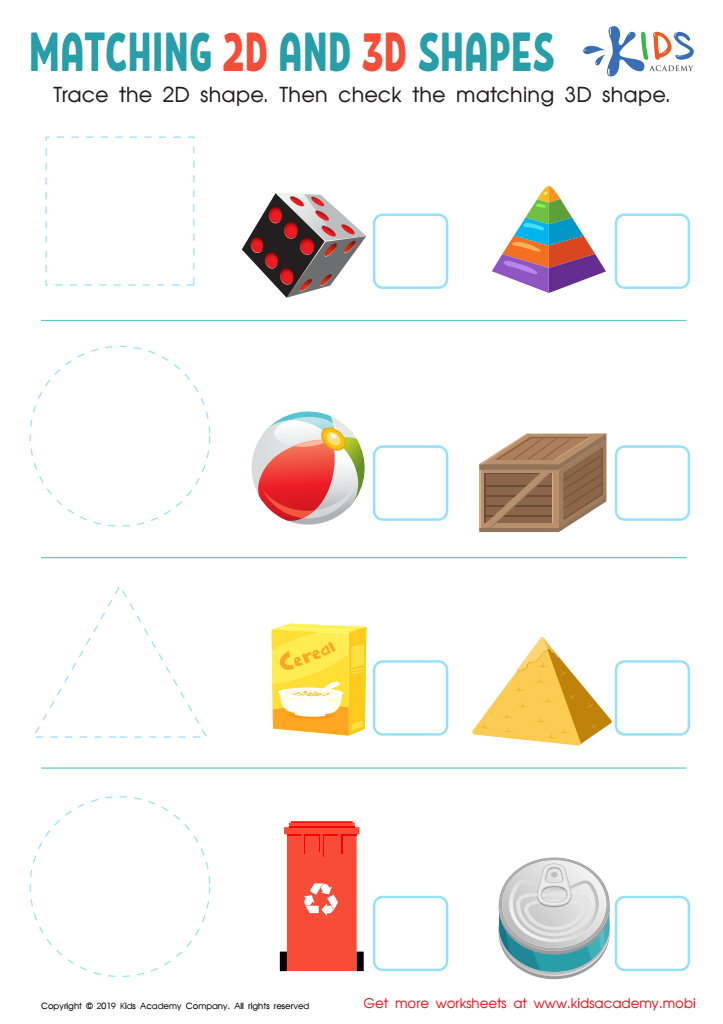
Matching 2D and 3D Shapes Worksheet








Cognitive development during early childhood is critical as it lays the foundation for future learning and problem-solving skills. Tracing shapes is an essential activity for children aged 5-6, promoting vital cognitive skills such as spatial awareness, hand-eye coordination, and fine motor proficiency. When children trace shapes, they engage in active learning, allowing them to explore geometrical concepts and understand the properties of different forms.
This activity also enhances concentration and attention span, skills that are crucial for academic success. As children focus on the task of tracing, they develop persistence and resilience, which further benefits their overall cognitive development. Additionally, tracing shapes can foster creativity and imagination as children may apply colors and patterns, encouraging self-expression and decision-making.
For teachers and parents, supporting activities like tracing shapes means fostering an environment that values exploration, play, and learning. Such experiences enable children to construct their understanding of the world, laying the groundwork for more complex concepts. Ultimately, engaging in tracing activities nurtures a child's cognitive growth, preparing them for success in school and life, while also making learning enjoyable and interactive.