Counting practice Science Worksheets for Ages 5-6
3 filtered results
-
From - To
Explore our engaging Counting Practice Science Worksheets designed for children ages 5-6! These printable resources help young learners develop essential counting skills while discovering fundamental scientific concepts. Each worksheet features fun, themed activities that encourage students to count objects, identify patterns, and enhance their observation abilities. With vibrant illustrations and age-appropriate challenges, your child will enjoy hands-on learning that builds a strong foundation for future math and science success. Ideal for classroom use or at-home learning, these worksheets provide a delightful way to integrate science and counting practice seamlessly. Inspire curiosity and number skills today!
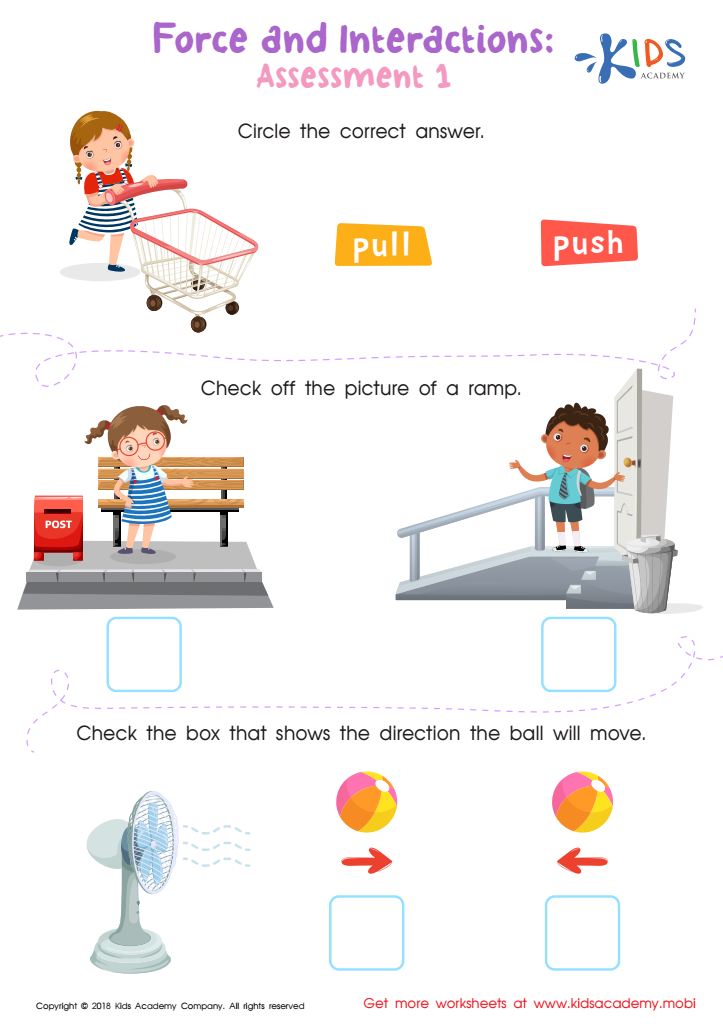
Force and Interactions: Assessment 1 Worksheet
 Assign to My Students
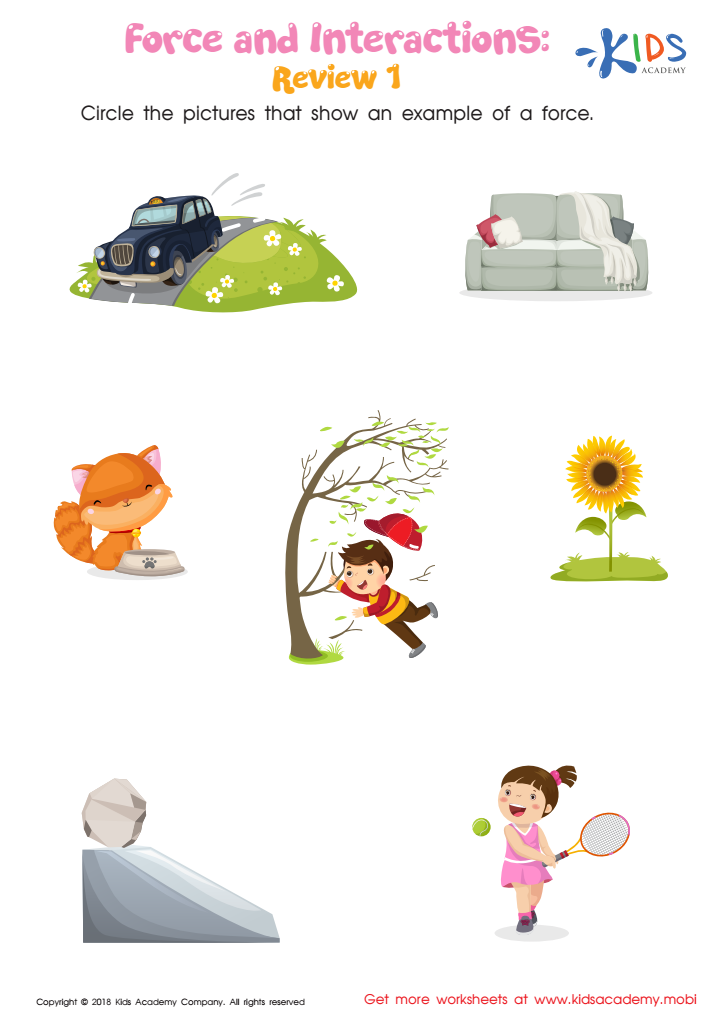
Force and Interactions: Review 1 Worksheet







Counting practice is crucial for young learners, especially in the age group of 5-6 years, as it lays the foundation for their mathematical understanding and broader academic skills. At this developmental stage, children are naturally curious and eager to explore numerical concepts. Engaging them in counting activities not only improves their basic arithmetic skills but also enhances their cognitive abilities, fostering critical thinking and problem-solving.
Moreover, counting practice is interconnected with science learning. Children learn to classify, compare, and explore patterns—skills necessary for scientific inquiry. For example, when counting objects in nature, like leaves or rocks, children simultaneously practice counting and engage with scientific concepts such as categorization and observation.
Parents and teachers should prioritize counting practice as it promotes a love for learning, encourages curiosity, and builds confidence in young learners. Developing counting skills at this age prepares children for more complex concepts in mathematics and science, setting the stage for future academic success.
Additionally, engaging in counting activities can be fun and interactive, fostering a positive learning environment. Whether through games, songs, or hands-on activities, counting practice nurtures a child's enthusiasm for both math and science from an early age.







