Logical Reasoning Plants and Animals Worksheets for Ages 5-6
4 filtered results
-
From - To
Introduce young learners to the fascinating world of plants and animals with our "Logical Reasoning Plants and Animals Worksheets" for ages 5-6. These engaging worksheets are designed to enhance critical thinking and problem-solving skills through fun activities related to the natural world. Children will love identifying different species, understanding life cycles, and exploring habitats while honing their logical reasoning. Perfect for classroom use or at-home practice, each worksheet is crafted to be both educational and entertaining, making learning about science both enjoyable and impactful. Jumpstart your child's science journey with these exciting, interactive printables!
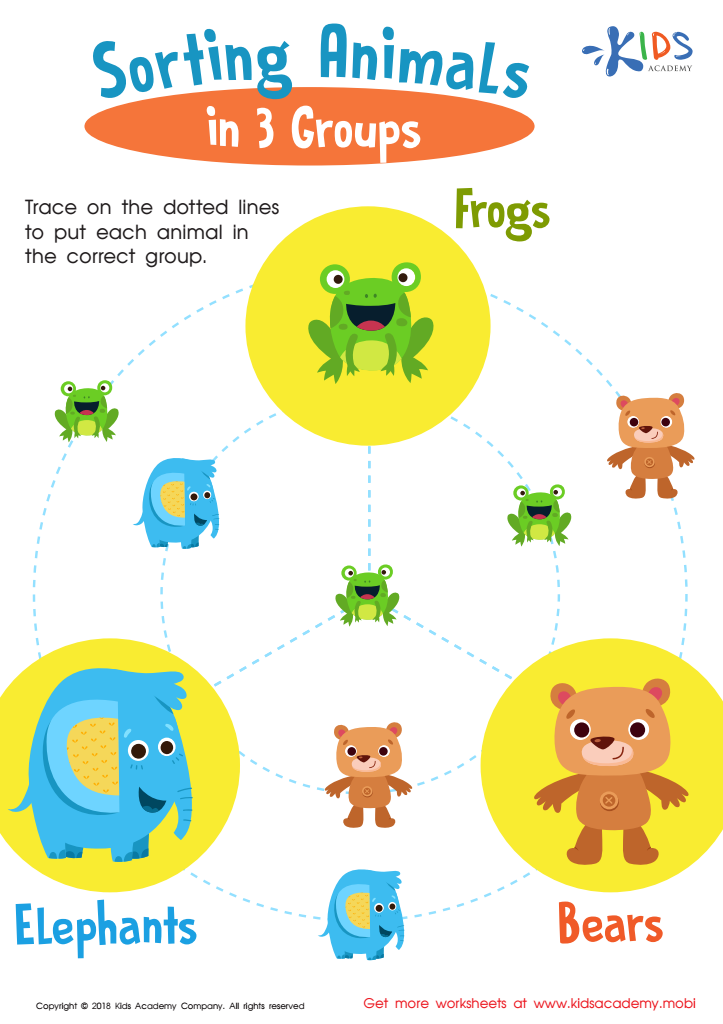
Sorting Animals in 3 Groups Worksheet
 Assign to My Students











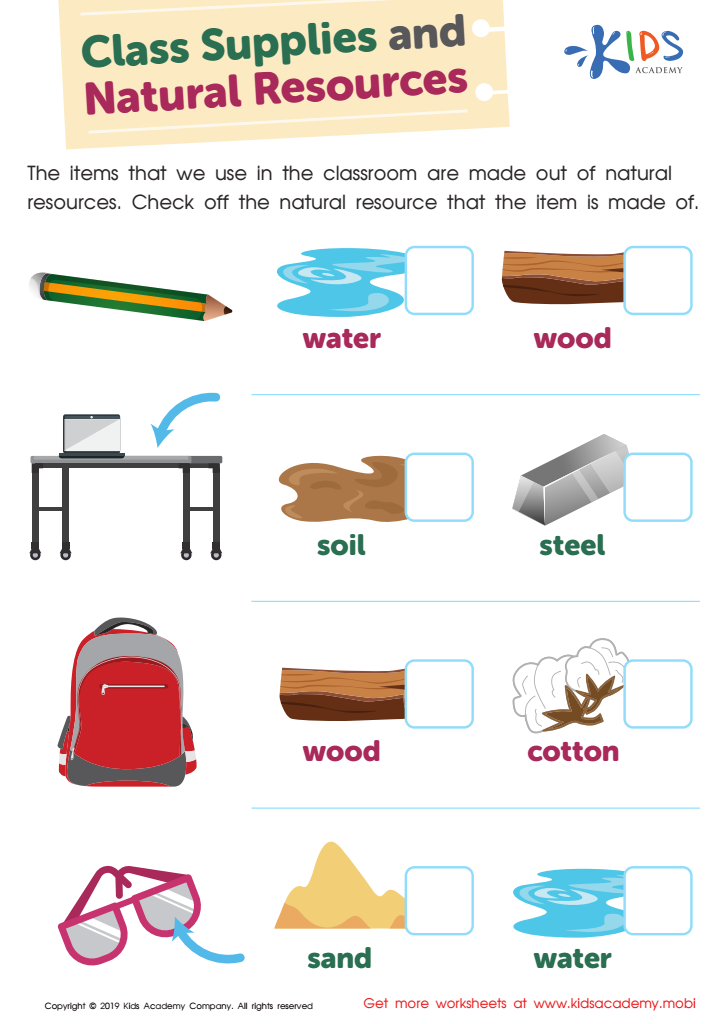
Class Supplies and Natural Resources Worksheet
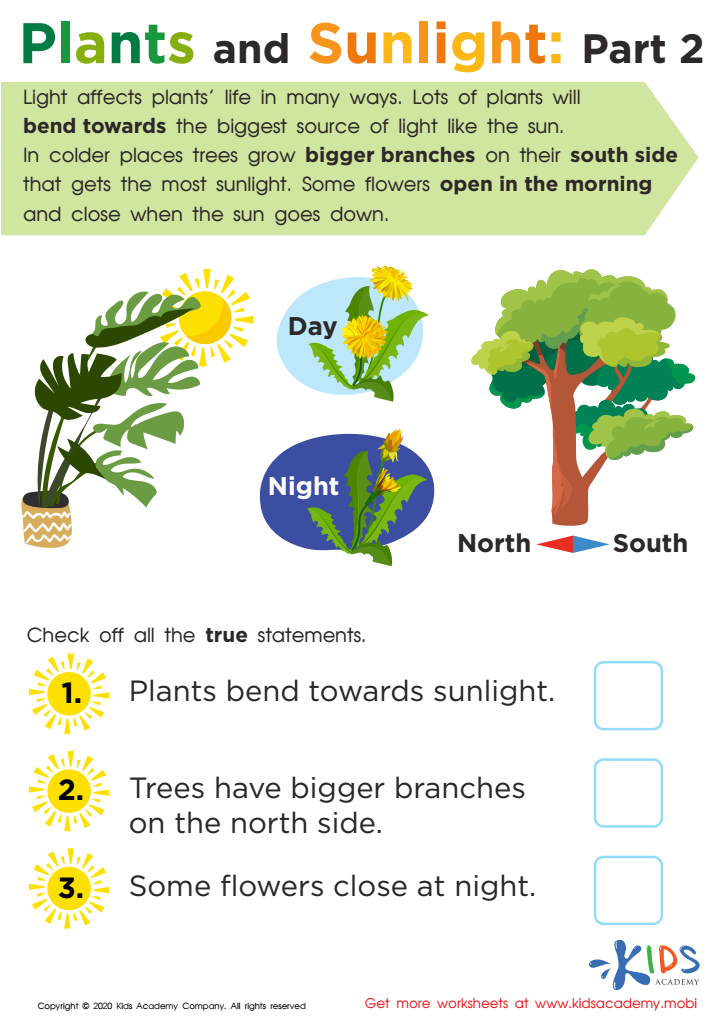
Plants and Sunlight: Part 2 Worksheet
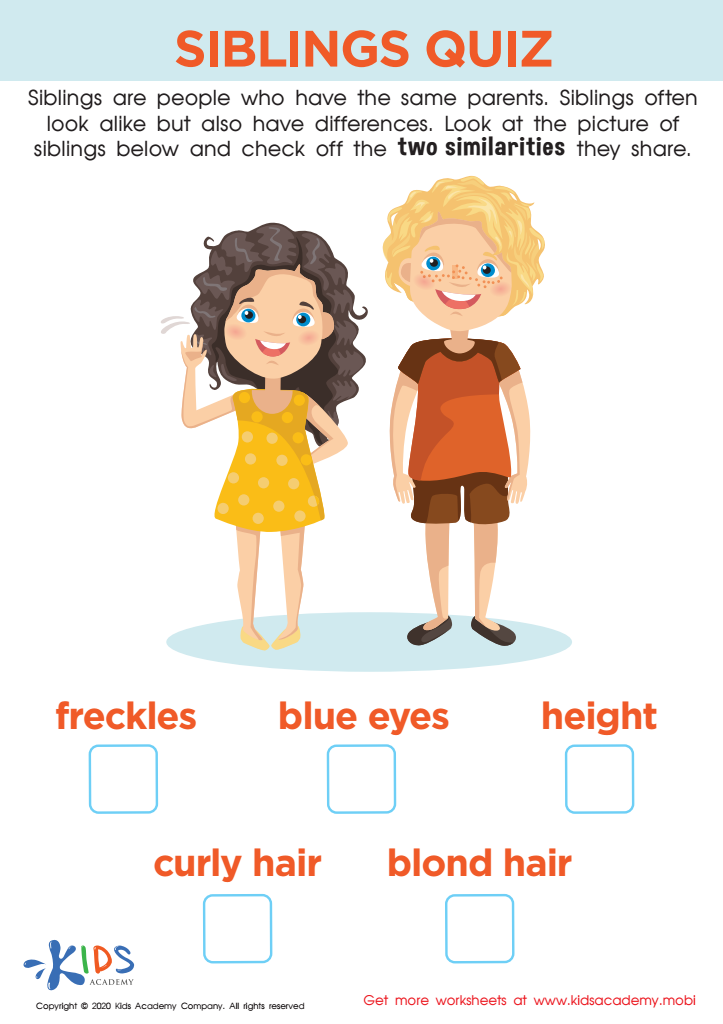
Siblings Quiz Worksheet








Parents and teachers should care about introducing logical reasoning related to plants and animals for children aged 5-6 because it fosters essential cognitive and personal growth. This age is a critical developmental period where foundational skills are established. Teaching logical reasoning encourages young minds to make connections, understand cause and effect, and develop problem-solving abilities. For instance, by observing how plants need sunlight and water to grow, children begin to understand the concept of interdependence in the natural world.
Moreover, learning about plants and animals instills a sense of curiosity and environmental stewardship. As children explore how animals adapt to their habitats or how plants change with the seasons, they start appreciating biodiversity and the environment. This can nurture a sense of respect and responsibility towards nature.
Additionally, such activities enhance observational skills, attention to detail, and critical thinking. For example, sorting animals by their habitats or identifying different plant parts can improve categorization skills and attention span. Including elements of play and exploration makes learning enjoyable, keeping young learners engaged and motivated. Ultimately, harmonizing logical reasoning with lessons about plants and animals creates well-rounded individuals who are prepared for more complex scientific and environmental education in the future.








