Alphabetical order Alphabet Worksheets for Ages 5-7
3 filtered results
-
From - To
Introduce your young learners to the essentials of alphabetical order with our engaging Alphabetical Order Worksheets, designed specifically for ages 5-7. These worksheets offer a fun and interactive approach to help children grasp the concept of arranging words in sequence, enhancing their reading and writing skills. Each activity encourages students to practice identifying, ordering, and sorting words and letters, making learning both enjoyable and effective. With vibrant illustrations and age-appropriate challenges, these printable sheets are perfect for use at home or in the classroom. Equip your child with the foundational skills they need to succeed in literacy with our thoughtfully crafted resources.
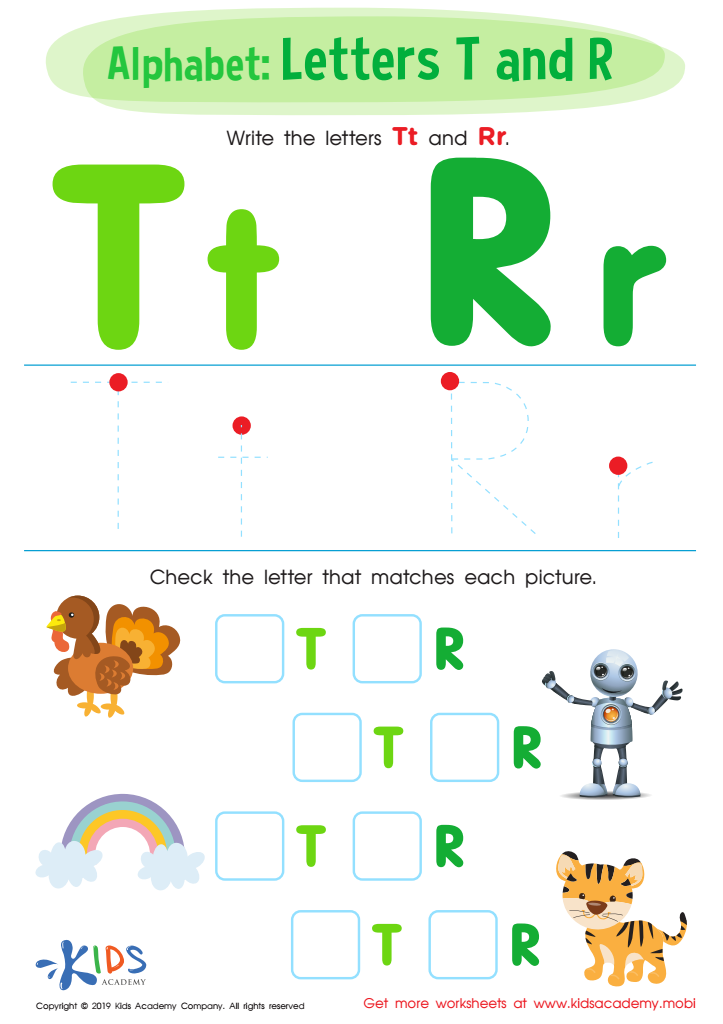
Letters T and R Worksheet
 Assign to My Students
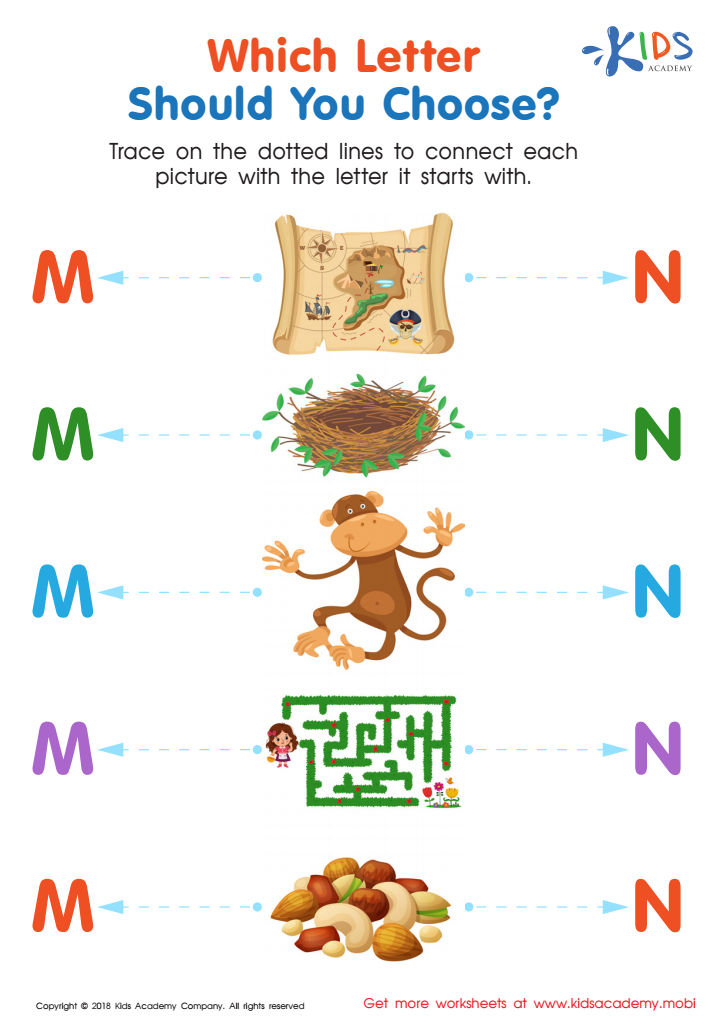
Which Letter Should you Choose? Worksheet
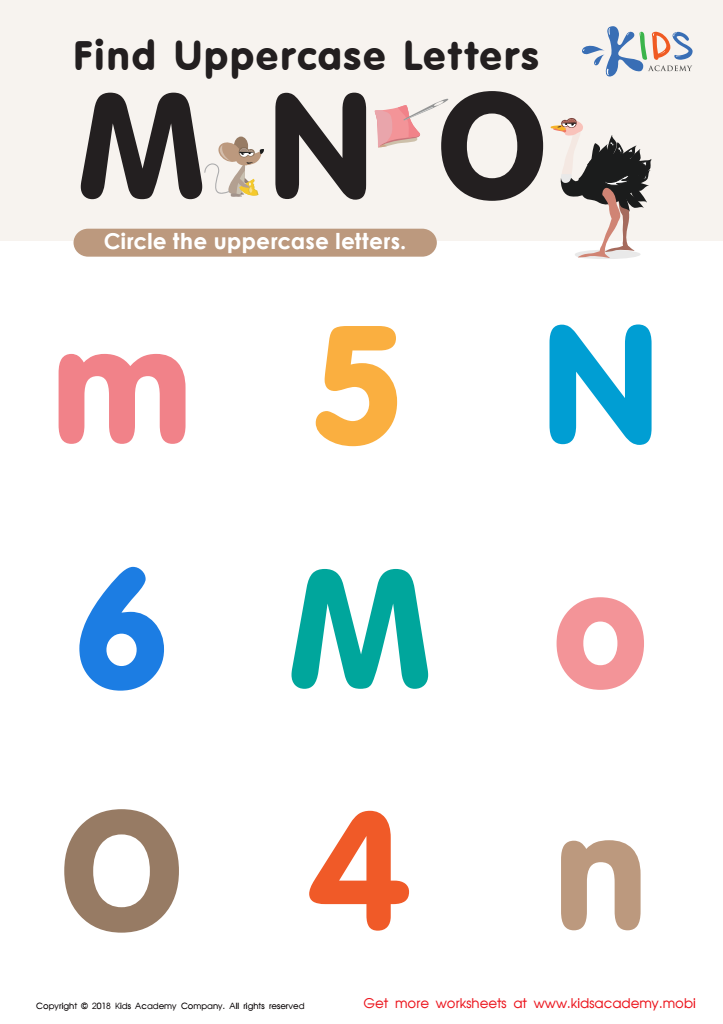
Find Uppercase Letters M, N, and O Worksheet







Understanding alphabetical order is a foundational skill for children aged 5 to 7, crucial for their literacy development and organizational abilities. Parents and teachers should prioritize this concept because it aids in reading and writing, allowing children to identify words quickly and efficiently. By learning to recognize the sequence of letters, children can more easily navigate dictionaries, glossaries, and books, enhancing their comprehension skills.
Furthermore, understanding alphabetical order fosters critical thinking. Children engage in sorting, categorizing, and sequencing—skills that are essential for problem-solving in broader contexts. Practicing this skill can also build a child’s confidence in their abilities, as they master a seemingly simple, yet vital task.
Introducing concepts like alphabetical order through fun activities, like singing the alphabet song or playing sorting games, caters to the developmental needs of children in this age bracket. This approach keeps learning engaging and enjoyable, nurturing a love for reading and writing that can last a lifetime.
Encouraging children in mastering alphabetical order not only supports early literacy but also forms a stepping stone for more complex language skills in their educational journey. Thus, it is vital for parents and teachers to possess strategies that support this important learning phase.







