Letter tracing skills Tracing Letters Worksheets for Ages 5-7
3 filtered results
-
From - To
Help your child master essential writing skills with our comprehensive Letter Tracing Worksheets for ages 5-7. Designed to make learning fun, these carefully crafted worksheets introduce young learners to the alphabet through engaging and educational activities. Each worksheet provides ample practice in tracing letters, improving fine motor skills, hand-eye coordination, and letter recognition. Perfect for both classroom and at-home learning, these worksheets not only enhance early literacy but also lay a strong foundation for future academic success. Foster a love for writing and boost your child’s confidence with our delightful tracing activities.
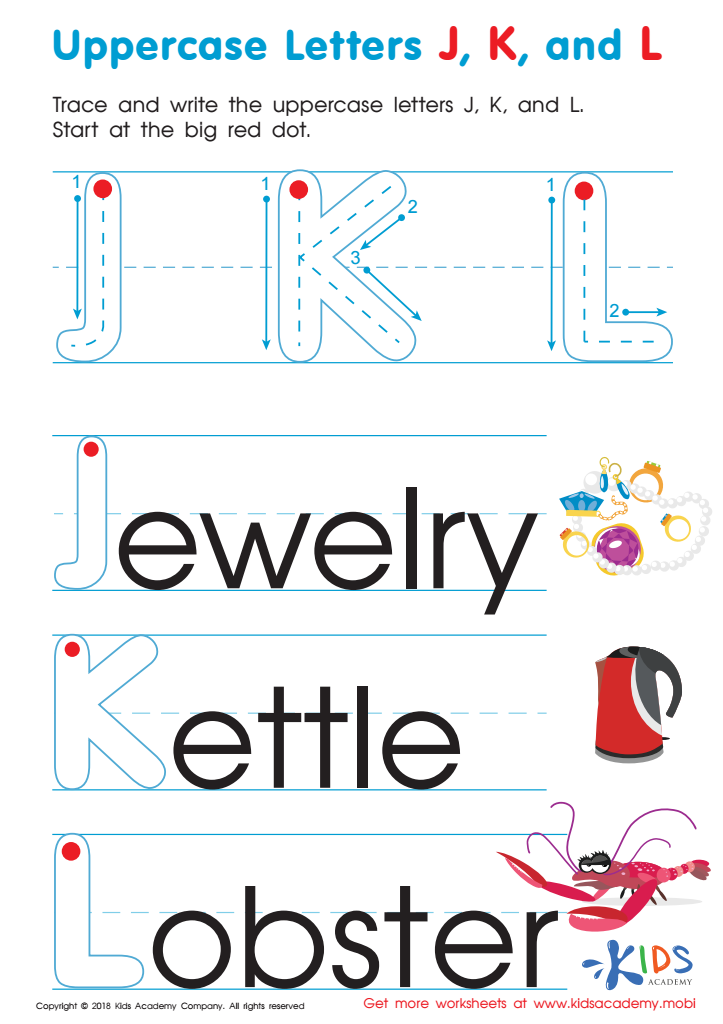
Uppercase Letters J, K, and L Worksheet
 Assign to My Students

Letter C Tracing Page

Uppercase Letters Y Z Worksheet







Parents and teachers should care about letter tracing skills for children aged 5-7 because it sets a crucial foundation for literacy development. This early practice helps children recognize and remember alphabet shapes, making future reading and writing tasks more intuitive. Tracing letters improves fine motor skills by guiding little hands to control pencils and other writing tools, which is essential for all types of written communication.
Furthermore, letter tracing supports cognitive development through pattern recognition and hand-eye coordination. As children trace letters, they start to understand the relationship between spoken and written language, which enhances phonemic awareness—a key predictor of reading success.
Beyond cognitive and motor skill gains, letter tracing activities can build confidence and enthusiasm for learning by offering a tangible sense of progress. When children see their improving abilities, they're encouraged to tackle more challenging tasks.
Practical structured play in this way is also socially interactive, often leading to collaborative learning with peers and guidance from adults. By investing in this foundational skill, parents and teachers provide children with the tools needed for effective communication, aiding their overall academic achievement and lifelong learning readiness.








