Chess strategy understanding Chess Worksheets for Ages 5-7
15 filtered results
-
From - To
Discover the exciting world of chess strategies with our engaging worksheets designed for children ages 5-7! These printable resources promote critical thinking and problem-solving skills while introducing young learners to the fundamentals of chess. Our Chess Strategy Understanding worksheets are crafted to help kids grasp essential concepts such as piece movement, basic tactics, and strategic thinking in a fun and interactive way. With colorful visuals and age-appropriate activities, children will develop their cognitive abilities and learn to make thoughtful decisions on the chessboard. Start your child's chess journey today and watch them thrive as budding strategists!
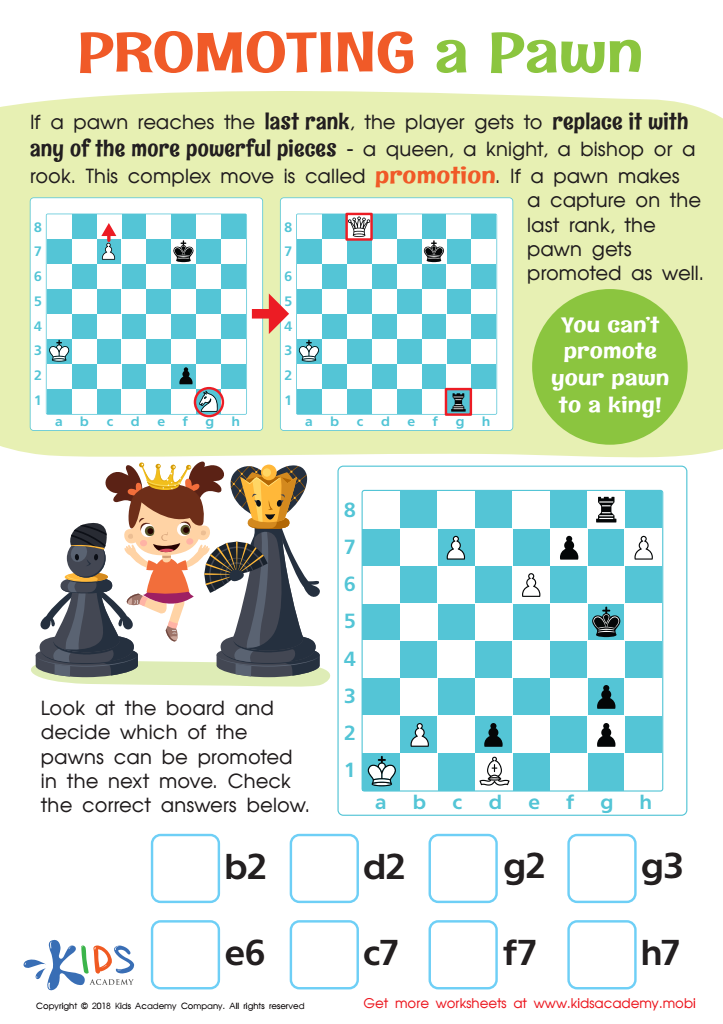
Promoting a Pawn Worksheet
 Assign to My Students
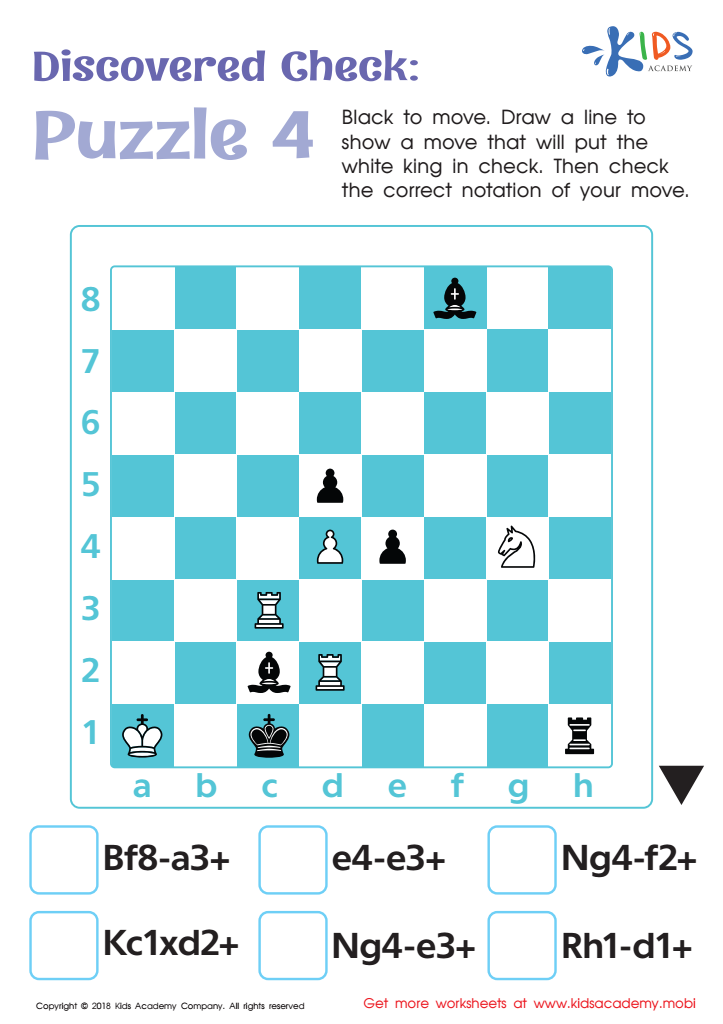
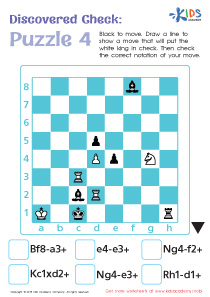
Discovered Check: Puzzle 4 Worksheet
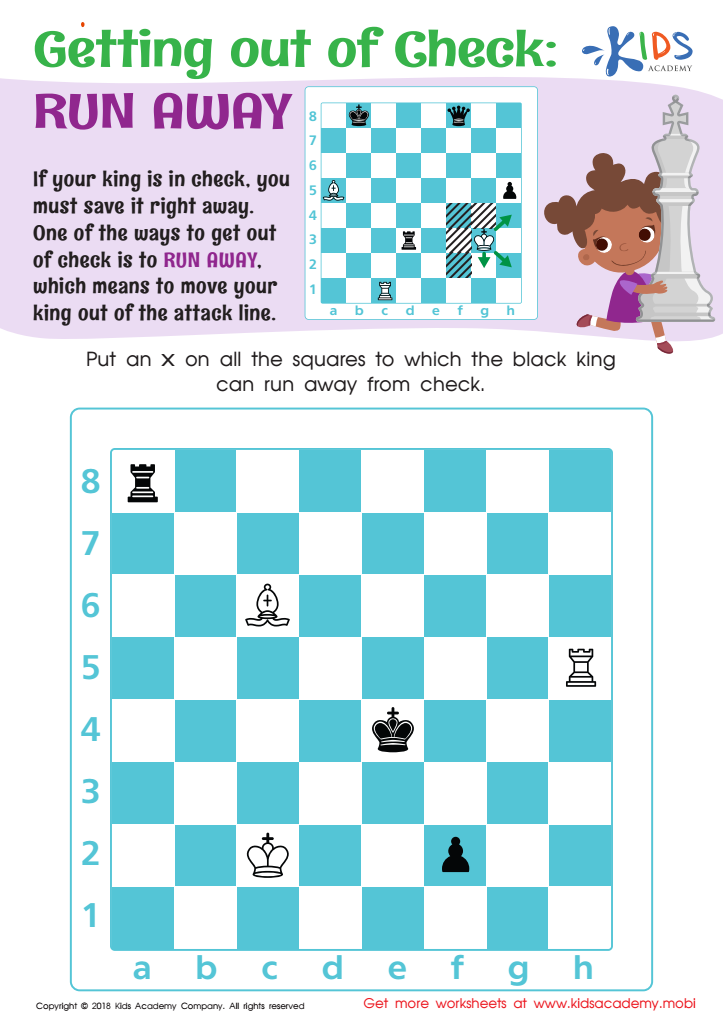
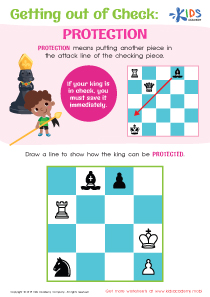
Getting out of Check: Run Away Worksheet
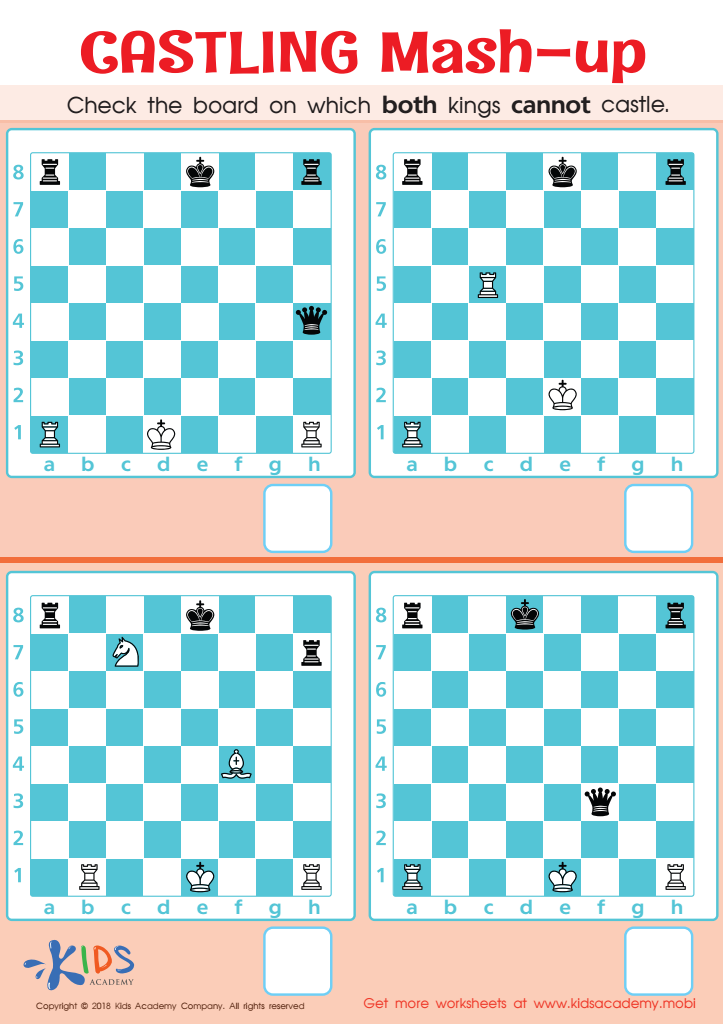
Castling Mash–up Worksheet
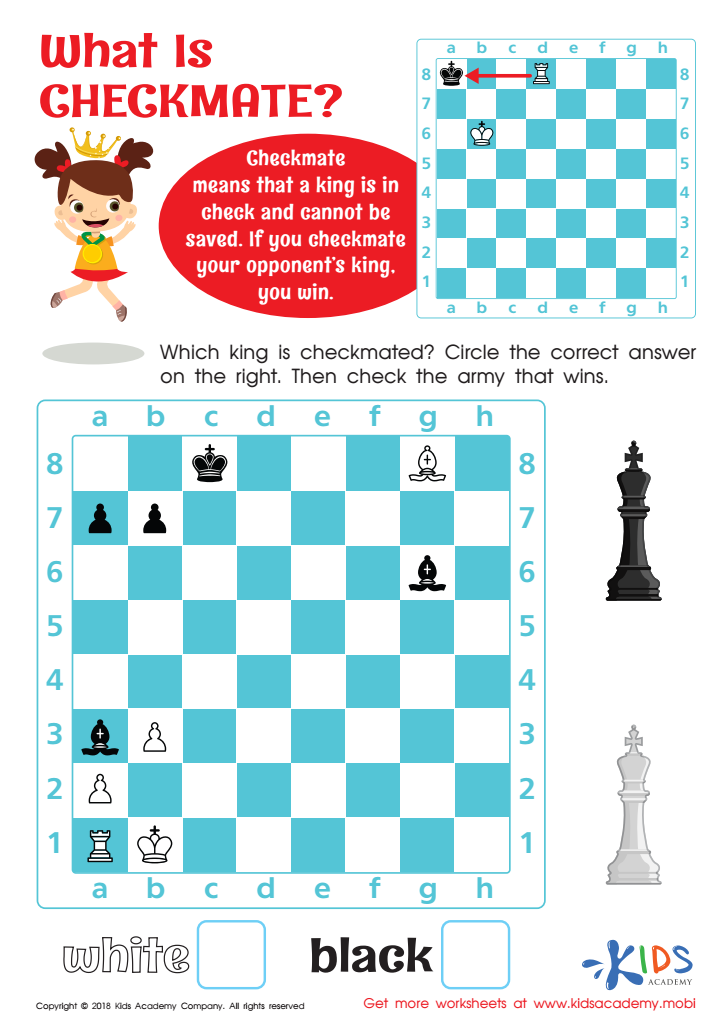
What is Checkmate? Worksheet
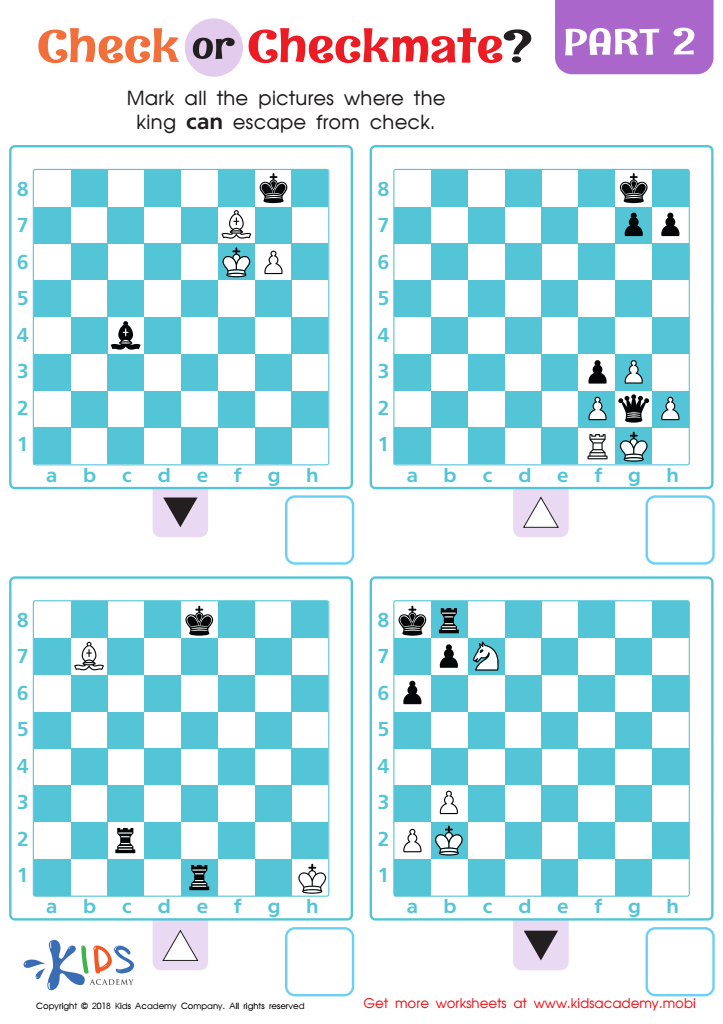
Check or Checkmate: Part 2 Worksheet
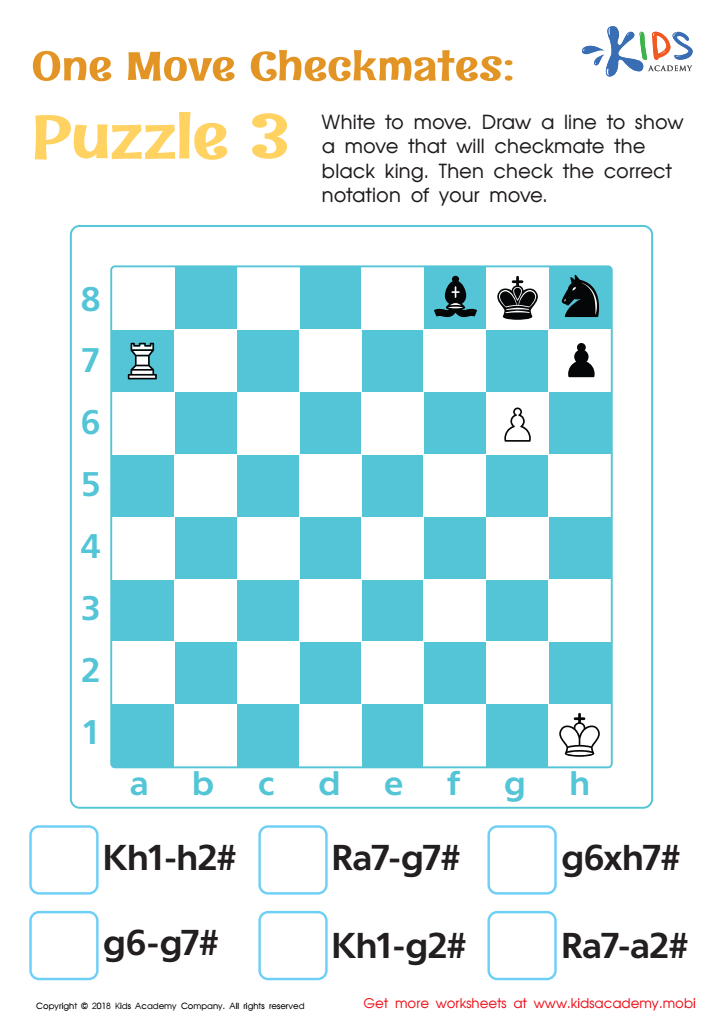
One Move Checkmates: Puzzle 3 Worksheet
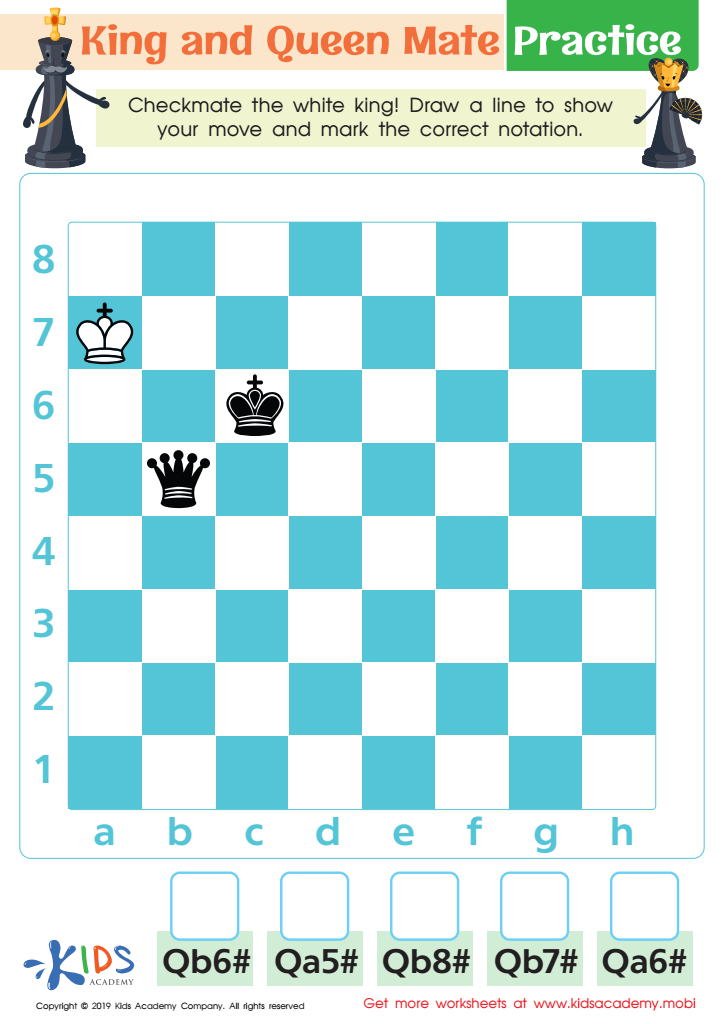
King and Queen Mate Practice Worksheet

Discovered Check: Puzzle 2 Worksheet
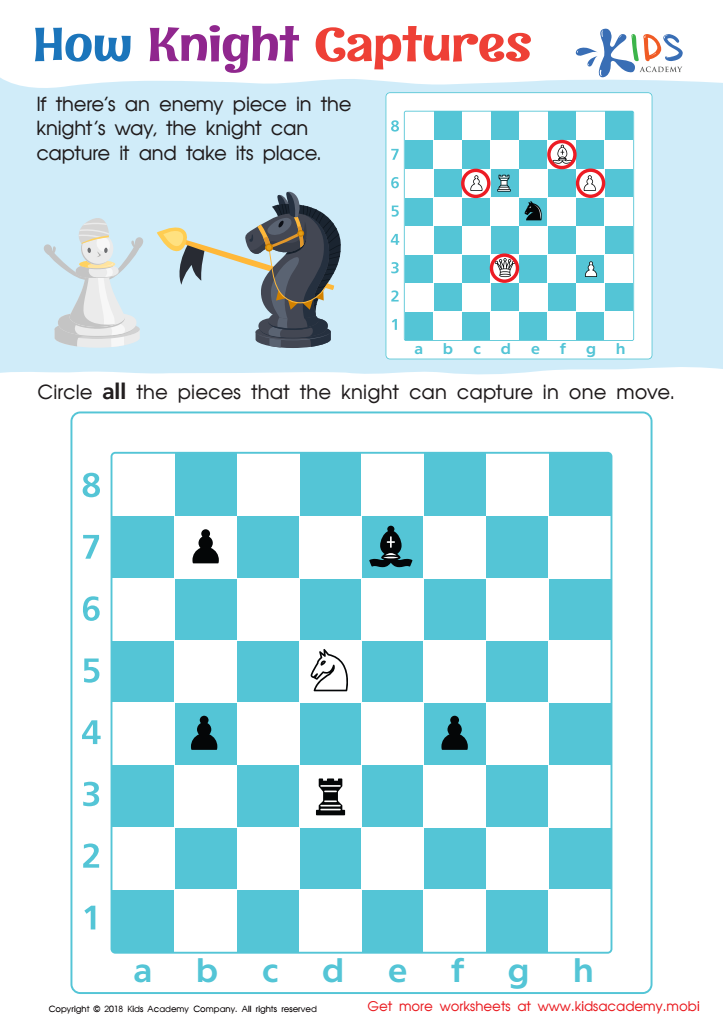
How Knight Captures Worksheet
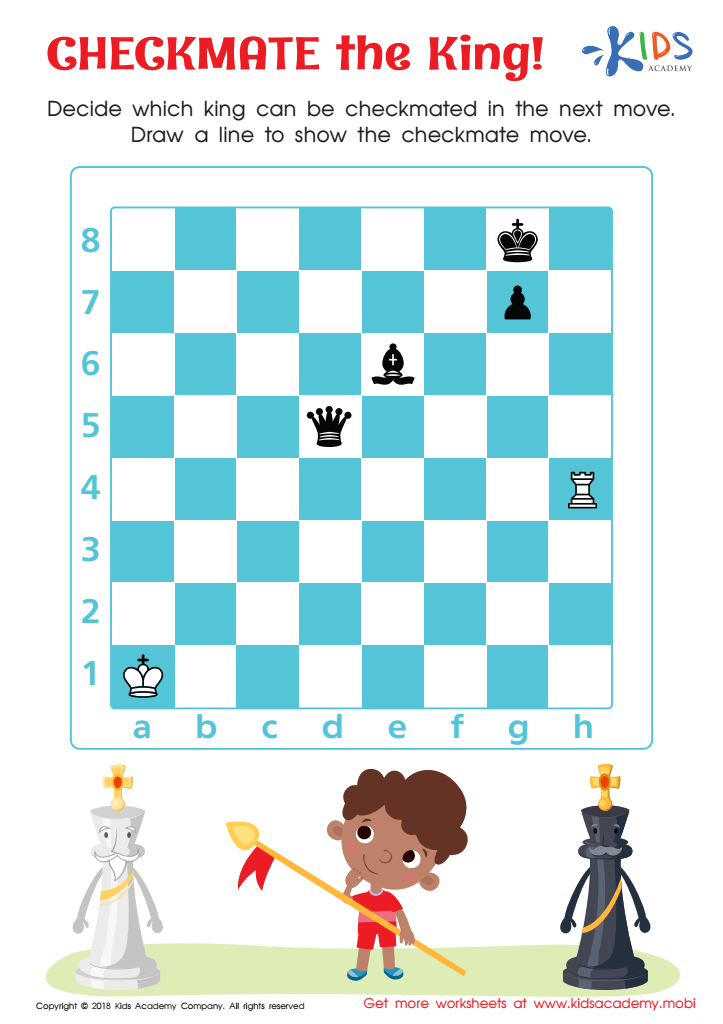
Checkmate the King Worksheet
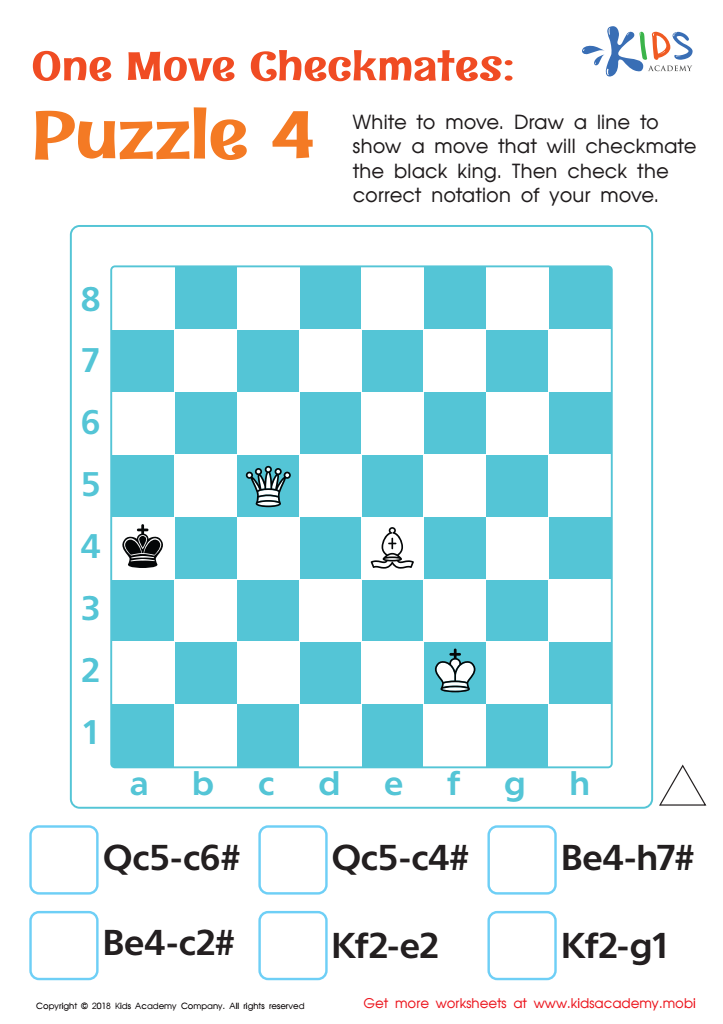
One Move Checkmates: Puzzle 4 Worksheet
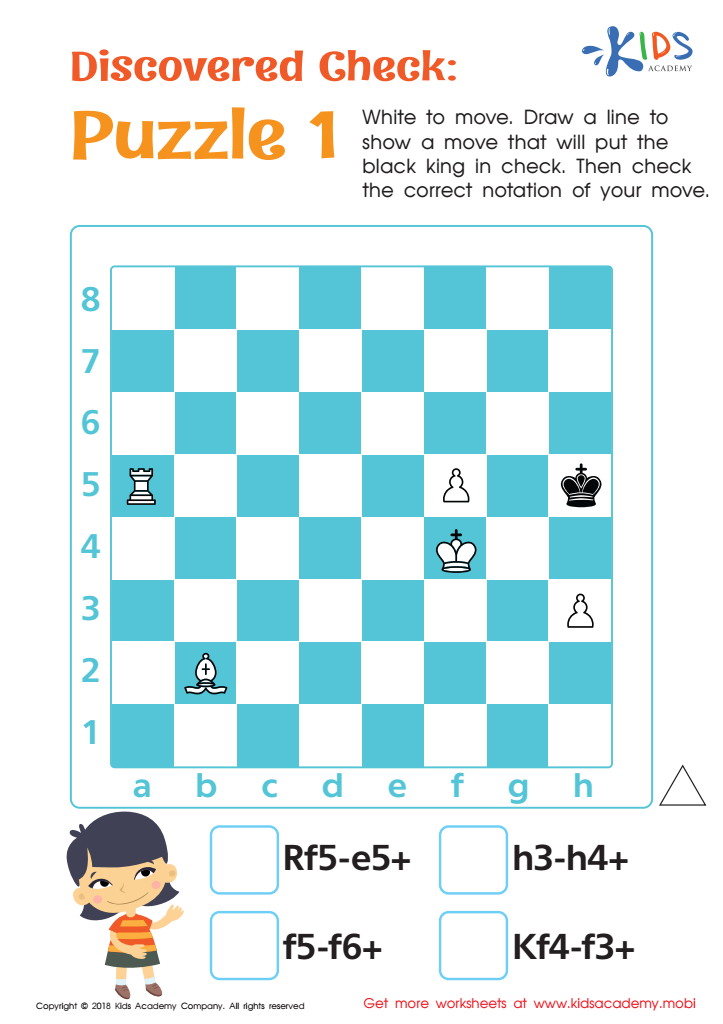
Discovered Check: Puzzle 1 Worksheet
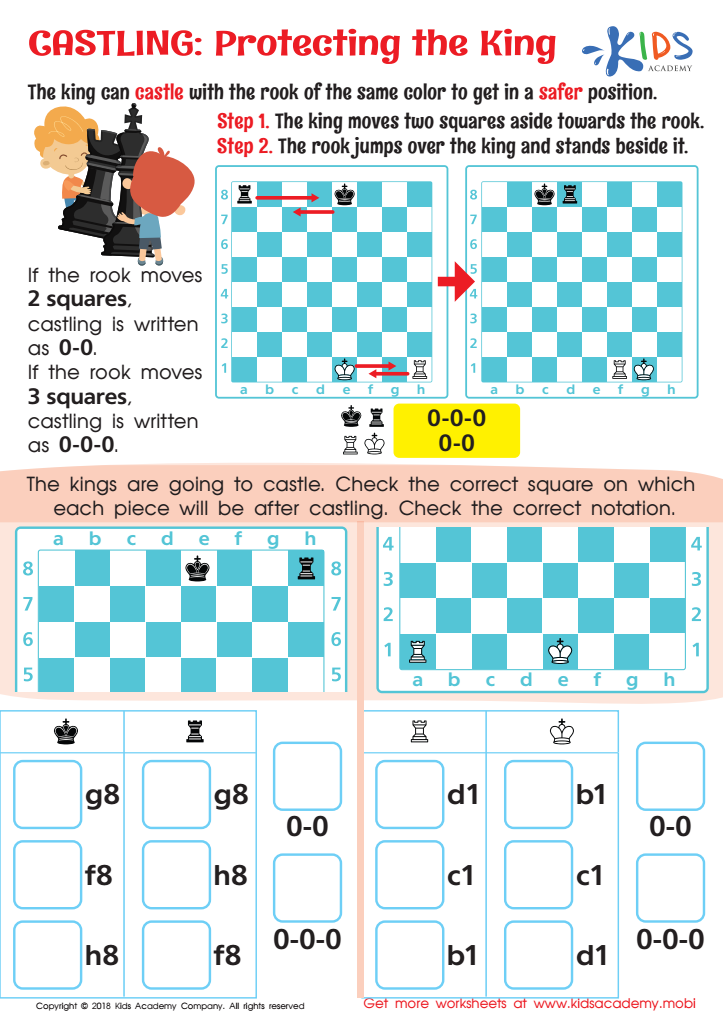
Castling: Protecting the King Worksheet
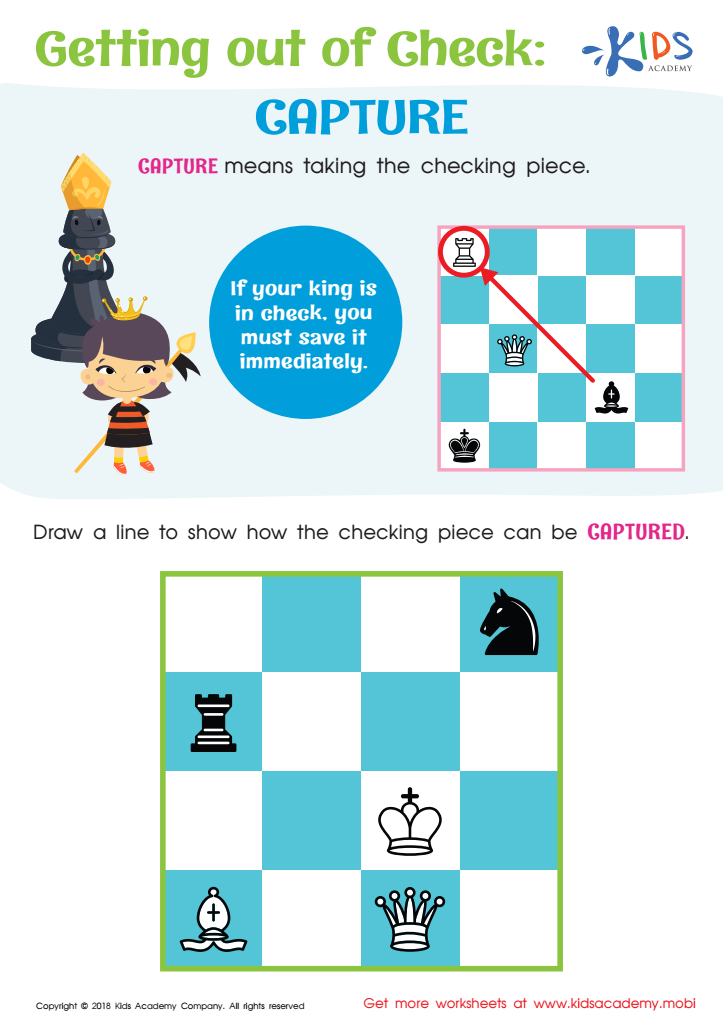
Getting out of Check: Capture




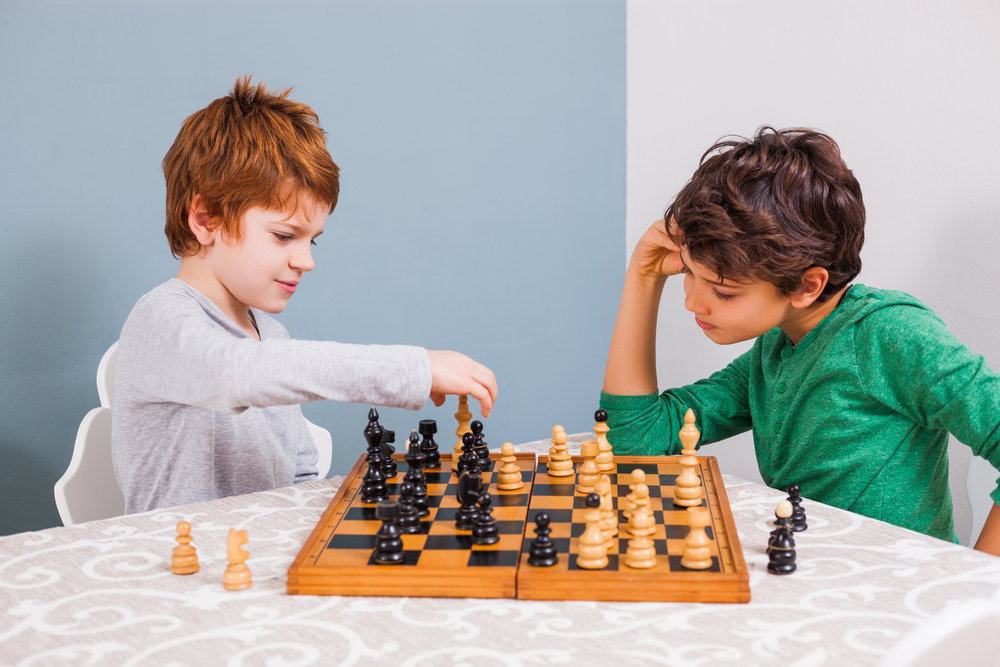
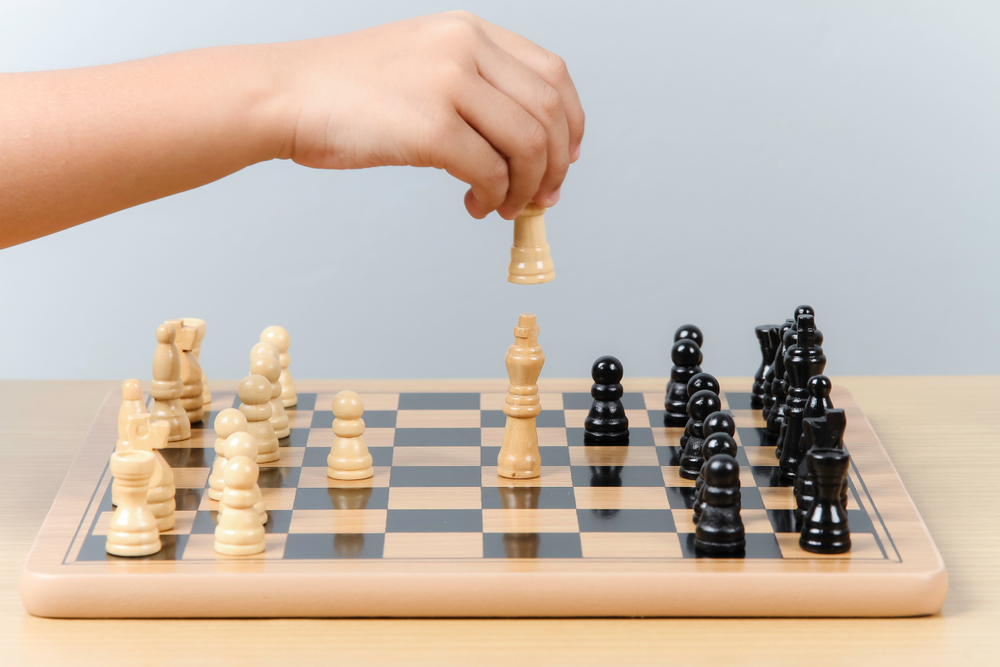

Introducing chess to children aged 5-7 offers numerous developmental benefits that extend beyond the chessboard. Understanding chess strategy helps young learners enhance critical thinking and problem-solving skills. As they navigate the complexities of the game, they develop foresight by predicting opponents' moves and planning their own, fostering essential analytical abilities.
Moreover, chess teaches valuable lessons in patience, as players must wait for the right moment to execute their strategies. This nurture of delayed gratification encourages children to think strategically rather than react impulsively. Additionally, the game instills a sense of responsibility and ownership, as each player learns that their decisions directly impact the outcome of the game.
Socially, chess promotes healthy competition and sportsmanship. Children learn to win graciously and accept losses gracefully, cultivating emotional intelligence. This setting also encourages collaboration and communication when engaging in games with peers.
For parents and teachers, supporting chess education means nurturing well-rounded individuals equipped with vital life skills. Chess can become a powerful tool in shaping a child's cognitive and social abilities, establishing a foundation for future academic and personal success. Therefore, investing in chess strategy understanding is more than just teaching a game; it's about developing life skills that last a lifetime.