Animal Classification Worksheets for Ages 5-7
7 filtered results
-
From - To
Explore our engaging Animal Classification Worksheets for ages 5-7, designed to make learning fun! These worksheets help young learners understand the diverse world of animals through easy-to-follow activities that promote critical thinking and creativity. Kids will sort, classify, and identify various animals, enhancing their knowledge of habitats and characteristics. Our worksheets not only support essential skills in science and categorization but also foster curiosity about the natural world. Perfect for homeschooling, classroom use, or individual enrichment, these resources are colorful, interactive, and tailored to fit the developmental needs of young children. Dive into your child’s learning adventure today!
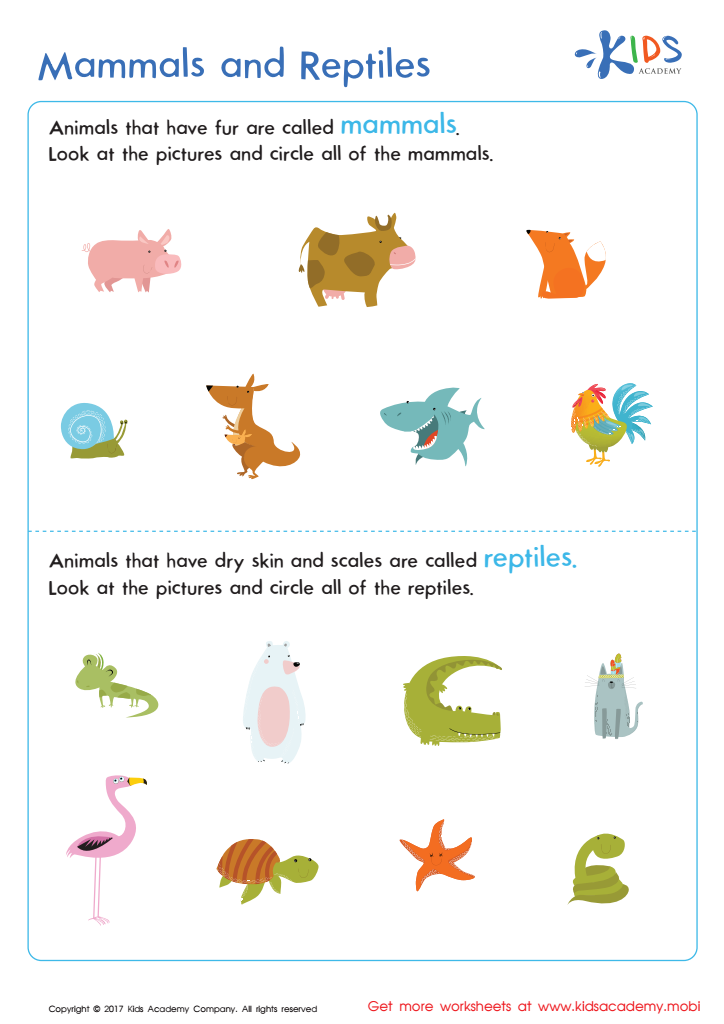
Mammals and Reptiles Worksheet
 Assign to My Students
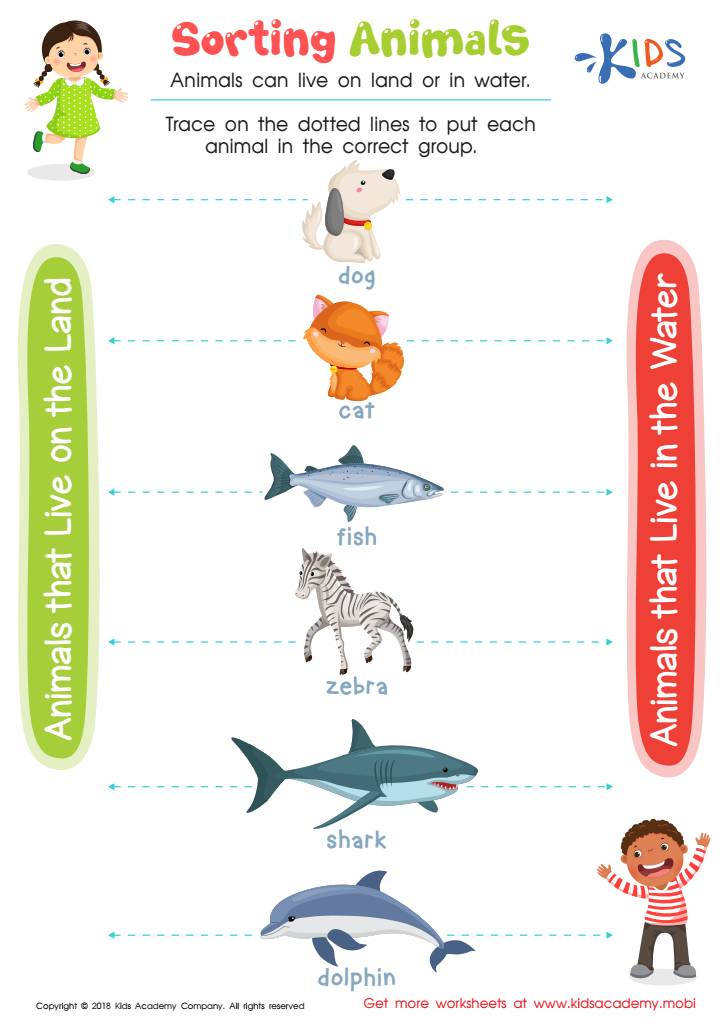
Sorting Animals Worksheet
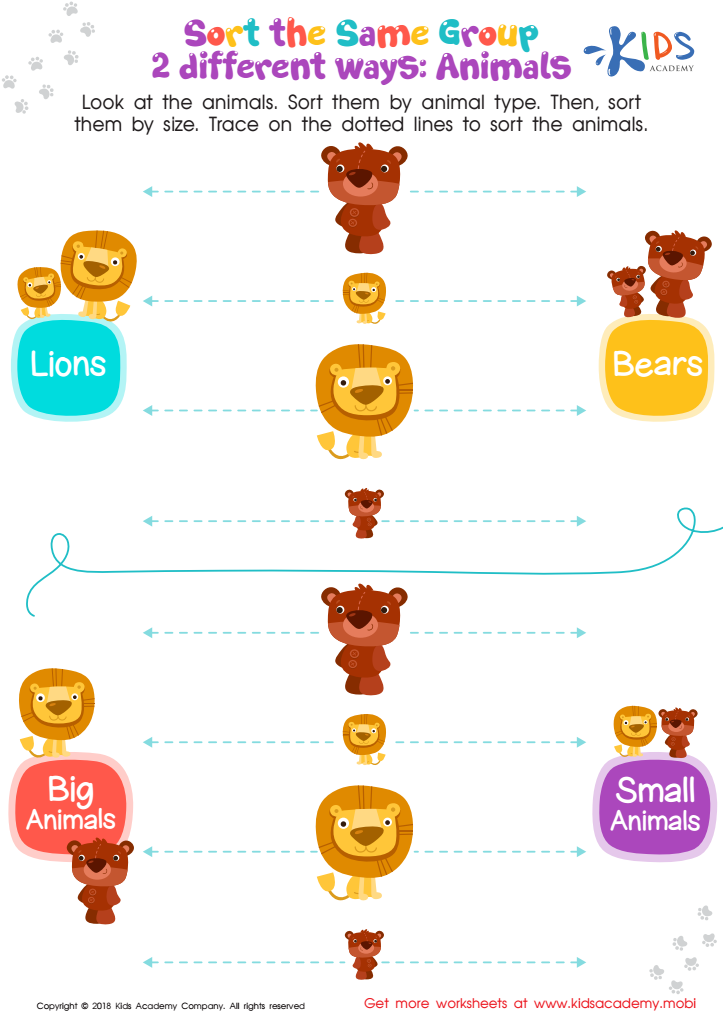
Sort the Same Group 2 Different Ways: Animals Worksheet
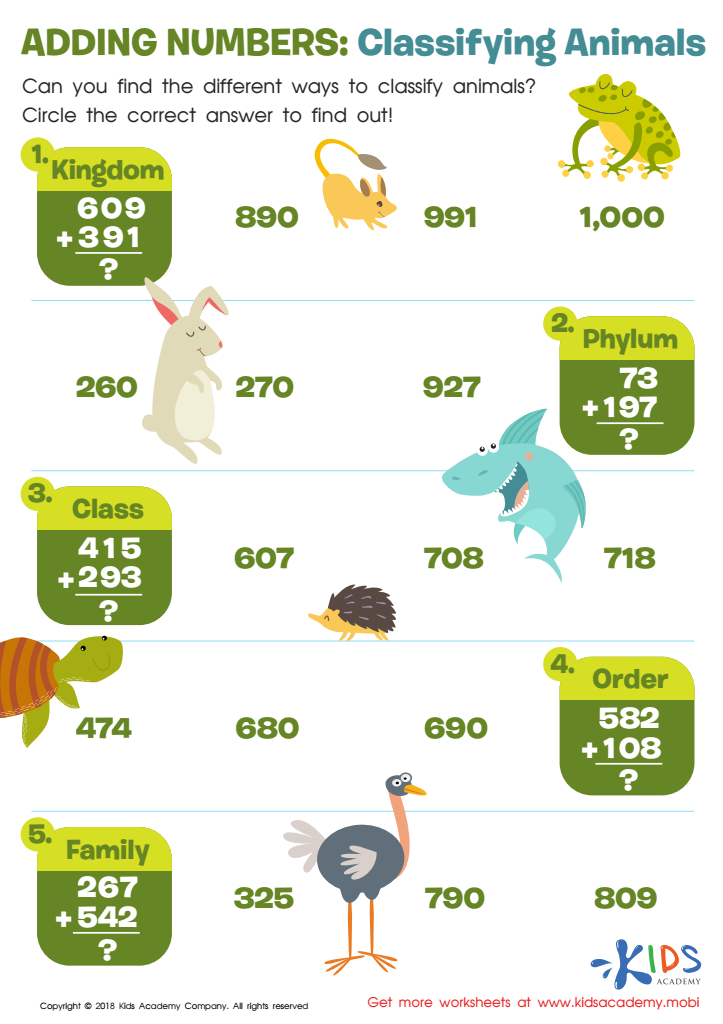
Adding Numbers: Classifying Animals Worksheet
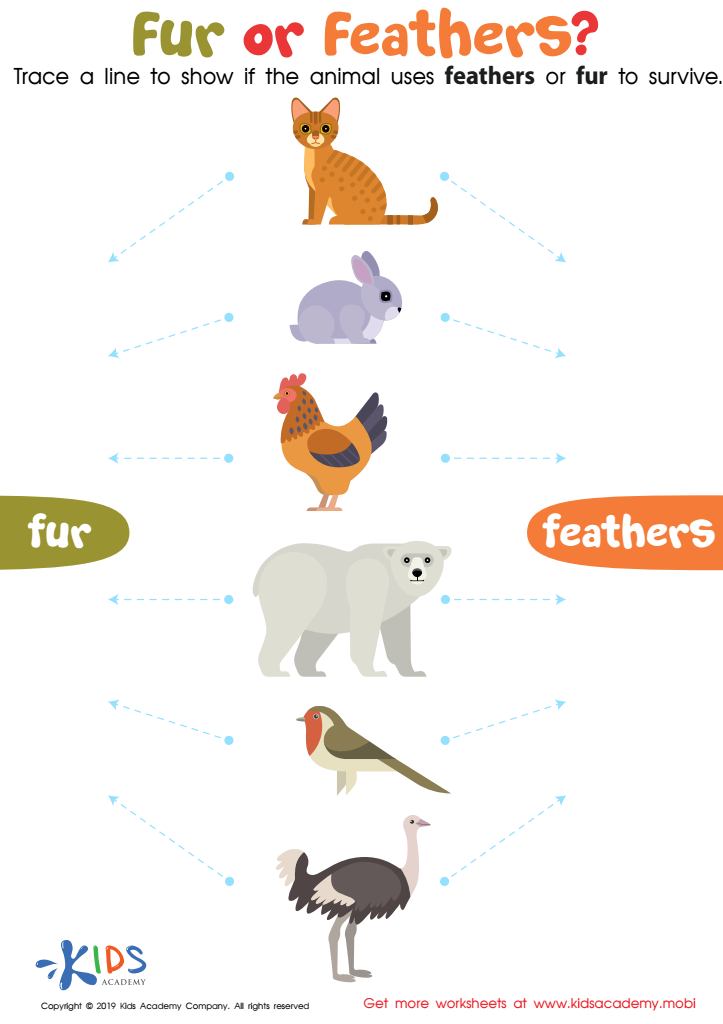
Fur or Feathers? Worksheet
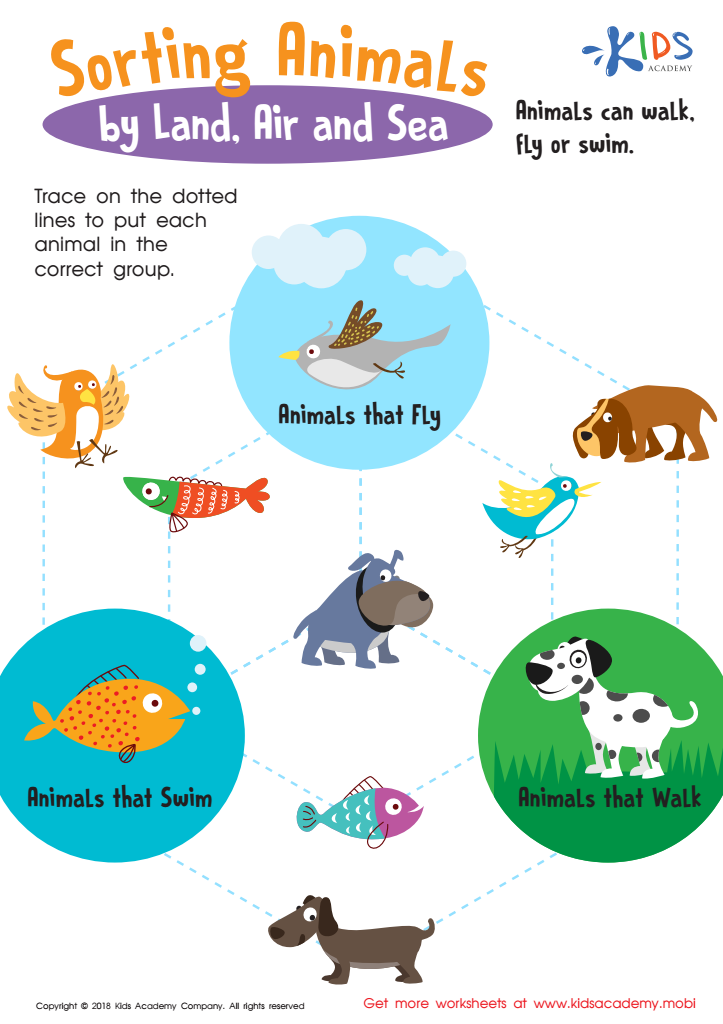
Sorting Animals by Land, Air and Sea Worksheet
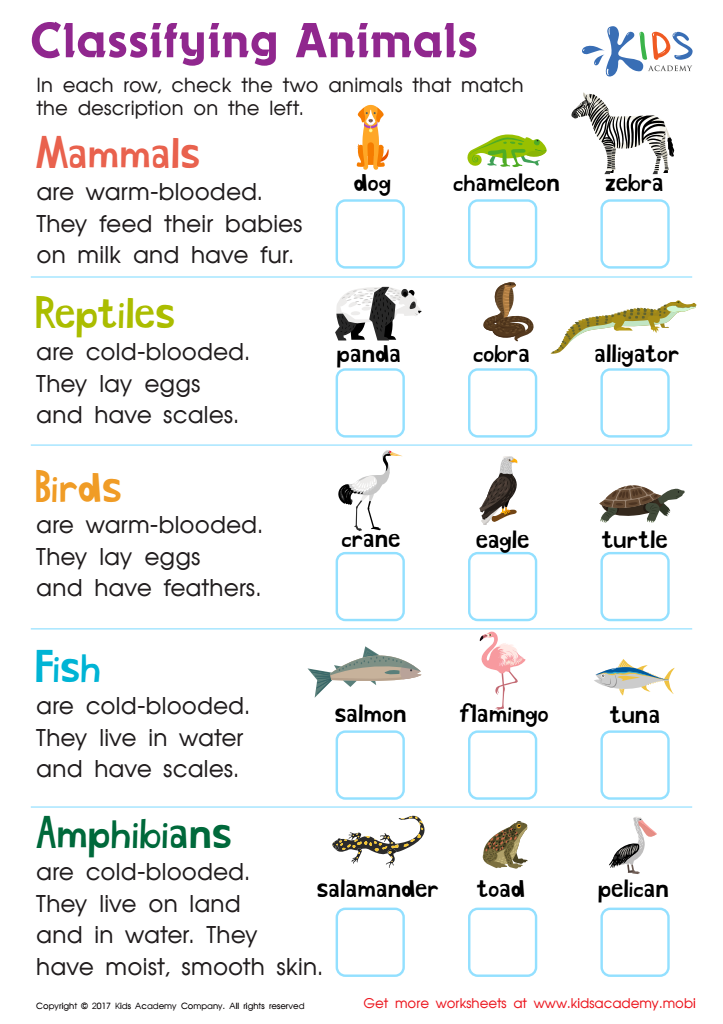
Classifying Animals Worksheet







Animal classification is crucial for children ages 5-7, as it lays the groundwork for their understanding of the natural world. By learning about different animal groups—such as mammals, birds, reptiles, amphibians, and fish—young learners develop critical thinking skills. These concepts help them categorize and make sense of their environment, fostering curiosity and exploration.
For parents and teachers, engaging children in the topic of animal classification enhances their comprehension of biodiversity and ecosystems. As children recognize the traits that set animals apart, they begin to see the connections within nature and appreciate the importance of conservation. This early awareness instills respect for all living creatures, promoting empathy and responsibility toward animals and their habitats.
Moreover, classes and discussions centered around animal classification can spark early interests in science, potentially inspiring future careers in biology, ecology, or veterinary fields. Learning together also strengthens the bond between parents, teachers, and children, creating shared experiences that can reinforce lessons and deepen knowledge.
Incorporating fun activities like sorting animals or observing local wildlife can make learning about classification enjoyable, transforming it into a lifelong passion for students. Ultimately, knowing how to classify animals is a stepping stone to a richer understanding of the world around us.








