Basic geometry knowledge Worksheets for Ages 5-7
4 filtered results
-
From - To
Discover our engaging Basic Geometry Knowledge Worksheets for children aged 5-7, designed to spark curiosity and foster essential math skills. These worksheets introduce young learners to fundamental geometric concepts such as shapes, patterns, and spatial awareness through fun, interactive activities. Each worksheet encourages critical thinking and problem-solving in a playful manner, making learning enjoyable. Perfect for home education or classroom use, our resources support early learners in building a strong foundation in geometry. Download and print the worksheets today to give your child the opportunity to explore the exciting world of shapes while honing their mathematical abilities!
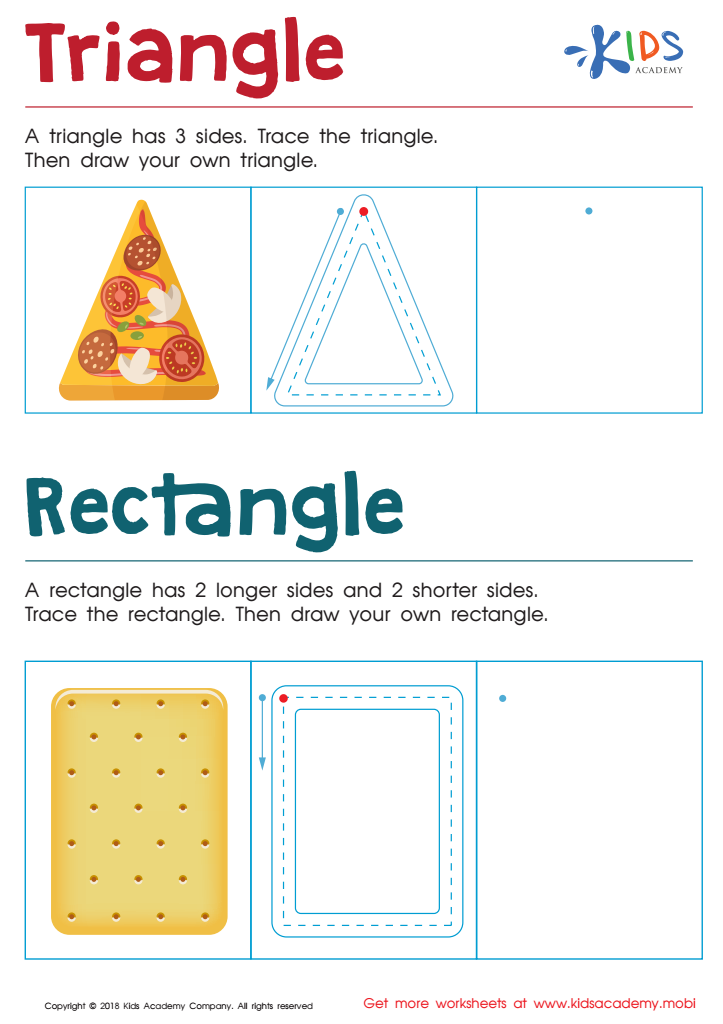
Triangle Rectangle Worksheet
 Assign to My Students
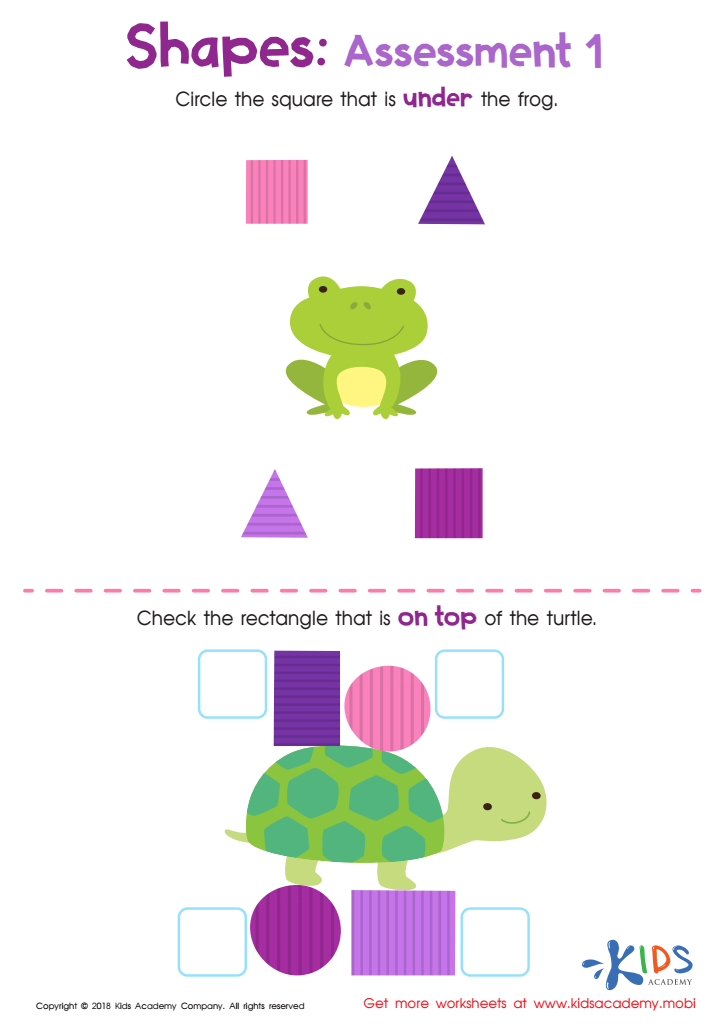
Geometry – Assessment 1 Worksheet
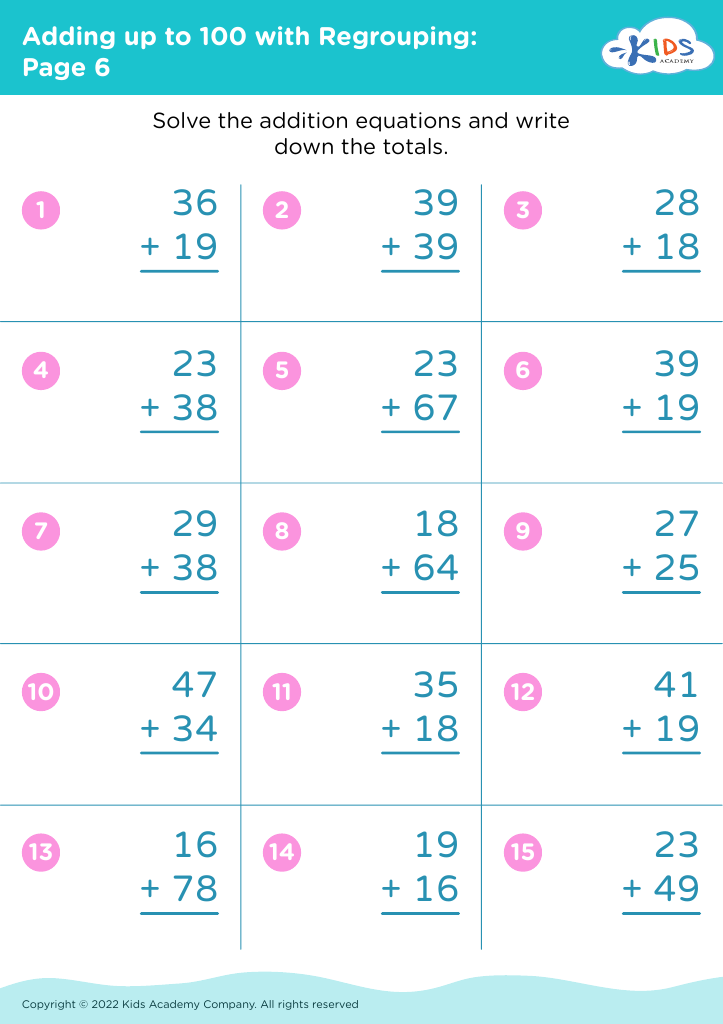
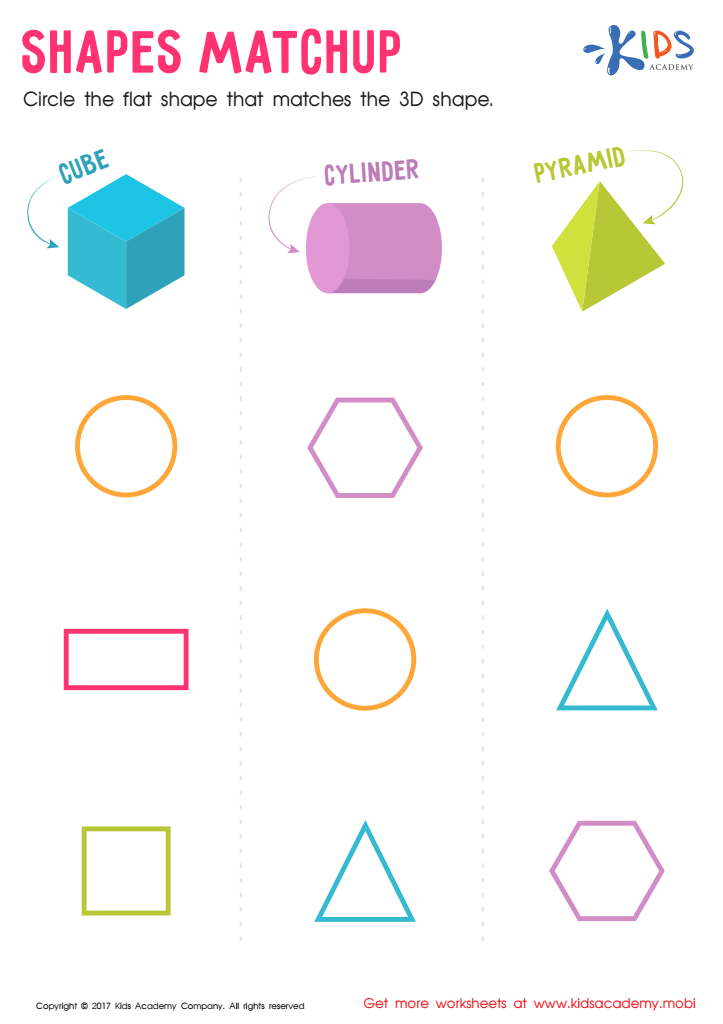
Shapes Matchup Worksheet







Parents and teachers should prioritize basic geometry knowledge for children ages 5-7 for several compelling reasons. First and foremost, early exposure to geometric concepts fosters critical thinking skills. By recognizing shapes and understanding their properties, children learn to categorize and make connections between their environment and abstract concepts. This foundational learning enhances cognitive development, paving the way for more complex mathematical reasoning in the future.
Moreover, geometry naturally integrates with everyday life. Understanding shapes and spatial awareness helps children navigate their surroundings, whether they’re playing with blocks or drawing. Implementing geometry in fun activities, such as storytelling with shapes or using visual aids, can make learning engaging and interactive.
Additionally, fostering geometry skills supports the development of fine motor skills as children manipulate materials like scissors and building blocks. These hands-on experiences encourage creativity and problem-solving.
Finally, early geometry knowledge lays the groundwork for STEM (Science, Technology, Engineering, Mathematics) education. In a rapidly evolving world that increasingly values these subjects, a solid grasp of basic geometry can inspire interests that lead to lifelong learning and future career opportunities. Ultimately, understanding geometric concepts empowers children to think critically, solve problems, and engage meaningfully with the world around them.








