Comparing sizes Worksheets for Ages 5-7
12 filtered results
-
From - To
Discover our engaging "Comparing Sizes Worksheets" designed for children aged 5-7! These worksheets help young learners develop essential skills in understanding and comparing different sizes through fun activities and exercises. With colorful illustrations and age-appropriate challenges, students will explore concepts such as big vs. small, tall vs. short, and more. Each worksheet encourages critical thinking and enhances cognitive development while making learning enjoyable. Perfect for both classroom settings and home use, our resources support early math skills and boost confidence in young learners. Download and print these worksheets today to make size comparison a delightful learning adventure for your child!
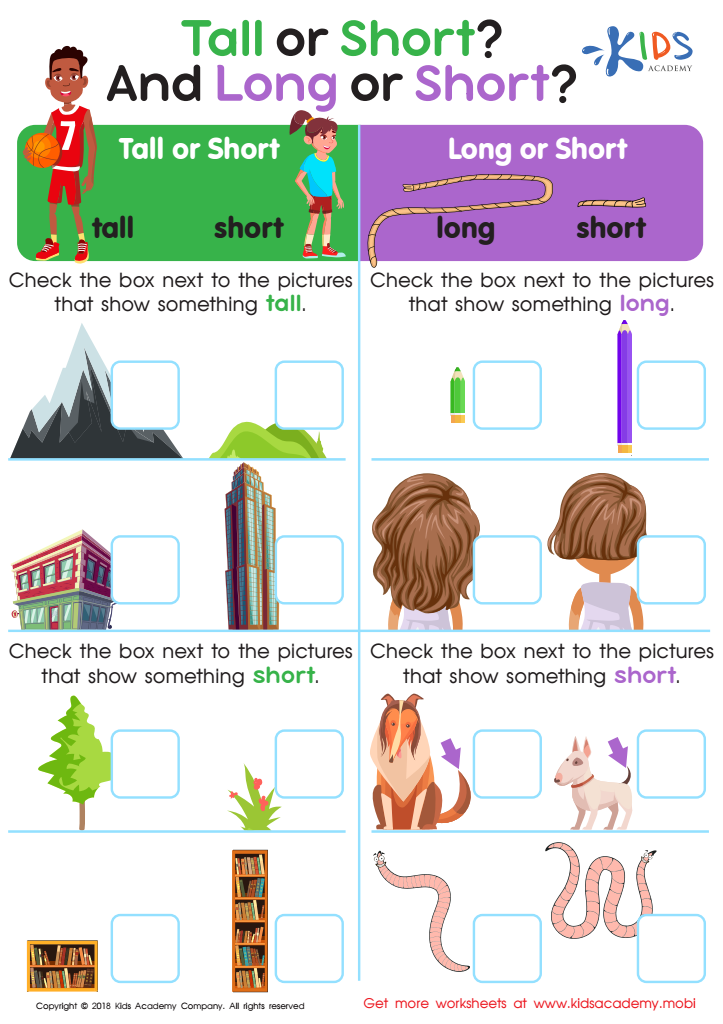
Tall or Short and Long or Short? Worksheet
 Assign to My Students
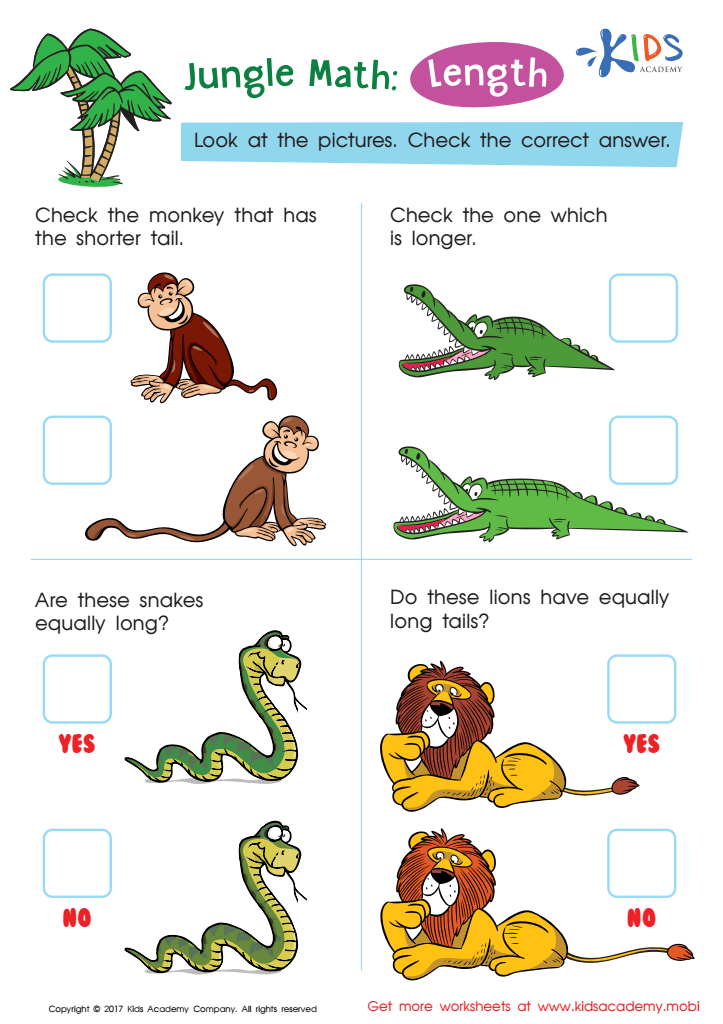
Which One Is Longer - Length Worksheet
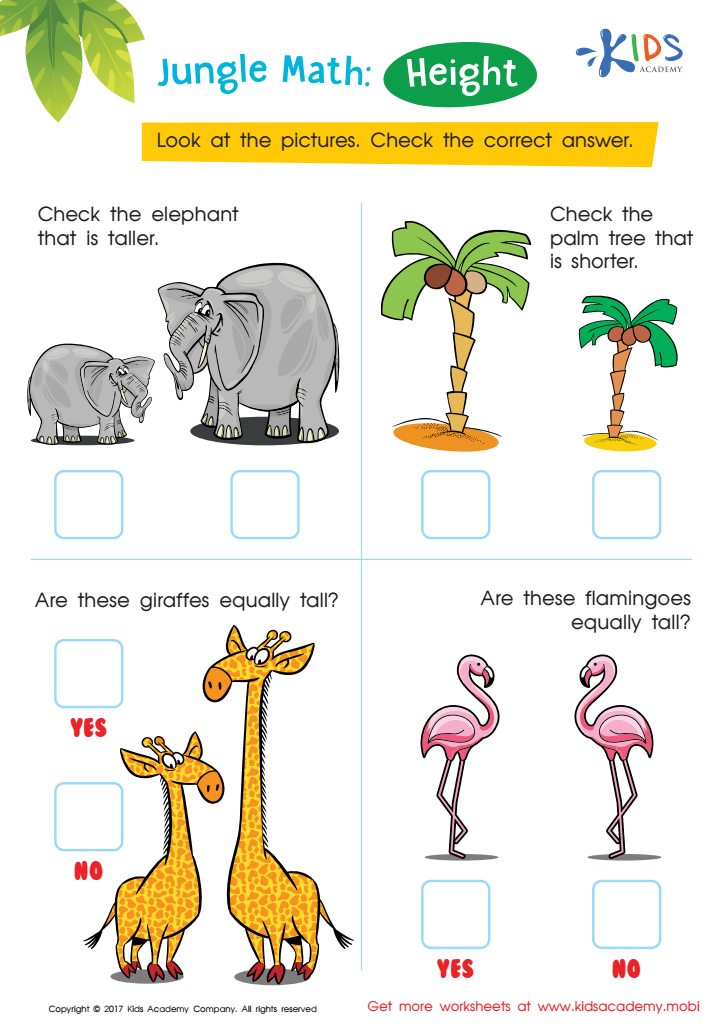
Which Is Taller Worksheet
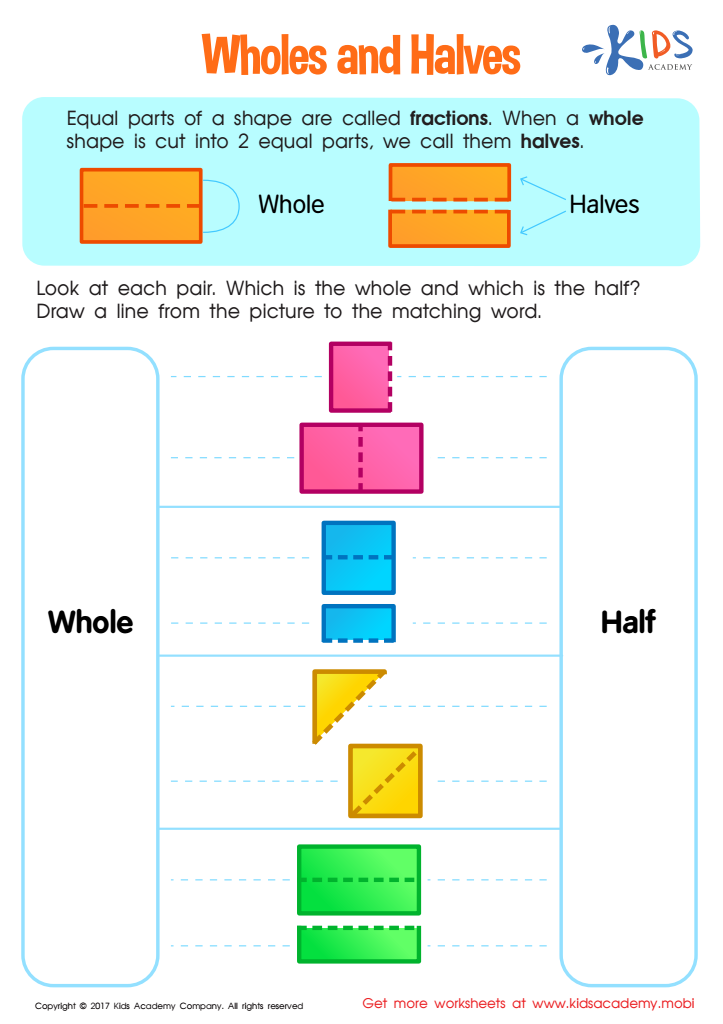
Wholes and Halves Worksheet
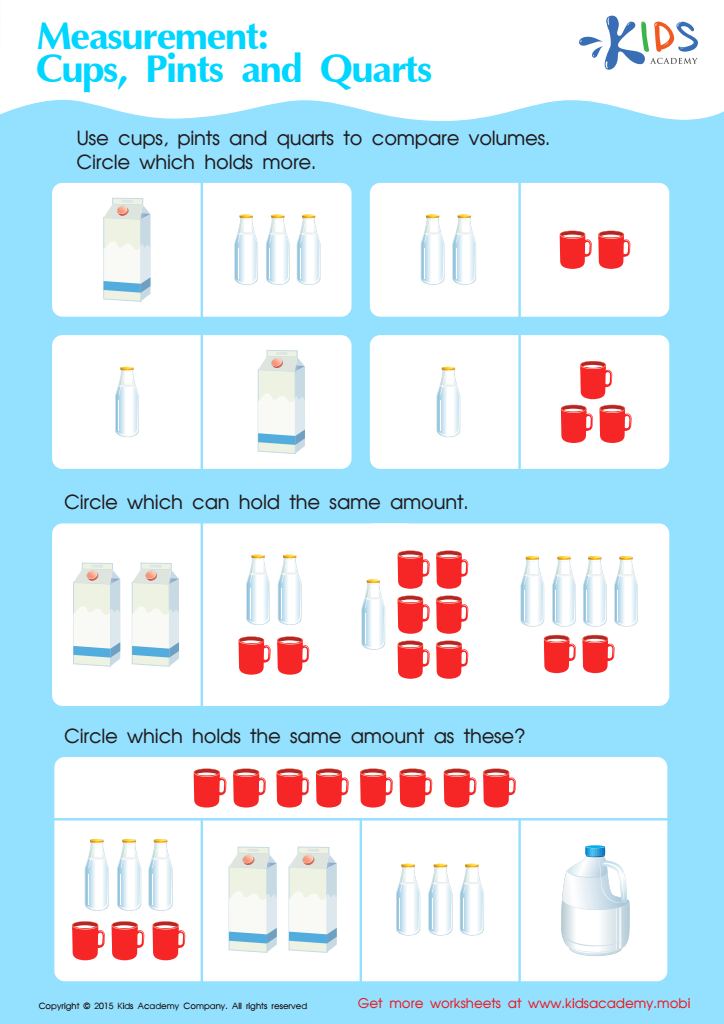
Measurement: Compare Volumes Worksheet
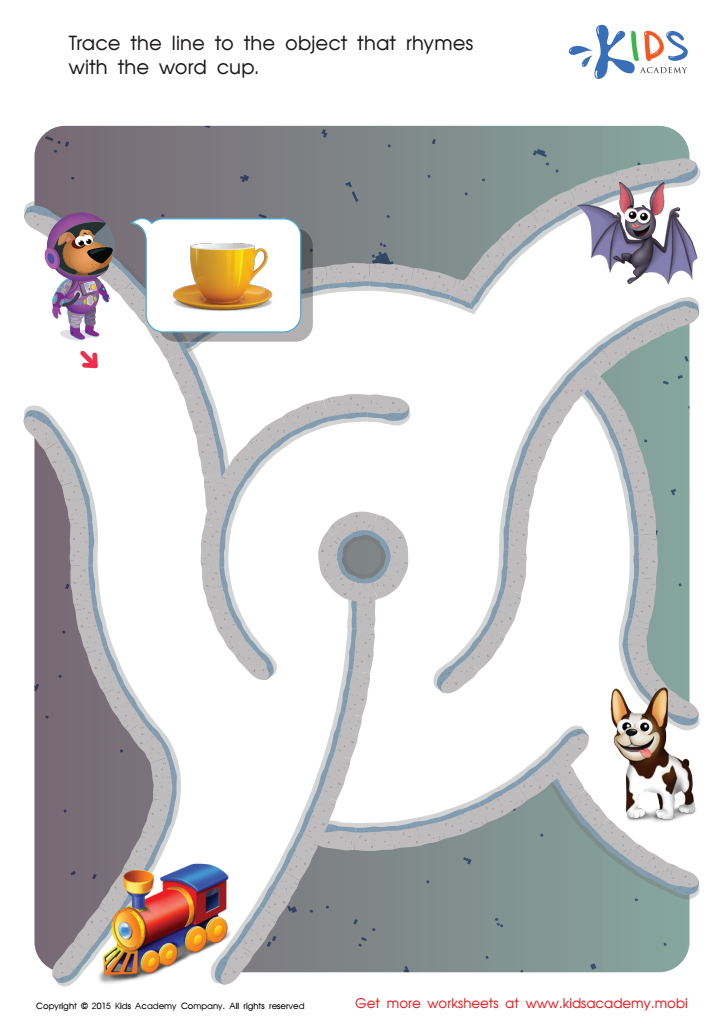
Cup Rhyming Words Worksheet
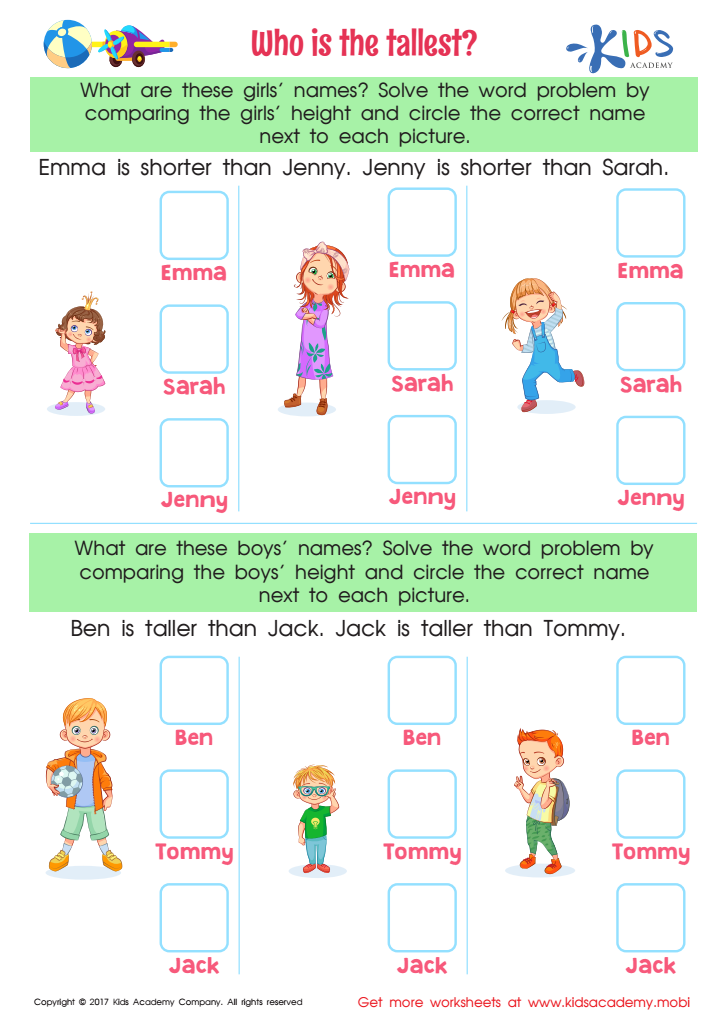
Who Tallest Printable
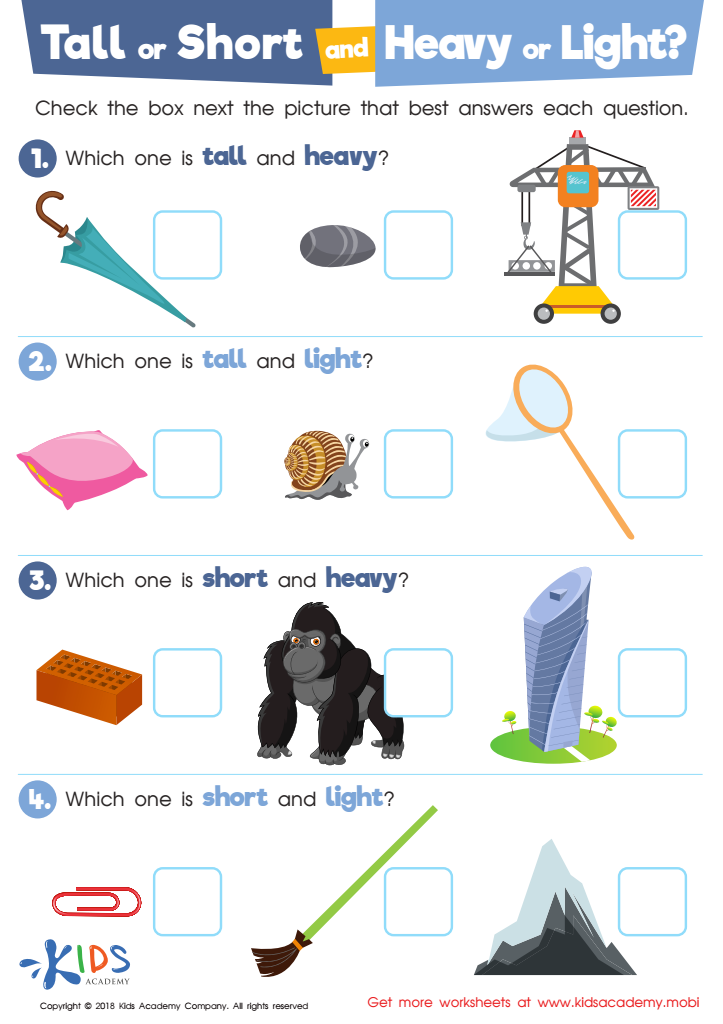
Tall or Short and Heavy or Light? Worksheet
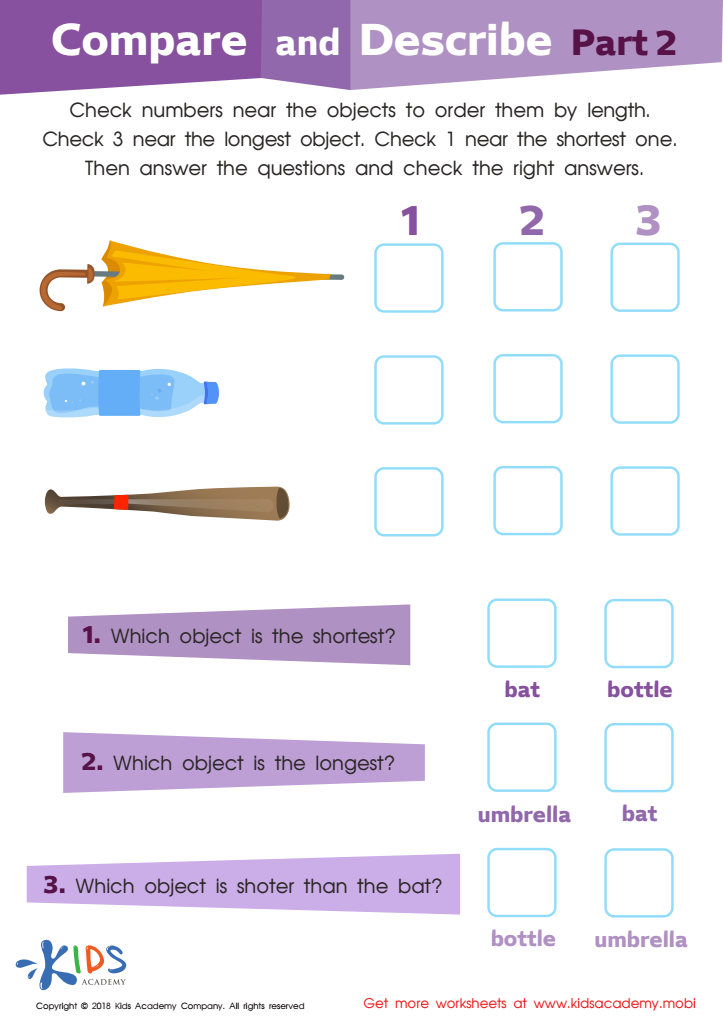
Compare and Describe: Part 2 Worksheet
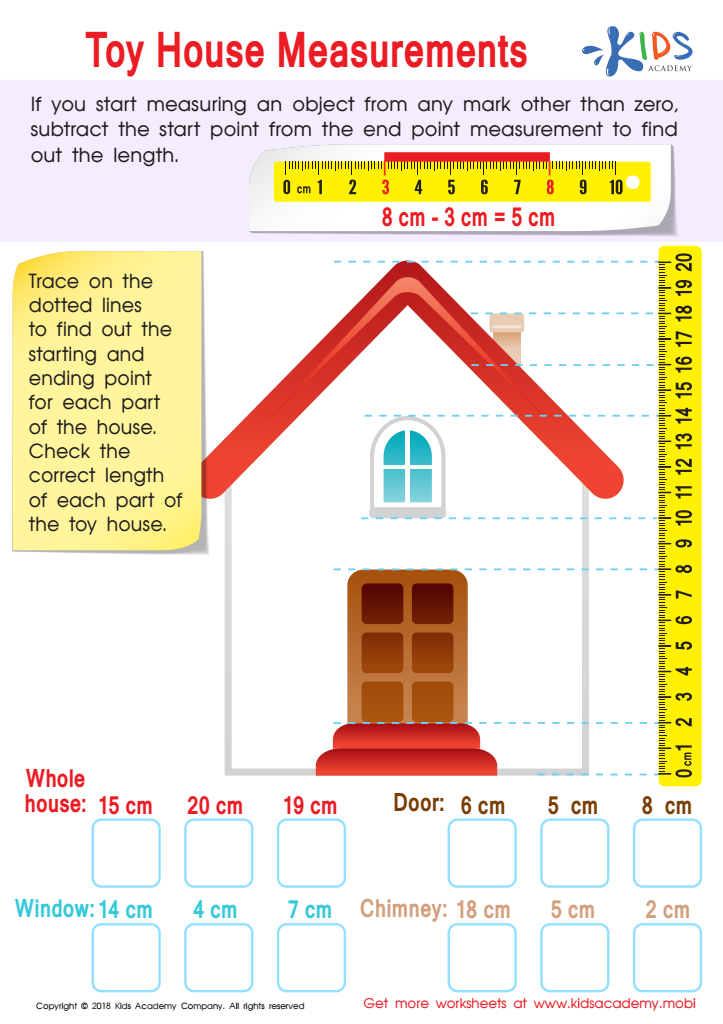
Toy House Measurements Worksheet
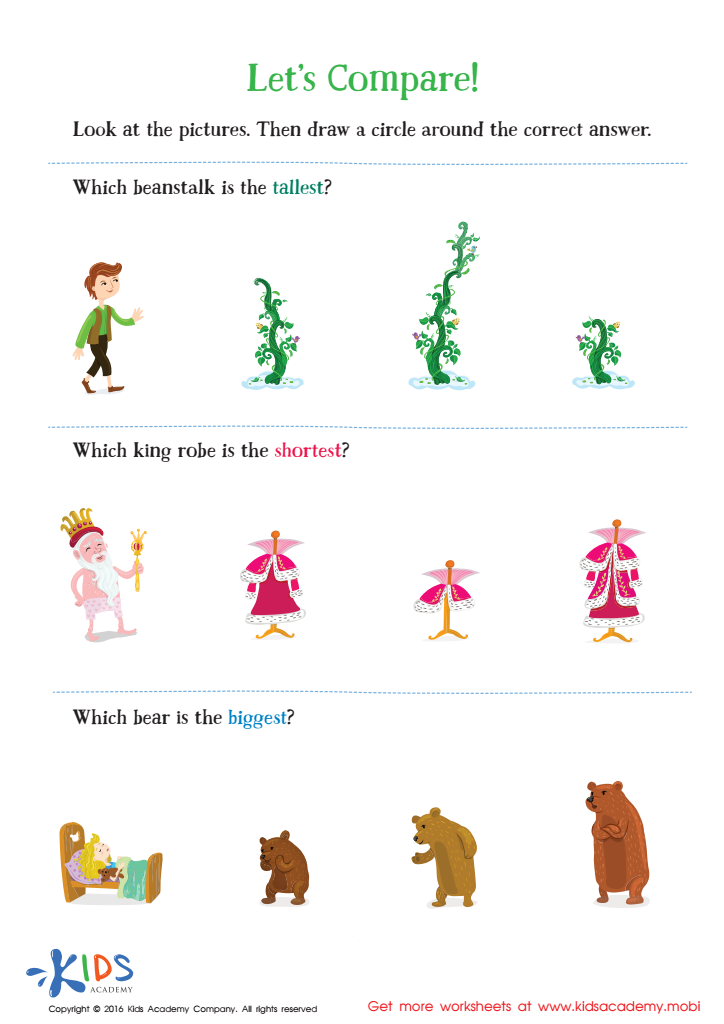
Fairy Tale Worksheet: Let's Compare






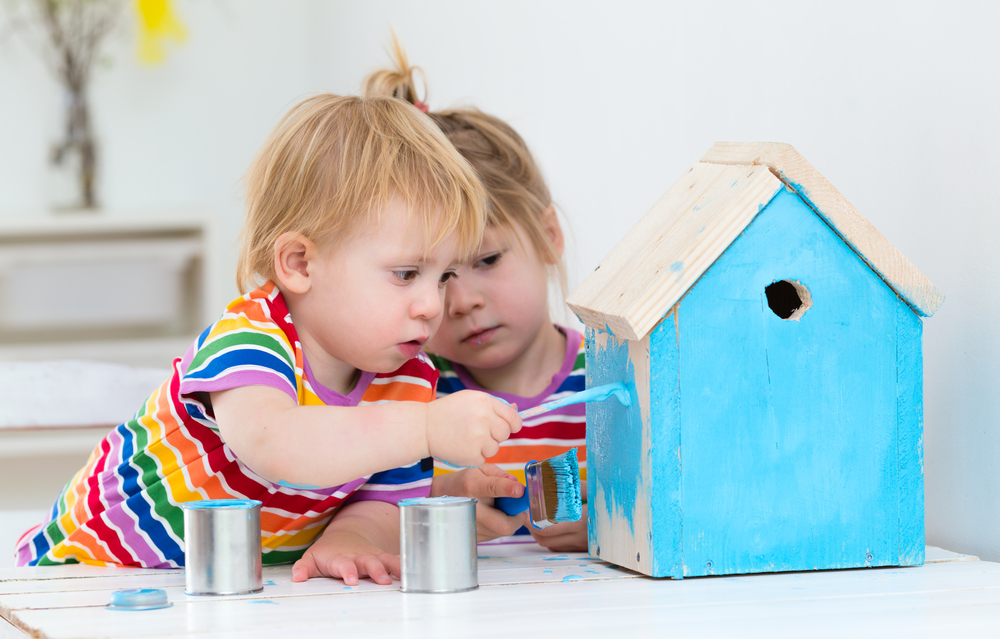
Comparing sizes is a crucial skill for children aged 5-7, impacting their cognitive and social development. Understanding size differences helps children make sense of the world around them, from recognizing their own growth to categorizing objects in their environment. This foundational skill fosters critical thinking; for example, children learn to make comparisons, which aids in problem-solving and decision-making.
Furthermore, size comparisons are integral in early math concepts. They introduce basic mathematical ideas such as measurement, estimation, and spatial awareness. By engaging in activities that explore larger and smaller objects, children build a foundational understanding of numbers and quantities, enhancing their confidence in math as they progress in their education.
Socially, comparing sizes facilitates communication and cooperation skills. Children learn to express comparisons with peer groups or during collaborative play, fostering language development and enhancing relationships. By involving parents and teachers in size comparison activities, they can effectively support children’s learning through real-life examples, such as cooking or organizing toys. Engaging in size comparisons not only fosters growth in academic areas but also strengthens children’s problem-solving abilities and interpersonal skills, laying the groundwork for their overall development and future learning experiences.








