Conversion skills Worksheets for Ages 5-7
5 filtered results
-
From - To
Enhance your child's learning journey with our engaging Conversion Skills Worksheets for Ages 5-7! Designed to introduce young learners to the fascinating world of measurement conversions, these interactive resources make learning fun and effective. Our worksheets cover essential concepts such as converting between different units of measurement, helping children build a solid foundation in math. Featuring colorful illustrations and age-appropriate activities, these worksheets capture children's interest and support their cognitive development. Perfect for both classroom and at-home learning, our Conversion Skills Worksheets ensure your child masters important skills while enjoying the process. Download today and watch them thrive in their mathematical journey!
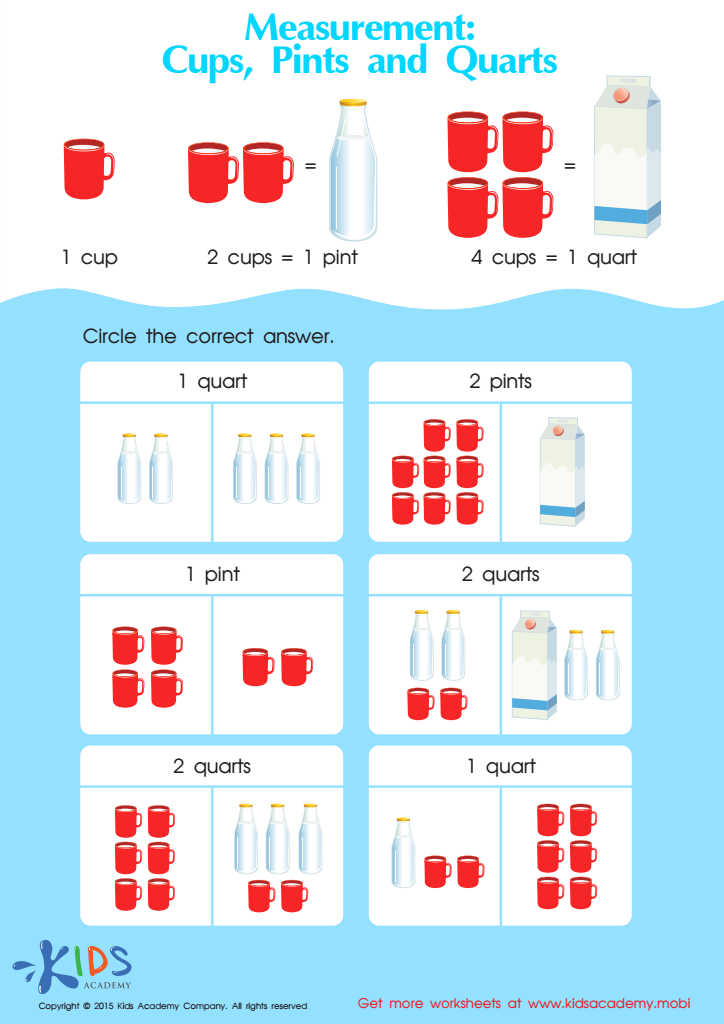
Cups, Pints and Quarts Worksheet
 Assign to My Students
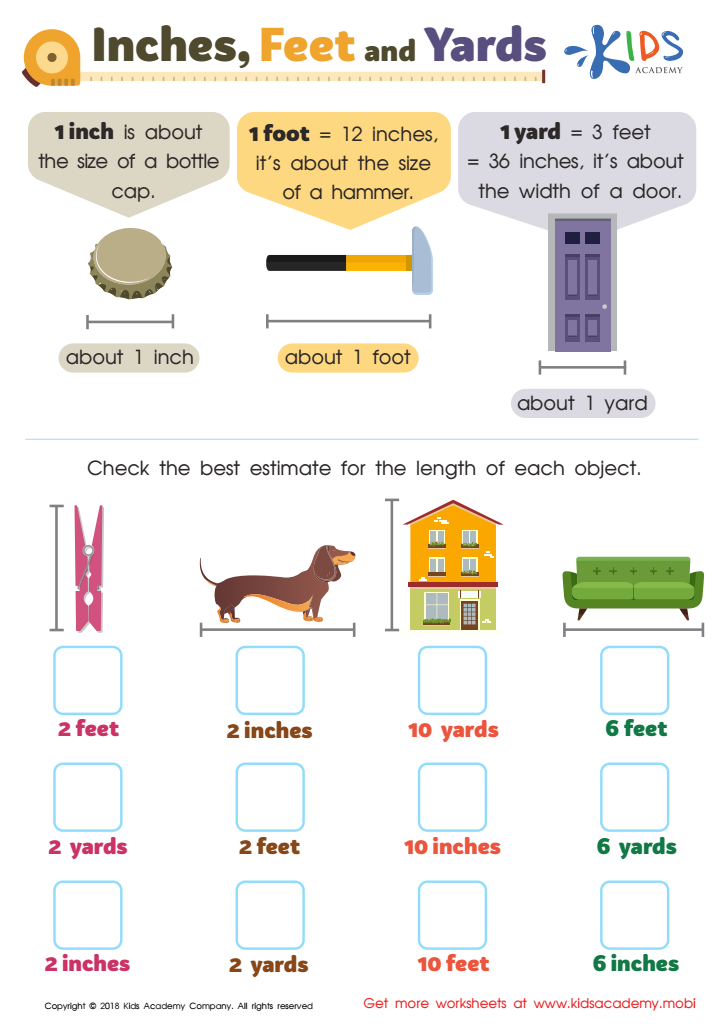
Inches, Feet and Yards Worksheet
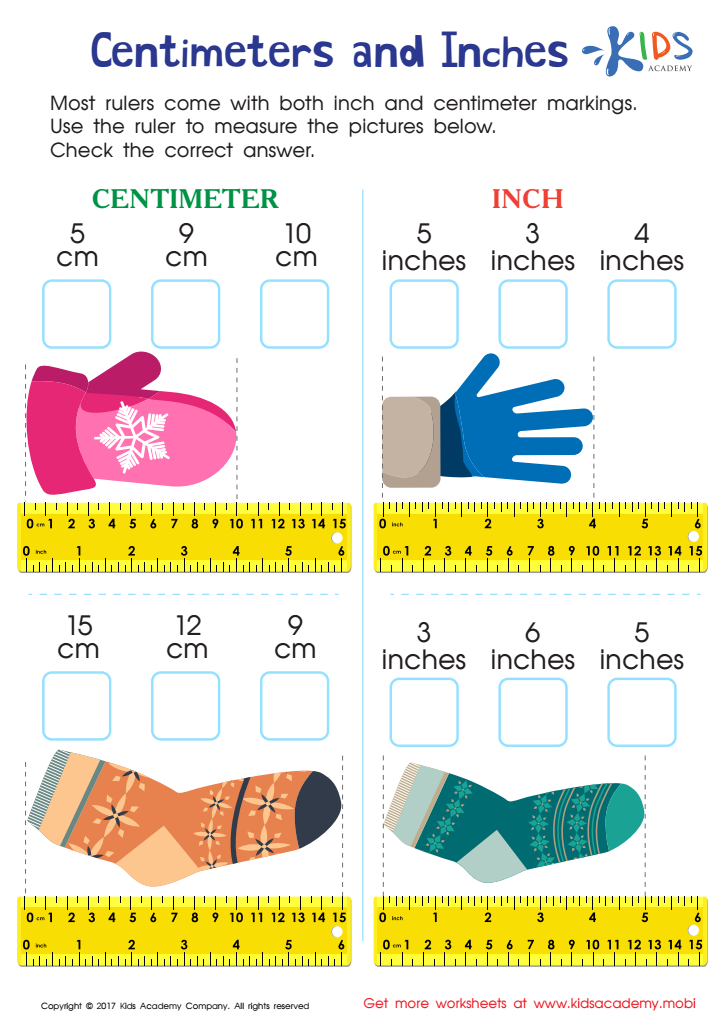
Centimeters and Inches Worksheet
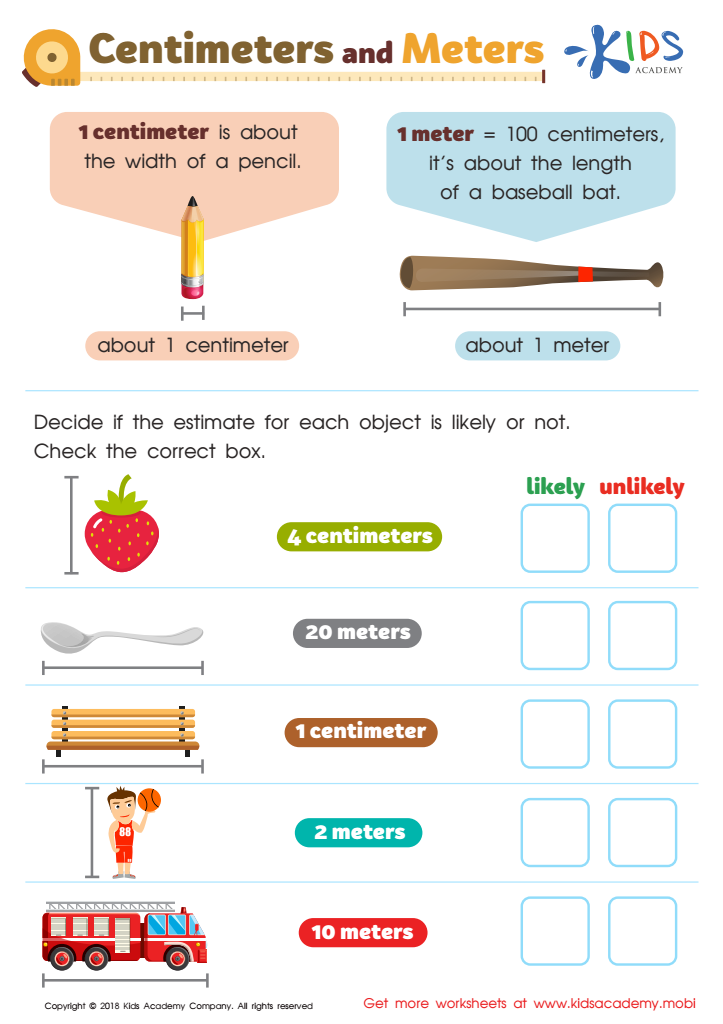
Centimeters and Meters Worksheet
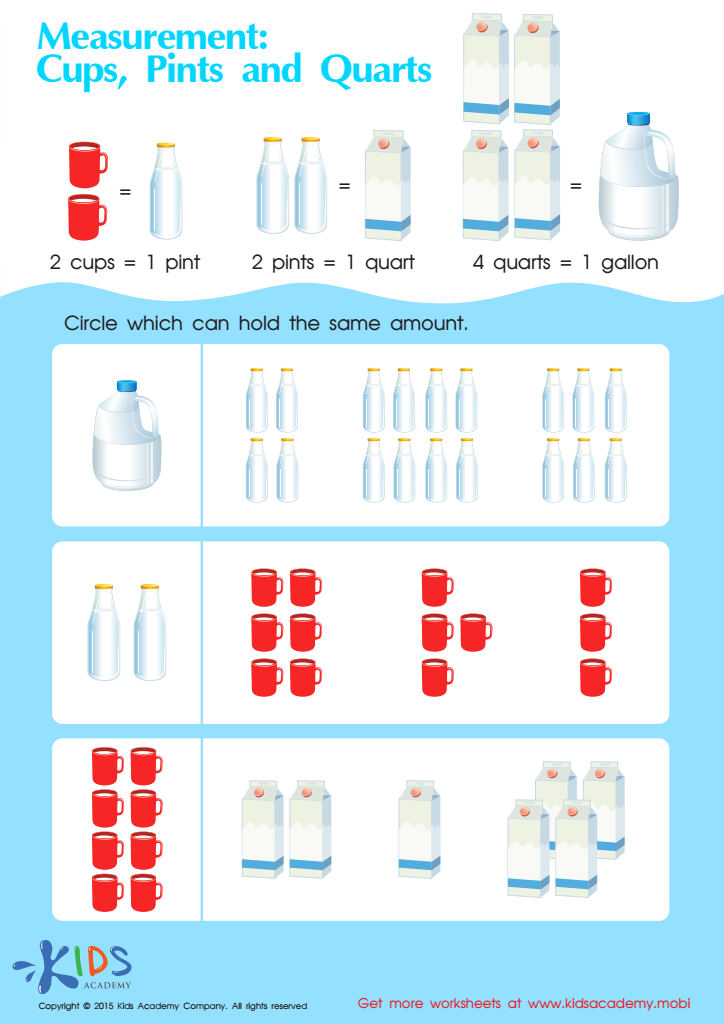
Cups, Pints and Quarts 2 Worksheet







Conversion skills, which include the ability to understand and manipulate numbers into different formats or contexts, are essential for children aged 5-7. During these formative years, children are building foundational mathematical concepts that will support their future learning. Parents and teachers should prioritize these skills because they foster critical thinking, problem-solving, and reasoning abilities.
At this age, children are naturally curious and eager to explore relationships between quantities. By cultivating conversion skills, educators and caregivers can help children understand how to transition between units of measurement, recognize patterns, and visualize mathematical concepts abstractly.
Moreover, strong conversion skills contribute to children’s confidence in handling math-related tasks or word problems. By learning how to convert numbers (such as transforming 2 apples into 4 halves), children can become more fluent with basic arithmetic operations. This not only supports their cognitive development but also helps them to apply math in real-world scenarios, enhancing their lifelong learning.
Fostering conversion skills also prepares children for more complex mathematical concepts they will encounter in later grades. Engaging and teaching these skills through play and practical activities can create a positive attitude toward mathematics, ensuring children develop a solid foundation for future academic success.








