
Handwriting development Worksheets for Ages 5-7
3 filtered results
Difficulty Level
Grade
Age
-
From - To
Subject
Activity
Standards
Discover our engaging Handwriting Development Worksheets designed specifically for children ages 5-7! These interactive worksheets aim to enhance fine motor skills and foster a love for writing through fun activities that promote letter recognition, formation, and fluidity. Tailored to meet early learning standards, our resources include traceable letters, guided writing practice, and creative writing prompts, ensuring a well-rounded approach to handwriting development. Ideal for home or classroom use, these worksheets support young learners as they develop confidence in their writing abilities. Explore new ways to make handwriting enjoyable and effective with our thoughtfully crafted resources for early learners!
Favorites
With answer key
Interactive
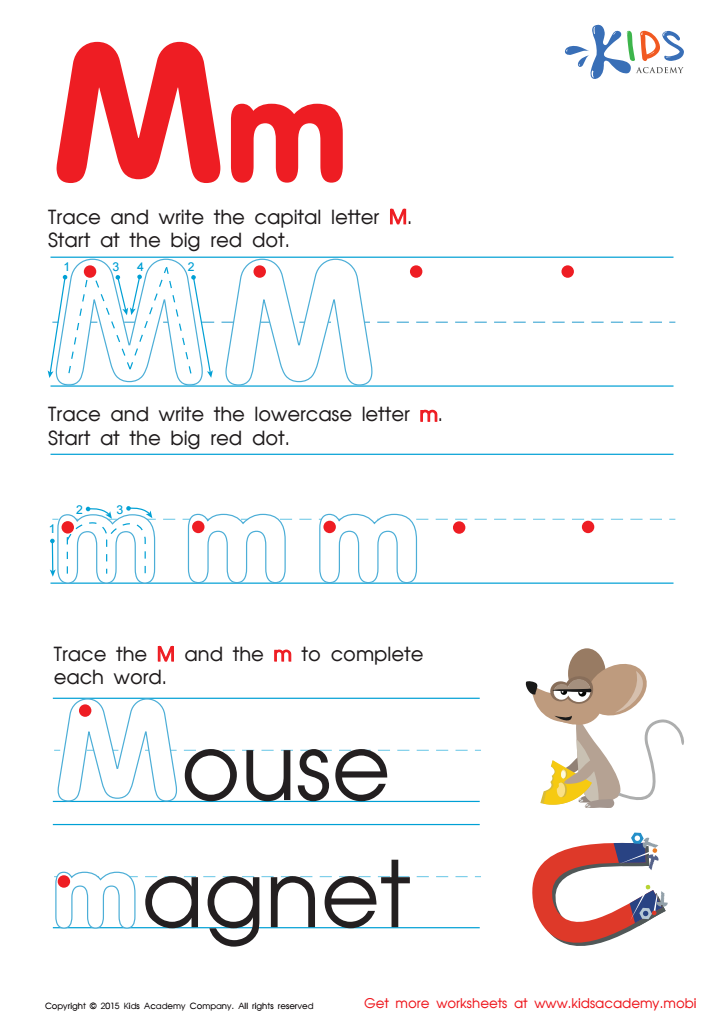
Letter M Tracing Page
Trace and write the letter "M" to help kids learn the alphabet. Start at the red dot and practice several times. Trace the capital letter first, then move on to the lowercase. Complete words like "mouse" and "magnet" in the further exercise. Get more free printables here.
Letter M Tracing Page
Worksheet
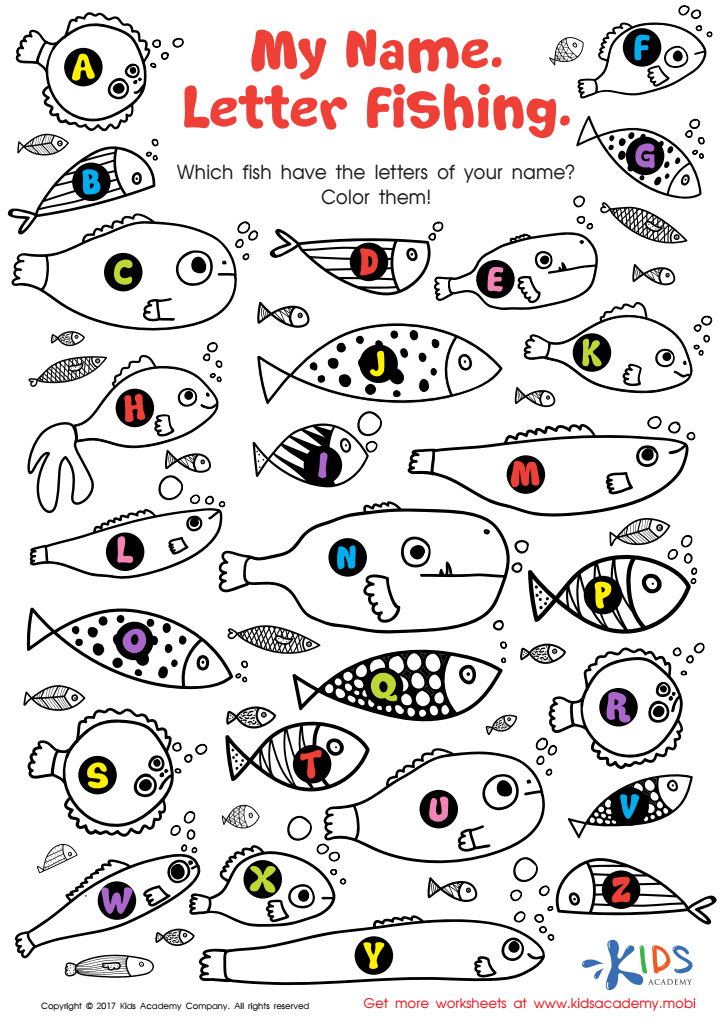
My Name: Letter Fishing Worksheet
Dive into the deep sea and search for fish with a letter on them. Can you find all the letters from your name? Color your favorite fish with crayons and be creative! On the other side, use the letters you found to write your name. Have fun coloring and finding the letters of your name! (80 words)
Download (PDF)
 Assign to My Students
Assign to My Students
My Name: Letter Fishing Worksheet
Worksheet
Join Kids Academy for Free
Who is primarily going to use this learning content?






.jpg)
Handwriting development in children aged 5-7 is crucial for several reasons. Firstly, this stage is vital for developing fine motor skills, which are essential for writing and other everyday tasks. Mastering these skills can enhance a child's hand-eye coordination and dexterity, laying the foundation for future academic success.
Furthermore, handwriting is not merely about crafting letters; it is a critical component of literacy. As children learn to write, they engage in phonemic awareness, spelling, and vocabulary building. This process supports reading development, helping them become more competent readers and communicators.
Additionally, writing allows young children to express their thoughts and creativity. A strong foundation in handwriting can boost their self-confidence and promote a positive attitude toward learning. Teachers and parents should also consider the implications of legible handwriting on future educational assessments, where clear communication of ideas is often essential.
Encouraging good handwriting practices fosters patience and perseverance in children, essential traits for lifelong learning. Overall, prioritizing handwriting development paves the way for academic achievement and personal growth, making it an essential focus for parents and educators alike.








