
Identifying differences Worksheets for Ages 5-7
3 filtered results
Difficulty Level
Grade
Age
-
From - To
Subject
Activity
Standards
Our "Identifying Differences Worksheets for Ages 5-7" are designed to sharpen young minds and help children develop critical observation skills. These engaging activities challenge kids to spot differences between similar images, enhancing their attention to detail and problem-solving abilities. Perfectly crafted for early learners, these worksheets make learning fun while aiding cognitive development. As children differentiate between shapes, sizes, and objects, they boost their visual discrimination skills, crucial for reading and math. Download our printable worksheets to provide your child with a productive, educational pastime that promotes growth and learning in an interactive and enjoyable way.
Favorites
With answer key
Interactive
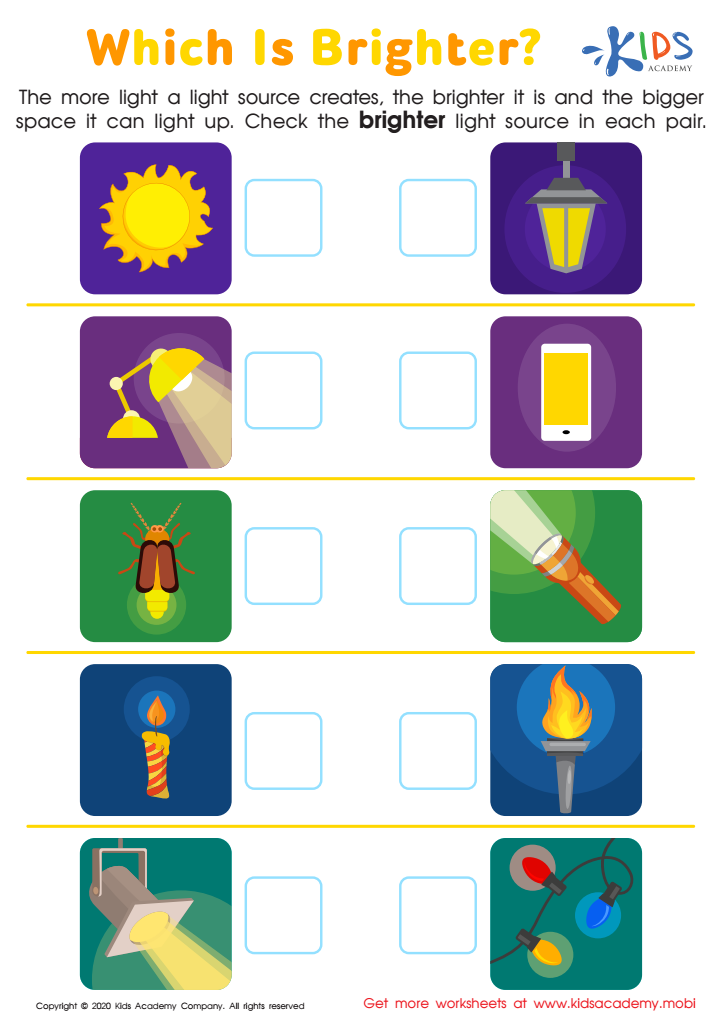
Which Is Brighter? Worksheet
Before the exercise, ask students to recall sources of light. Use this worksheet to explain that the brighter the light source, the more space it can light up. Identify the different light sources in the pictures, then check the brighter light source in each pair. The biggest natural source of light is the sun.
 Assign to My Students
Which Is Brighter? Worksheet
Worksheet
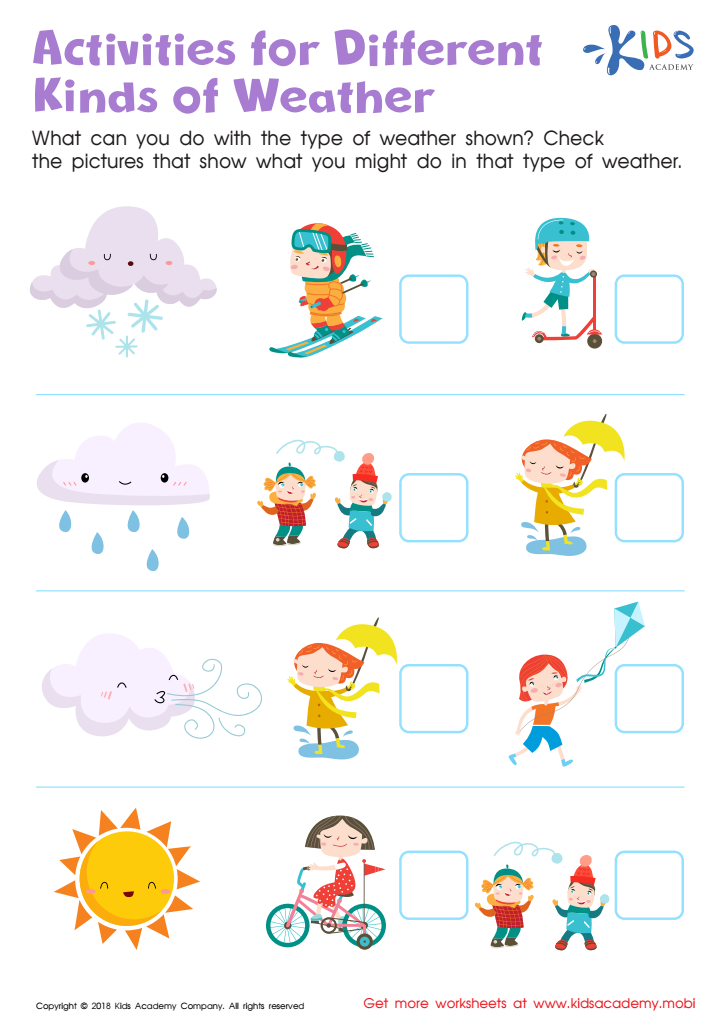
Activities for Different Kinds of Weather Worksheet
Help your child explore the changing seasons with this interactive worksheet. Ask them to name the different seasons and activities associated with each type of weather. Show the pictures and explain what they can do in that kind of weather. Have them check off the activities to help them learn and enjoy the changing seasons.
Activities for Different Kinds of Weather Worksheet
Worksheet
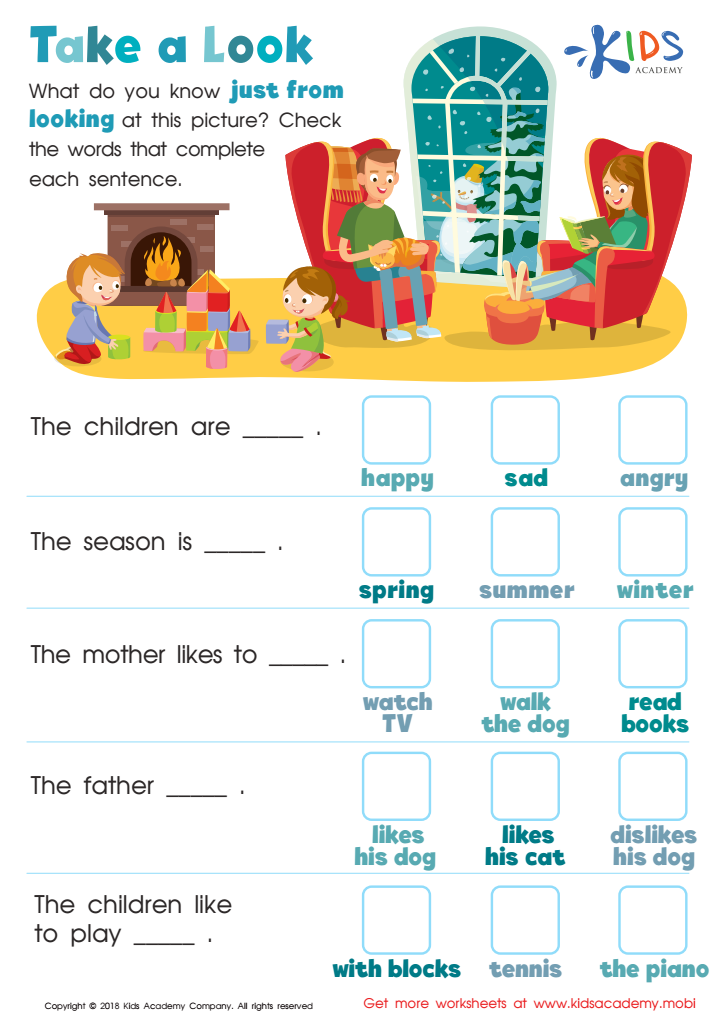
Take a Look - Part 1 Worksheet
Young learners gain understanding when using picture clues when reading. Looking at illustrations can help students learn the meaning of key vocabulary when reading fiction or informational text. Ask your students to look at the worksheet and observe what they can learn from the picture. It's a great comprehension strategy for early readers.
Take a Look - Part 1 Worksheet
Worksheet
Join Kids Academy for Free
Who is primarily going to use this learning content?






Identifying differences among children ages 5-7 is crucial for several reasons, encompassing both educational and emotional development. During these formative years, children exhibit a wide range of abilities, learning styles, and paces of development. Recognizing these differences enables parents and teachers to tailor their approaches to meet each child's unique needs, fostering a more inclusive and supportive learning environment.
By observing and understanding individual differences, educators can implement differentiated instruction, ensuring that every student is challenged appropriately and stays engaged. This practice not only helps advanced learners to remain stimulated but also provides extra support for those who may struggle, preventing frustration and potential loss of interest in learning.
Additionally, early identification of differences aids in detecting learning disabilities or giftedness, allowing for timely interventions that can significantly impact a child's academic trajectory. Addressing these needs early on helps in developing confidence and self-esteem, as children feel more understood and valued.
On a social and emotional level, acknowledging and embracing differences teaches empathy and respect among peers. It encourages children to appreciate diversity and fosters a classroom atmosphere of acceptance and cooperation. Ultimately, caring about and identifying differences in children ages 5-7 paves the way for more personalized, effective education and promotes a positive, inclusive community.








