Reading analog clocks Worksheets for Ages 5-7
9 filtered results
-
From - To
Dive into our "Reading Analog Clocks Worksheets" designed for kids ages 5-7! These engaging worksheets make learning to tell time fun and interactive, helping young learners master reading hour and minute hands. With colorful illustrations and simple exercises, children will easily grasp the concept of analog clocks while enhancing their math and critical thinking skills. Perfect for classroom and home use, these worksheets cater to various learning styles, ensuring every child can confidently read and interpret clock faces. Visit Kids Academy for exciting resources to support your child’s educational journey!
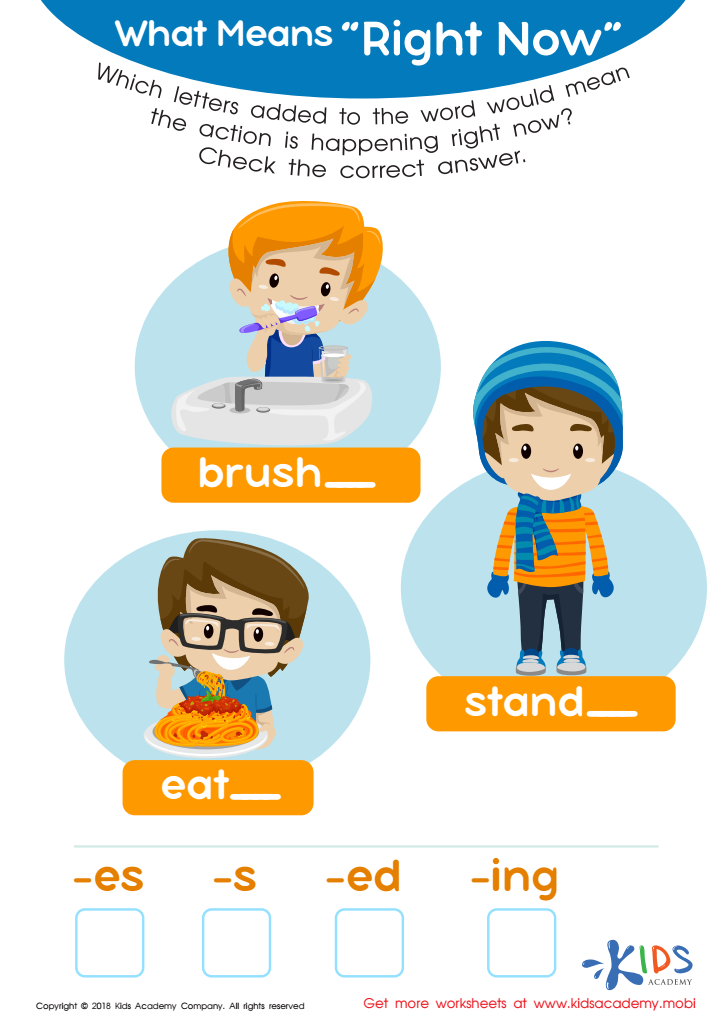
What Means "Right Now" Worksheet
 Assign to My Students
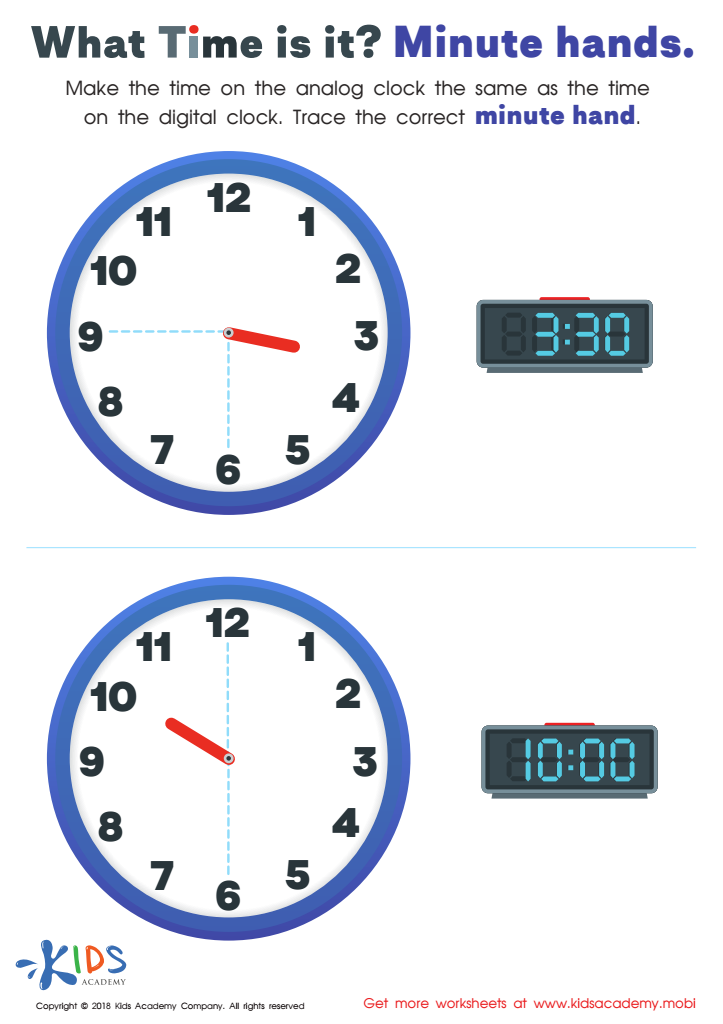
What Time Is it? Minute Hands Worksheet
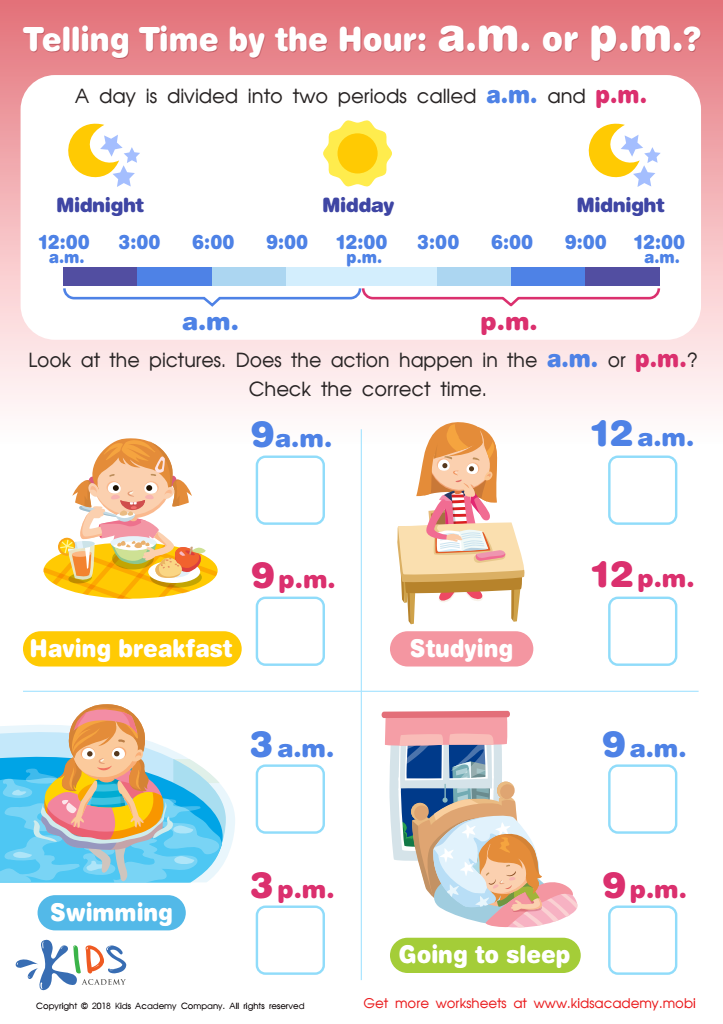
Tilling Time by the Hour: a.m. or p.m.? Worksheet
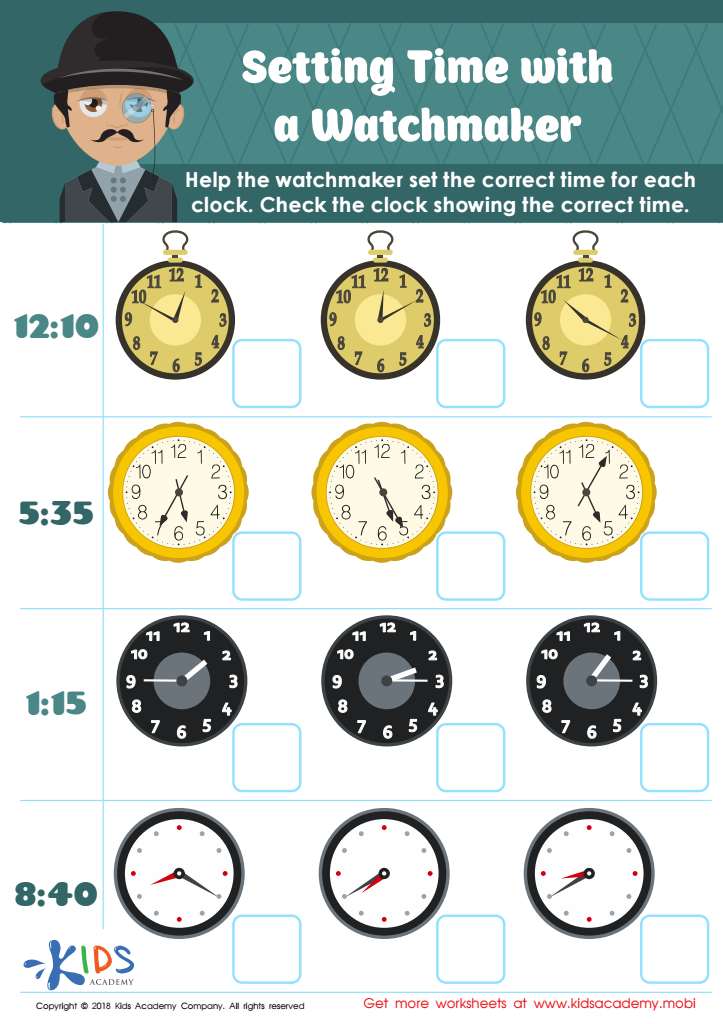
Setting Time with Watchmaker Worksheet
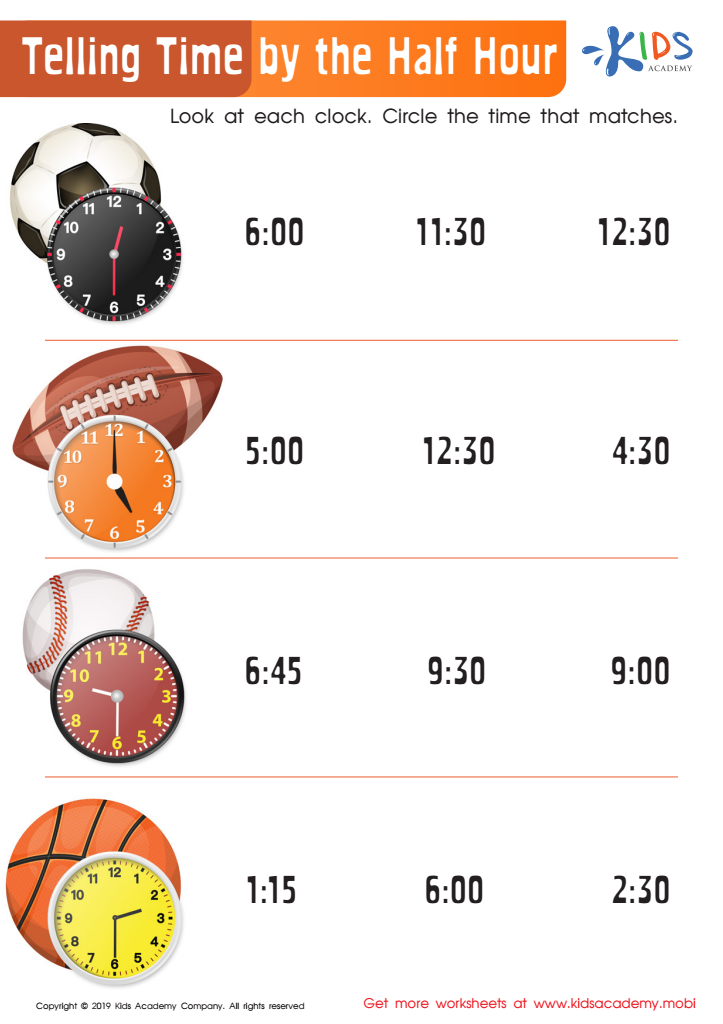
Telling Time by the Half Hour Worksheet








Learning to read analog clocks is a crucial skill for children aged 5-7, and parents and teachers should prioritize it for several reasons. Firstly, it builds a foundational understanding of time, which is vital for daily routines such as knowing when to wake up, go to school, or engage in various activities. Mastery of this skill fosters a sense of responsibility and independence in young learners.
Secondly, reading analog clocks enhances cognitive development. It introduces children to the concepts of numbers, counting by fives, and the basic operations of addition and subtraction, all of which are essential mathematical skills. Understanding these concepts in a practical, real-world context, like clock-reading, makes them more concrete and comprehensible.
Additionally, analog clocks help in developing fine motor skills and eye-hand coordination when children physically move the clock hands or point out the time. Unlike digital clocks, which simply present the time, analog clocks require interpretation, promoting critical thinking and decision-making skills.
Lastly, in a rapidly digitizing world, retaining the ability to read analog clocks ensures that children can navigate any situation, irrespective of technology. This skill also connects them with historical and broader cultural contexts where analog time-telling has been pivotal.
Therefore, encouraging children to read analog clocks not only aids their academic growth but also prepares them for practical life skills and cognitive challenges.








