Recognizing equal parts Worksheets for Ages 5-7
3 filtered results
-
From - To
Discover our engaging "Recognizing Equal Parts Worksheets" designed specifically for children ages 5-7. These interactive resources help young learners understand basic fractions by visualizing and identifying equal parts of shapes. With vibrant illustrations and age-appropriate activities, kids will enjoy practicing their math skills while enhancing their critical thinking. Perfect for classrooms or home learning, our worksheets promote hands-on learning experiences, allowing students to draw, color, and explore different shapes. Foster a love for mathematics in your child as they master the concept of equal parts with these fun and educational printable worksheets—ideal for parents and teachers alike!
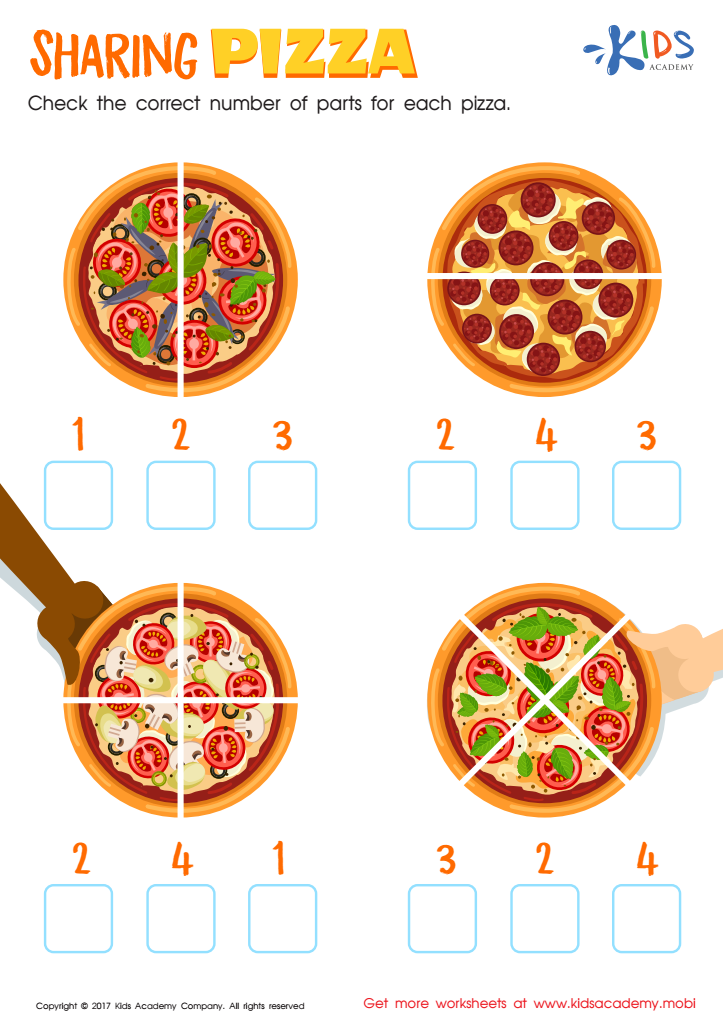
Sharing Pizza Worksheet
 Assign to My Students
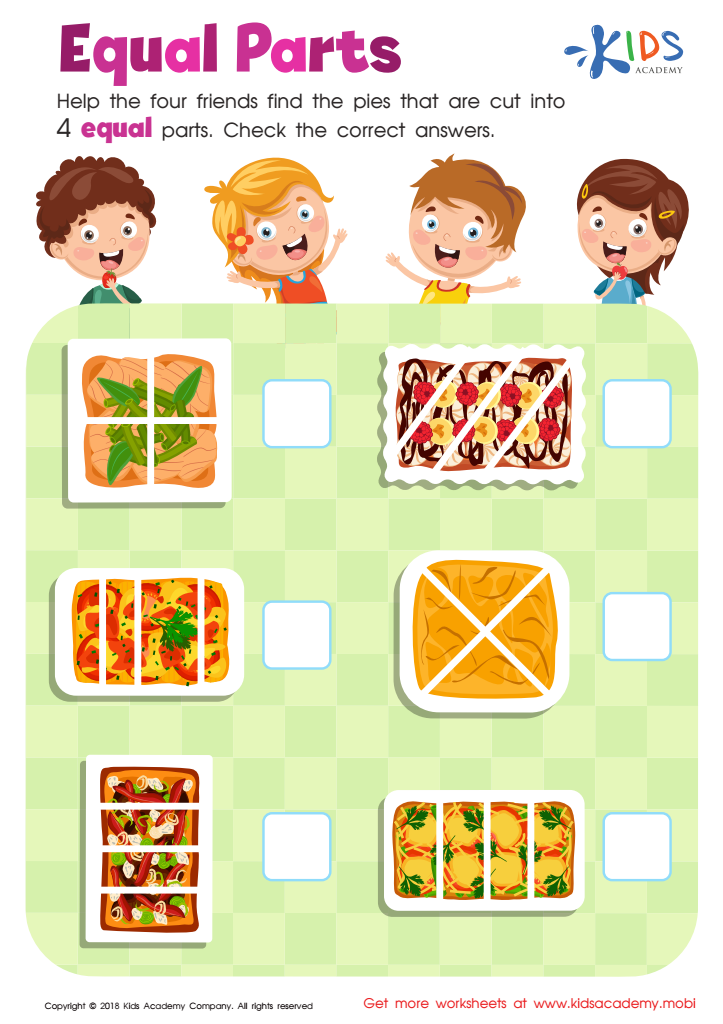
Equal Parts: Food Worksheet







Recognizing equal parts is a fundamental concept in early mathematics that is crucial for children aged 5-7. Understanding equal parts lays the groundwork for essential skills in fractions, division, and later, measurements. For parents and teachers, fostering this understanding helps children develop critical thinking and problem-solving abilities, as they learn to see relationships between different quantities and the importance of fairness in sharing.
At this age, children are naturally curious and eager to explore concepts through hands-on experiences. Activities that involve dividing objects, such as sharing snacks or coloring shapes, engage children's imaginations while building their comprehension of equal portions. This understanding not only supports mathematical learning but encourages cooperation and social skills.
Moreover, recognizing equal parts can integrate seamlessly with concepts in art and science, enhancing a child's learning experience across subjects. By prioritizing the recognition of equal parts, parents and teachers enable children to build a strong foundation for future academic endeavors, promoting a love for math that can influence their educational journey positively. Ultimately, excelling in these foundational skills can foster confidence, resilience, and a lifelong supportive attitude towards learning. This reinforces the importance of a collaborative effort between parents and educators in nurturing young learners.








