Recognizing shapes Worksheets for Ages 5-7 - Page 2
45 filtered results
-
From - To
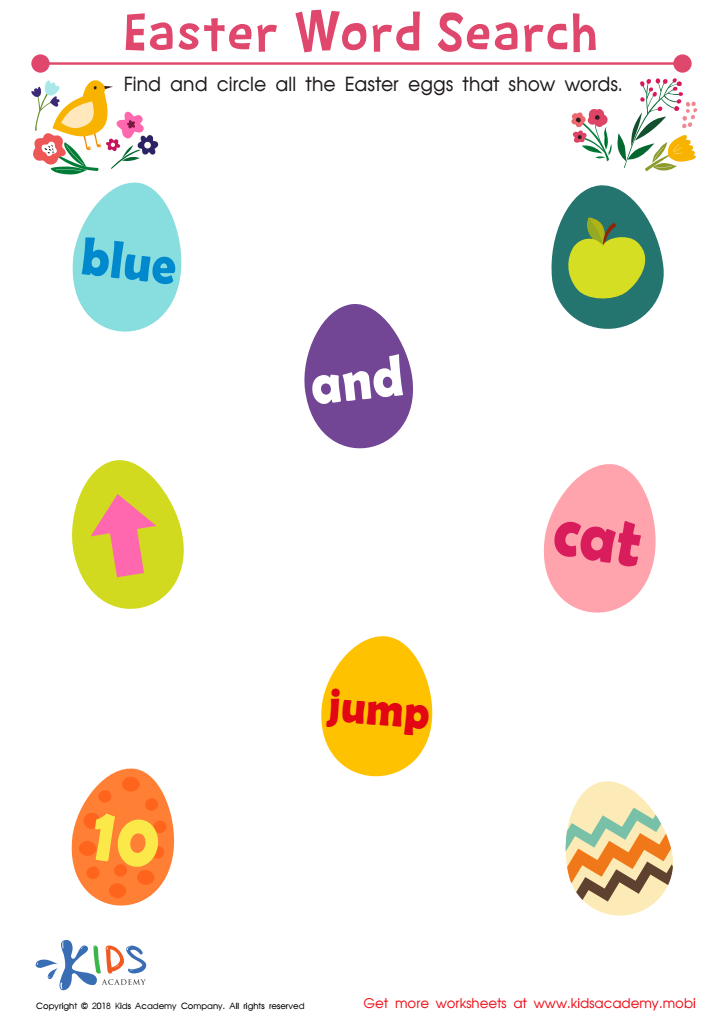
Easter Word Search Worksheet
 Assign to My Students
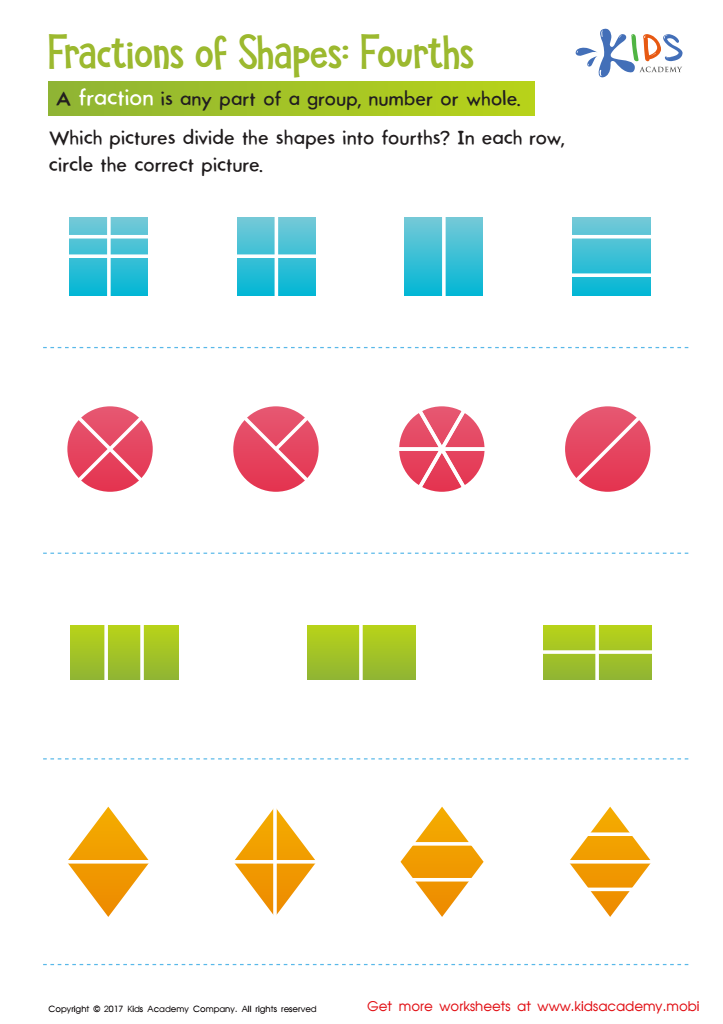
Fractions of Shapes Worksheet







Recognizing shapes is a fundamental skill for children aged 5-7 and has significant implications for their overall development. For parents and teachers, fostering this ability is crucial as it lays the groundwork for various cognitive and everyday skills. Understanding shapes aids in developing spatial awareness, which is an essential precursor to more complex mathematical concepts such as geometry and measurement.
Moreover, shape recognition enhances critical thinking and problem-solving skills. As children learn to identify and classify different shapes, they engage in categorization that is foundational for logical reasoning. Learning about shapes also intersects with language development, as children learn to describe these shapes, enhancing their vocabulary and communication.
From a practical perspective, shape recognition plays a significant role in daily life. Recognizing shapes helps children understand the environment around them, from identifying road signs to organizing toys. Additionally, engaging in activities that involve shapes—such as art, building blocks, and games—promotes fine motor skills and creativity.
By prioritizing shape recognition, parents and teachers equip children with essential skills that support academic success, boost self-confidence, and promote an understanding of the world, ultimately contributing to a well-rounded education.








