Sound recognition Worksheets for Ages 5-7
16 filtered results
-
From - To
Discover our curated collection of Sound Recognition Worksheets for Ages 5-7, tailored to enhance early phonemic awareness and auditory skills. These engaging worksheets combine fun illustrations with interactive activities, helping young learners identify and differentiate sounds. From consonants to vowel sounds, each worksheet encourages kids to listen, recognize, and match sounds, fostering critical early reading skills. Ideal for use at home or in the classroom, these printables support both individual and group learning. Set your child on the path to reading success with Kids Academy's expert-designed sound recognition worksheets. Explore now and make learning phonics a joy!
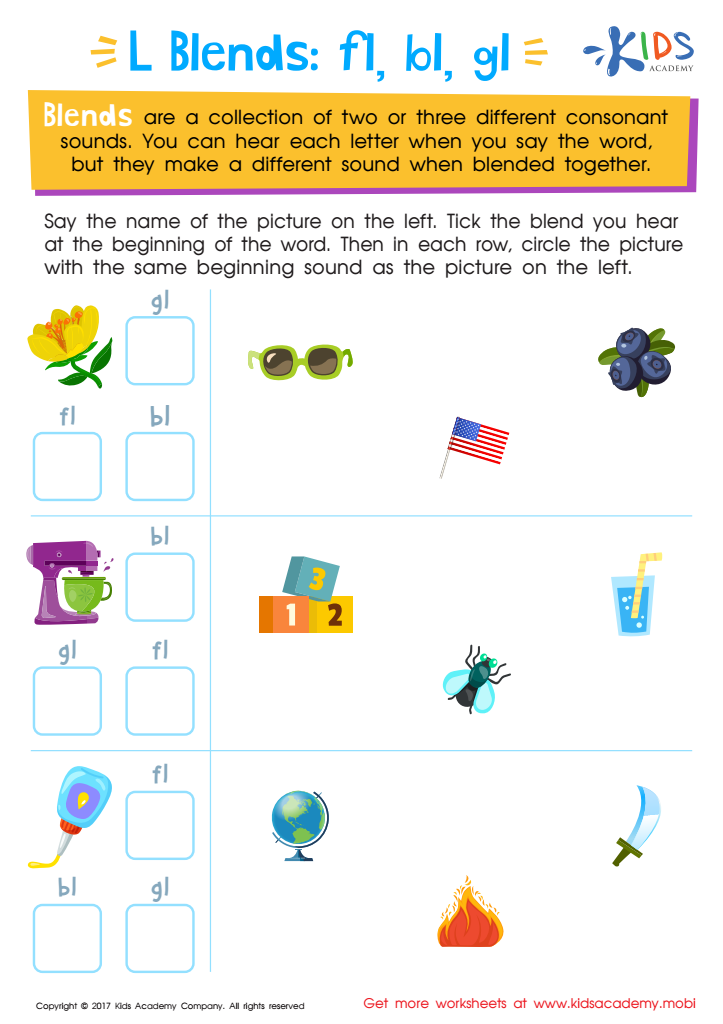
Blending Consonants: "Fl", "Bl" and "Gl" Printable
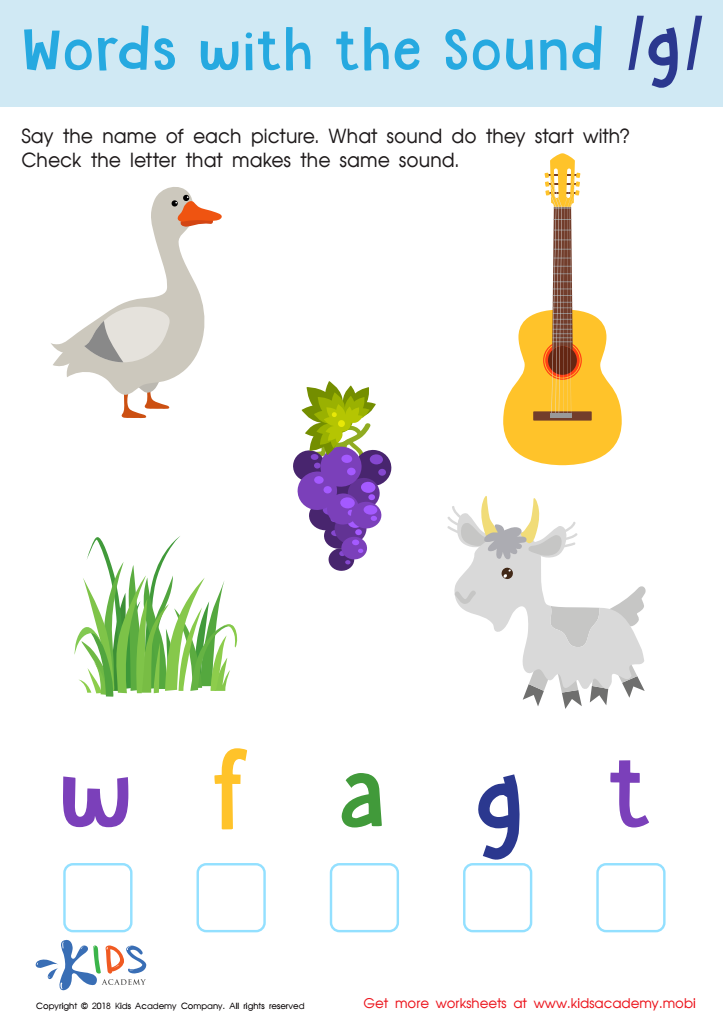
Words with sound g Reading Worksheet
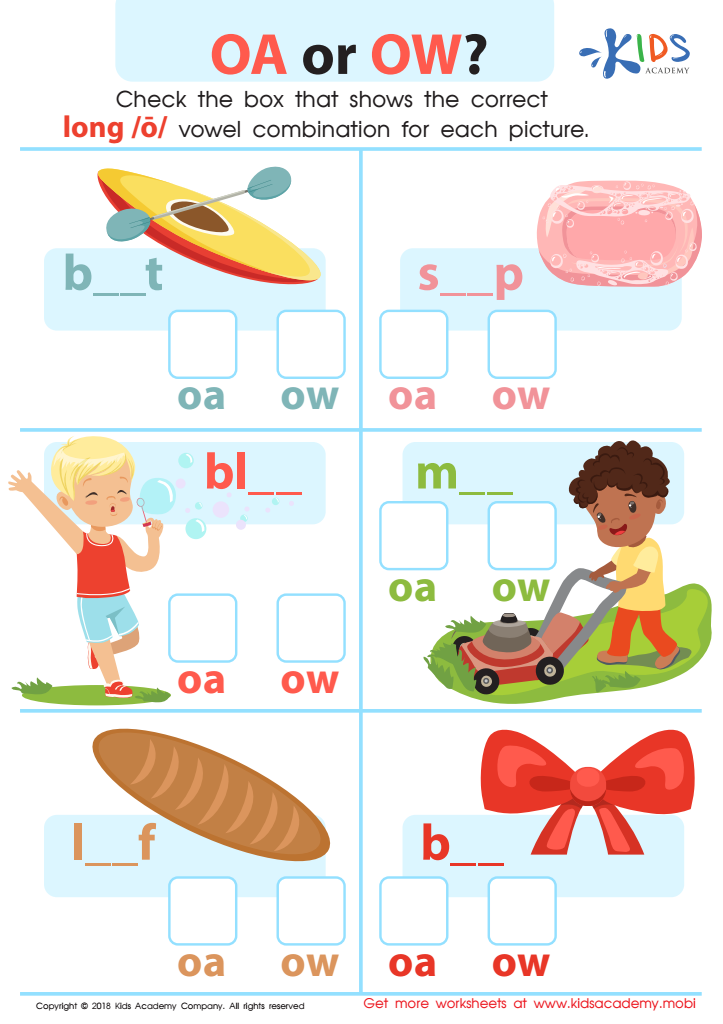
Reading: OA or OW Worksheet
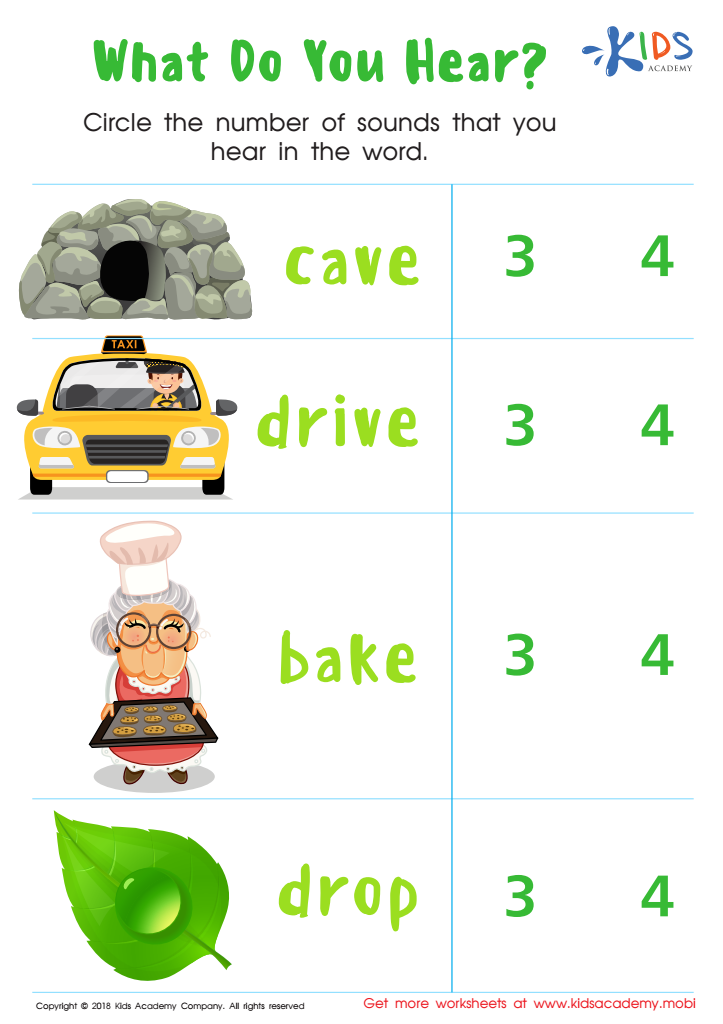
What Do You Hear? Worksheet

Rhyming Words Rhyming Worksheet
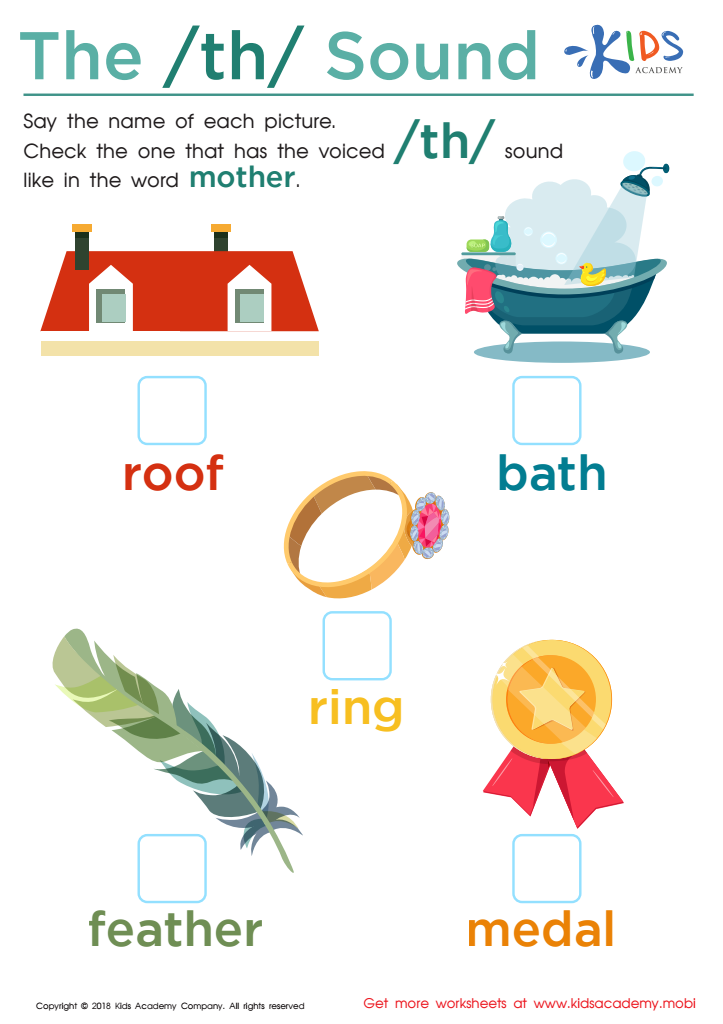
The /th/ Sound Worksheet
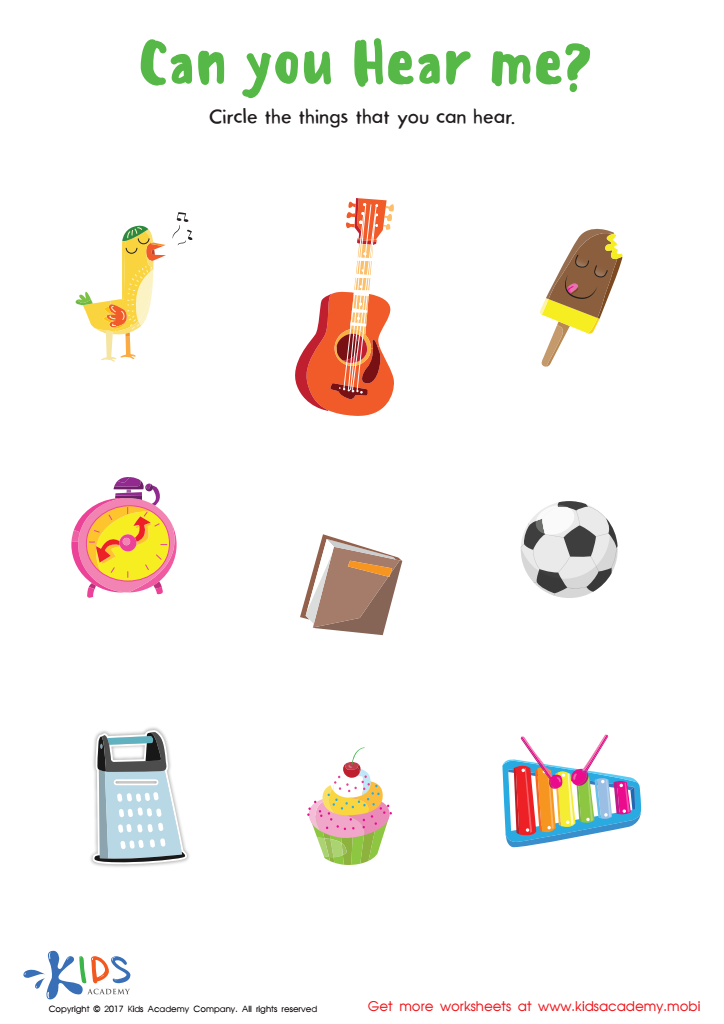
Can You Hear Me Worksheet
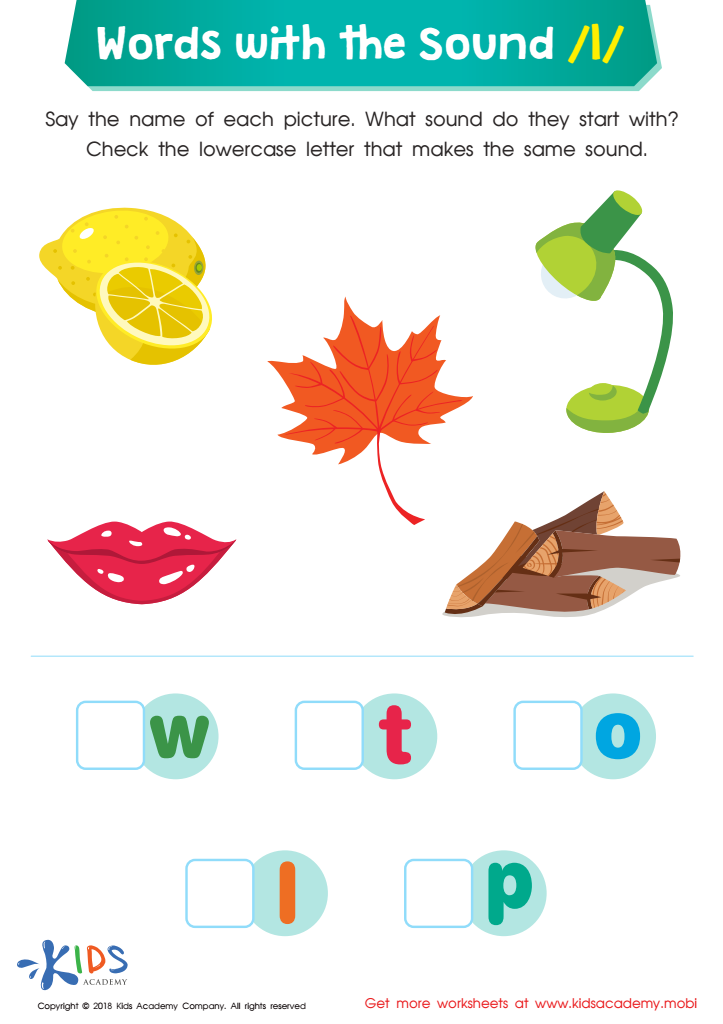
Words with Sound L Reading Worksheet
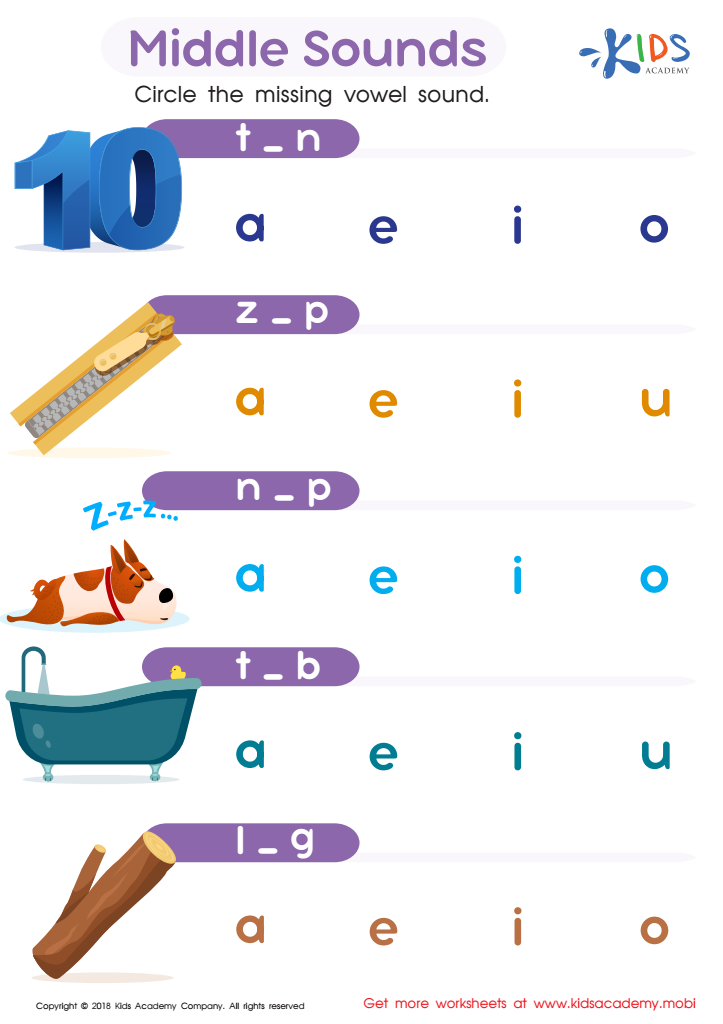
Middle Sounds Worksheet
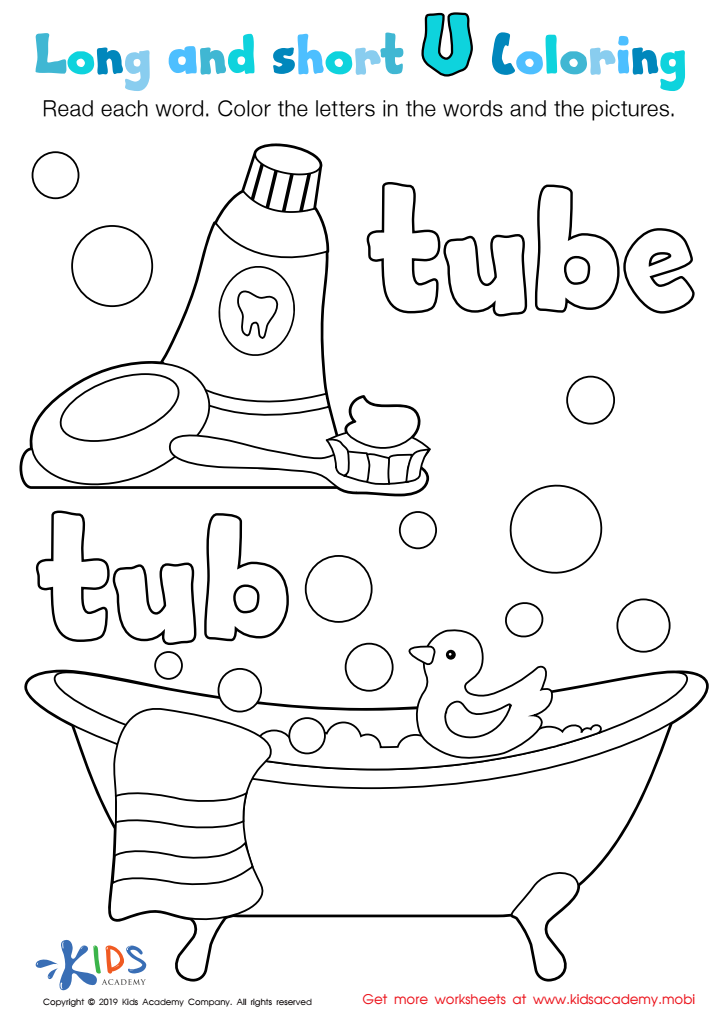
Long and Short U Worksheet
 Assign to My Students
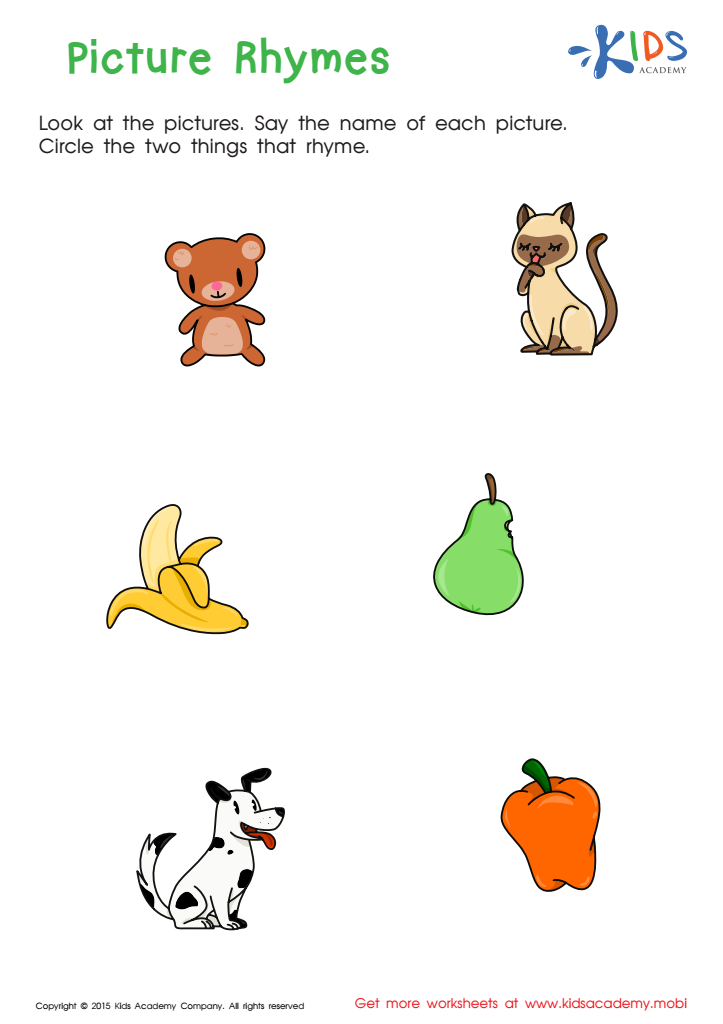
First Words: Picture Rhymes Worksheet
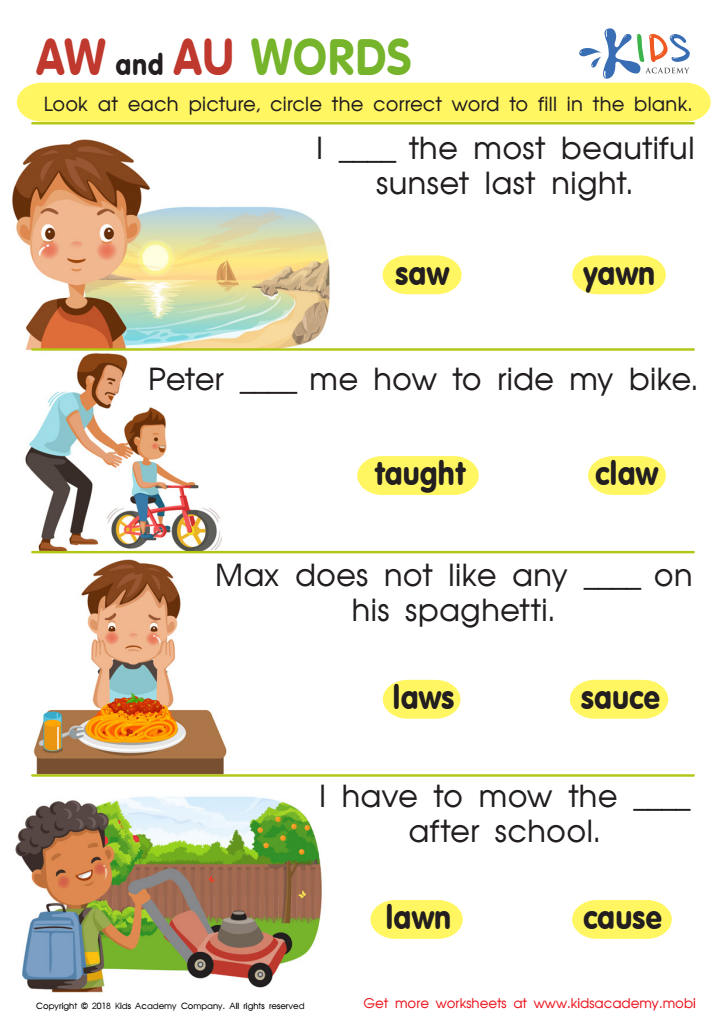
Reading: AW and AU Words Worksheet
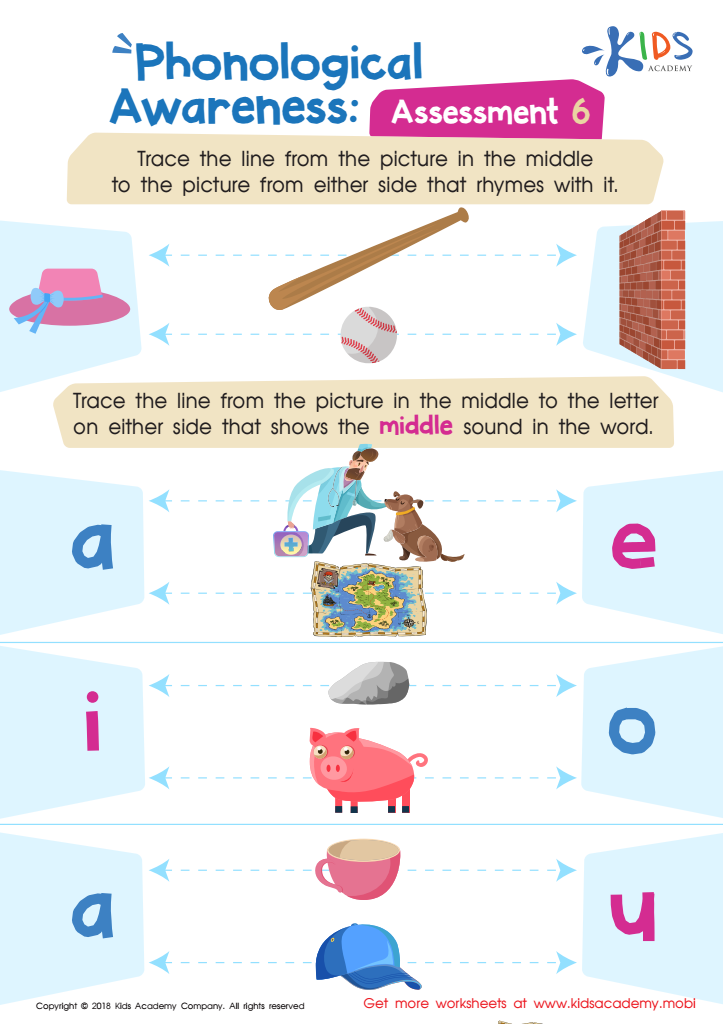
Phonological Awareness: Assessment 6 Worksheet
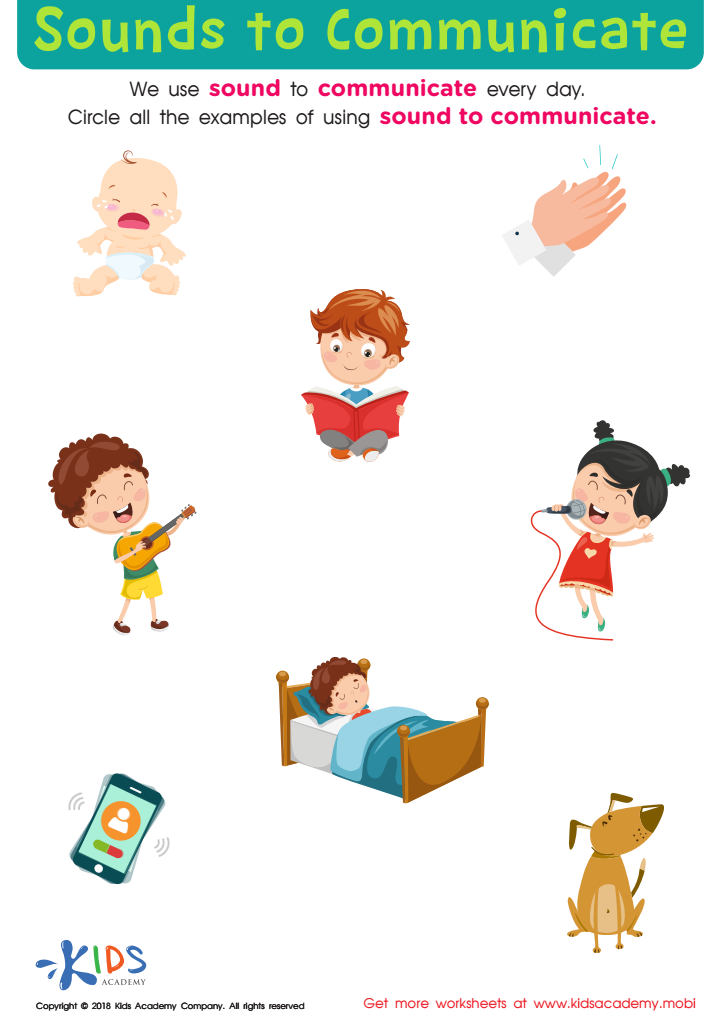
Sounds to Communicate Worksheet
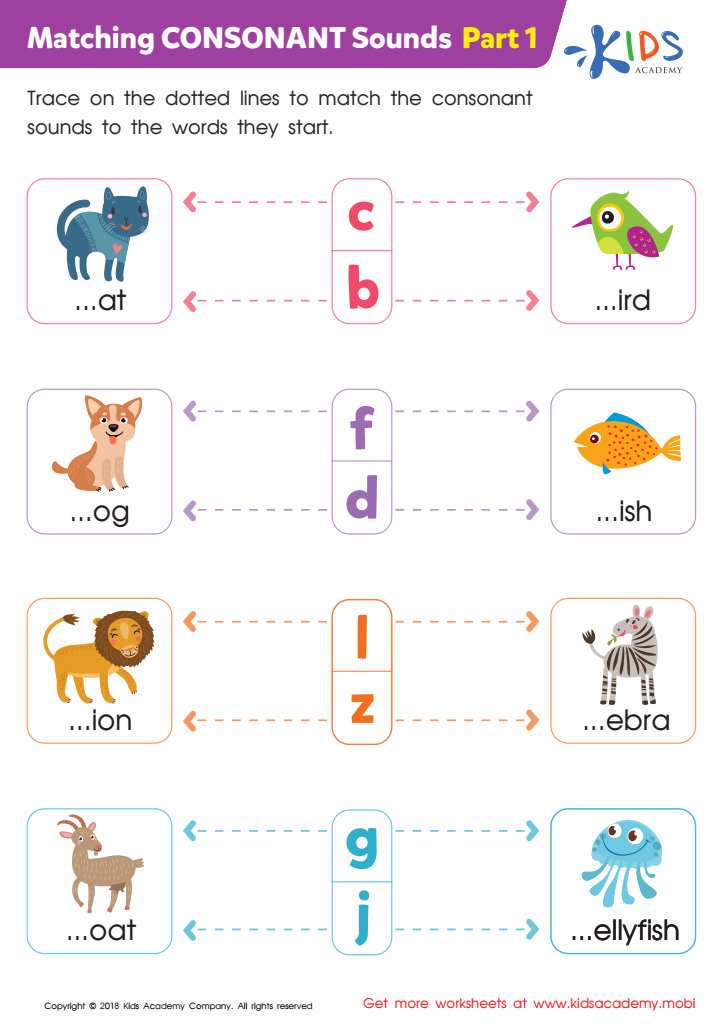
Matching Consonant Sounds: Part 1 Worksheet
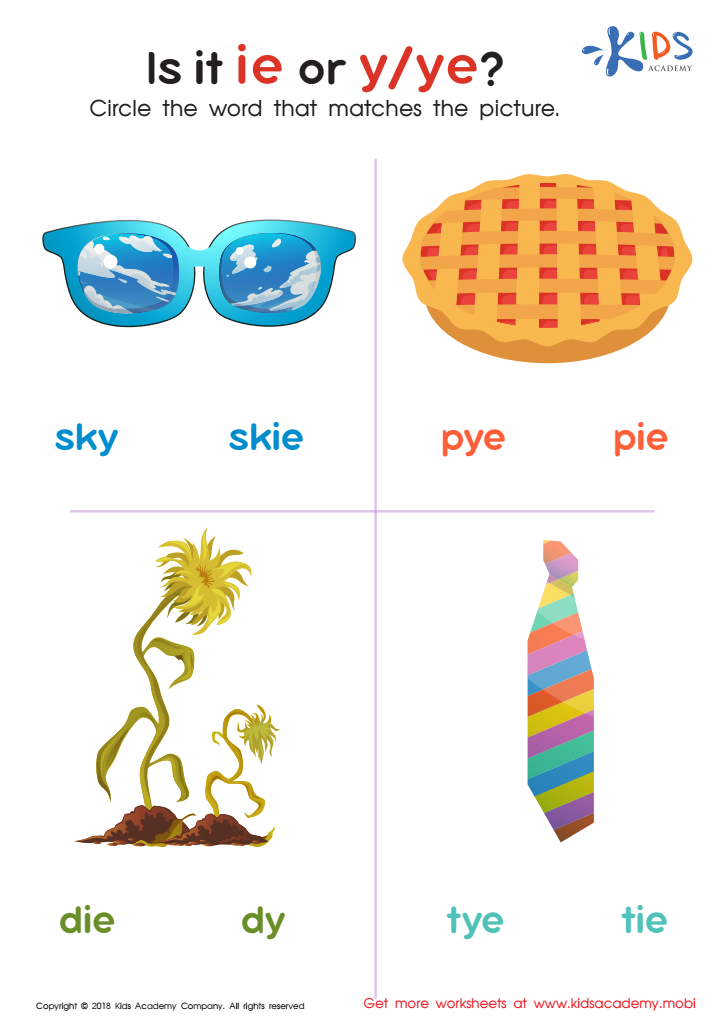
Is It IE or Y/Ye? Worksheet





Sound recognition for children aged 5-7 is crucial for their overall development and future learning success. During these formative years, children's brains are highly adaptable, making it the perfect time to develop essential auditory skills. Recognizing different sounds helps children with phonemic awareness, a key component in learning to read. Understanding the small differences in sounds can aid in distinguishing between words, leading to better reading fluency and comprehension.
Moreover, effective sound recognition supports language development. Children learn new words and phrases by hearing them spoken and identifying the various sounds that make up these words. This auditory skill also aids in improving their listening skills, which are essential not only academically but socially as well. Good listeners are better communicators and tend to form stronger relationships.
In addition, children who are adept at recognizing sounds can better follow instructions and engage in classroom activities. When they can easily differentiate between similar sounds, they are less likely to mix up instructions, ensuring they grasp classroom etiquette and tasks more effectively.
Overall, investing in sound recognition activities can set a foundation for lifelong learning, better communication skills, and well-rounded cognitive development, making it essential for both parents and teachers to prioritize this area during early childhood education.








