Time calculation skills Worksheets for Ages 5-7
3 filtered results
-
From - To
Enhance your child's understanding of time with our engaging Time Calculation Skills Worksheets, designed for ages 5-7. These educational worksheets introduce young learners to essential concepts such as reading clocks, understanding hours and minutes, and solving real-life time problems. Featuring colorful illustrations and fun activities, our resources make learning to tell time enjoyable and effective. Perfect for both classroom and home use, these worksheets help build a strong foundation in time management, critical thinking, and math skills. Let Kids Academy support your child's journey towards mastering time calculation with ease and confidence.
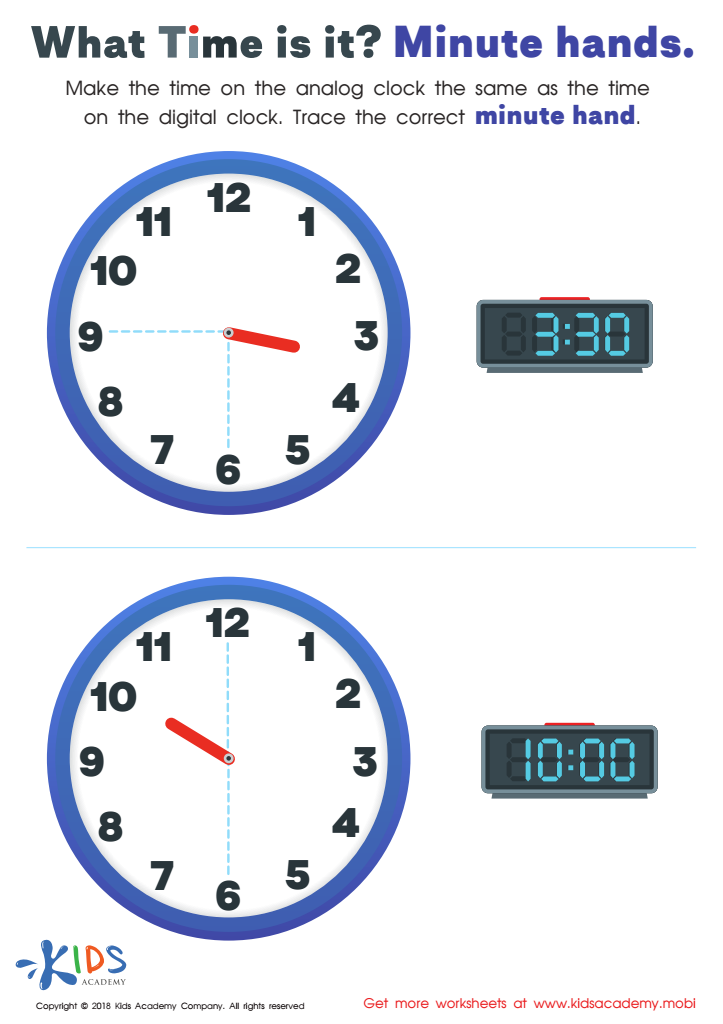
What Time Is it? Minute Hands Worksheet
 Assign to My Students
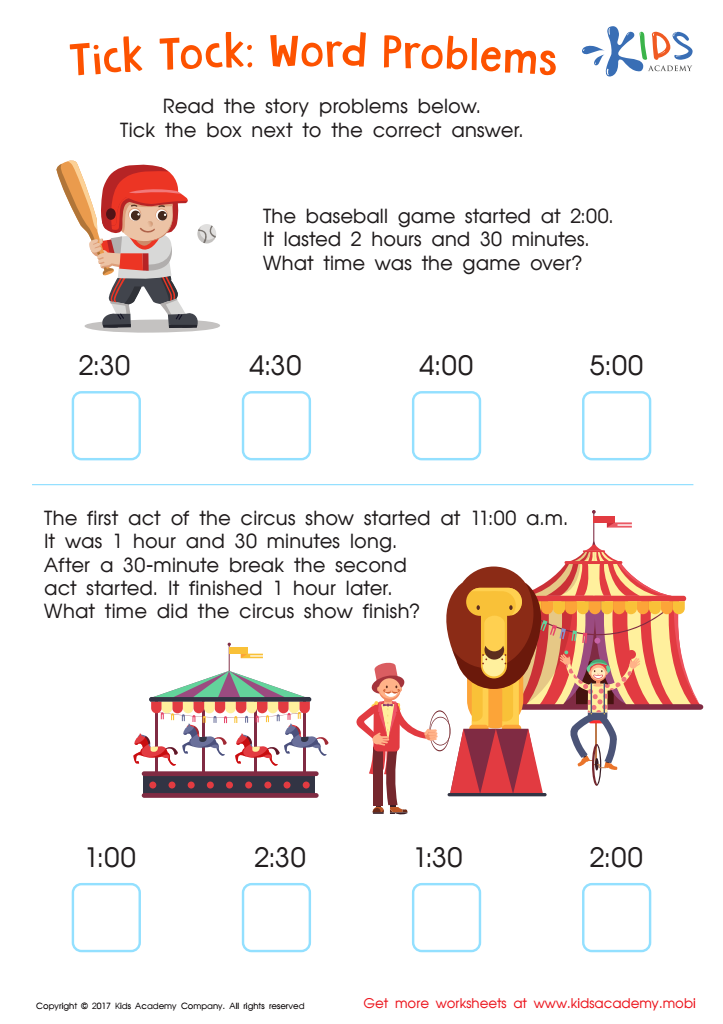
Tick Tock Word Problems Time Worksheet








Teaching time calculation skills to children aged 5-7 is crucial for several reasons. First, time management is an essential life skill that affects all aspects of daily living, from adhering to schedules to being punctual. By learning how to read clocks and calculate time, children develop a sense of structure and discipline that will benefit them throughout their lives.
Second, mastering time calculation helps build a child’s mathematical foundation. Understanding concepts like hours, minutes, and seconds, and how they interrelate, enhances numeracy and strengthens other areas like addition and subtraction.
Third, learning to tell time fosters cognitive development. It involves critical thinking, problem-solving, and comprehension skills. These cognitive processes enhance a child’s capacity to tackle more complex concepts in later schooling.
Moreover, developing time-related skills boosts a child’s confidence. When they can independently tell time, they feel more self-reliant and capable. This small achievement can instill a sense of accomplishment that encourages a positive attitude toward learning.
Lastly, understanding time cultivates social awareness. Knowing the importance of time improves social interactions as children learn the value of being punctual and respecting others’ schedules.
In conclusion, time calculation is a multifaceted skill that enriches a child's educational experience and personal growth, making it a fundamental aspect of early developmental education.








