
Understanding laws Worksheets for Ages 5-7
3 filtered results
Difficulty Level
Grade
Age
-
From - To
Subject
Activity
Standards
Introduce young learners to the basic concept of laws with our engaging worksheets tailored for ages 5-7. At Kids Academy, our understanding laws worksheets help children grasp the importance of rules in everyday life through fun activities and simple explanations. Each worksheet aims to build foundational knowledge, encourage critical thinking, and foster a sense of responsibility. Perfect for classroom settings or homeschooling, these worksheets align with educational standards, making learning both effective and enjoyable. Equip your children with essential life skills and a gentle introduction to legal concepts as they explore the world of rules and regulations.
Favorites
With answer key
Interactive
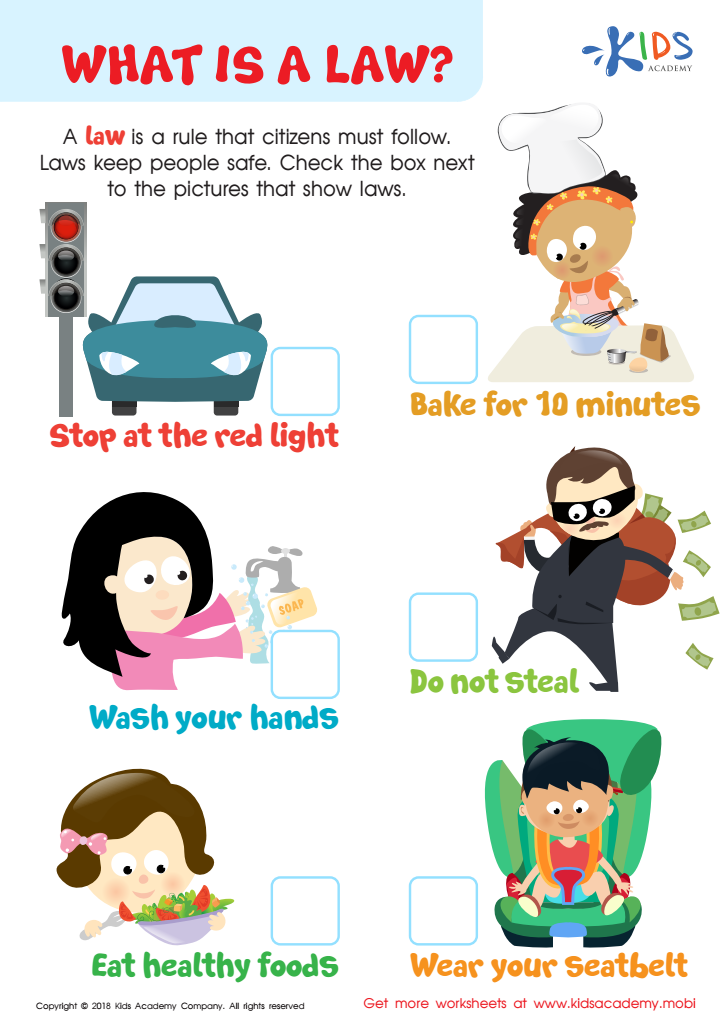
What is a Law? Worksheet
Encourage your students to think about the laws they abide by - at home, school, and the playground. Explain the importance of laws in keeping us safe, then ask them to check the box next to the pictures depicting different laws in a worksheet.
 Assign to My Students
What is a Law? Worksheet
Worksheet
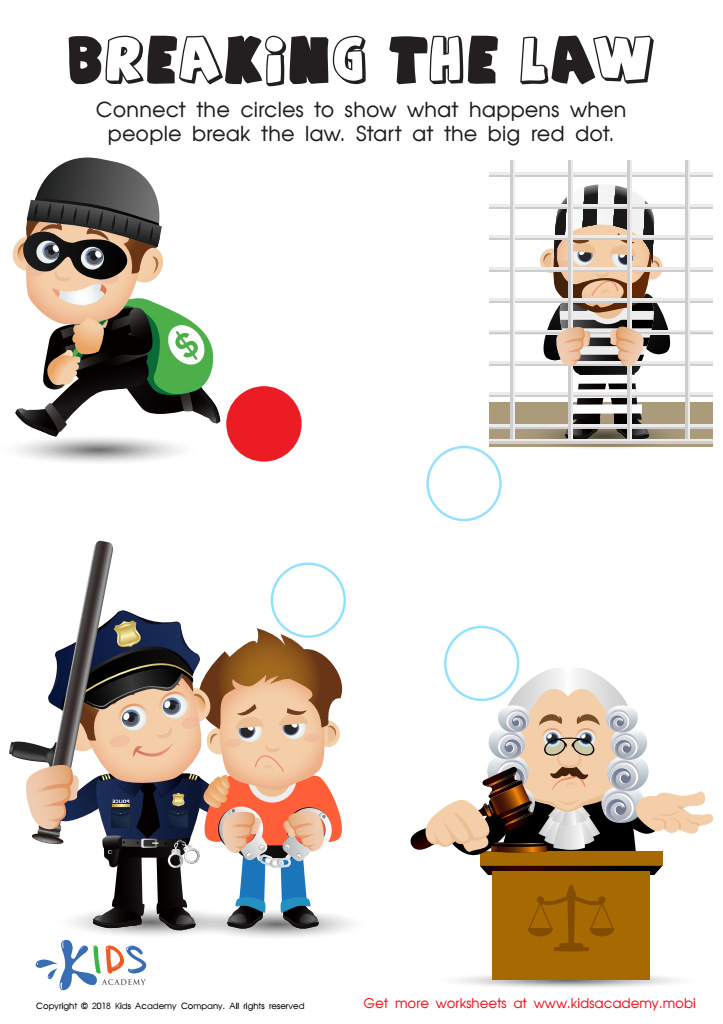
Breaking the Law Worksheet
Explain to your child why people go to jail. Show them this worksheet; it illustrates the stages a criminal goes through from breaking the law to receiving their punishment. Guide them in connecting the circles from the big red dot. Finish with a discussion on why it's important to follow the law.
Breaking the Law Worksheet
Worksheet
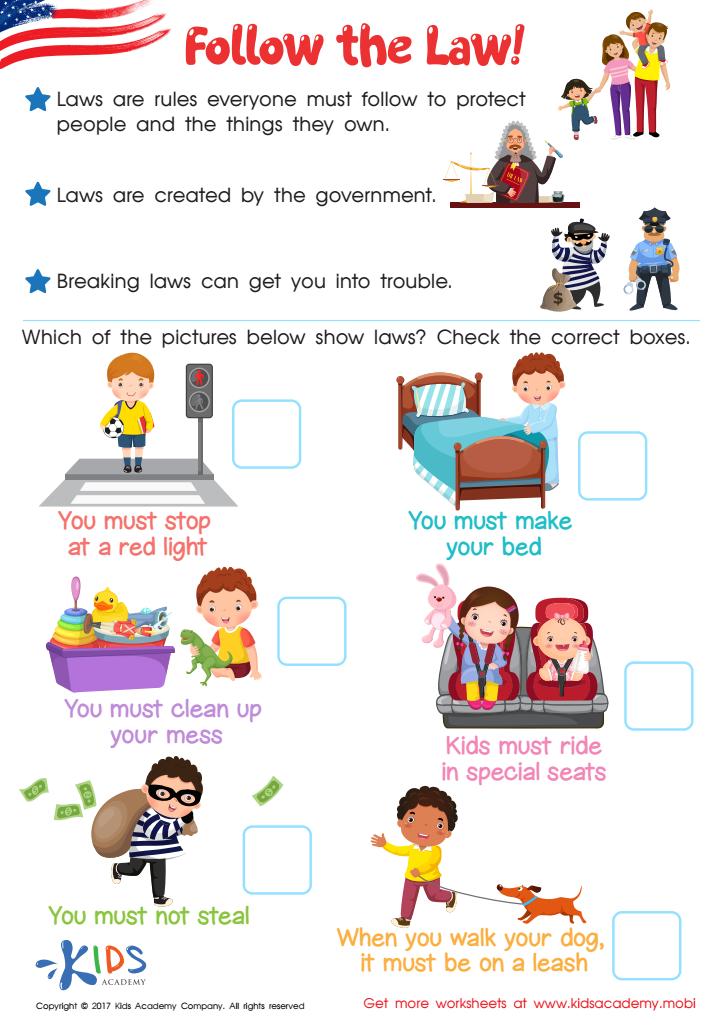
Follow the Law Worksheet
Kids should understand the difference between laws and household rules. Worksheets for 2nd grade review these differences, teaching kids more about life in their community. Breaking the law can lead to harsh consequences, so understanding the rules of home and public spaces is essential.
Follow the Law Worksheet
Worksheet
Join Kids Academy for Free
Who is primarily going to use this learning content?








Understanding laws, even at a basic level, is crucial for young children aged 5-7, and both parents and teachers play critical roles in this. At this age, children's characters and senses of morality are being shaped, making it vital to introduce concepts like rules, justice, and fairness. If children understand why laws exist, they’re more likely to develop respect for them, promoting a sense of social responsibility and good behavior.
Moreover, teaching kids how laws keep us safe helps them comprehend the importance of following rules, and how these rules apply to everyone equally. For instance, understanding that traffic lights prevent accidents or that taking turns keeps games fun can translate into meaningful respect for laws as they grow older.
Parents and teachers can guide this understanding through age-appropriate discussions and everyday examples. When children see influential adults placing value on laws, they’re likely to mimic this regard. Introducing these concepts early on establishes a foundation for more complex moral and ethical reasoning later in life. Additionally, a basic understanding of laws can contribute to kids' sense of security and community, assuring them that they are protected, important, and capable of contributing to a harmonious society. Parents and teachers thus empower children with knowledge and values that will help them become responsible and ethical adults.








