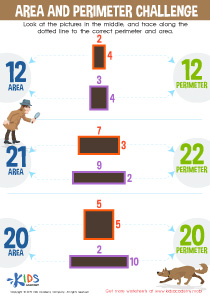
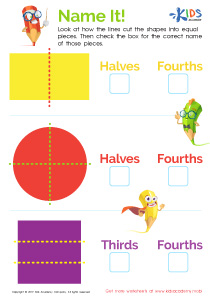
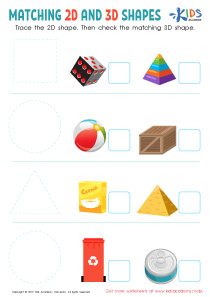
Spatial awareness 2D Shapes Worksheets for Ages 5-7
3 filtered results
-
From - To
Boost your child's spatial intelligence with our engaging Spatial Awareness 2D Shapes Worksheets, tailored for ages 5-7. These printable resources are designed to help young learners recognize, classify, and manipulate 2D shapes, enhancing their ability to understand and interact with the space around them. Each worksheet combines fun activities with educational value, focusing on foundational skills crucial for early math development. The exercises foster critical thinking and problem-solving while keeping kids entertained and motivated. Download now from Kids Academy to ensure a strong start in geometry and spatial reasoning for your little one!
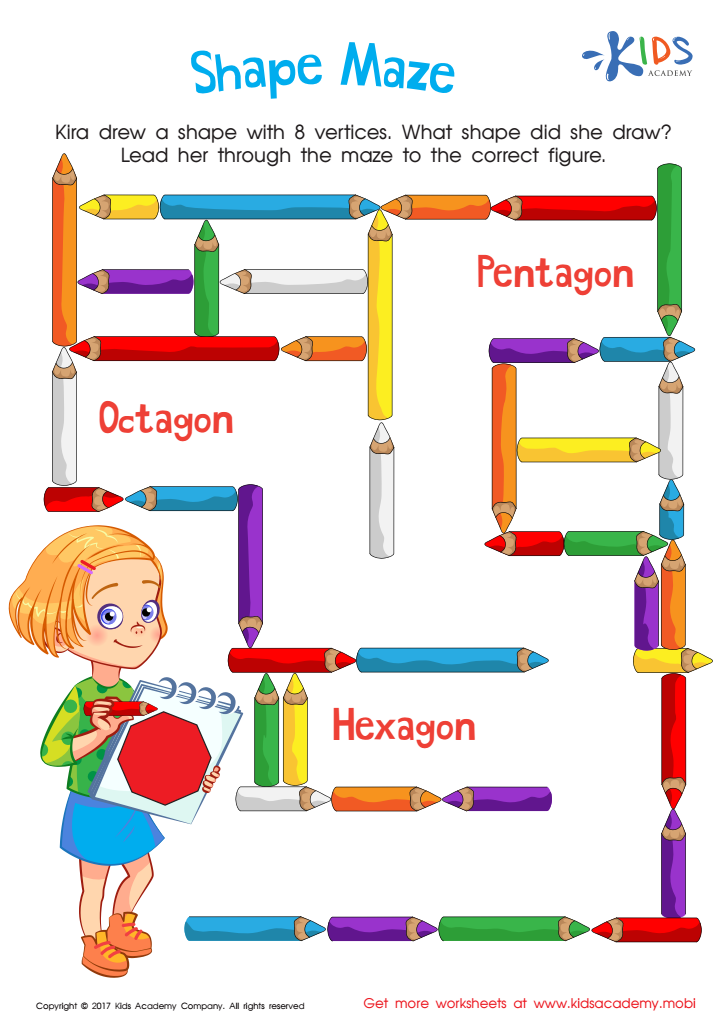
Shape Maze Worksheet
 Assign to My Students


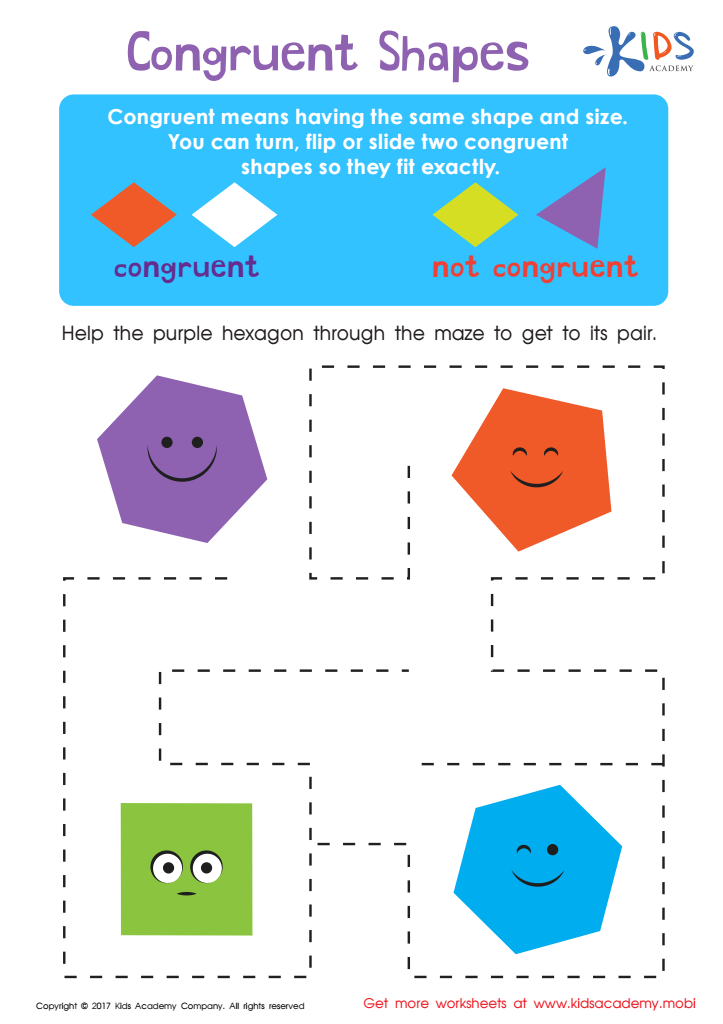
Congruent Shapes Worksheet
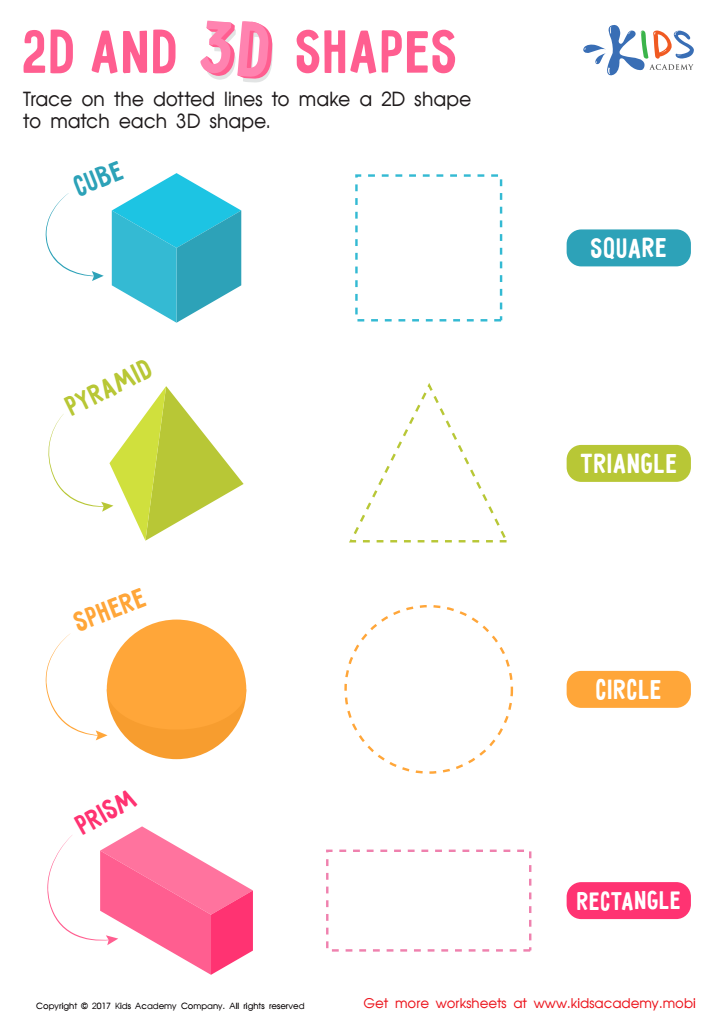
2D and 3D Shapes Worksheet








Spatial awareness and understanding 2D shapes are crucial for children aged 5-7 because they form the foundation for cognitive development and future learning. First and foremost, spatial awareness—the ability to recognize and understand the relationships between objects—enhances children’s ability to navigate their environment. This skill is fundamental for everyday activities, from tying shoelaces to reading a map.
Introducing 2D shapes helps children recognize and categorize attributes of their surroundings, laying the groundwork for mathematical concepts. Understanding shapes aids in the development of geometry skills, which are pivotal in subjects like math and science. For instance, learning the properties of shapes helps children grasp more complex mathematical principles later on, such as area, perimeter, and volume.
Moreover, studies show that developing spatial skills can significantly improve problem-solving and critical-thinking abilities. These skills are not confined to mathematics; they are integral in art, music, and physical activities, fostering well-rounded development.
Parents and teachers who prioritize spatial awareness and 2D shape recognition are not just teaching children shapes; they are equipping them with essential tools for academic and everyday success. Engaging activities like puzzle-solving, drawing, and group play can make learning these concepts fun and intuitive, ensuring that children develop these indispensable skills early in life.