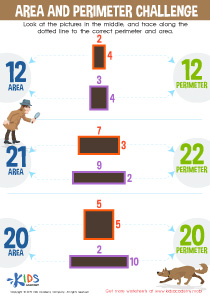
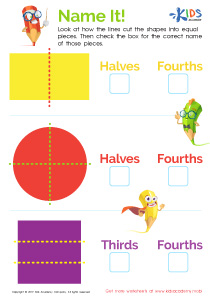
Visual discrimination 2D Shapes Worksheets for Ages 5-7
5 filtered results
-
From - To
Enhance your child's learning with our Visual Discrimination 2D Shapes Worksheets designed for ages 5-7! These engaging worksheets help young learners sharpen their ability to distinguish between various two-dimensional shapes, promoting essential cognitive skills. With colorful illustrations and interactive activities, your child will enjoy identifying, comparing, and categorizing shapes in a fun and exciting way. Our comprehensive worksheets support your child's early math skills, laying a strong foundation for future success. Perfect for classroom or home use, these resources help make learning about shapes enjoyable and effective. Download now to inspire your child's love for learning through visual discrimination activities!
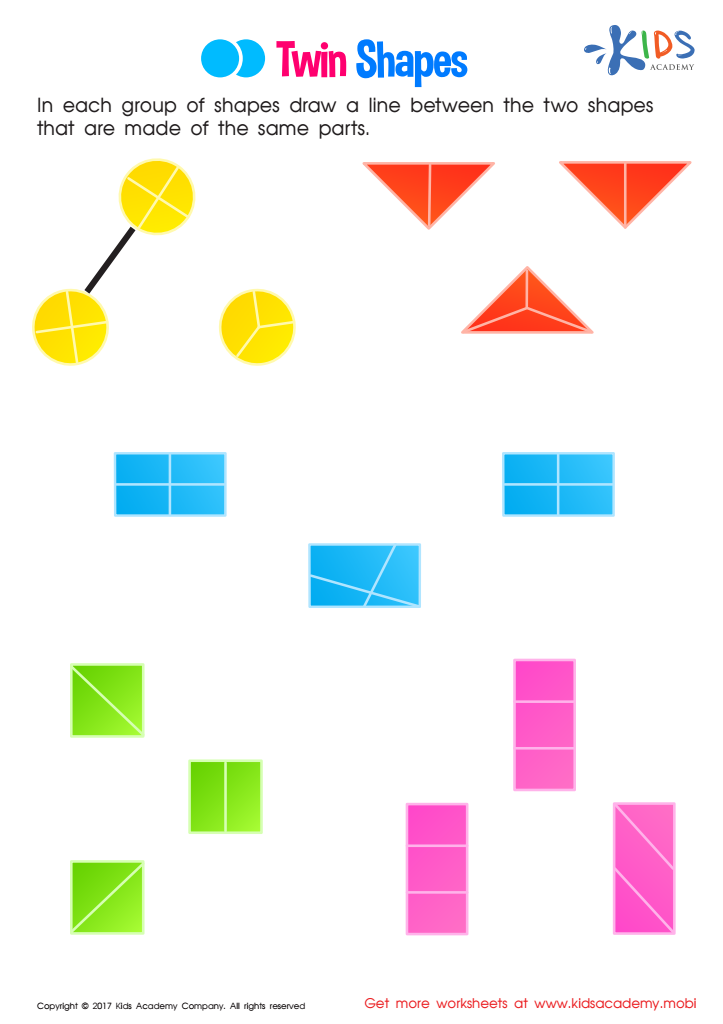
Twin Shapes Worksheet
 Assign to My Students


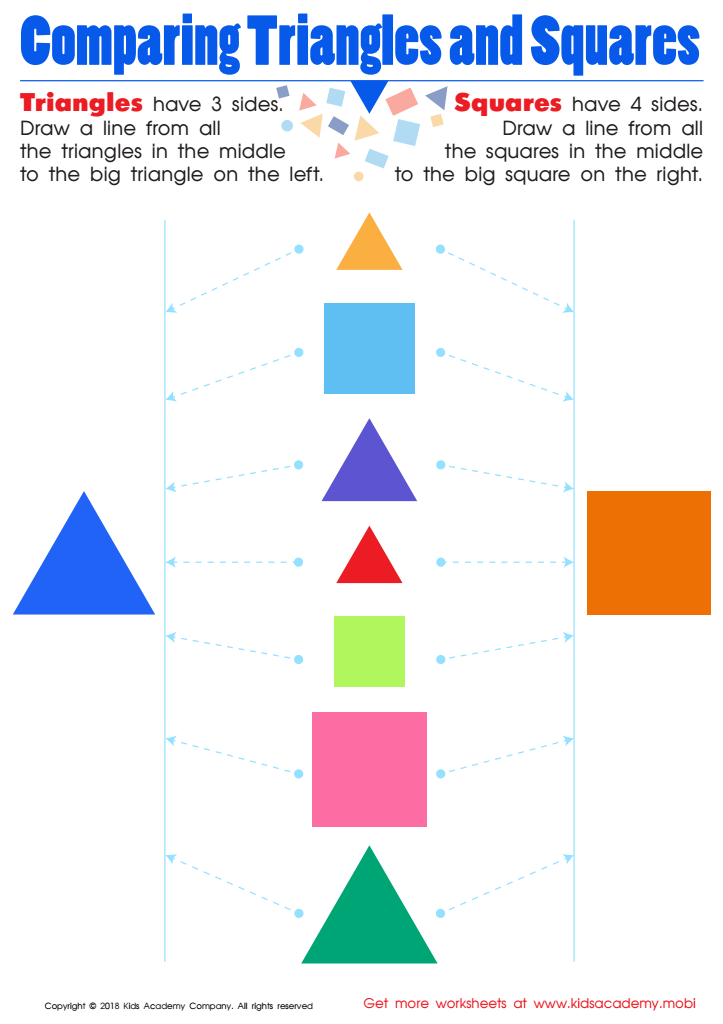
Comparing Triangles Squares Worksheet
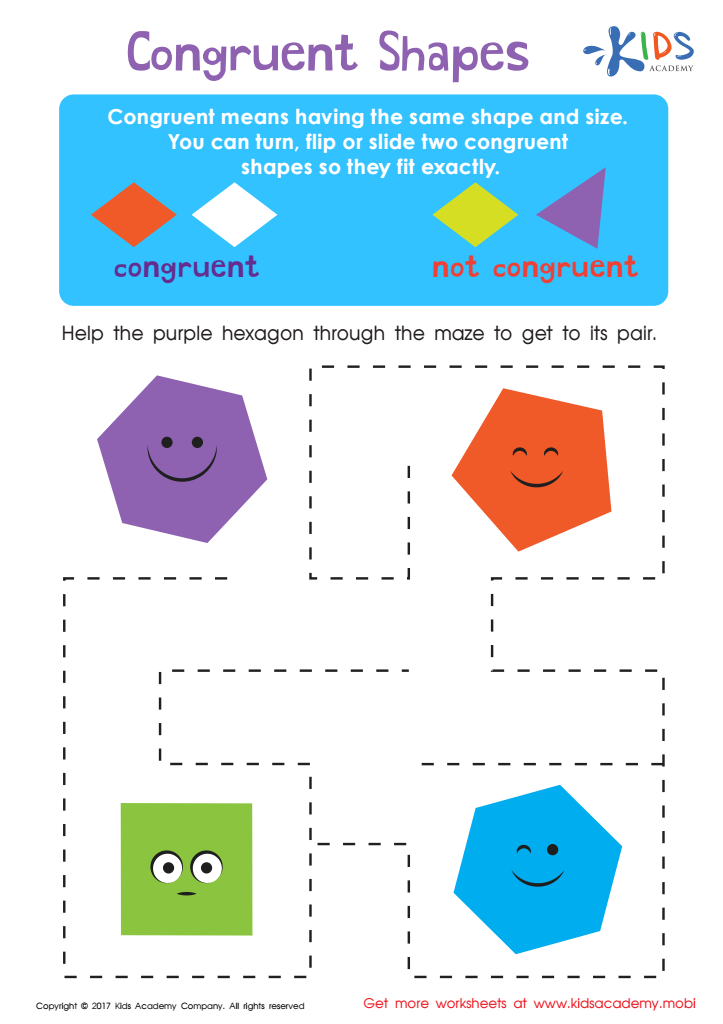
Congruent Shapes Worksheet
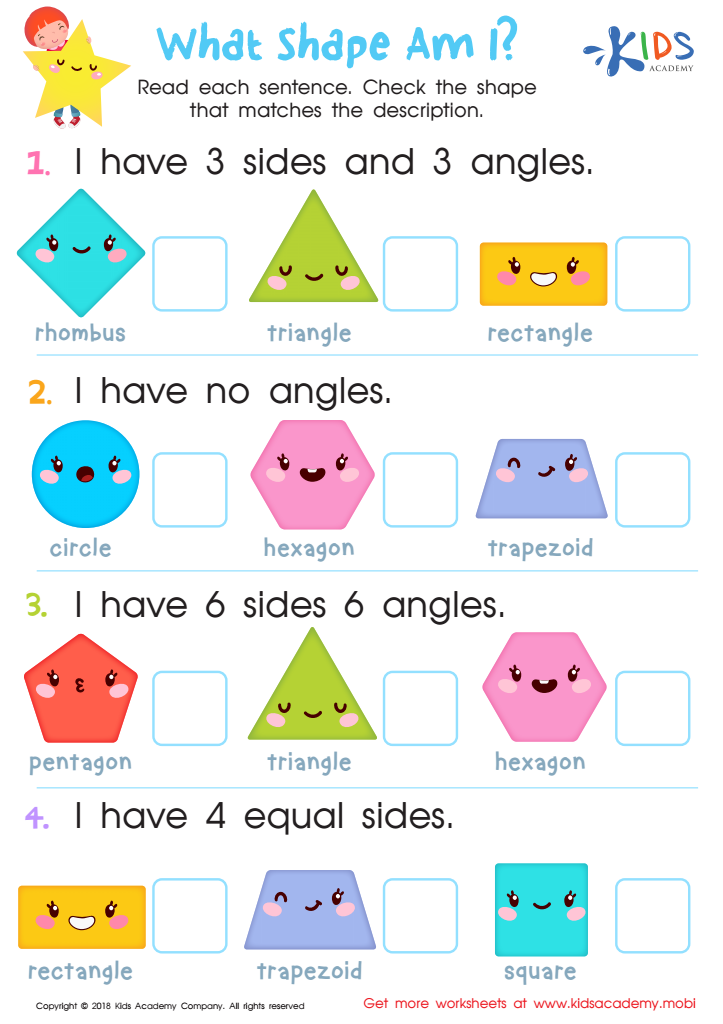
What Shape Am I? Worksheet
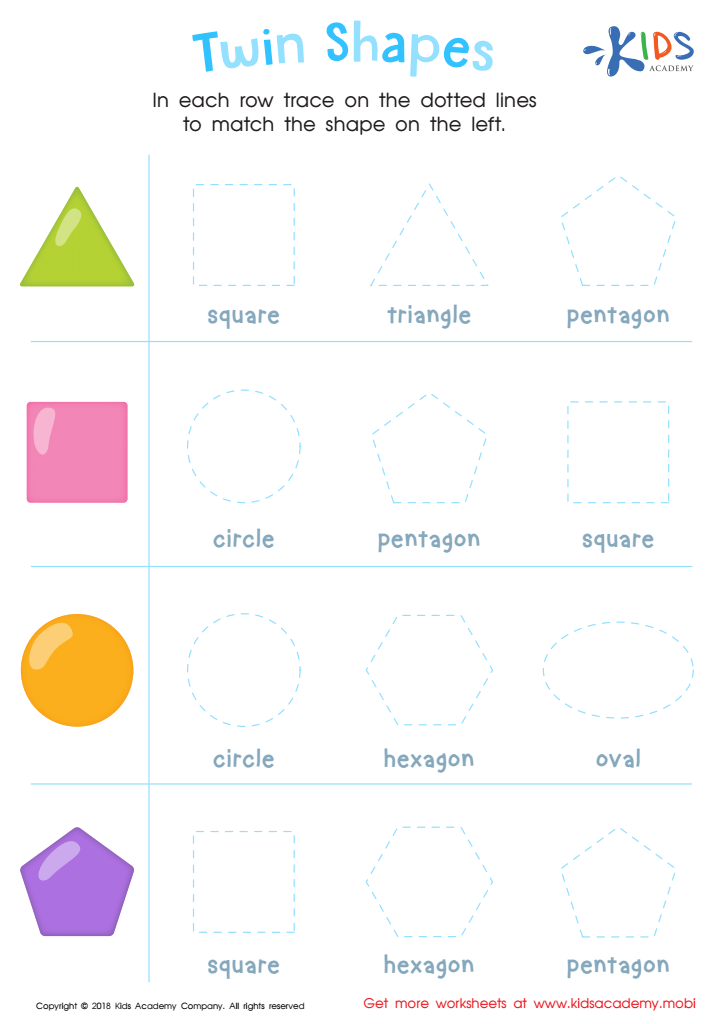
Twin Shapes Dot-to-Dot Worksheet








Visual discrimination, particularly in recognizing 2D shapes, plays a crucial role in early childhood development. For children aged 5-7, mastering this skill not only enhances their ability to identify and differentiate between shapes—such as circles, squares, triangles, and rectangles—but also significantly bolsters their overall cognitive abilities.
This foundational skill aids in the development of critical thinking and problem-solving abilities. Recognizing shapes is essential for learning more advanced concepts in mathematics, like geometry and measurement. Furthermore, visual discrimination supports literacy development; for instance, recognizing letters and words involves the same skill set.
Parents and teachers should prioritize shape recognition because it directly impacts children's spatial awareness, creativity, and organization skills. Engaging in activities that promote visual discrimination can improve hand-eye coordination and fine motor skills, making it easier for young learners to engage in tasks like writing or crafting.
Additionally, fostering these skills fosters confidence in young children, as they gain the ability to engage actively with their environment, participate in learning activities, and express themselves better. Ultimately, investing time in developing visual discrimination in 2D shapes prepares children for future academic success and enriches their everyday experiences.