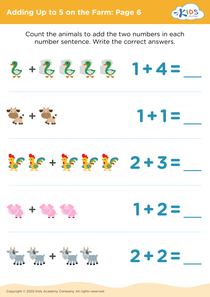
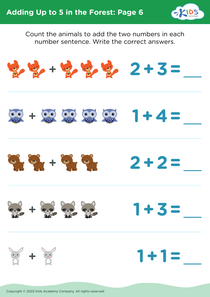
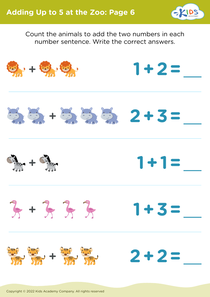
Visual Learning Adding in the Sea Worksheets for Ages 5-7
18 filtered results
-
From - To
Dive into a world of fun with our "Visual Learning Adding in the Sea Worksheets" designed for children aged 5-7! These engaging worksheets utilize vibrant underwater themes to captivate young learners while mastering addition skills. Each activity focuses on visual learning strategies, making math concepts accessible and enjoyable. Through colorful sea creatures and interactive visuals, kids are encouraged to explore numbers and enhance their counting abilities. Perfect for both classroom settings and home practice, our worksheets promote early math literacy, critical thinking, and problem-solving skills. Join the adventure and help your child build a strong foundation in math with our delightful resources!
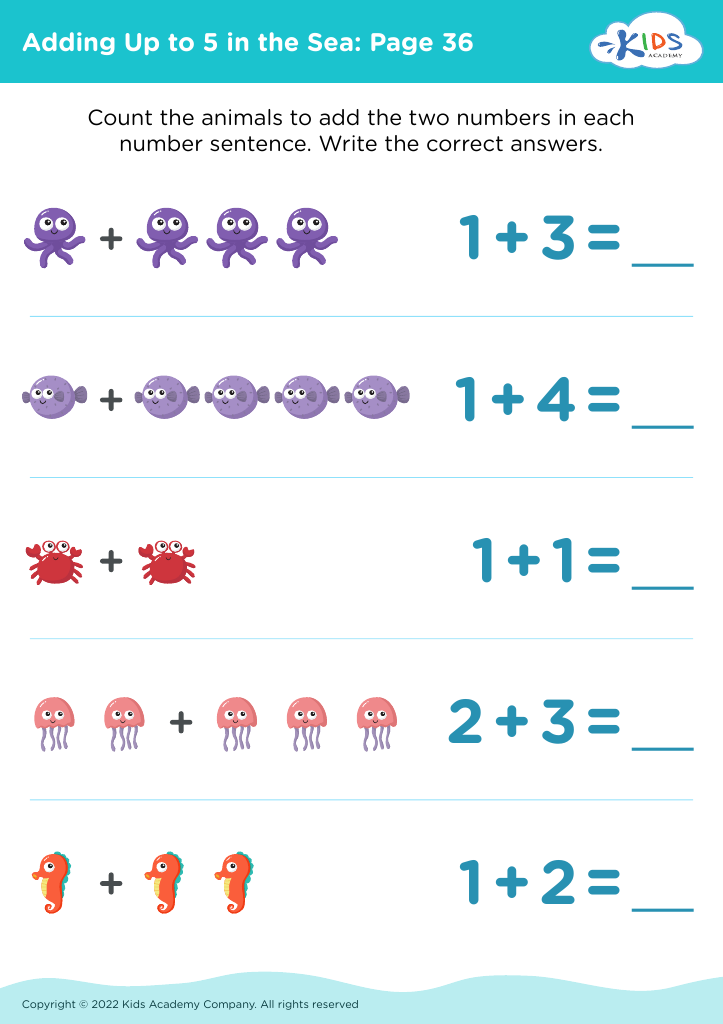
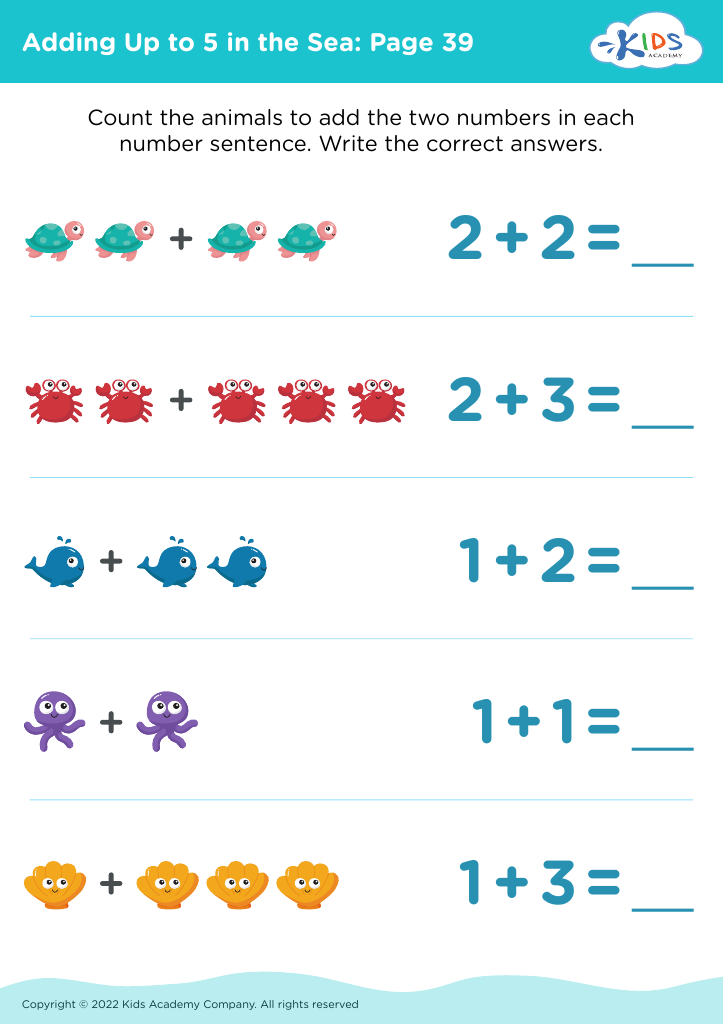
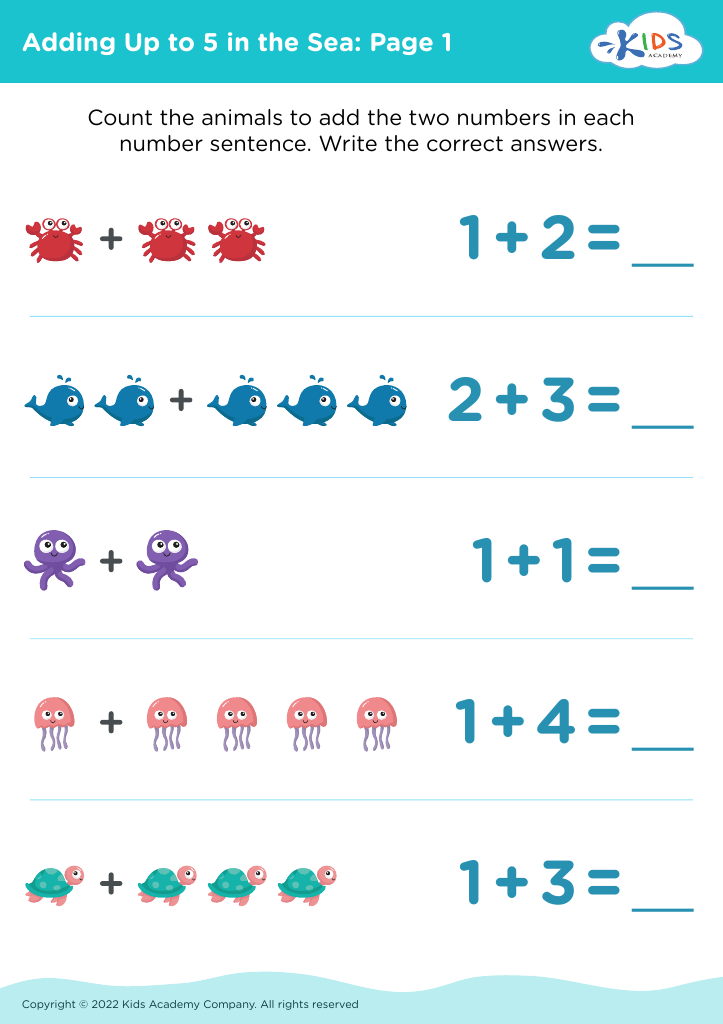
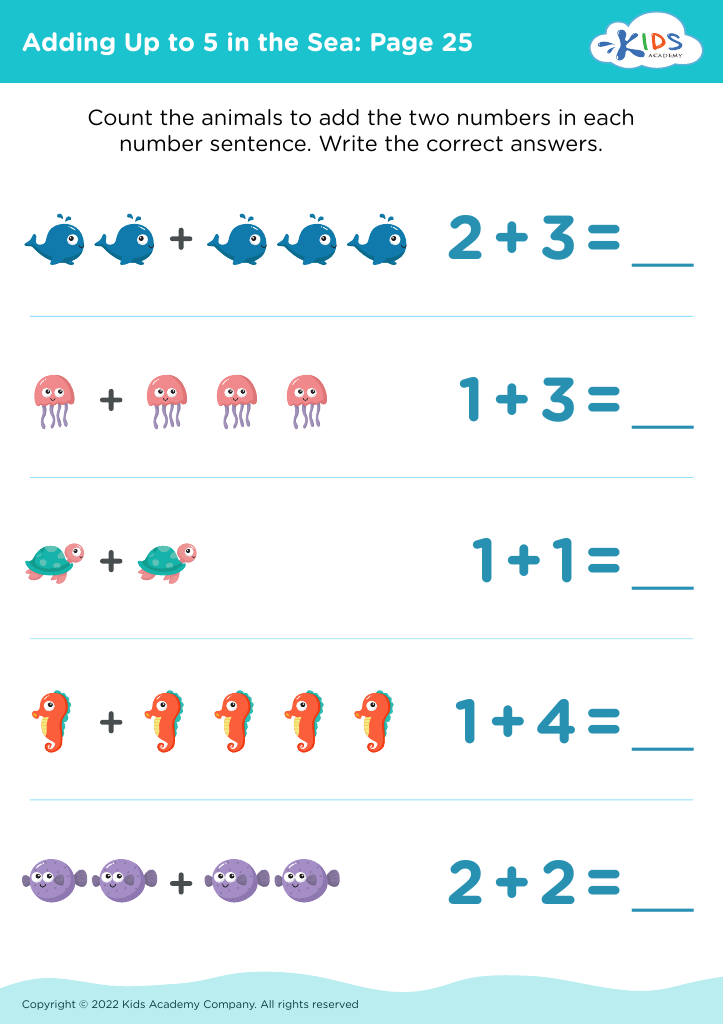
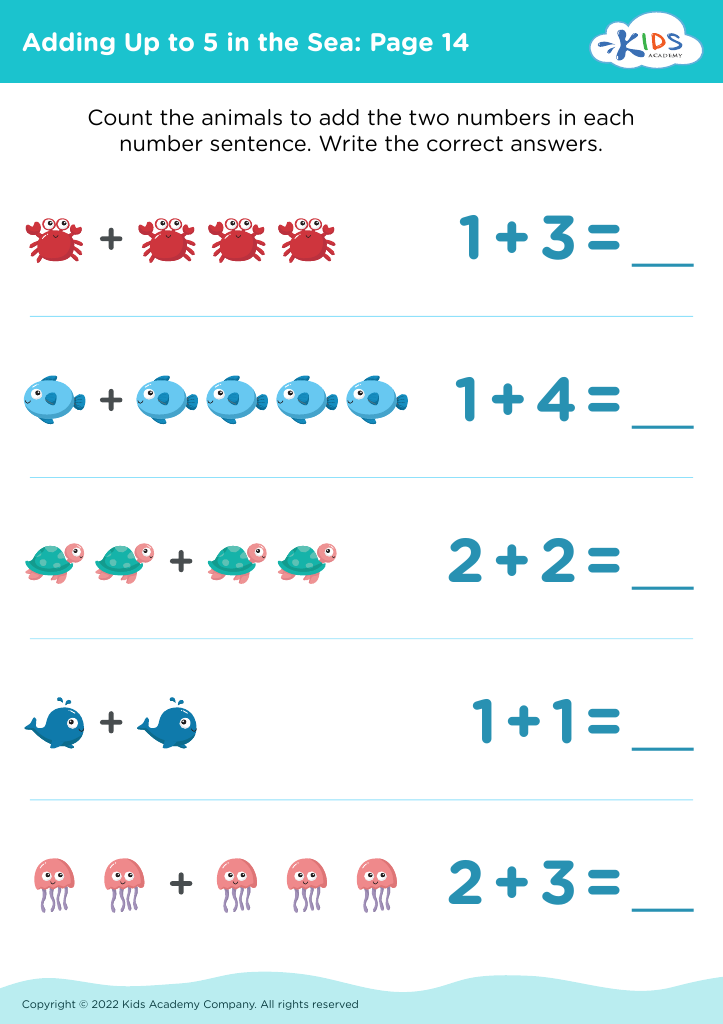
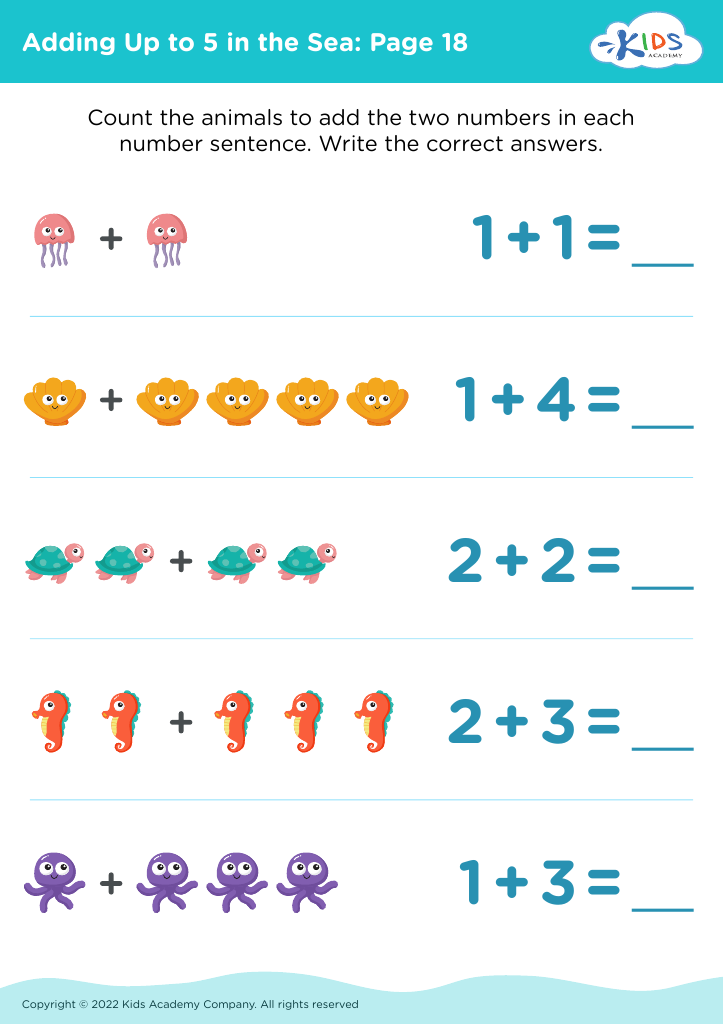
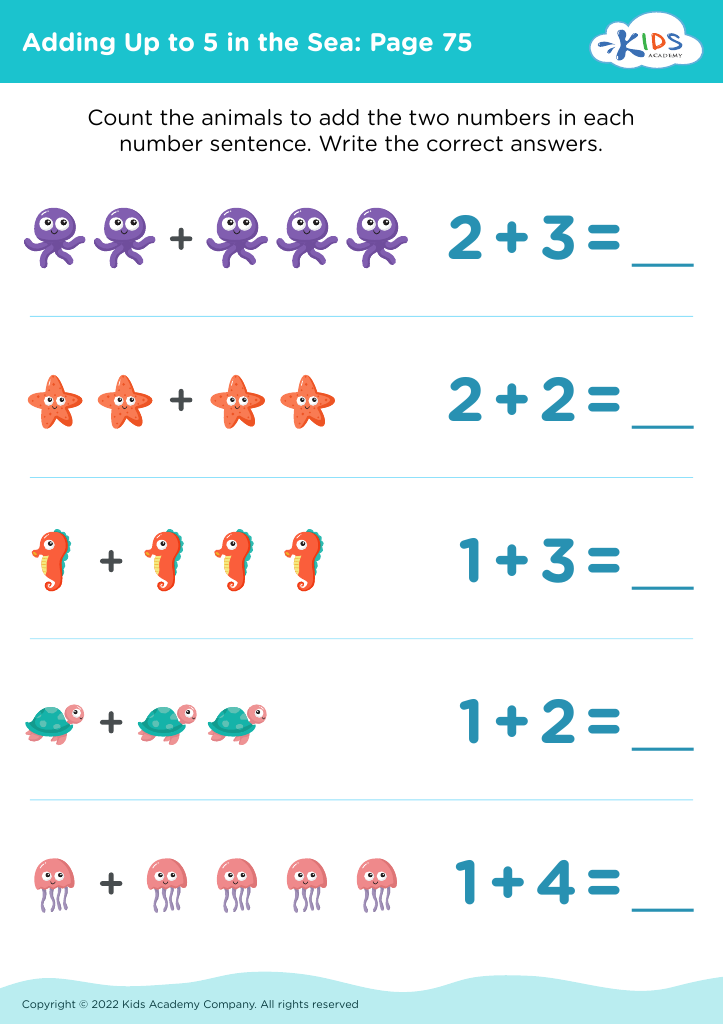
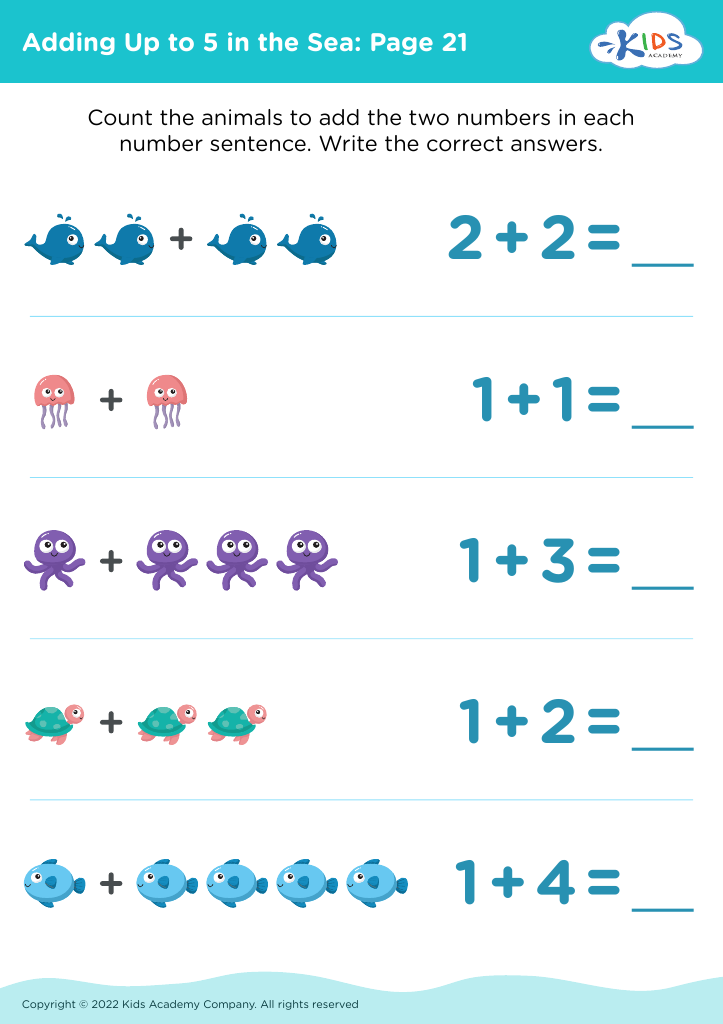
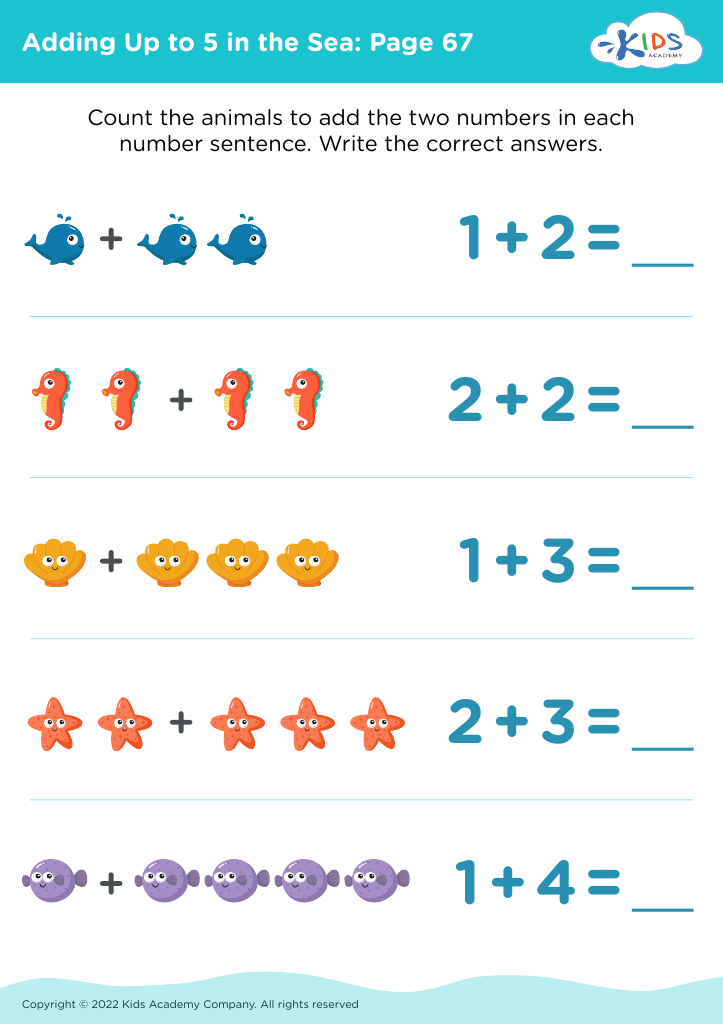
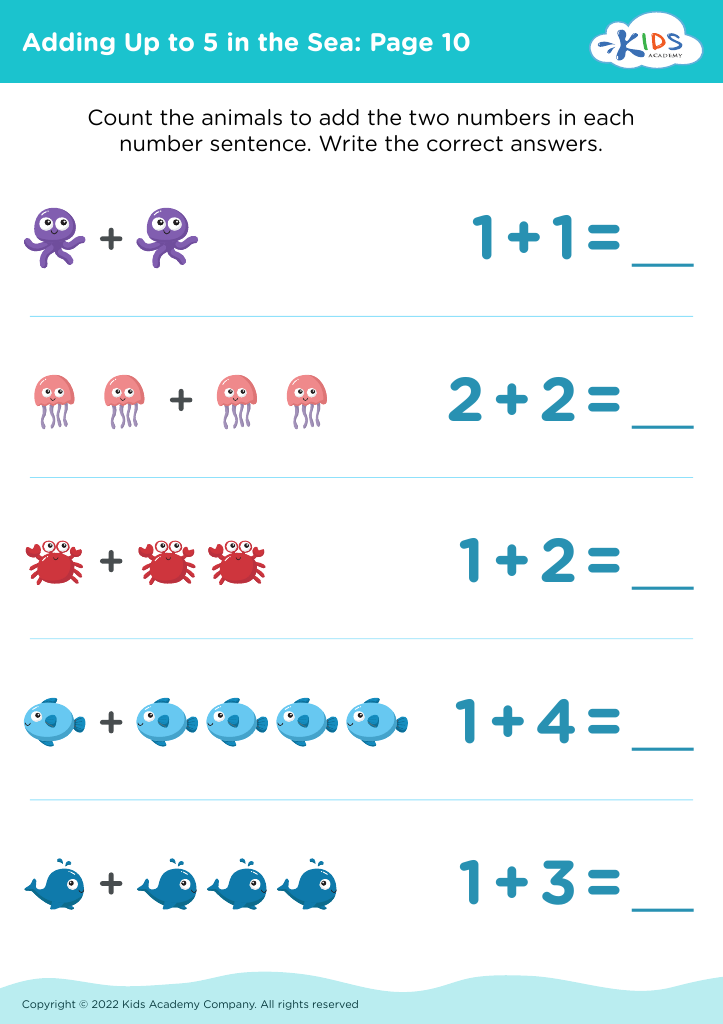
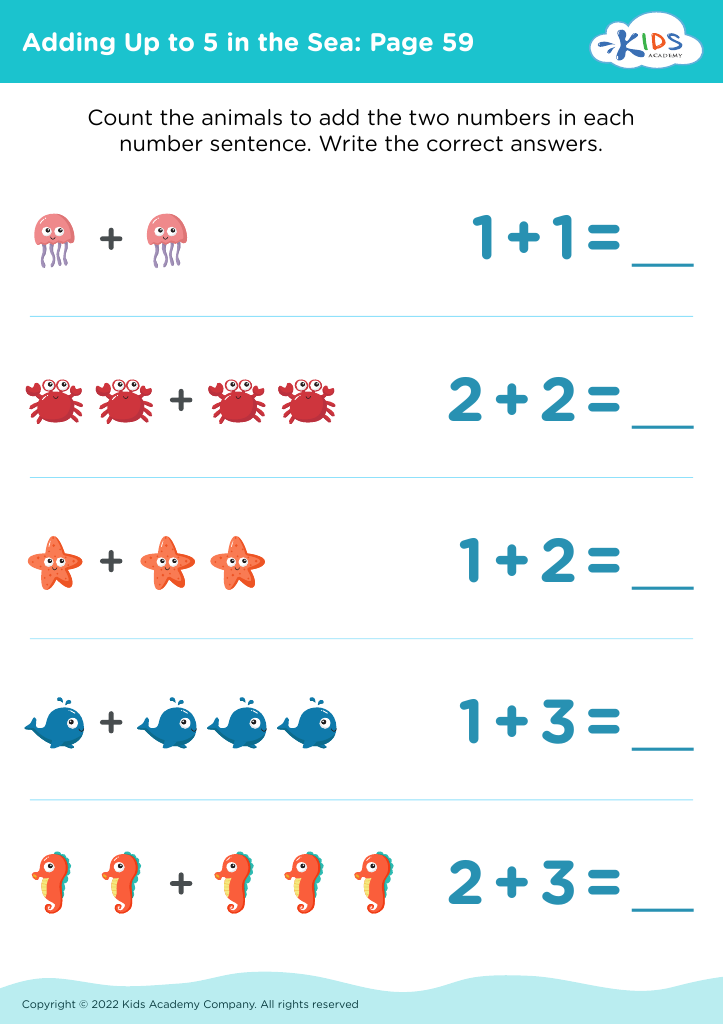
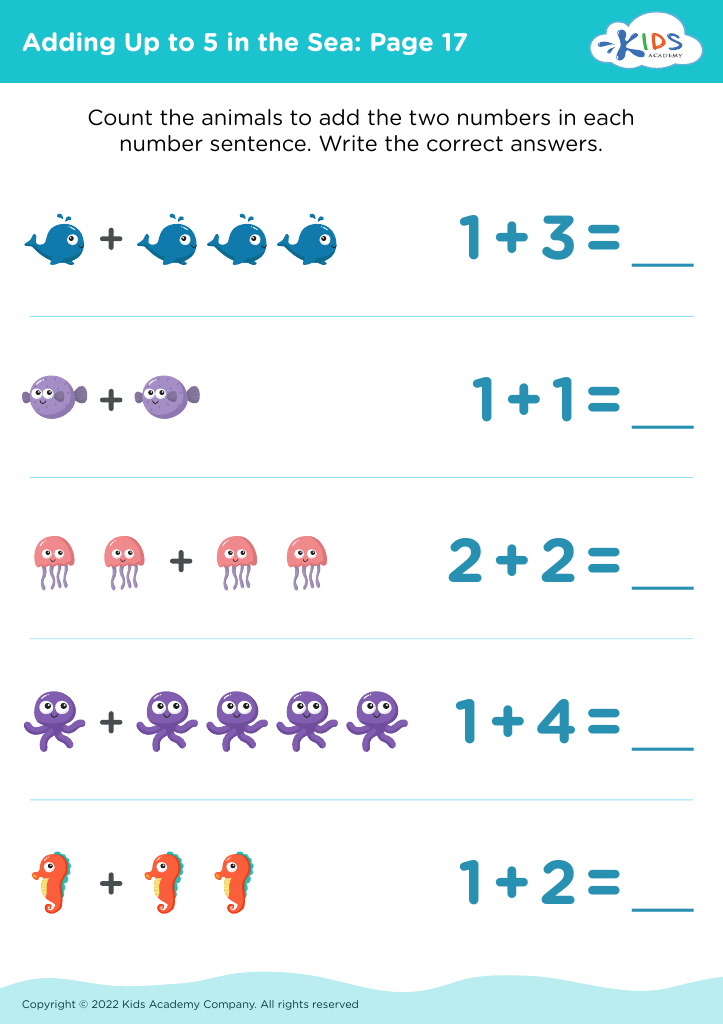
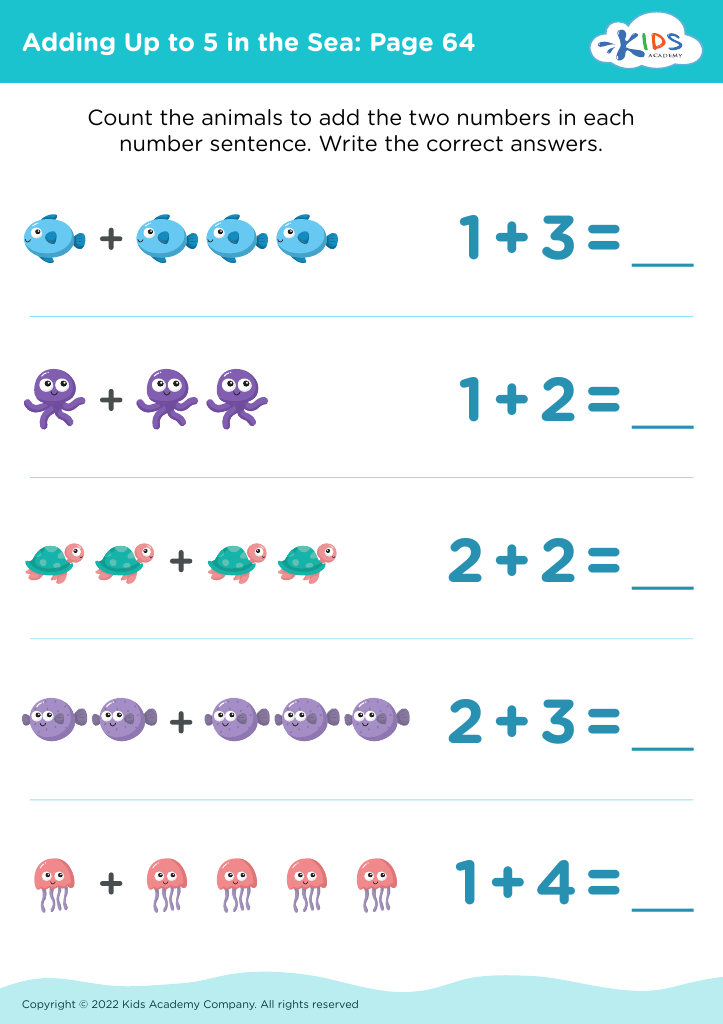
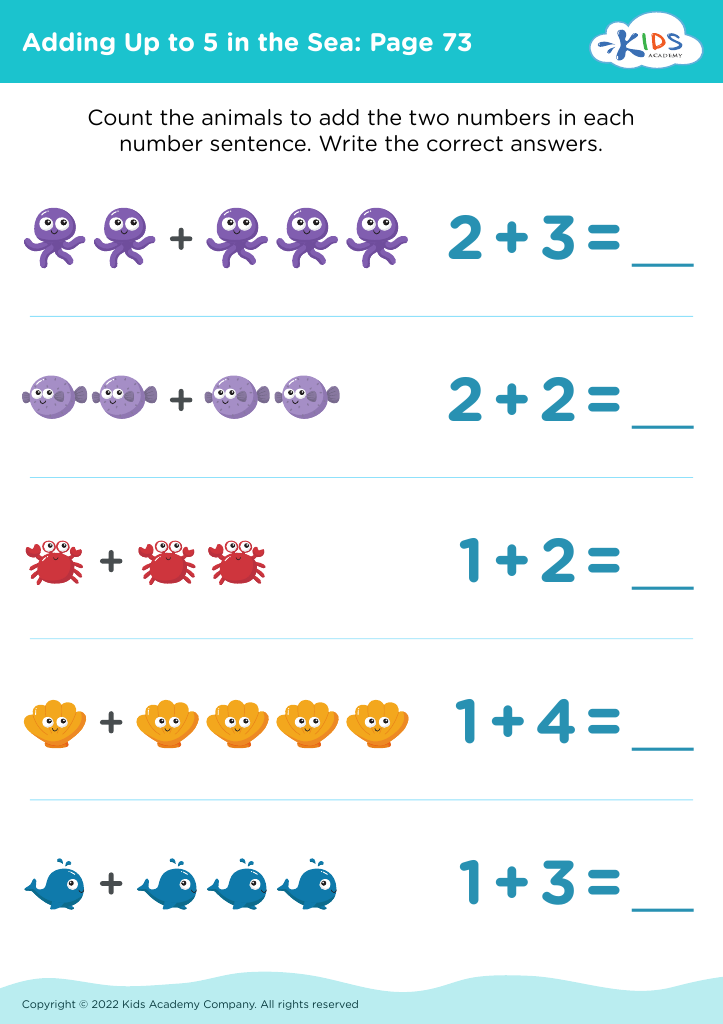
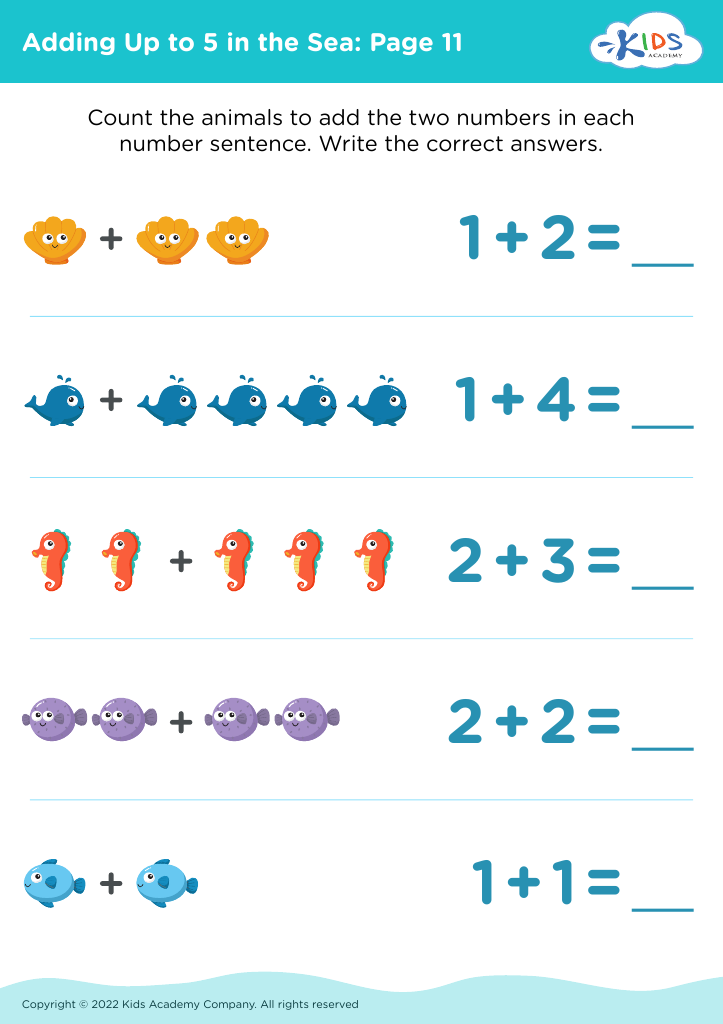
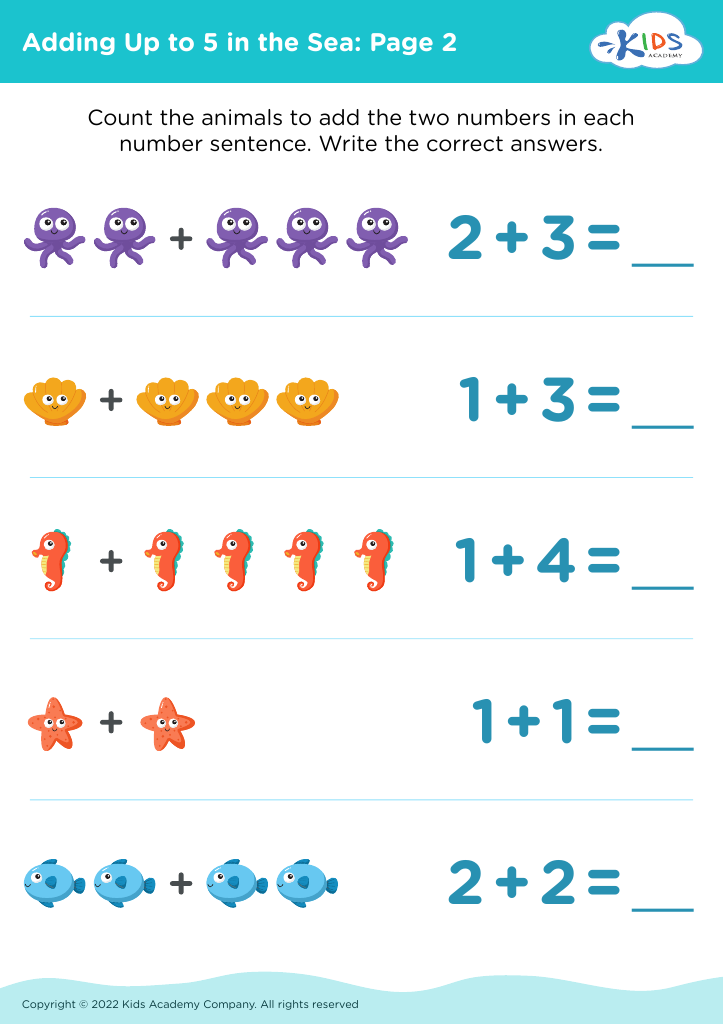
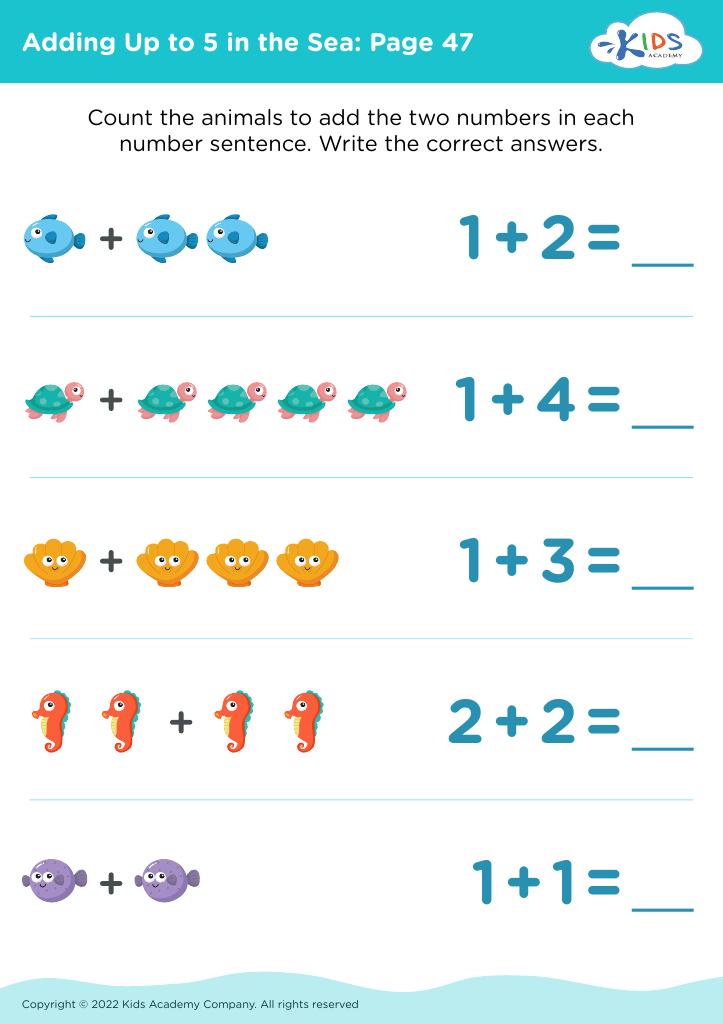
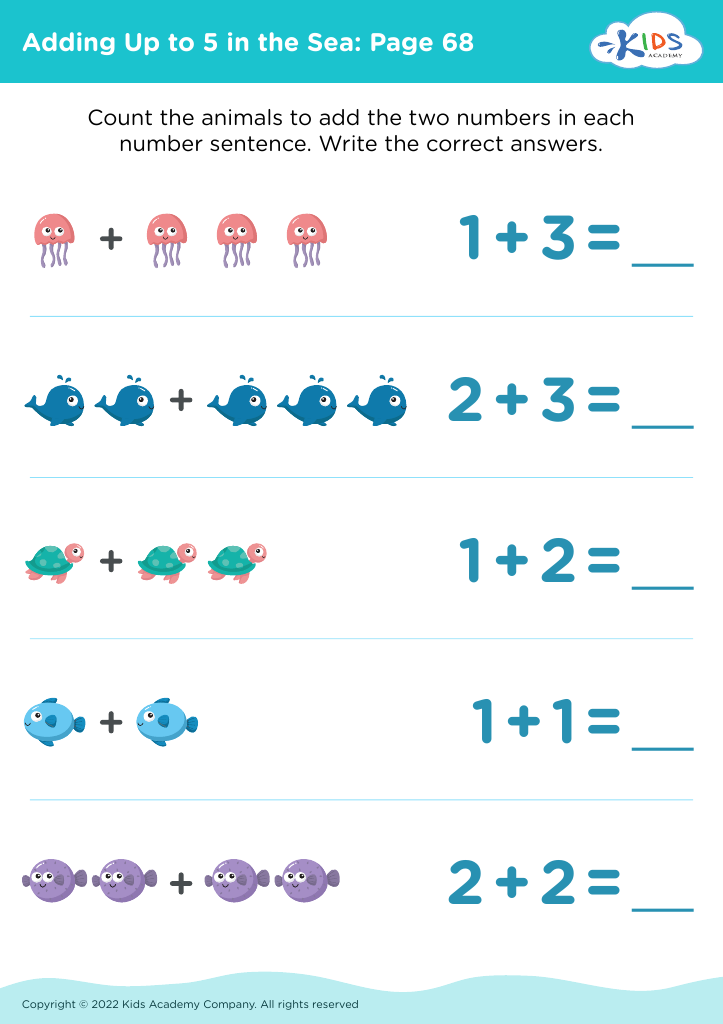



Visual learning is an essential teaching strategy for young learners, particularly for those aged 5-7. During this stage, children are naturally curious and observe the world around them with keen interest. Integrating visual elements, such as images and illustrations of marine life, can significantly enhance their understanding and retention of concepts related to the sea.
First, visual learning engages students by capturing their attention and stimulating their imagination. For example, vibrant pictures of ocean creatures like dolphins, sharks, and coral reefs help children build a connection with the subject matter, making learning fun and memorable. This engagement can lead to enhanced motivation and a love for learning.
Second, visual representations facilitate comprehension for diverse learning styles. Some children grasp information better through images rather than text. Using visual aids in discussions about oceans and ecosystems can simplify complex ideas, allowing children to understand relationships and processes in a more accessible manner.
Lastly, visual learning prompts collaboration and discussion among peers, fostering vital communication skills. By exploring visual materials together, children can share their thoughts and ideas, enriching their understanding through social interaction.
In summary, incorporating visual learning about the sea not only enhances comprehension but also nurtures a generation of environmentally conscious, engaged learners.