Counting proficiency Adding Up to 5 Worksheets for Ages 5-7
9 filtered results
-
From - To
Enhance your child's counting proficiency with our engaging "Adding Up to 5" worksheets, designed specifically for ages 5-7! These interactive worksheets provide a fun and effective way for young learners to practice addition skills while counting objects and visual aids. With colorful illustrations and a variety of exercises, your child will gain confidence in their mathematical abilities as they master basic addition concepts. Whether at home or in the classroom, our worksheets support early math development, making learning enjoyable and effective. Download and watch your child thrive as they add up to 5 with ease and joy!
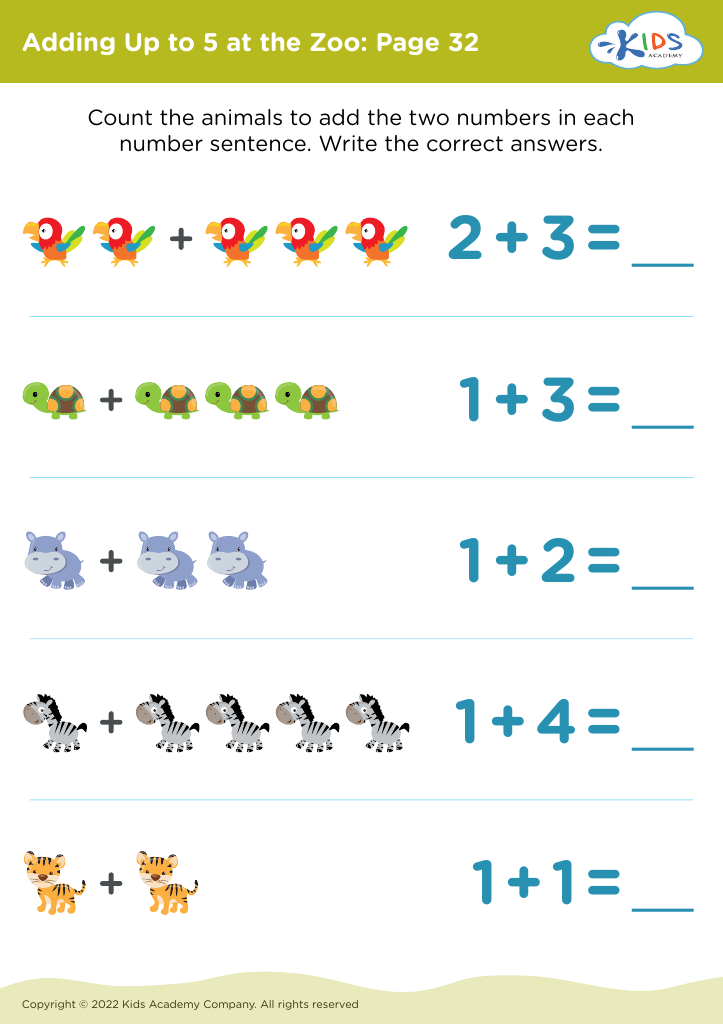
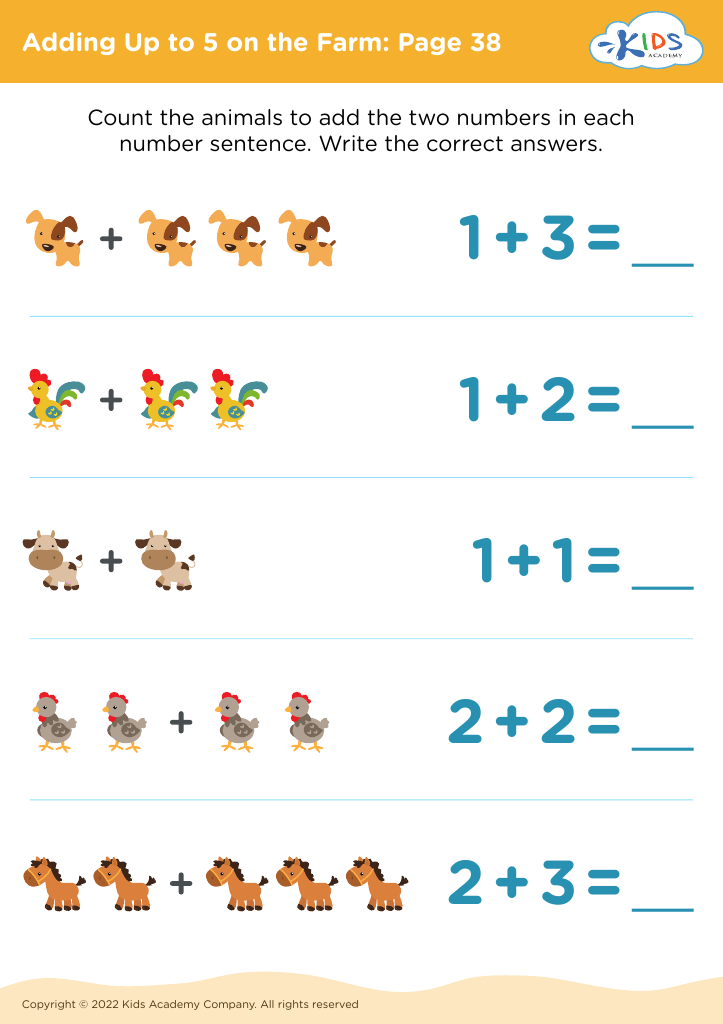
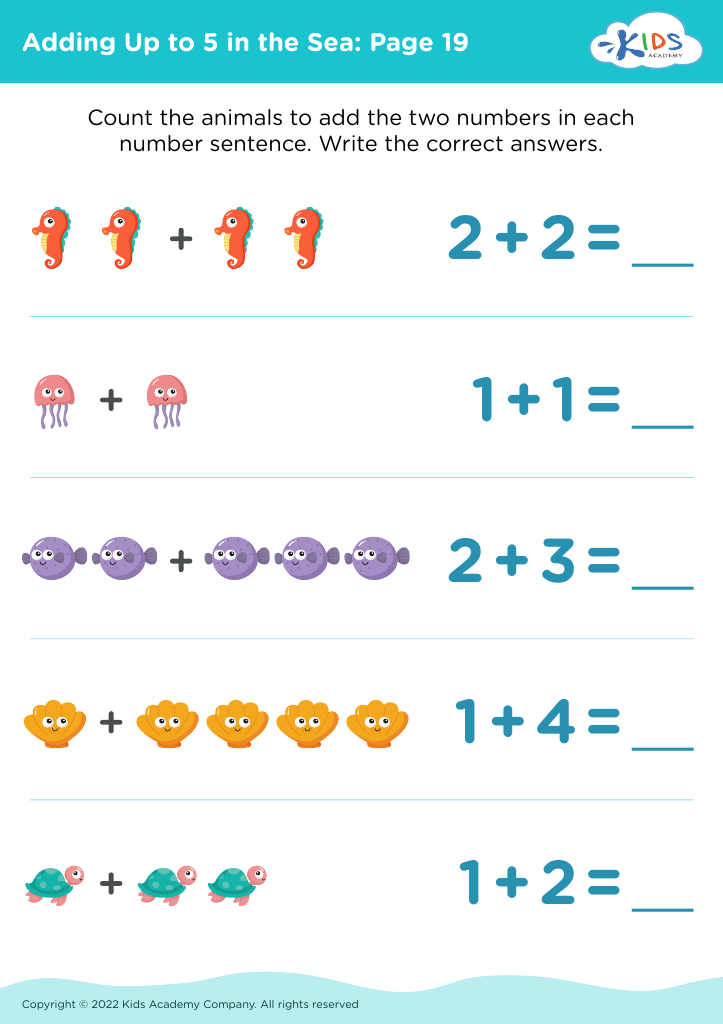
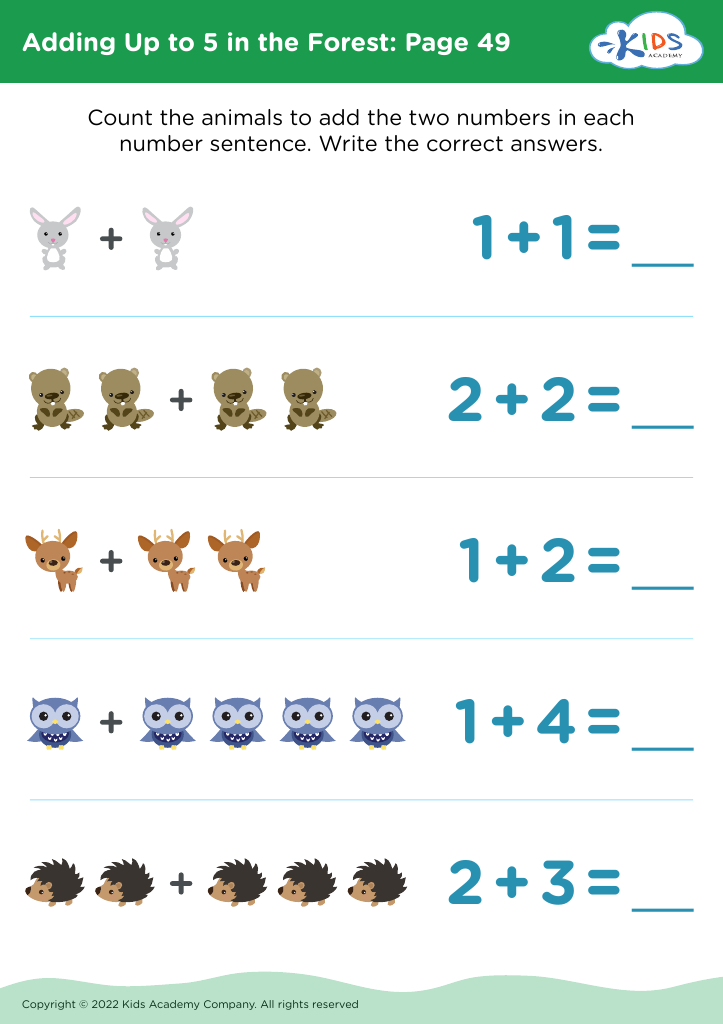
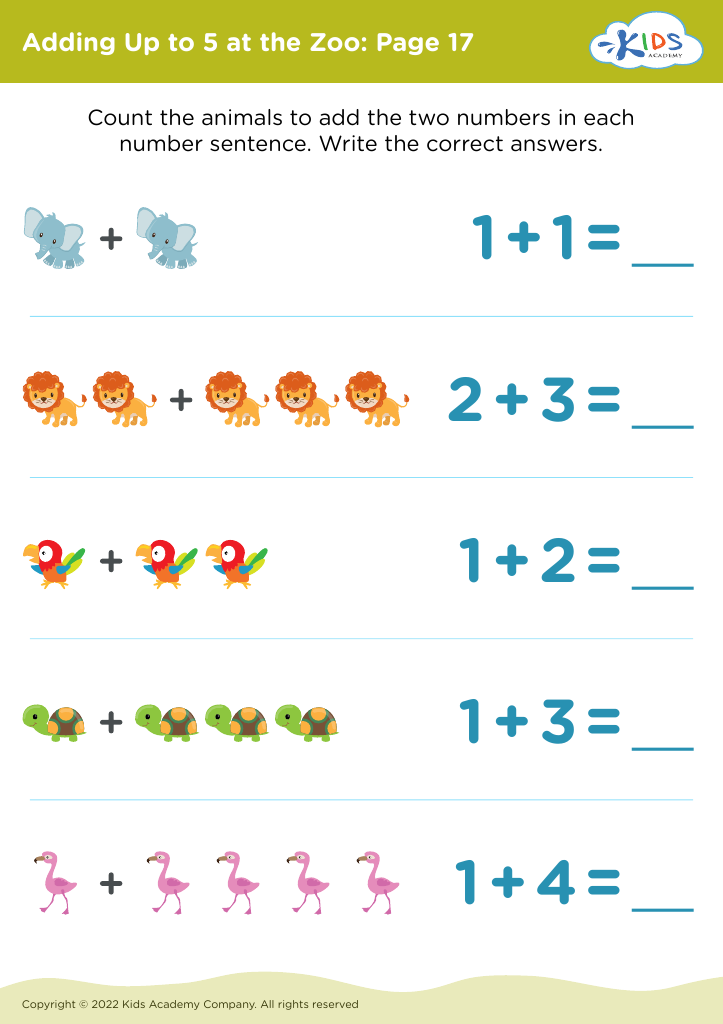
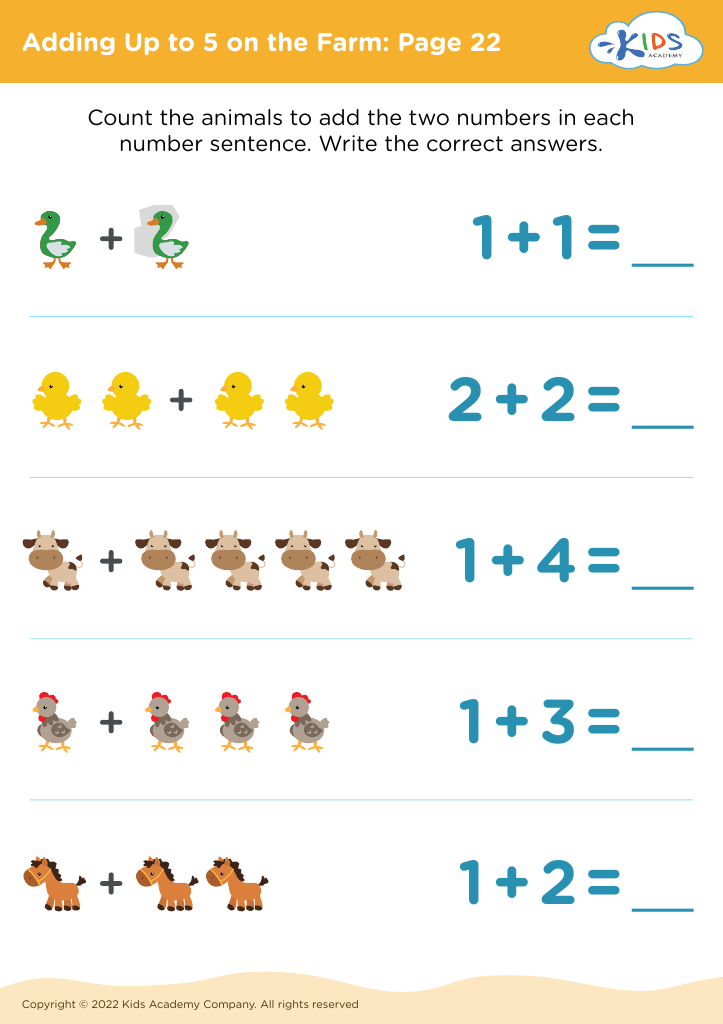
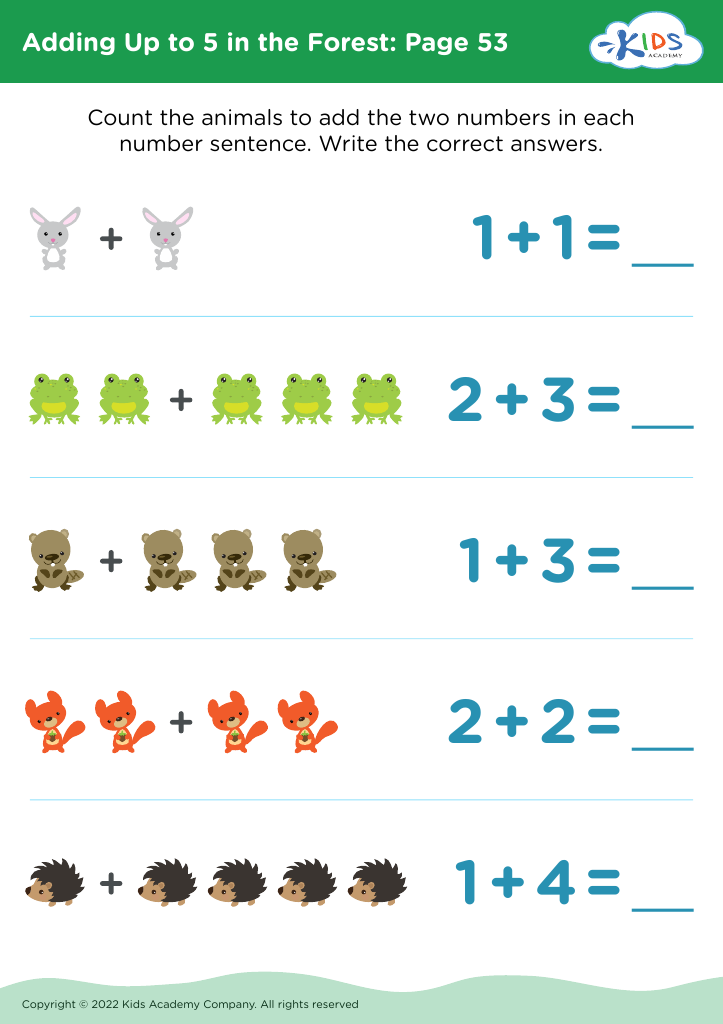
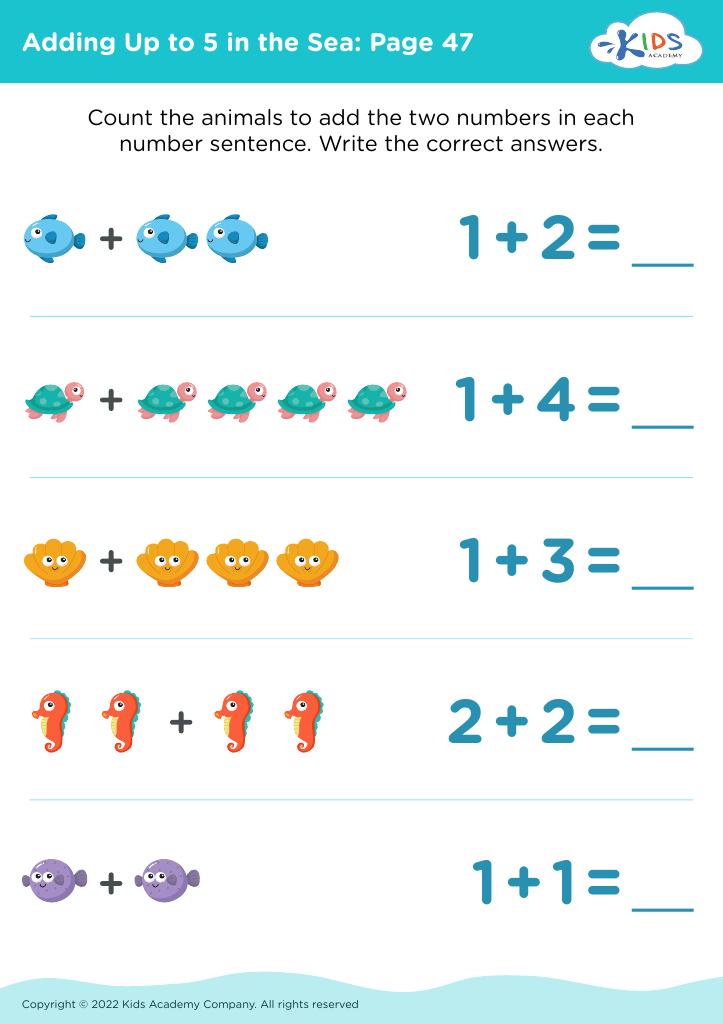
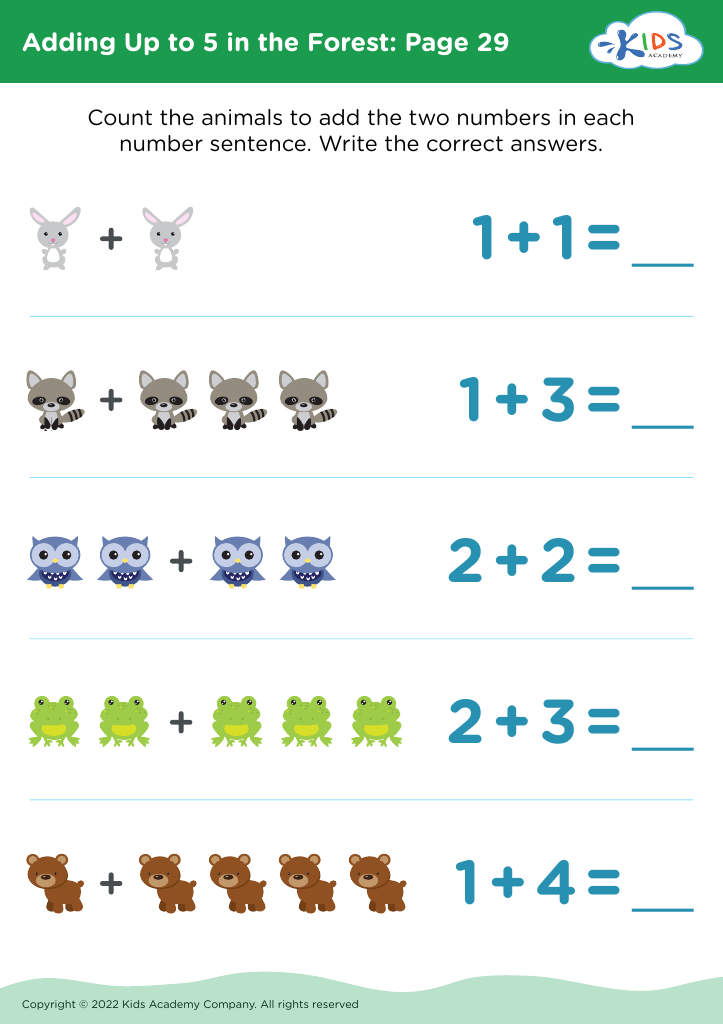








Counting proficiency, particularly the ability to add up to 5, is crucial for children aged 5-7 for several reasons. First, mastering basic counting skills forms the foundation for future math concepts. At this age, children begin to transition from rote counting to understanding how numbers relate to one another, which is vital for addition and subtraction.
Second, strong counting skills enhance cognitive development and logical thinking. Limiting or struggling with basic counts can affect a child's confidence and interest in mathematics later in life. Engaging children with counting activities can also improve concentration and memory, essential components of overall academic success.
Furthermore, counting up to 5 equips children with practical life skills. It supports everyday activities, such as sharing, grouping objects, and even early budgeting skills when they learn to manage small amounts of money.
For parents and teachers, fostering counting proficiency includes creating a stimulating learning environment that encourages exploration, discussion, and play involving numbers. This approach not only teaches mathematical concepts, but also supports social skills, patience, and perseverance, ensuring that children are well-equipped for more complex challenges ahead. In essence, nurturing counting proficiency paves the way for a brighter academic future.








