Counting skills Adding up to 50 Worksheets for Ages 5-7 - Page 2
34 filtered results
-
From - To
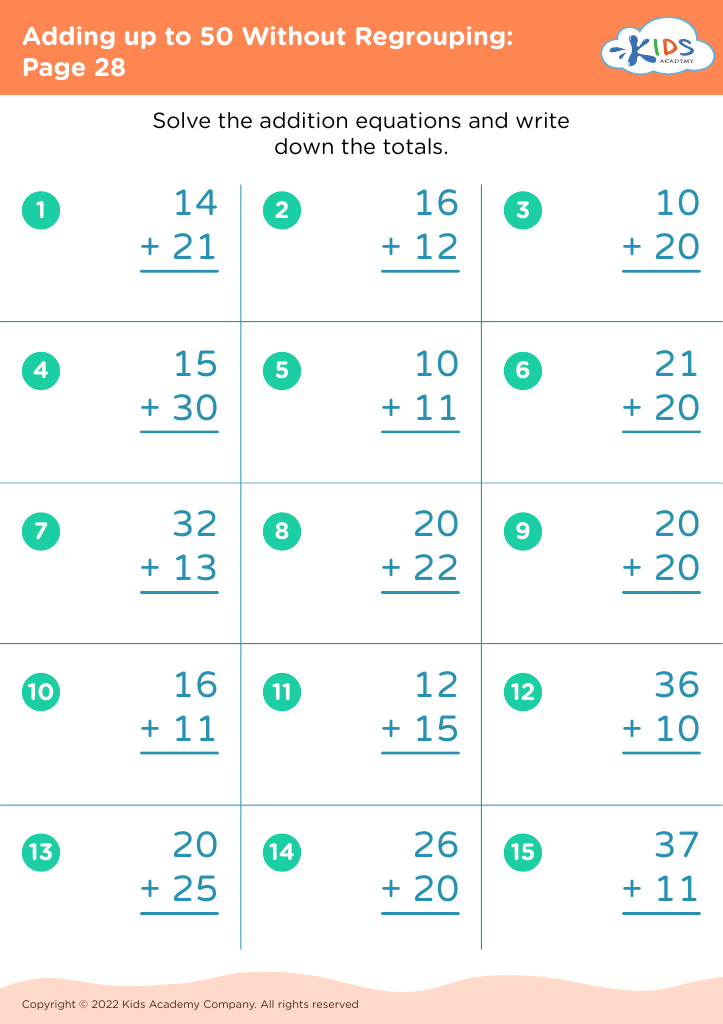
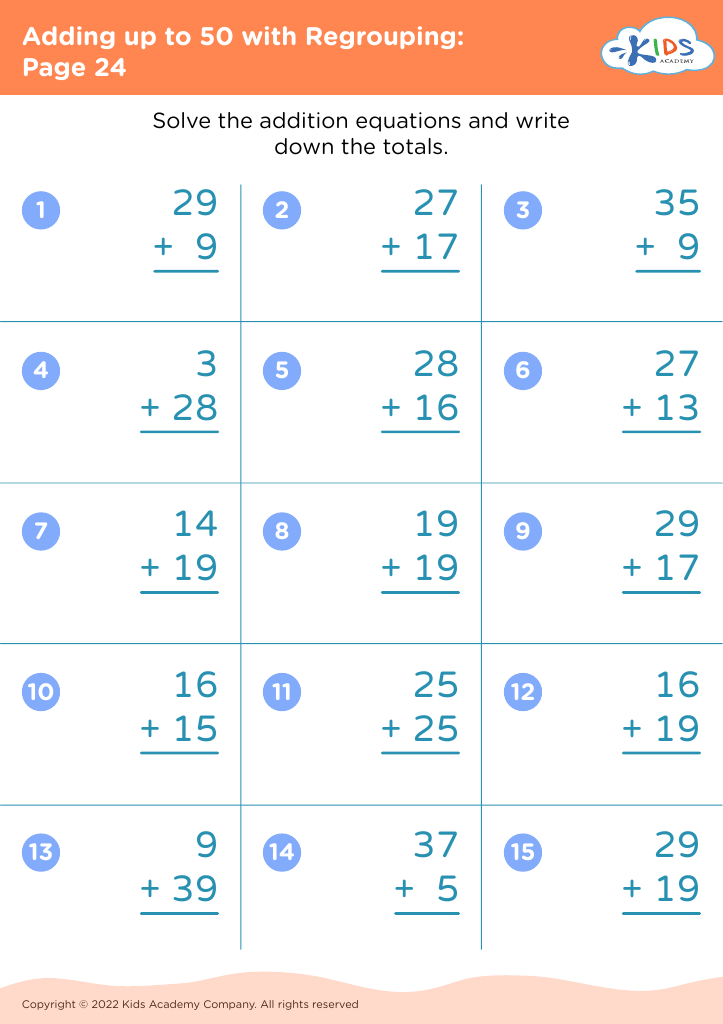
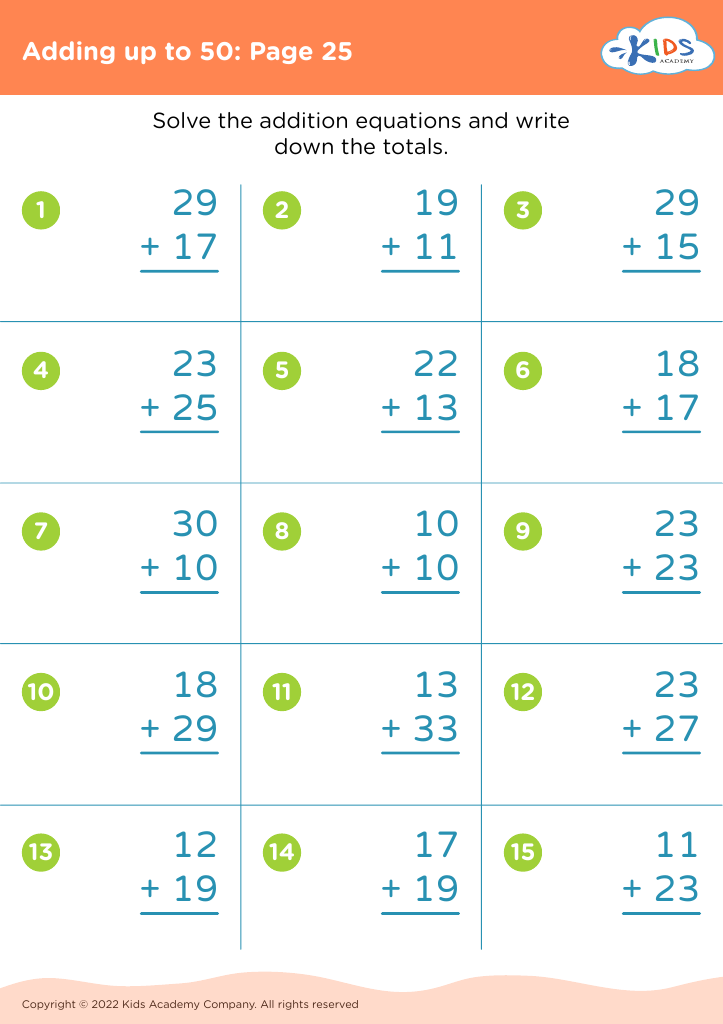
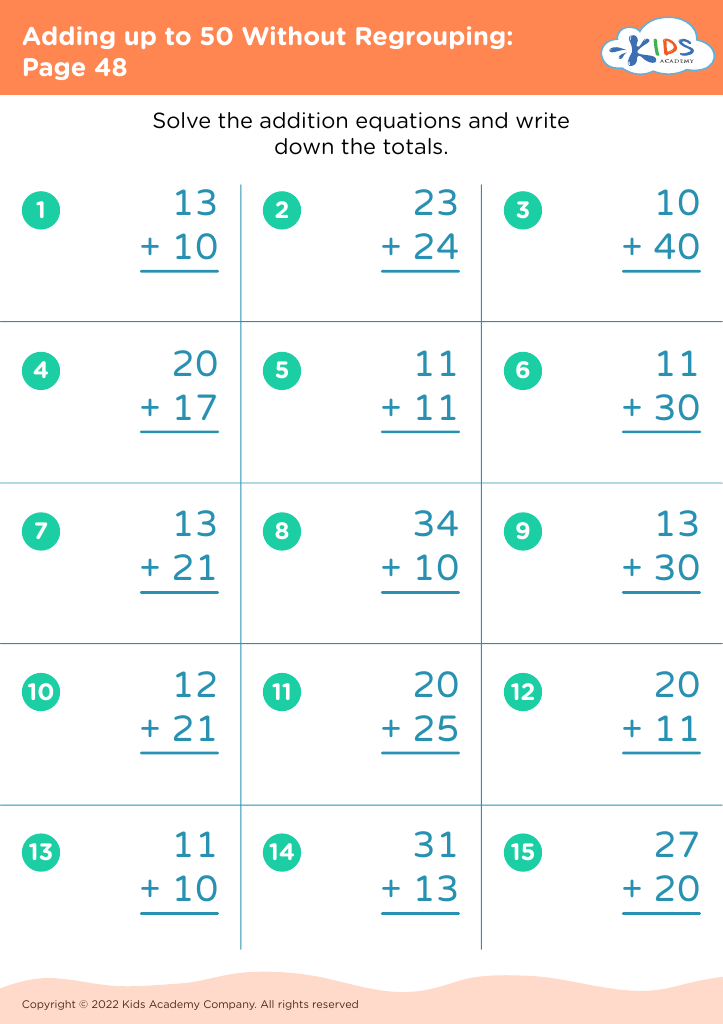
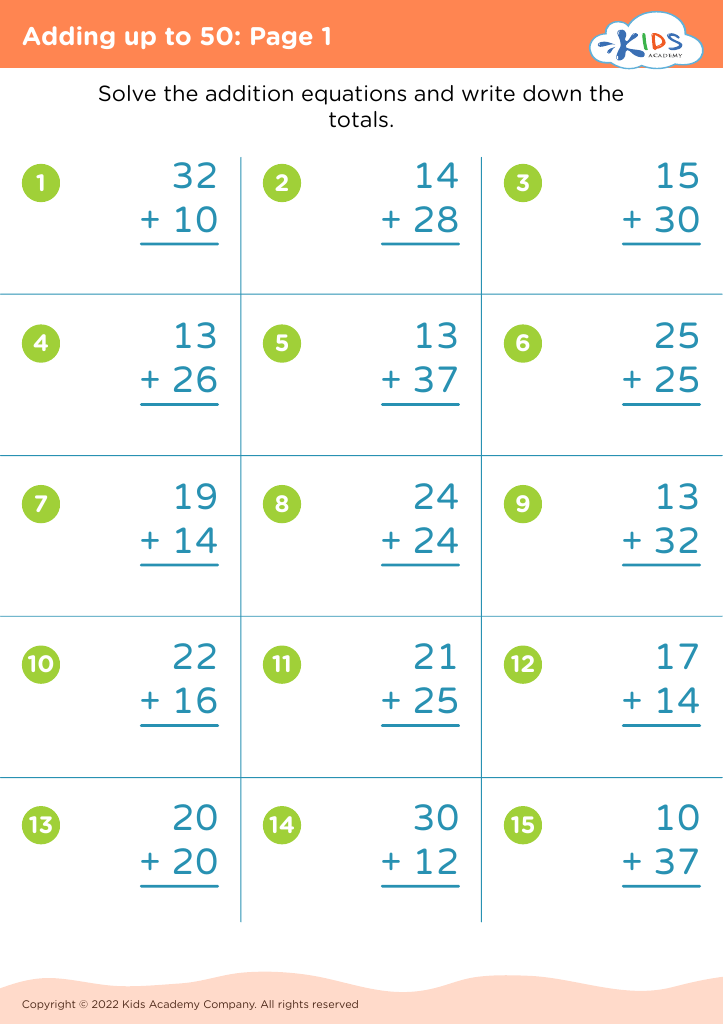
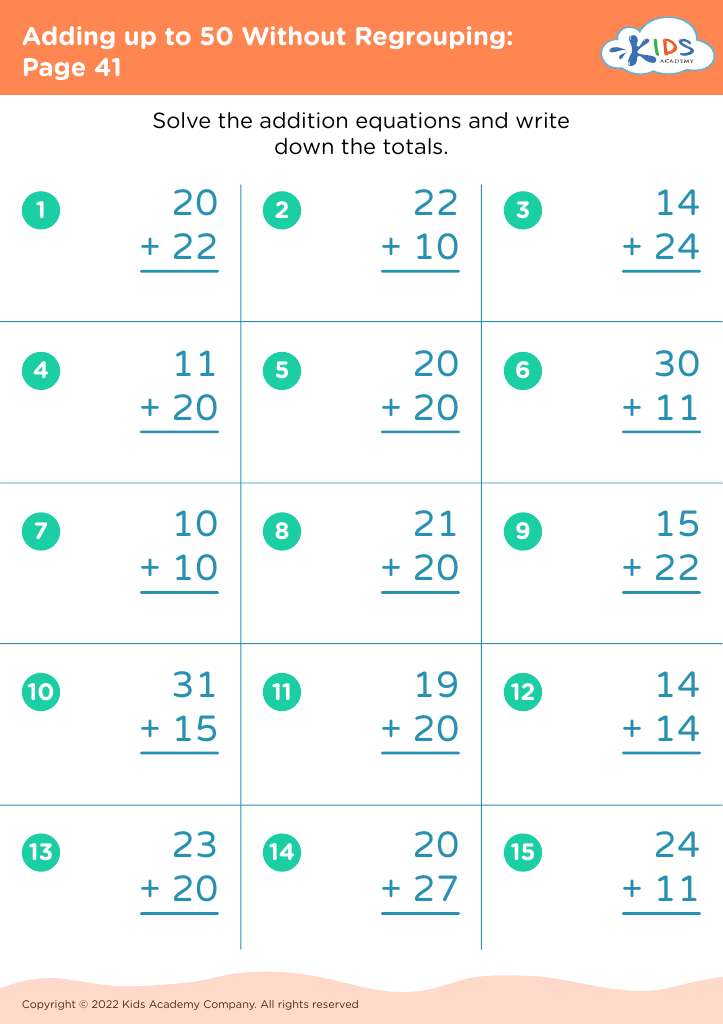
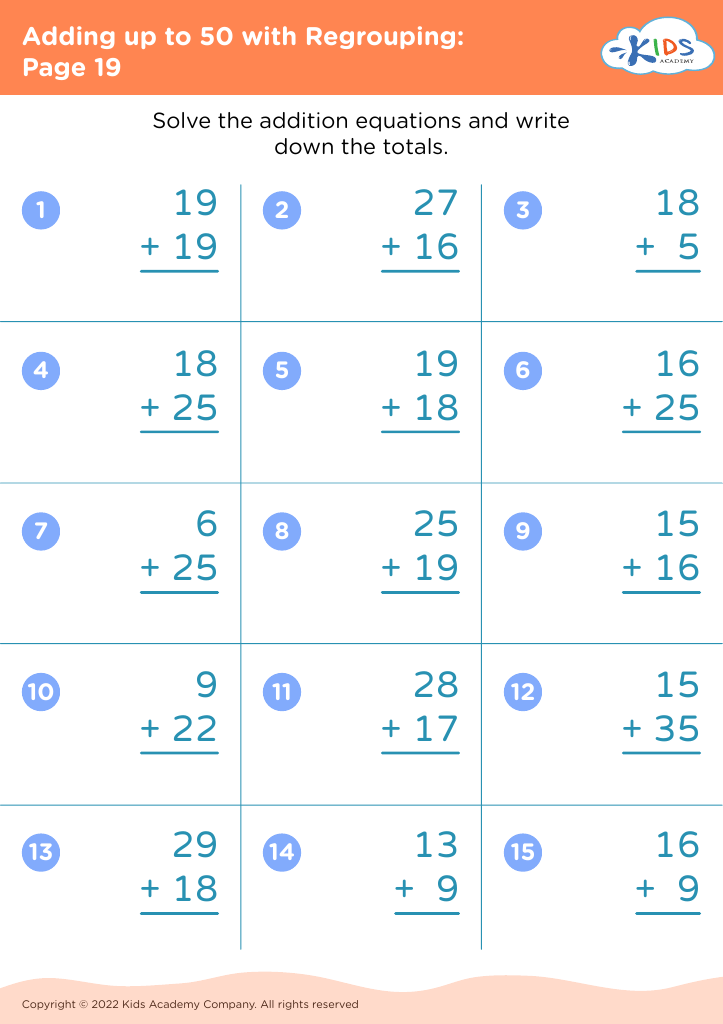
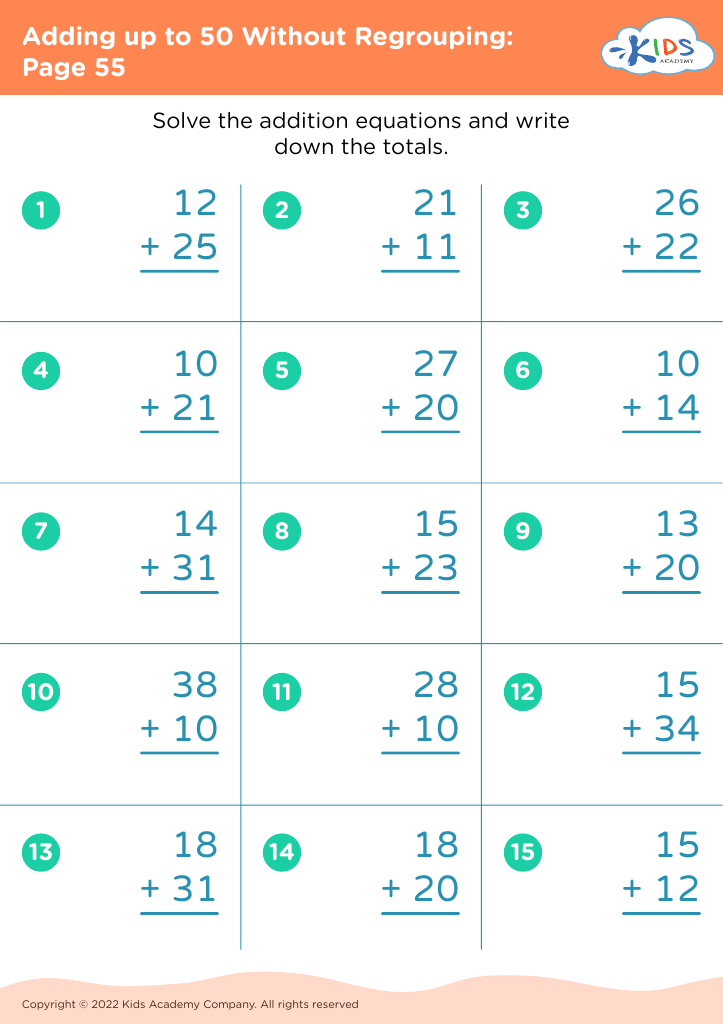
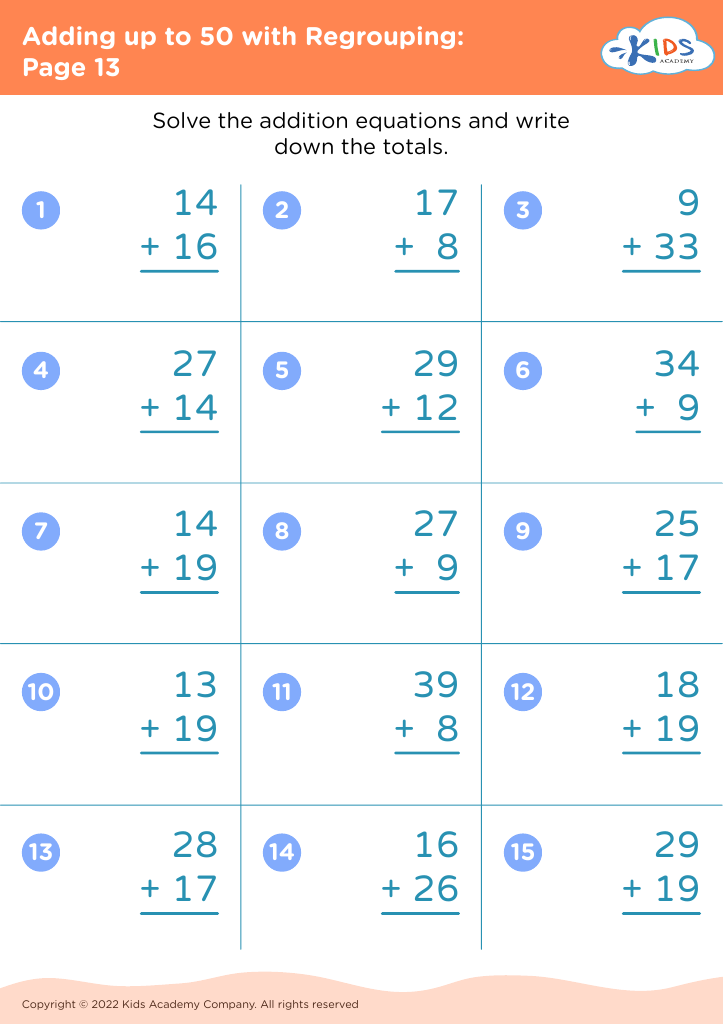
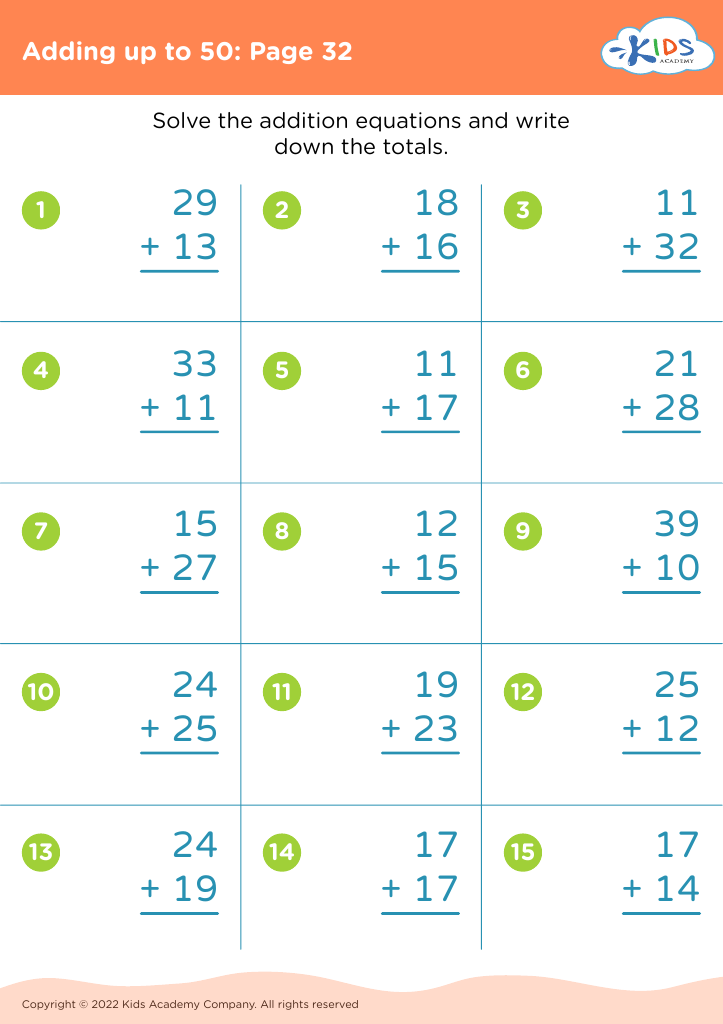




Counting skills and basic addition are critical building blocks for young learners, especially between the ages of 5 and 7. At this stage, children are in their formative years of cognitive development. Proficient counting and the ability to add numbers up to 50 lay a strong mathematical foundation, which is essential for more complex arithmetic operations in the future.
When parents and teachers focus on developing these skills, they help children enhance their number sense. This term refers to an intuitive understanding of numbers, their magnitude, relationships, and how they are affected by operations. Good number sense is crucial for problem-solving and logical reasoning, both of which are skills that extend beyond the realm of mathematics.
Furthermore, early success in math boosts children's confidence and encourages a positive attitude toward learning. Struggling with basic skills can lead to math anxiety, which can deter students from engaging in STEM (Science, Technology, Engineering, and Mathematics) subjects later on.
Practicing counting and adding up to 50 offers real-life benefits too, as children learn to handle money, tell time, and understand quantities in everyday situations. Fostering these essential skills at a young age thus equips children with practical tools for academic success and daily living.








