Visual Learning Addition and Subtraction Word Problems Worksheets for Ages 5-7
5 filtered results
-
From - To
Discover our engaging Visual Learning Addition and Subtraction Word Problems Worksheets designed for children ages 5-7. Our worksheets facilitate a fun and interactive approach to mastering basic math skills through colorful visuals and relatable scenarios. These resources focus on enhancing problem-solving abilities while reinforcing key concepts in addition and subtraction. Perfect for young learners, each worksheet includes step-by-step visuals that make understanding word problems easy and enjoyable. Foster your child's confidence in math by navigating real-life situations using these essential worksheets. Transform learning into play and watch as your little ones develop crucial foundational skills with our visual learning resources!
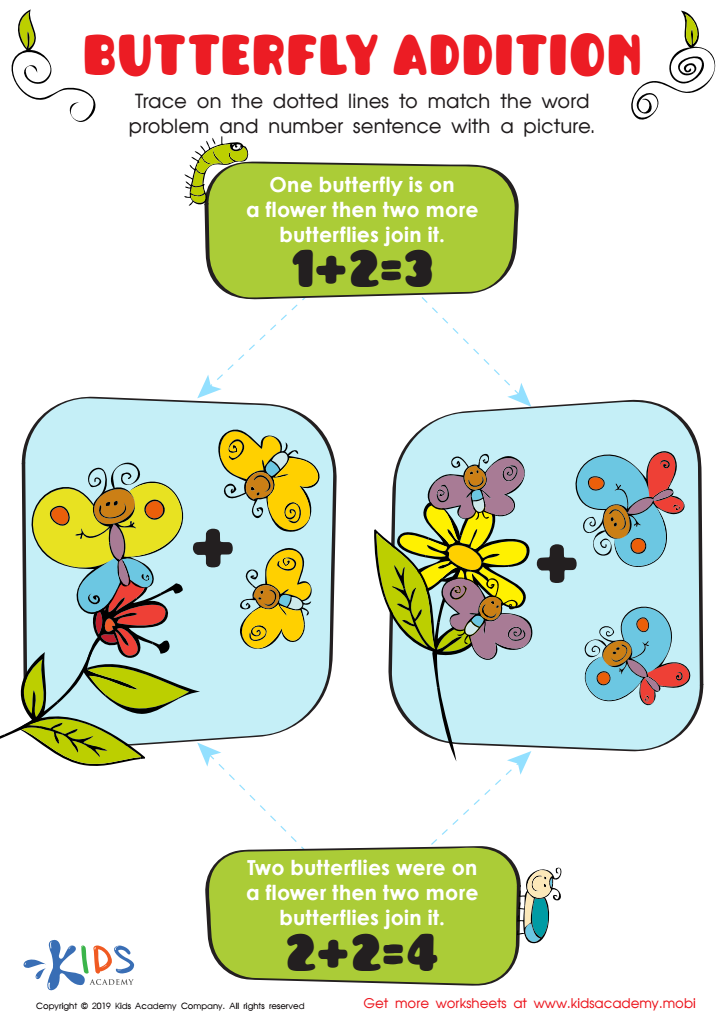
Butterfly Addition Worksheet
 Assign to My Students
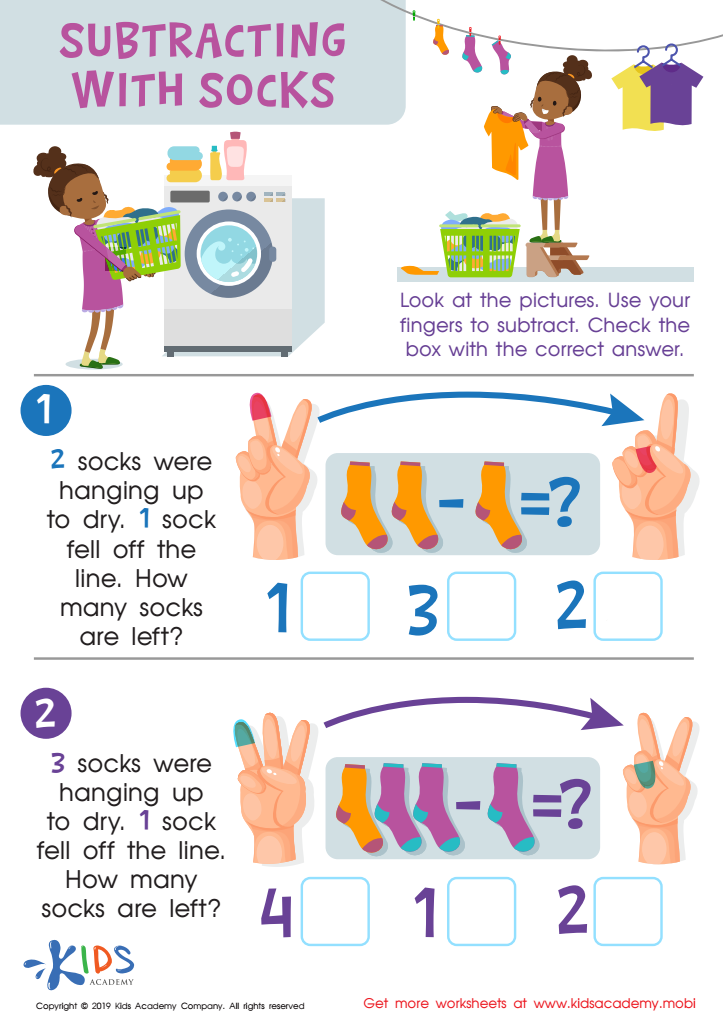
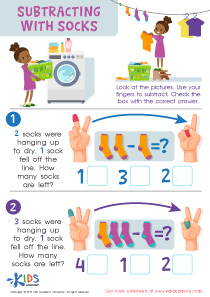
Subtracting Socks Worksheet
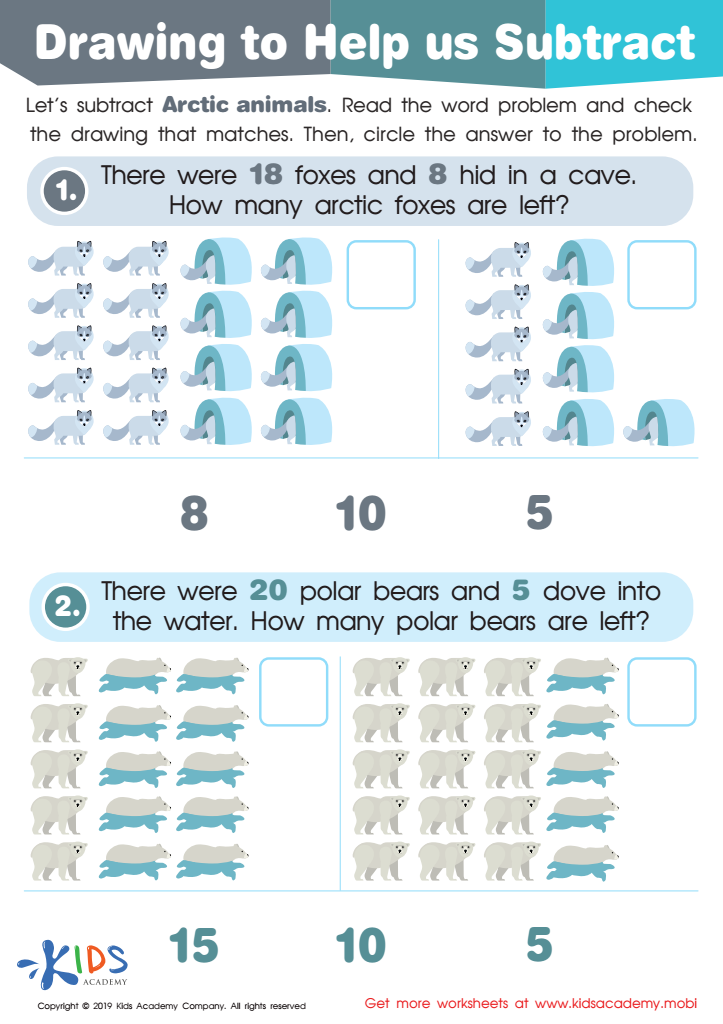
Drawing to Help Us Subtract Worksheet
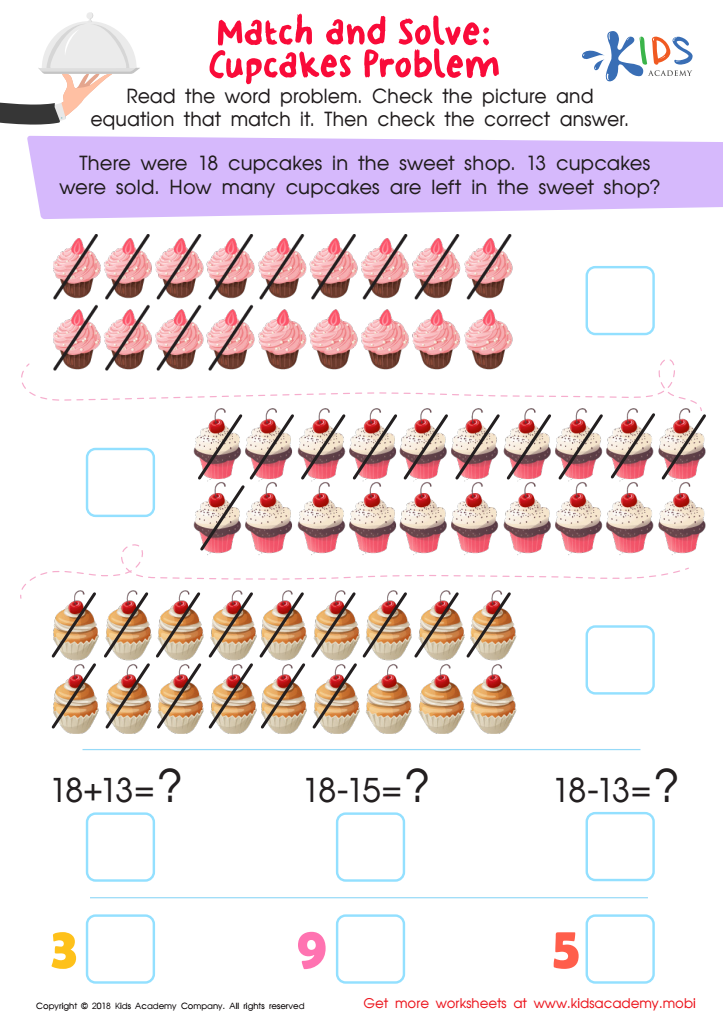
Match and Solve: Cupcakes Problem Worksheet
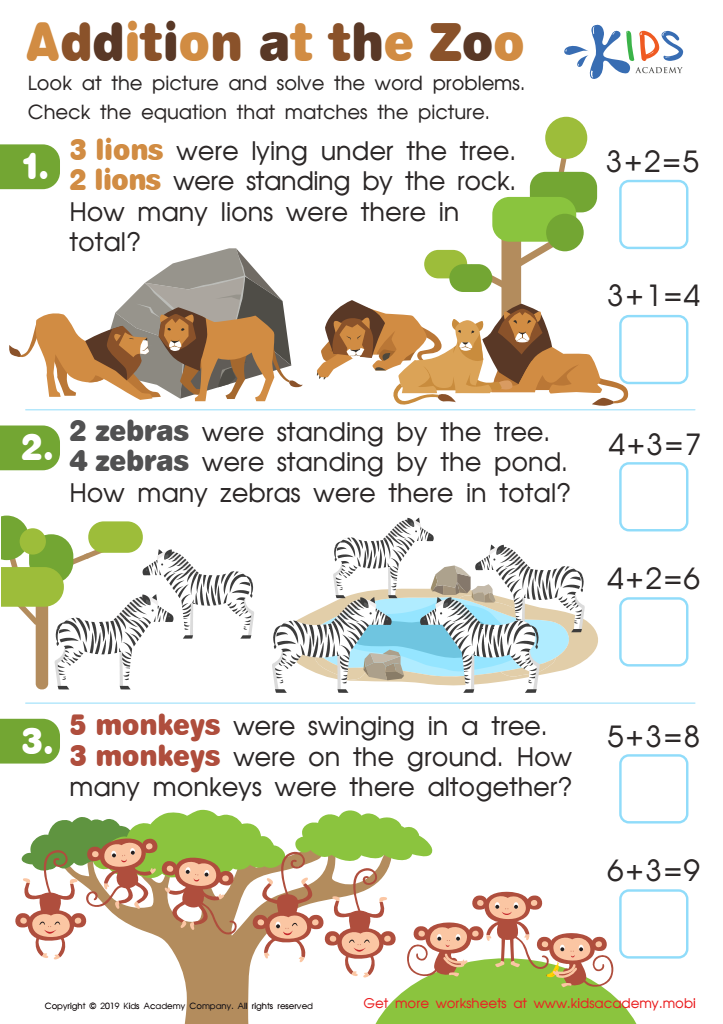
Addition at the Zoo Worksheet








Parents and teachers should prioritize visual learning in addition and subtraction word problems for children ages 5-7, as this method enhances comprehension and retention of mathematical concepts. Young children are naturally drawn to visual stimuli, and incorporating images or diagrams helps make abstract ideas more concrete. Visual representations, like drawing pictures or using manipulatives, enable kids to see the relationships between numbers and quantities, fostering a deeper understanding of addition and subtraction.
Moreover, visual learning caters to diverse learning styles, assisting those who might struggle with traditional methods. Many children in this age group find it challenging to grasp numerical problems verbally; thus, visual aids can bridge this gap and boost their confidence in math.
Additionally, engaging with word problems encourages critical thinking, as children must analyze and interpret situations before solving them. This skill is not only essential for math but also beneficial for overall academic growth. By integrating visual learning into addition and subtraction, educators and parents can create a supportive environment that nurtures problem-solving skills, instills a love for mathematics, and lays a strong foundation for future learning. Ultimately, fostering visual learning at this critical age helps shape confident, capable learners.