Filters

21 filtered results

Clear all filters
Favorites
With answer key
Interactive

21 filtered results

Difficulty Level

Grade


Introduce your child to the world of numbers with our "Basic Addition & Subtraction Worksheets for Ages 5-7." Designed specifically for young learners, these engaging worksheets help children build a strong foundation in essential math skills. Fun and interactive exercises make mastering addition and subtraction an enjoyable experience. Each worksheet incorporates colorful illustrations and practical problems to captivate your child's interest and promote learning. Ideal for both classroom use and at-home practice, our worksheets enhance your child's confidence in solving basic math operations. Make early math learning fun and effective with our expertly crafted worksheets.
Check out this FREE Trial Lesson on Addition & Subtraction for age 5-7!

H

Favorites
With answer key
Interactive
  • 5-7
  • Basic Addition
  • Addition & Subtraction
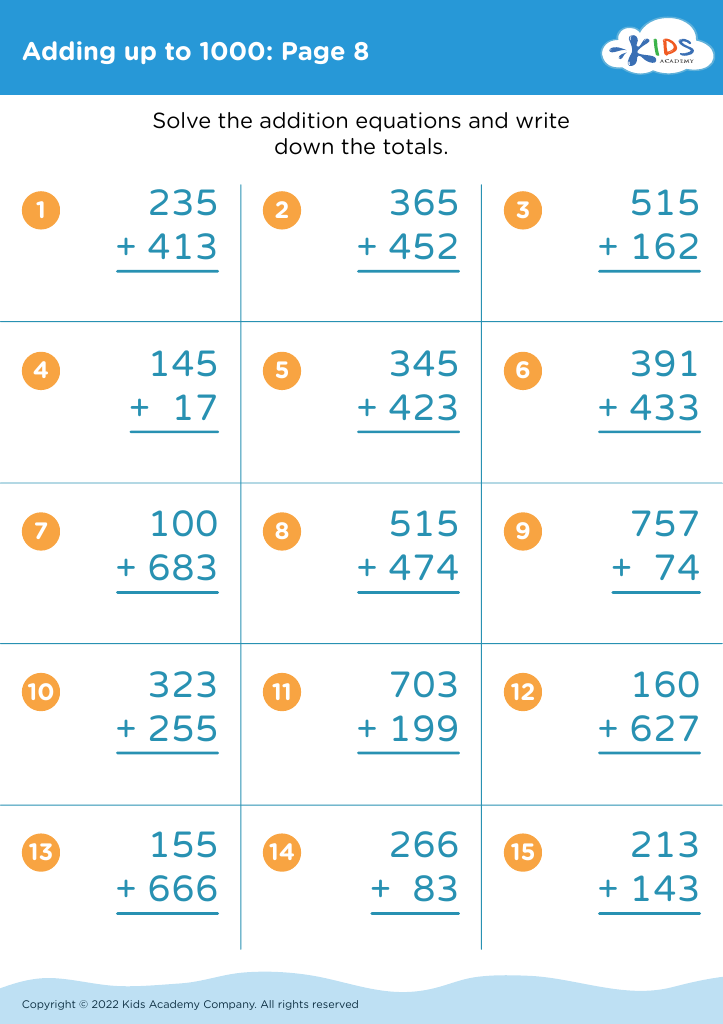
Adding up to 1000: Page 8

Adding up to 1000: Page 8

Adding up to 1000: Page 8
Worksheet
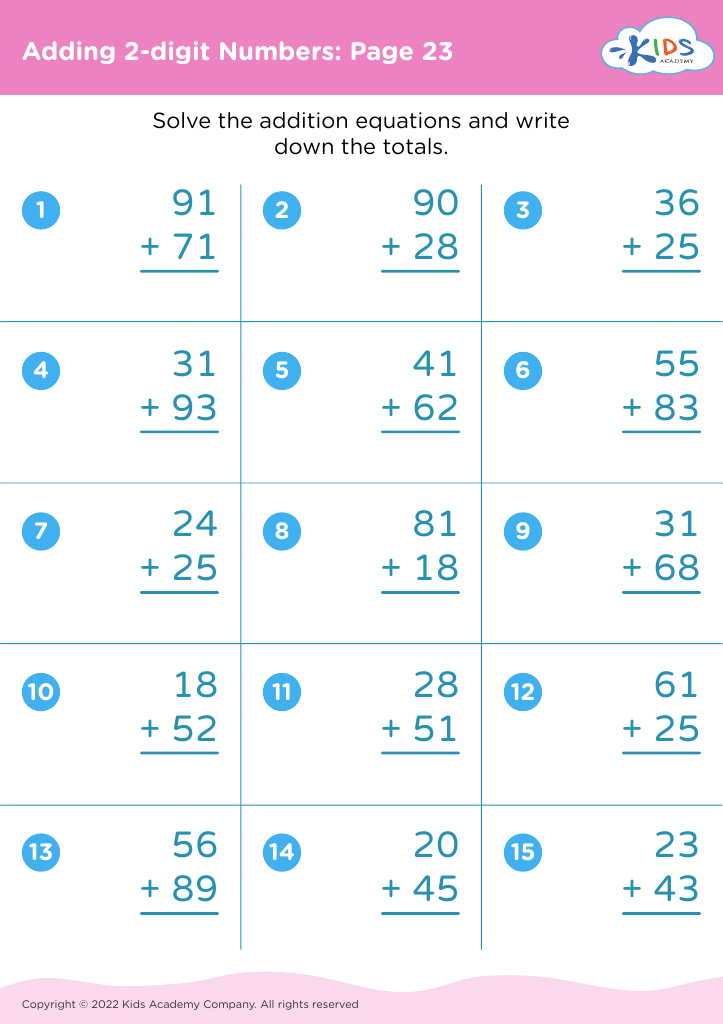
Adding 2-digit Numbers: Page 23

Adding 2-digit Numbers: Page 23

Adding 2-digit Numbers: Page 23
Worksheet
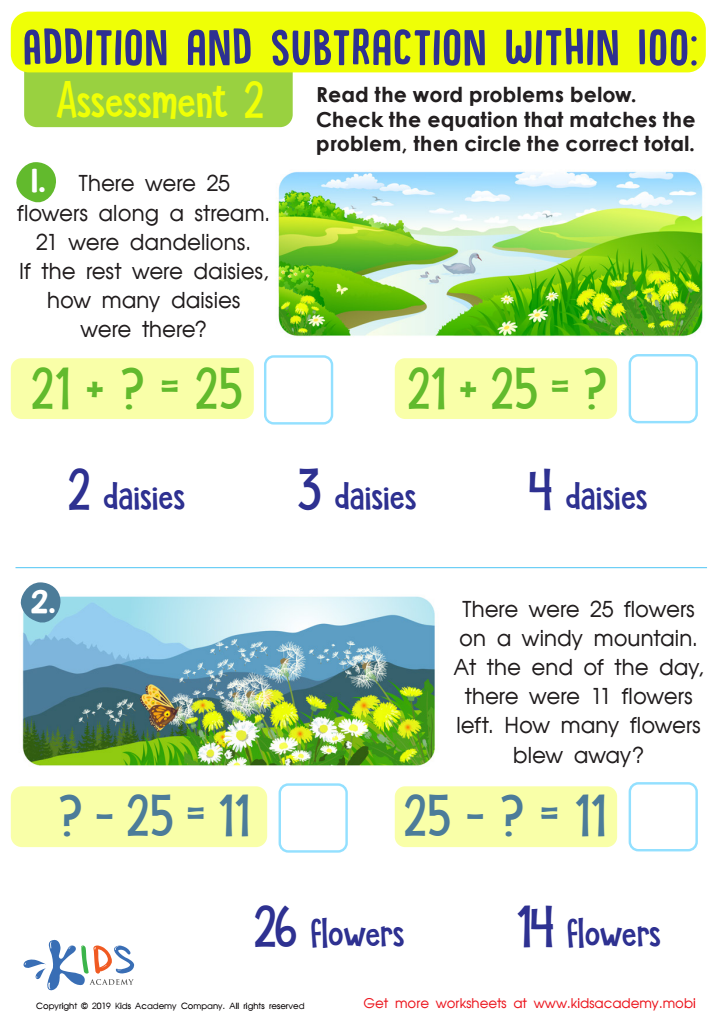
Assessment 2 Math Worksheet

Assessment 2 Math Worksheet

Using fun exercises and pictures, you can get kids excited about math. With practice and reminders of what they've learnt, they'll be solving simple addition and subtraction equations with ease. Read the word problems in the picture to them, then help them check the equation and choose the correct answer.
Assessment 2 Math Worksheet
Worksheet
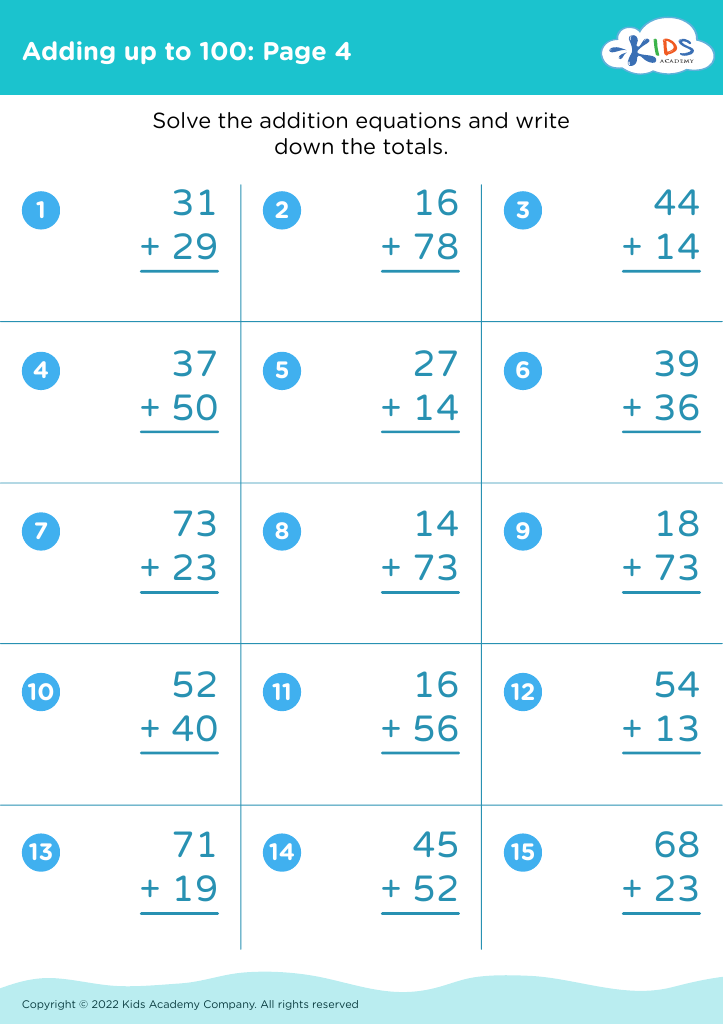
Adding up to 100: Page 4

Adding up to 100: Page 4

Adding up to 100: Page 4
Worksheet
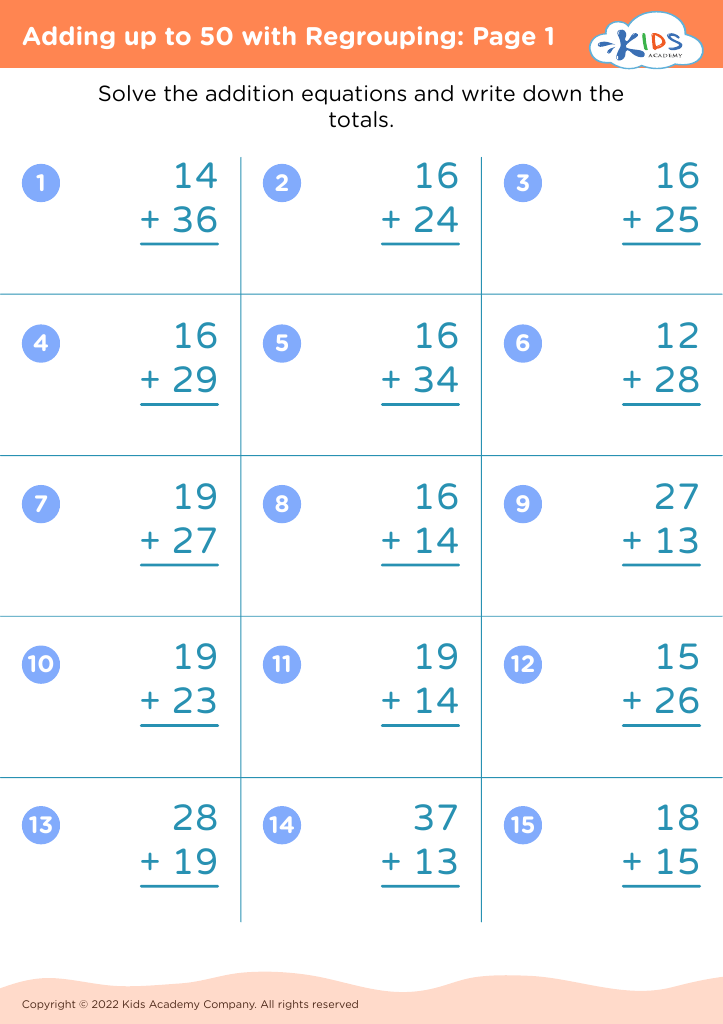
Adding up to 50 with Regrouping: Page 1
Worksheet
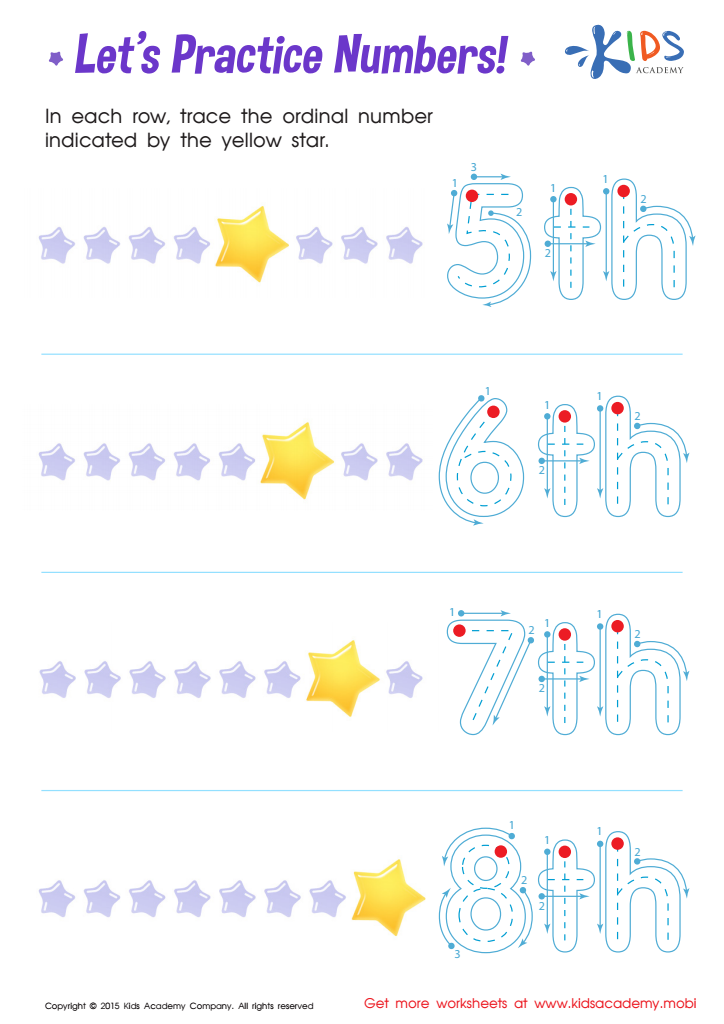
Practice Ordinal Numbers Worksheets PDF
Ordinal Numbers: Let's Practice Numbers Printable
Worksheet
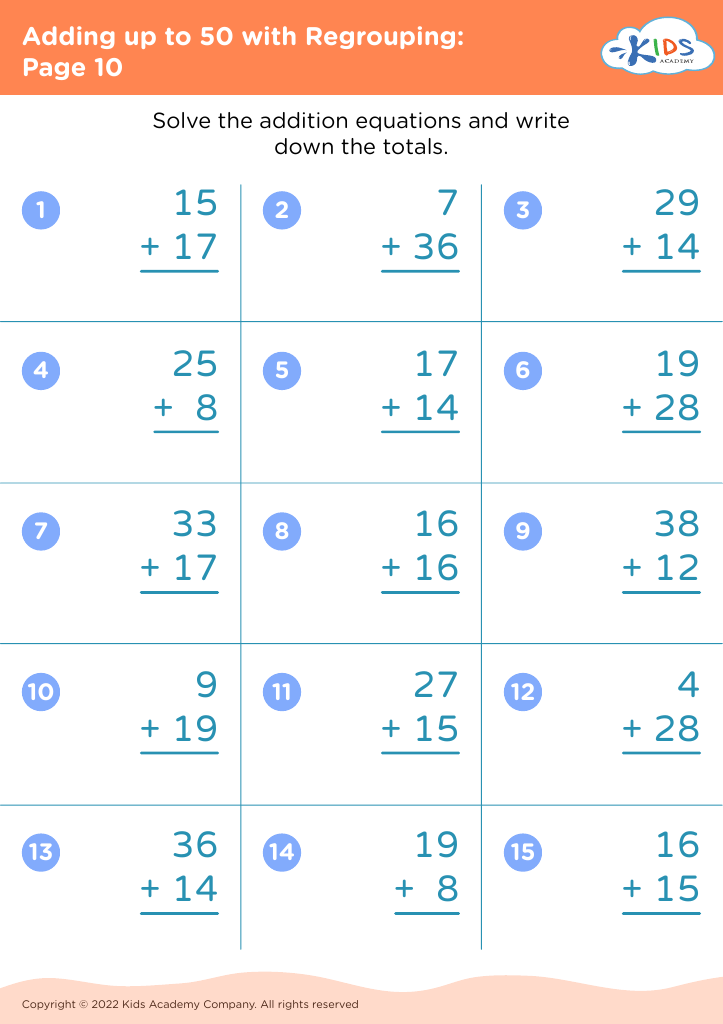
Adding up to 50 with Regrouping: Page 10
Worksheet
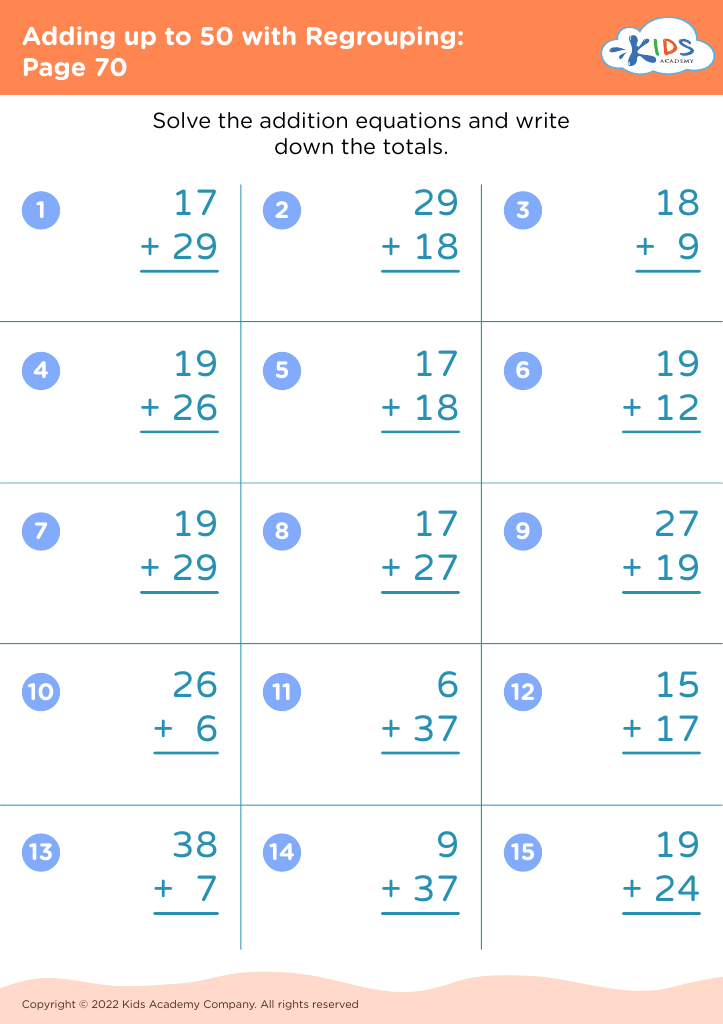
Adding up to 50 with Regrouping: Page 70
Worksheet
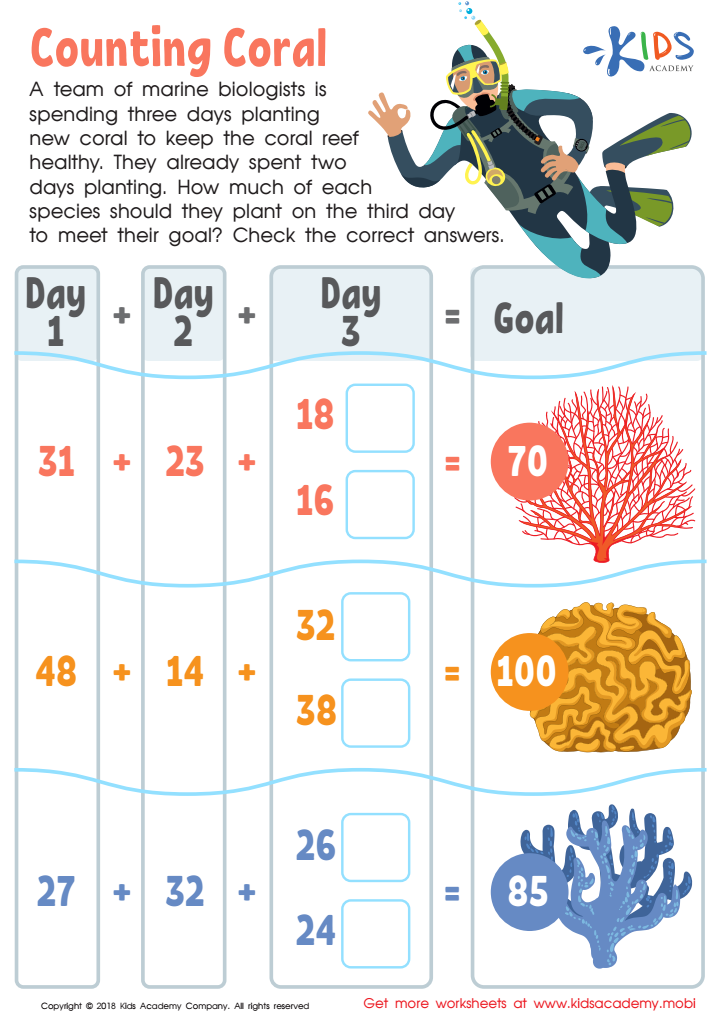
Counting Coral Worksheet

Counting Coral Worksheet

Introduce your child to the team of marine biologists planting coral to keep a reef healthy. They've planted for two days and need to figure out how much of each specie to plant on the third day to reach their goal. Help your child answer the questions on the printout and learn what it takes to be a marine biologist.
Counting Coral Worksheet
Worksheet
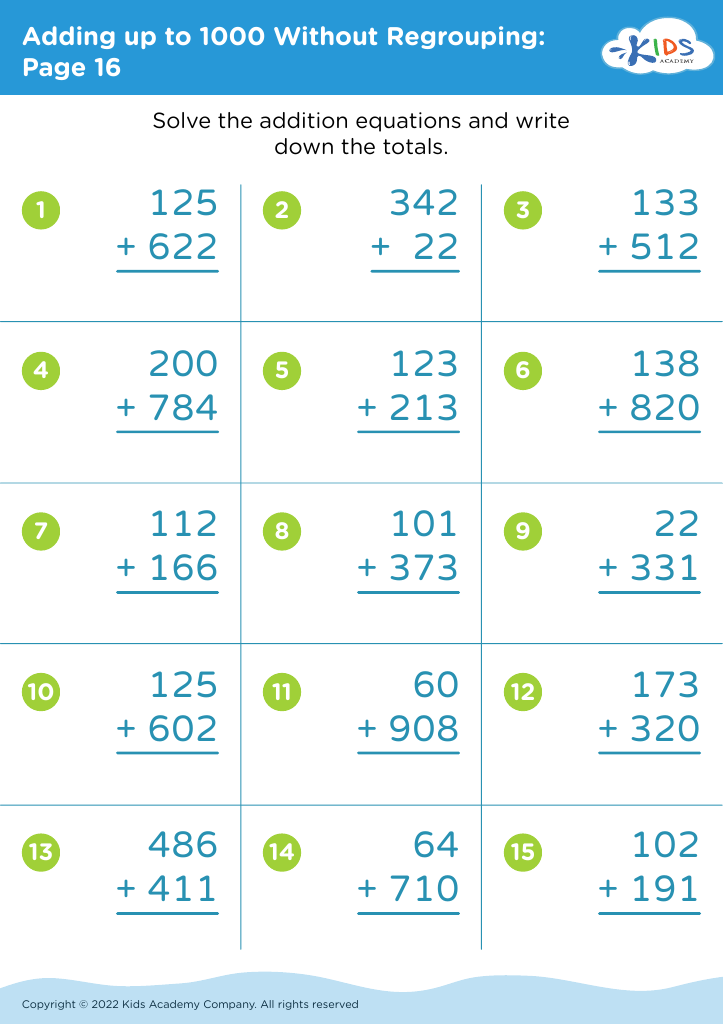
Adding up to 1000 Without Regrouping: Page 16
Worksheet
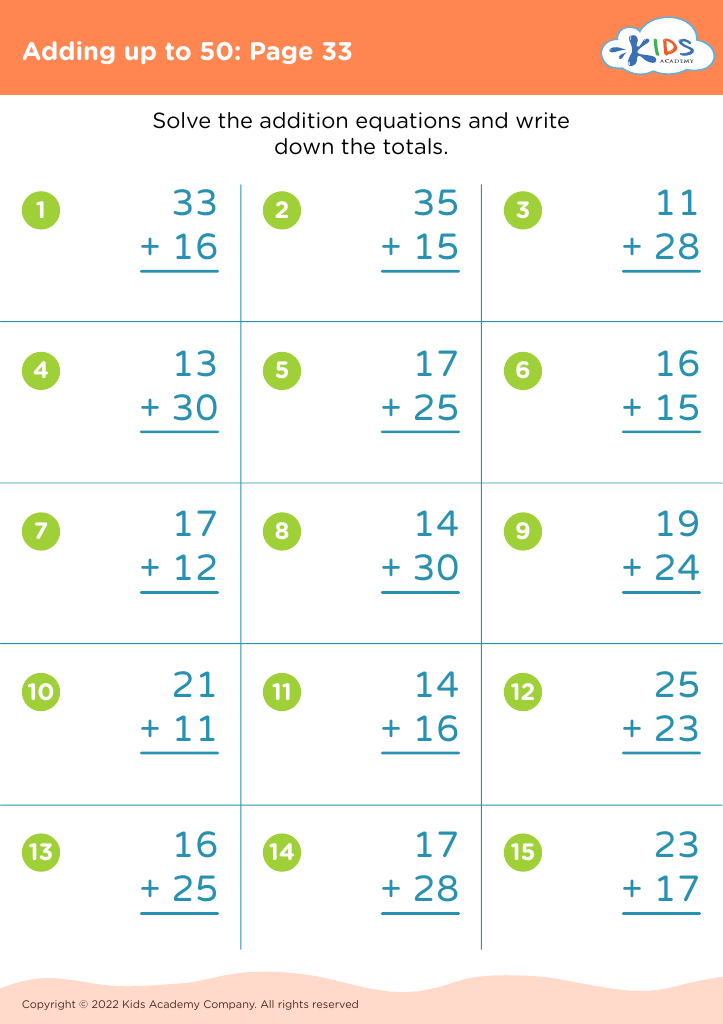
Adding up to 50: Page 33

Adding up to 50: Page 33

Adding up to 50: Page 33
Worksheet
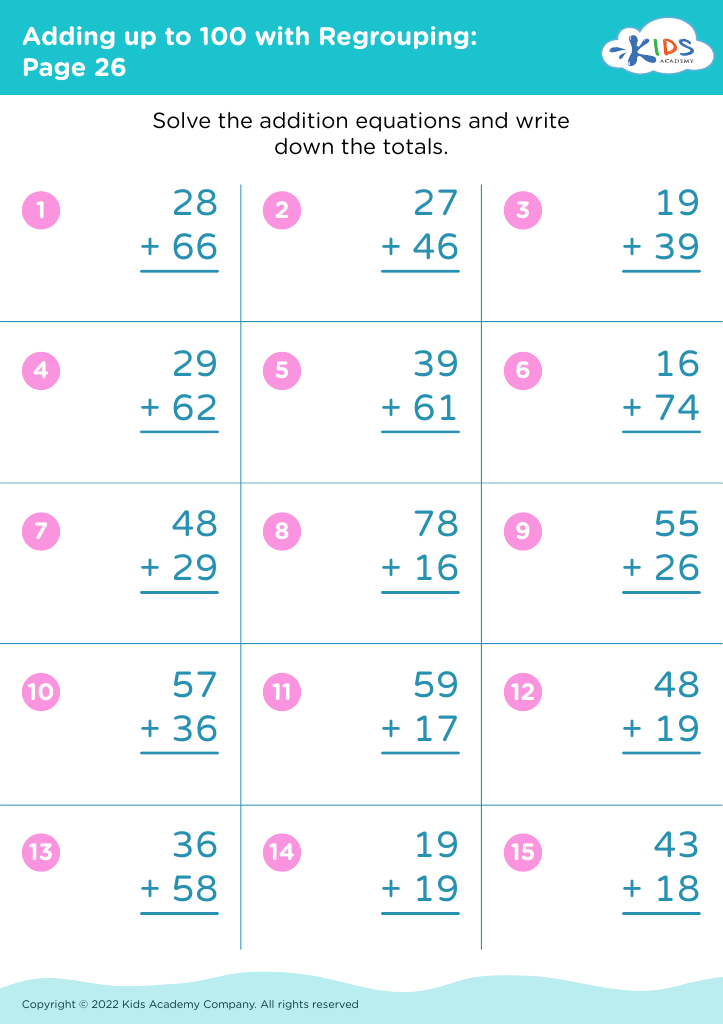
Adding up to 100 with Regrouping: Page 26
Worksheet
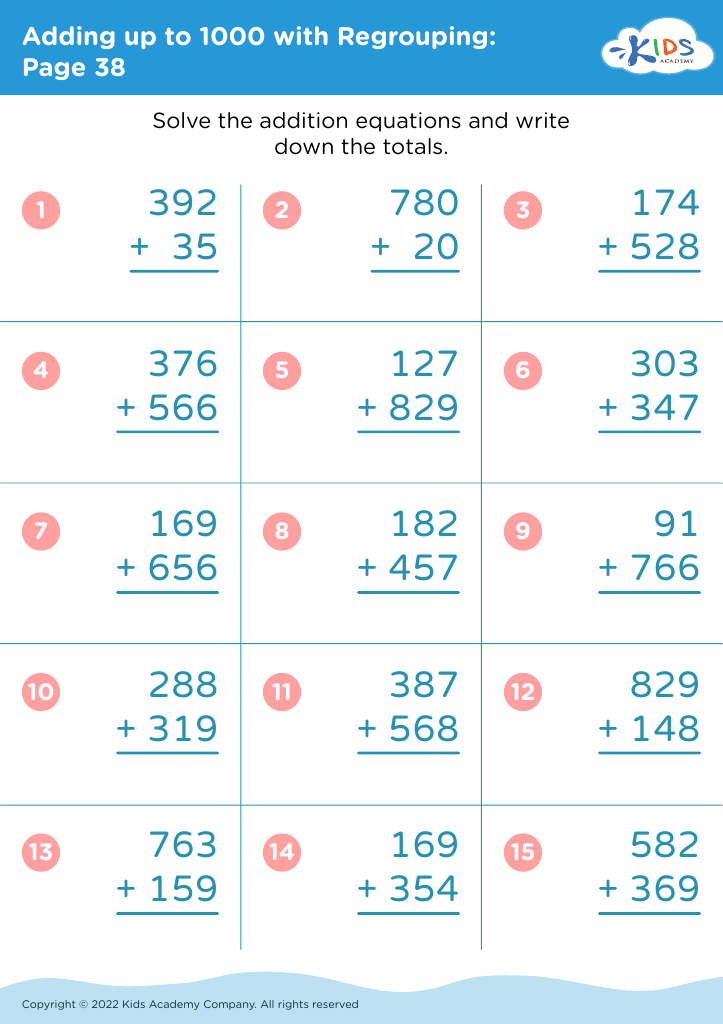
Adding up to 1000 with Regrouping: Page 38
Worksheet
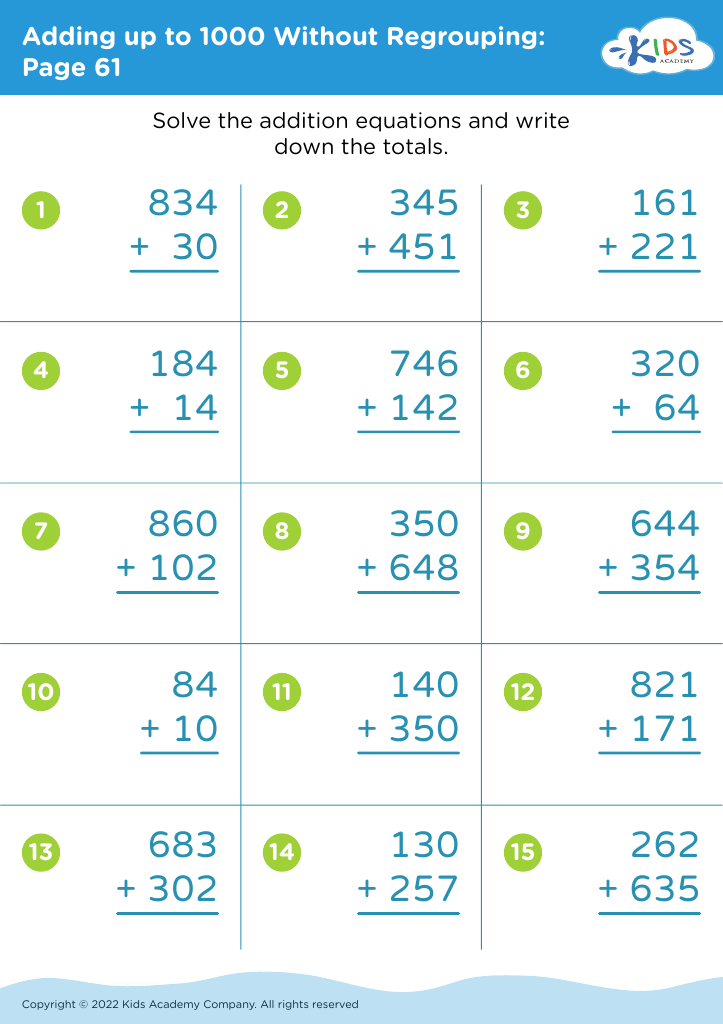
Adding up to 1000 Without Regrouping: Page 61
Worksheet
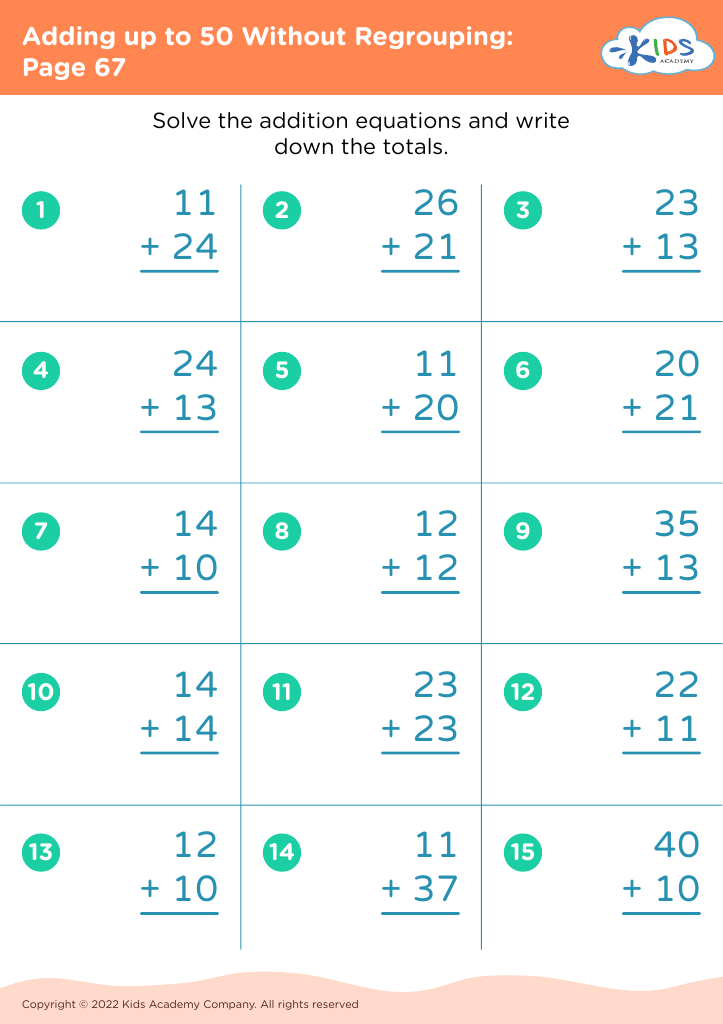
Adding up to 50 Without Regrouping: Page 67
Worksheet
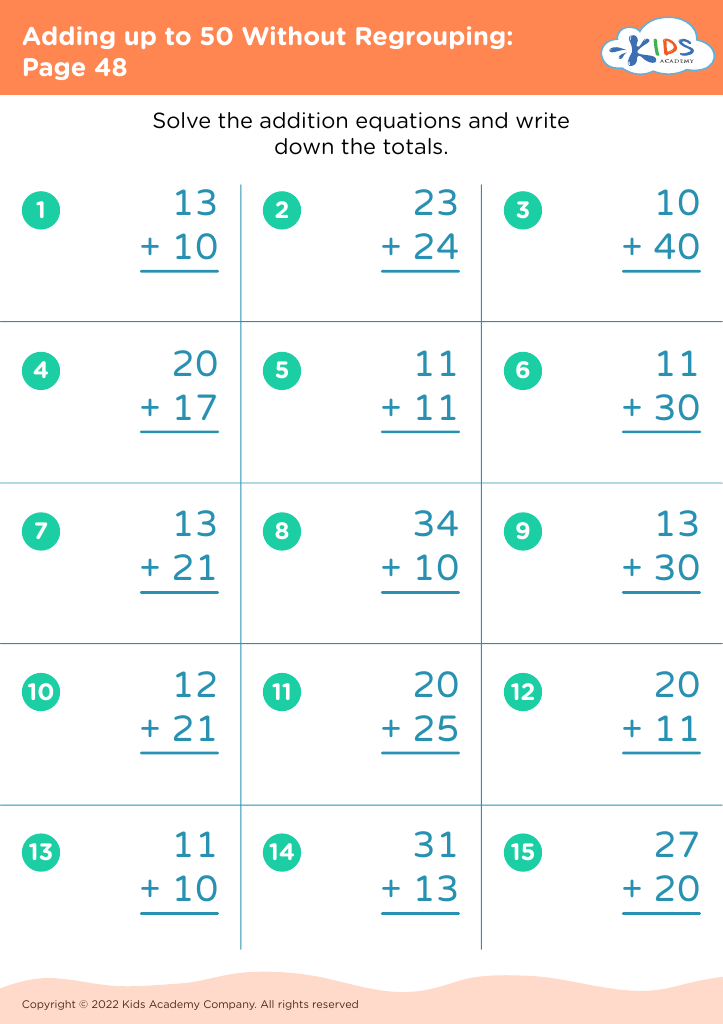
Adding up to 50 Without Regrouping: Page 48
Worksheet
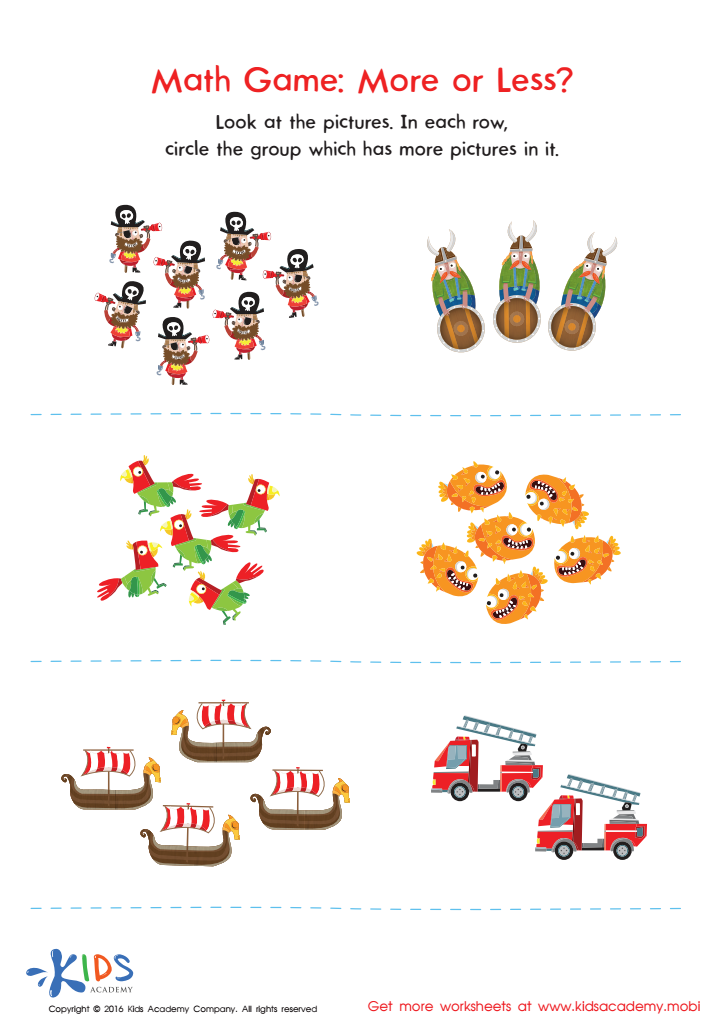
Free Printable More or Less Worksheets for Kindergarten

More or Less Worksheet

Counting and understanding quantity are essential skills for kindergarteners. Get your free printable more or less worksheet now!
More or Less Worksheet
Worksheet
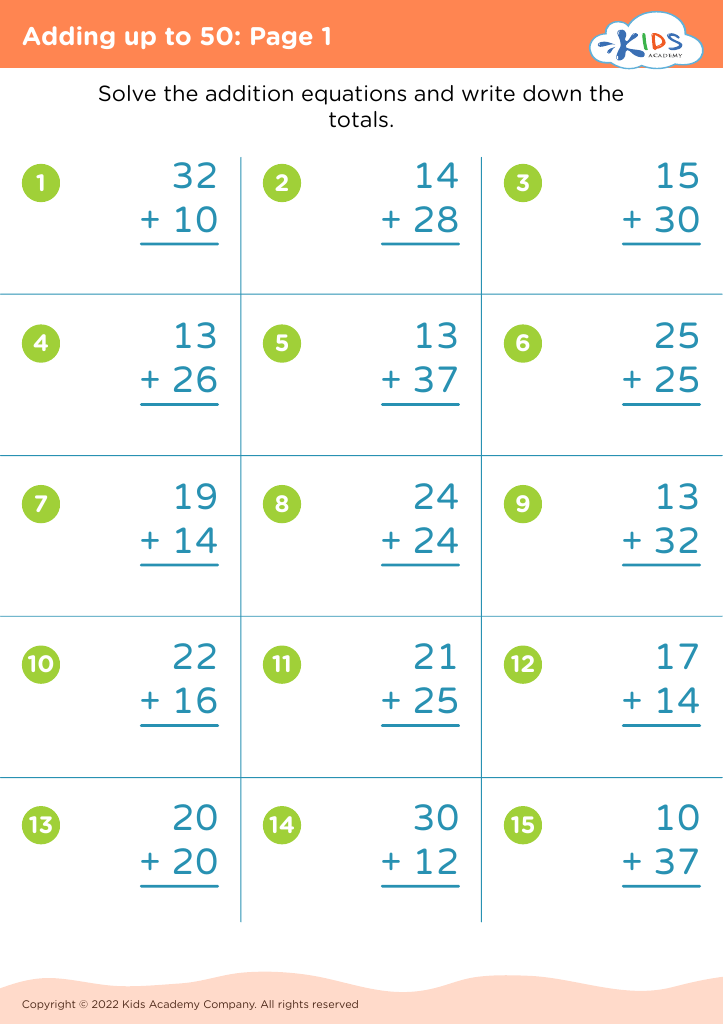
Adding up to 50: Page 1

Adding up to 50: Page 1

Adding up to 50: Page 1
Worksheet
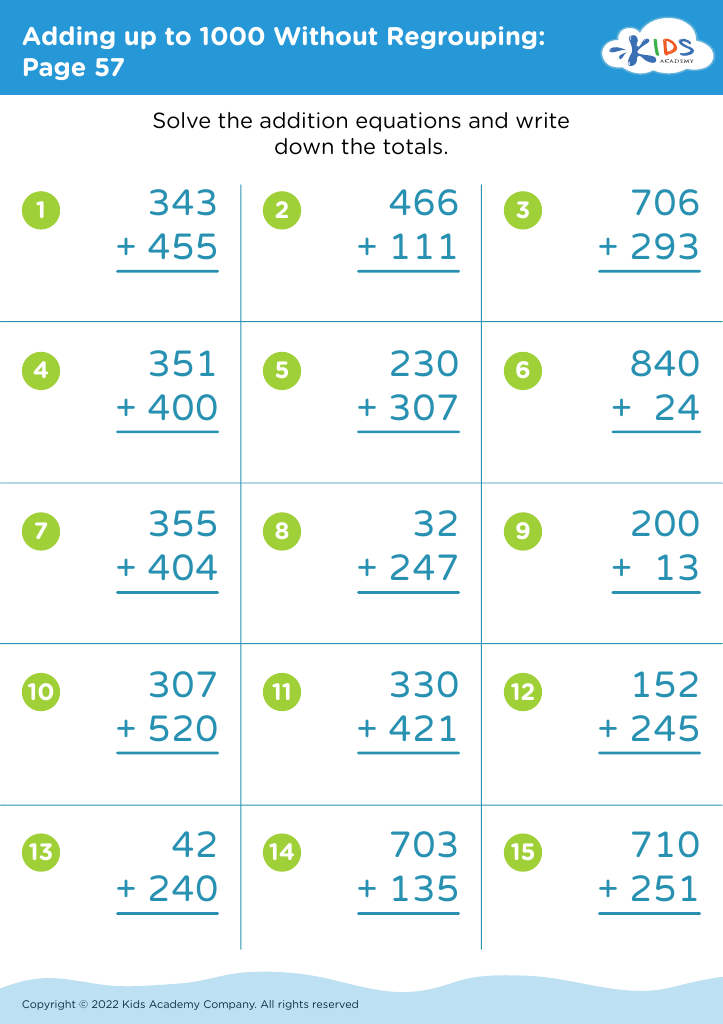
Adding up to 1000 Without Regrouping: Page 57
Worksheet
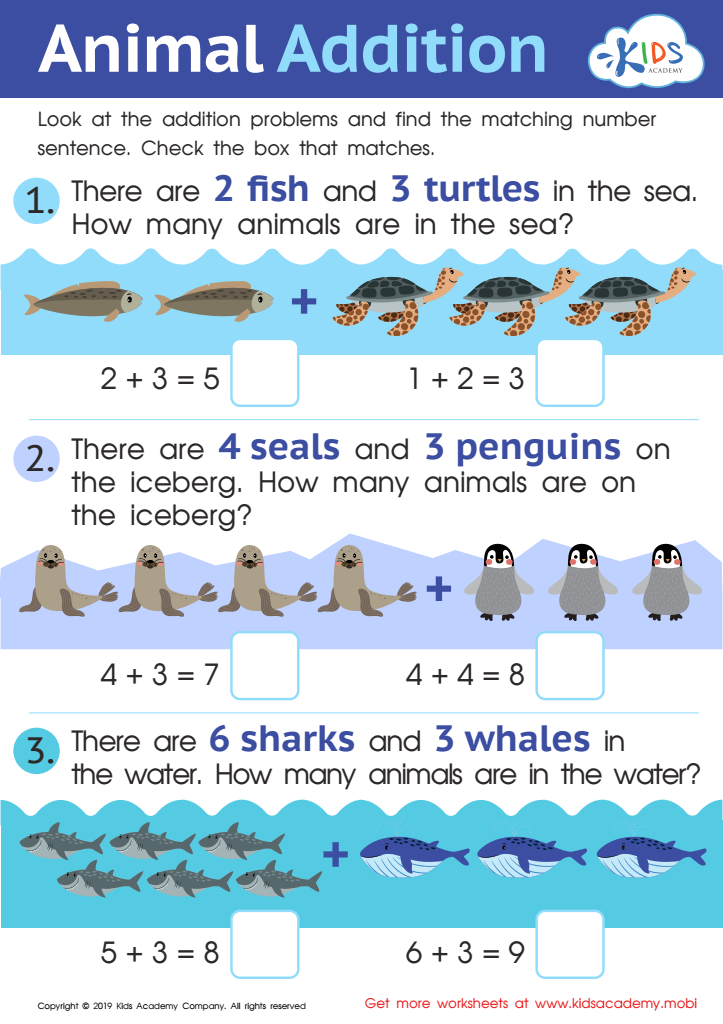
Animal Addition Worksheet

Animal Addition Worksheet

Get your kids learning addition and subtraction with this fun worksheet! Show them that solving equations can be enjoyable and help them match number sentences to the correct boxes. By doing this together, you'll create a positive learning experience that your kids won't forget.
Animal Addition Worksheet
Worksheet
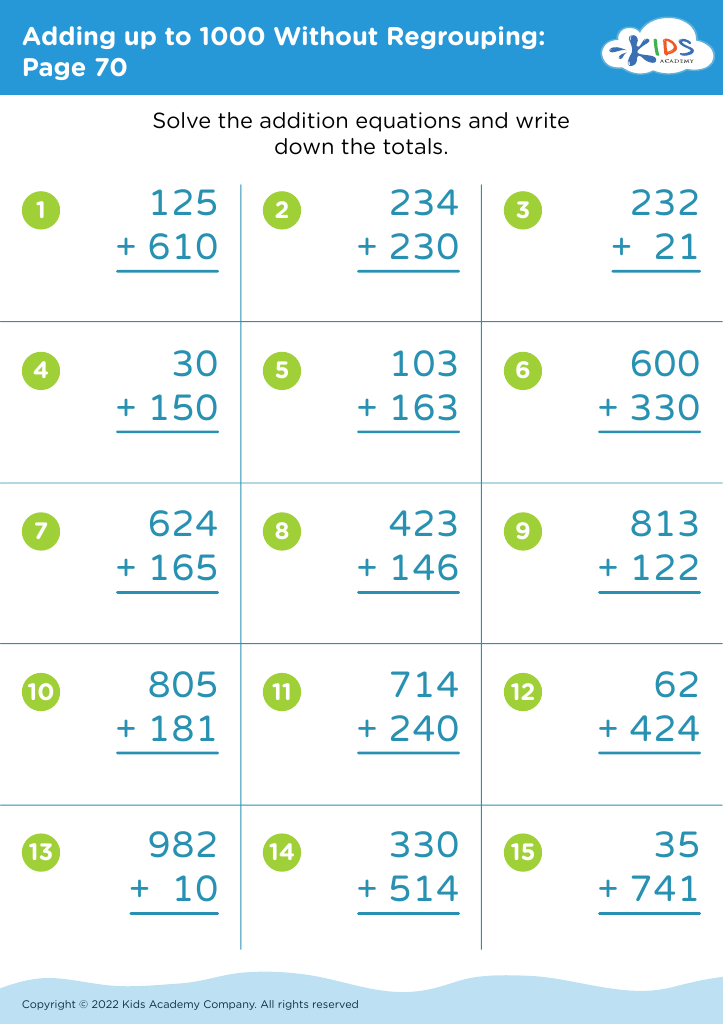
Adding up to 1000 Without Regrouping: Page 70
Worksheet


Parents and teachers should place great importance on teaching basic addition and subtraction to children aged 5-7 because these fundamental skills form the foundation upon which all future mathematics learning is built. This age is crucial for cognitive development, and introducing these concepts early helps to lay the groundwork for more complex arithmetic, problem-solving abilities, and logical thinking in later years.

Addition and subtraction are not just isolated skills; they are integral to everyday activities. Whether it's counting toys, sharing snacks, or following a cooking recipe, these basic mathematical operations help children understand and navigate the world around them. Comprehending addition and subtraction also enhances their ability to manage time and money, a skill essential for adulthood.

Moreover, early mastery of these basics can boost a child’s confidence and foster a positive attitude towards mathematics. When children can solve simple equations with ease, they are more likely to view math as fun and accessible, reducing anxiety and promoting an open mindset toward learning new concepts.

Finally, proficiency in these skills is often directly tied to academic success, as math is a core subject in school curriculums. A solid understanding will not only benefit the child's math scores but can positively influence other academic areas requiring analytical skills and procedural understanding.