Hand-eye Coordination Addition & Subtraction Worksheets for Ages 5-7 - Page 2
29 filtered results
-
From - To
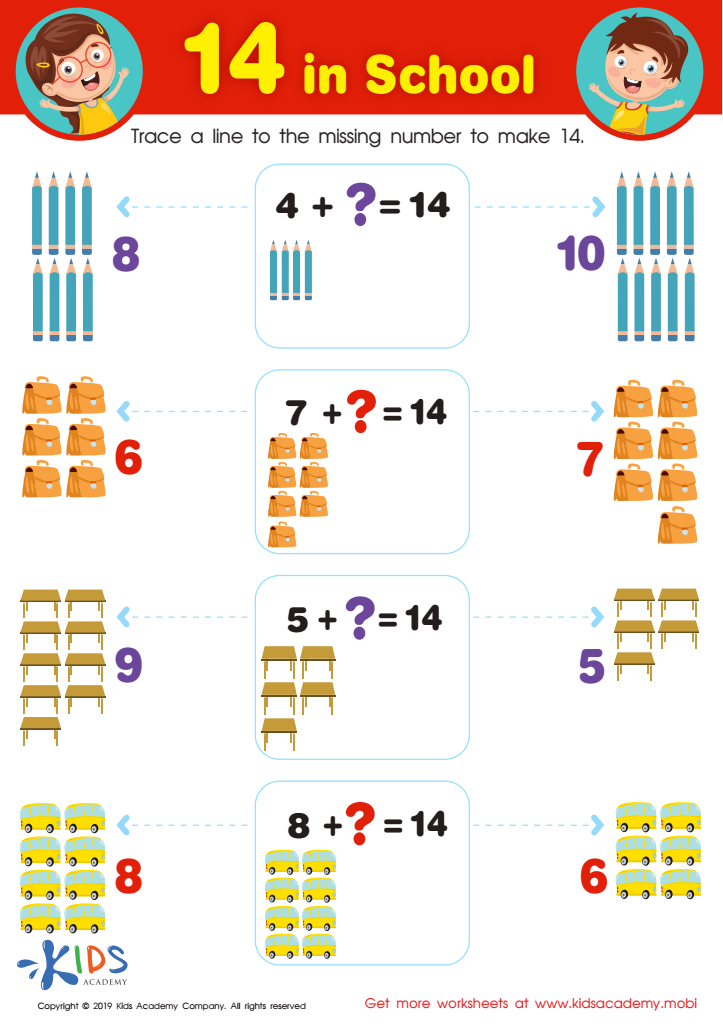
14 in School Worksheet
 Assign to My Students
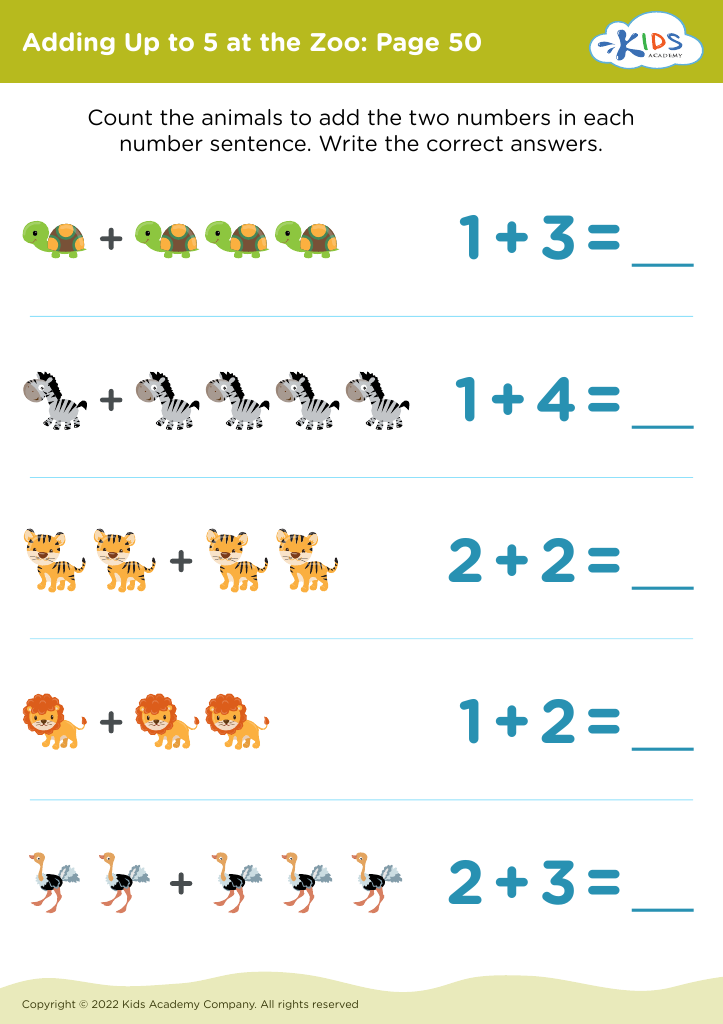








Hand-eye coordination is a crucial skill that influences a child's ability to perform various everyday tasks, including writing, cutting, and playing sports. For children aged 5-7, developing this coordination is particularly important because it lays the groundwork for more advanced skills in both academic and physical activities. Incorporating hand-eye coordination activities, like manipulatives for addition and subtraction, can significantly enhance a child's understanding of these foundational math concepts.
Engaging children in tactile, kinesthetic learning experiences helps reinforce their mathematical understanding while improving fine motor skills. When children manipulate objects—such as counting blocks or using beads— they gain a concrete understanding of numbers and their relationships. This hands-on approach also makes math less intimidating and more enjoyable, fostering a positive attitude toward learning.
Moreover, developing strong hand-eye coordination at an early age benefits other aspects of learning, such as reading and writing. It enhances focus, spatial awareness, and concentration—skills that are essential across subjects. By combining coordination activities with math learning, parents and teachers not only encourage a fundamental grasp of addition and subtraction but also promote overall cognitive and physical development, setting children up for success in their educational journey.








