Check out this FREE Trial Lesson on Addition & Subtraction for age 5-7!

L

Favorites
With answer key
Interactive
  • 5-7
  • Understanding fractions
  • Addition & Subtraction
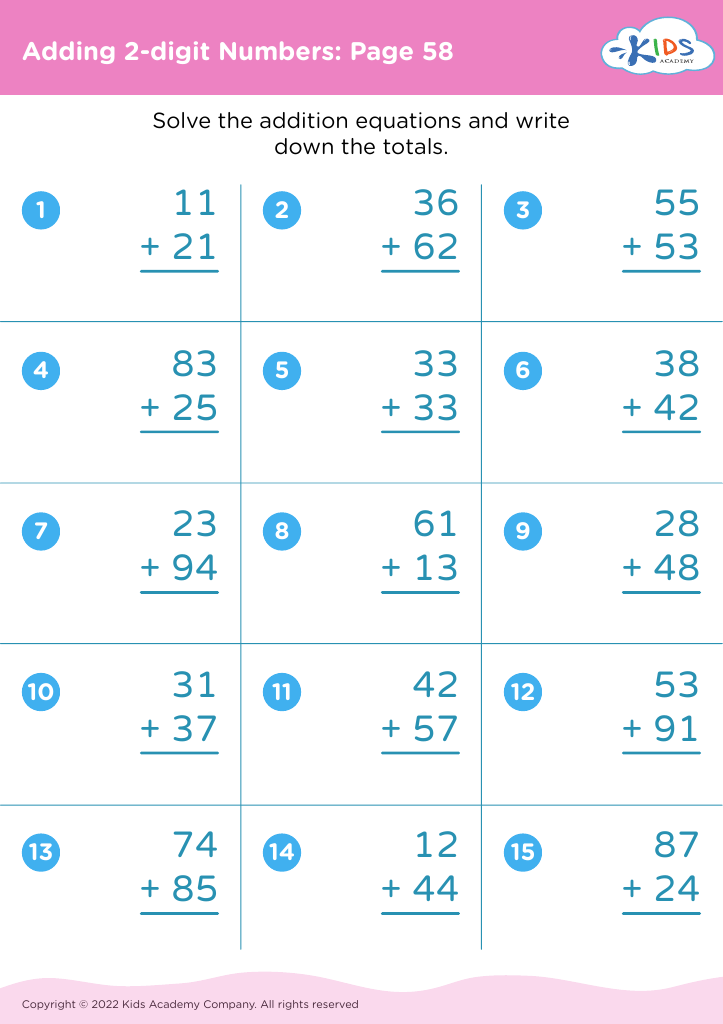
Adding 2-digit Numbers: Page 58

Adding 2-digit Numbers: Page 58

Adding 2-digit Numbers: Page 58
Worksheet
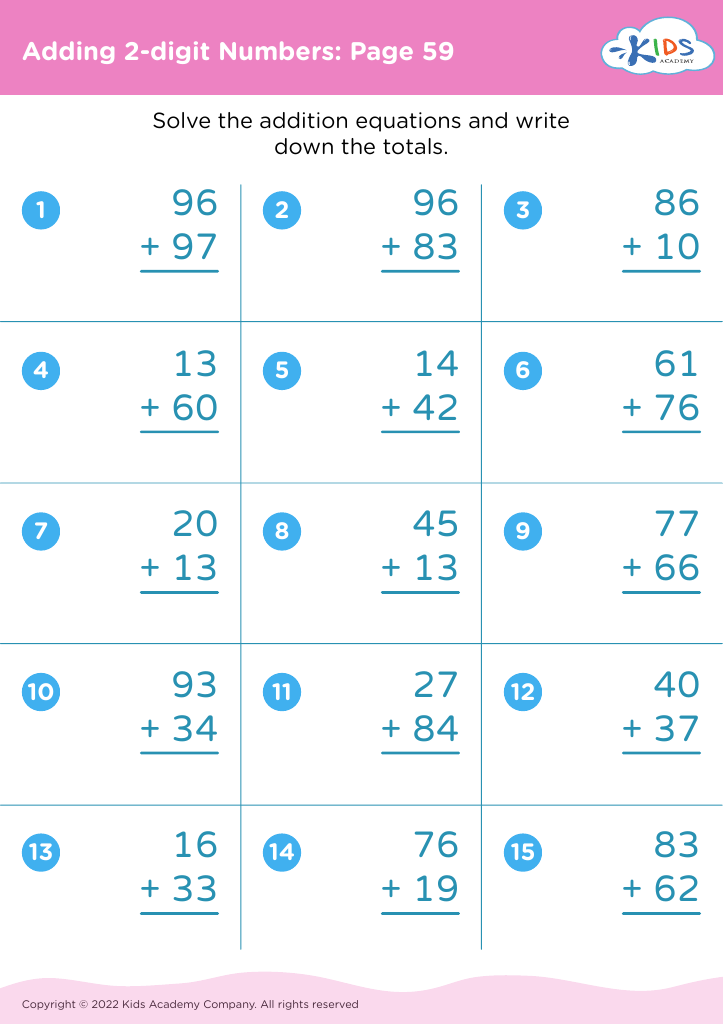
Adding 2-digit Numbers: Page 59

Adding 2-digit Numbers: Page 59

Adding 2-digit Numbers: Page 59
Worksheet
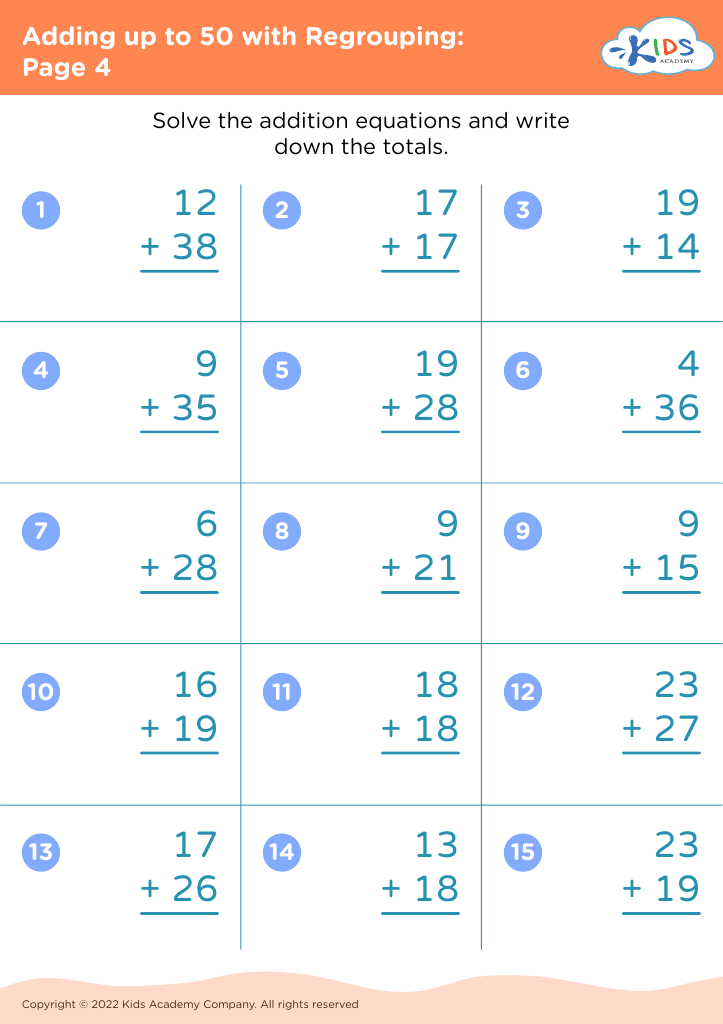
Adding up to 50 with Regrouping: Page 4
Worksheet
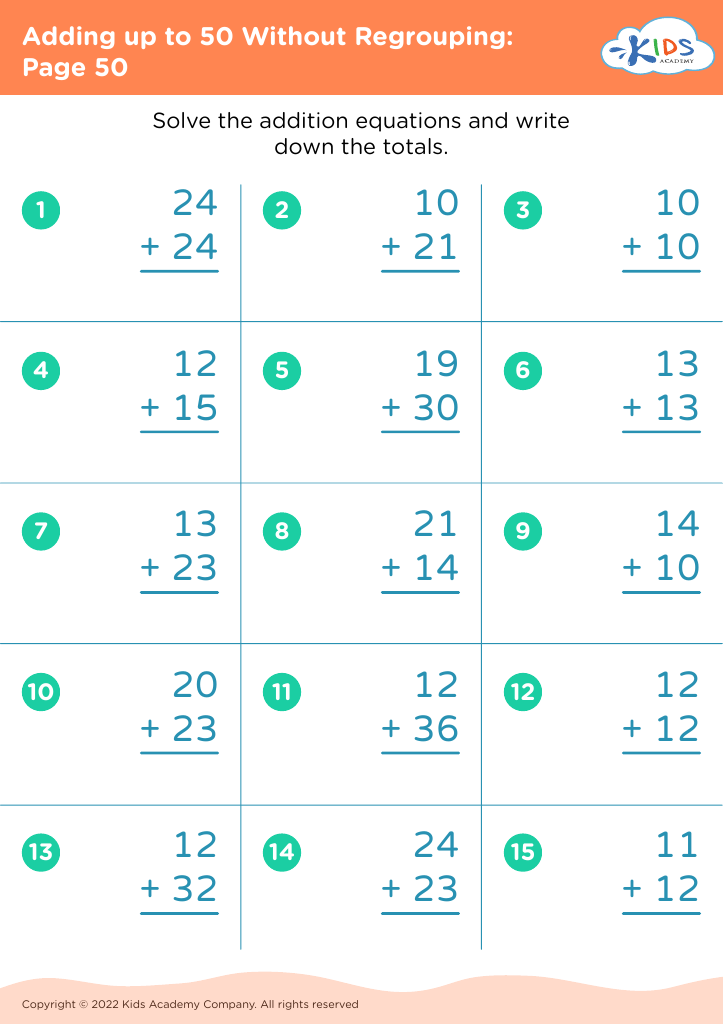
Adding up to 50 Without Regrouping: Page 50
Worksheet
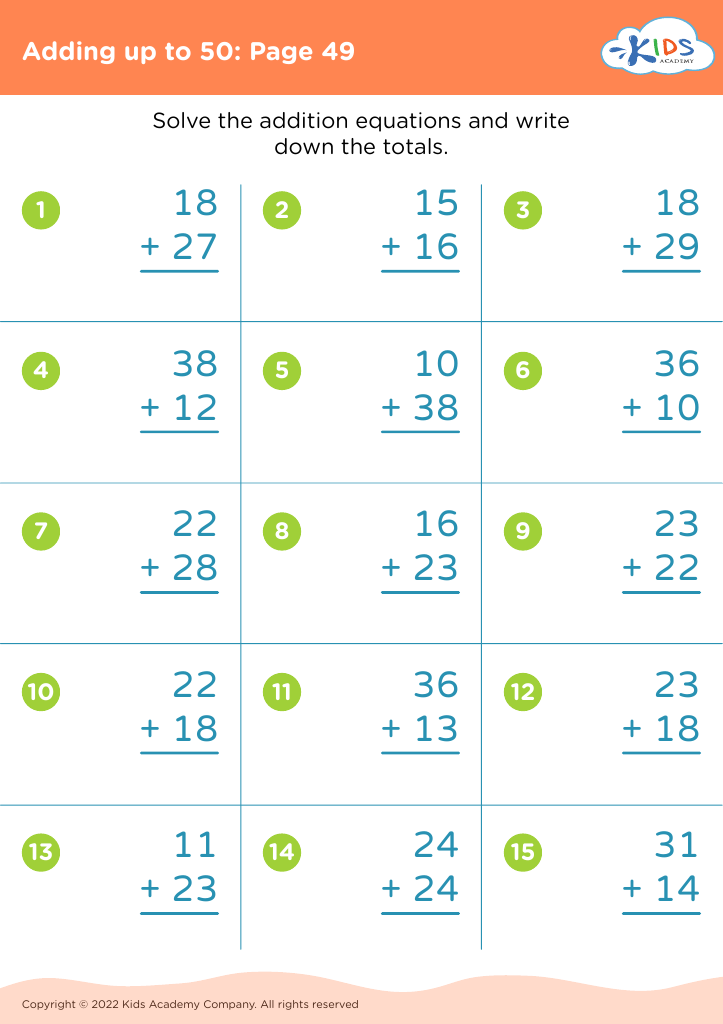
Adding up to 50: Page 49

Adding up to 50: Page 49

Adding up to 50: Page 49
Worksheet
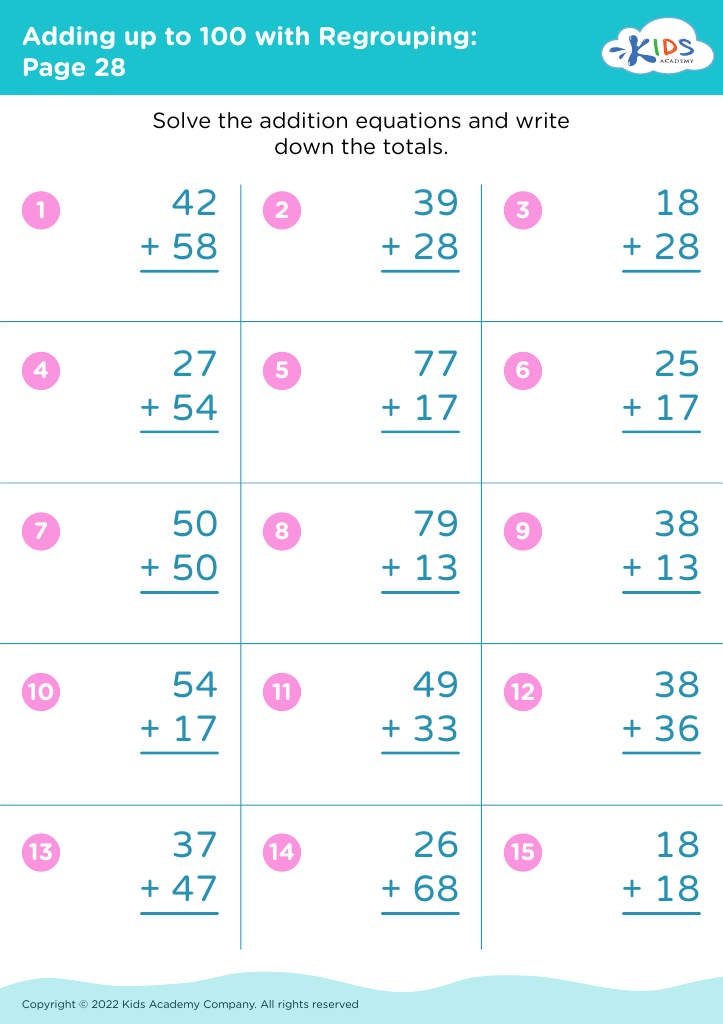
Adding up to 100 with Regrouping: Page 28
Worksheet
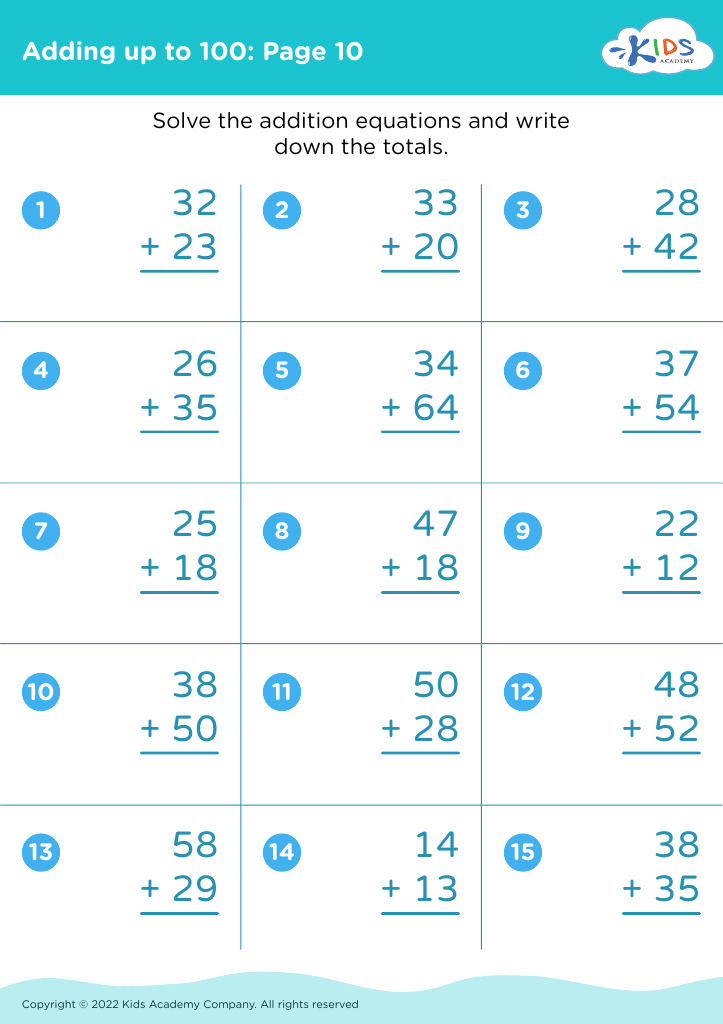
Adding up to 100: Page 10

Adding up to 100: Page 10

Adding up to 100: Page 10
Worksheet
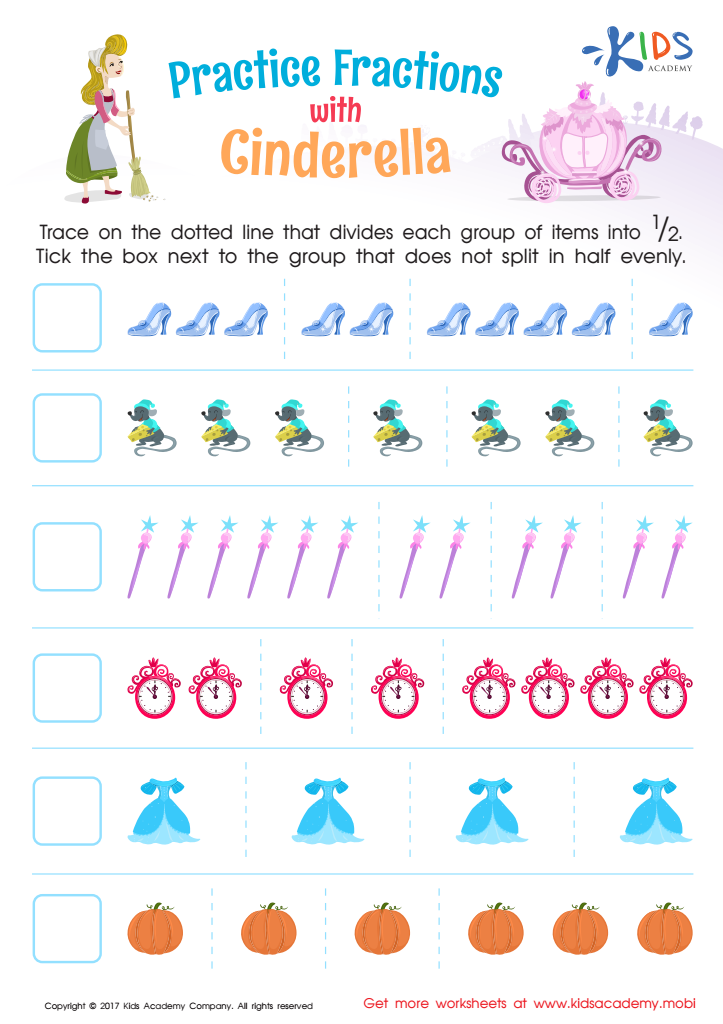
Cinderella Fraction Practice

Fractions: Cinderella Printable

Cinderella and ½ are the perfect pair to excite your child about learning fractions.
Fractions: Cinderella Printable
Worksheet
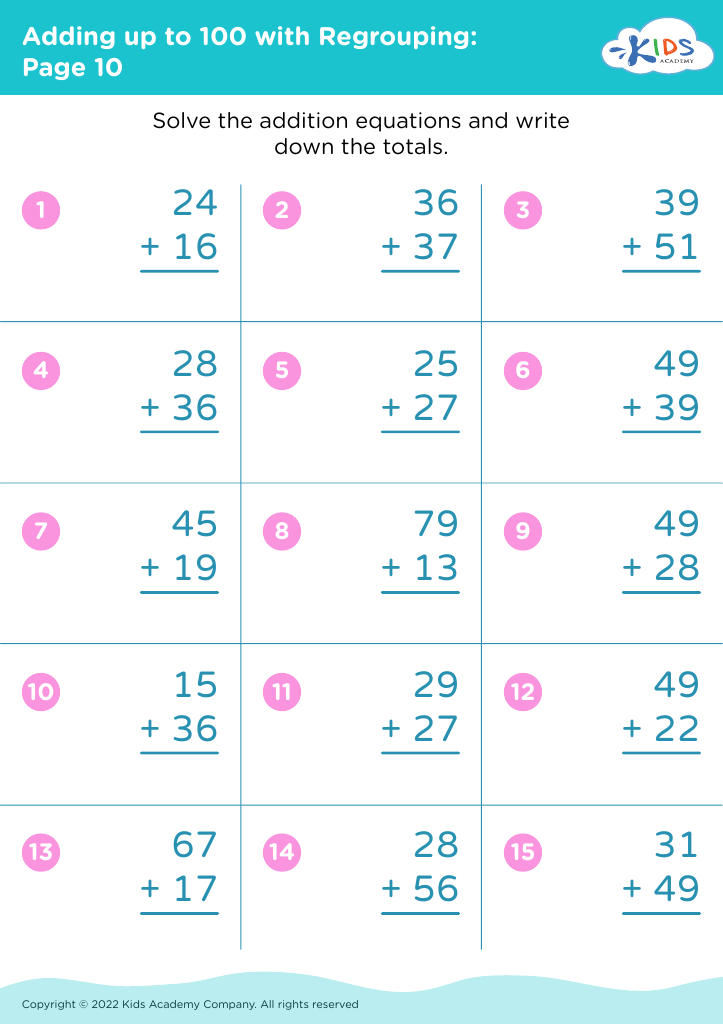
Adding up to 100 with Regrouping: Page 10
Worksheet
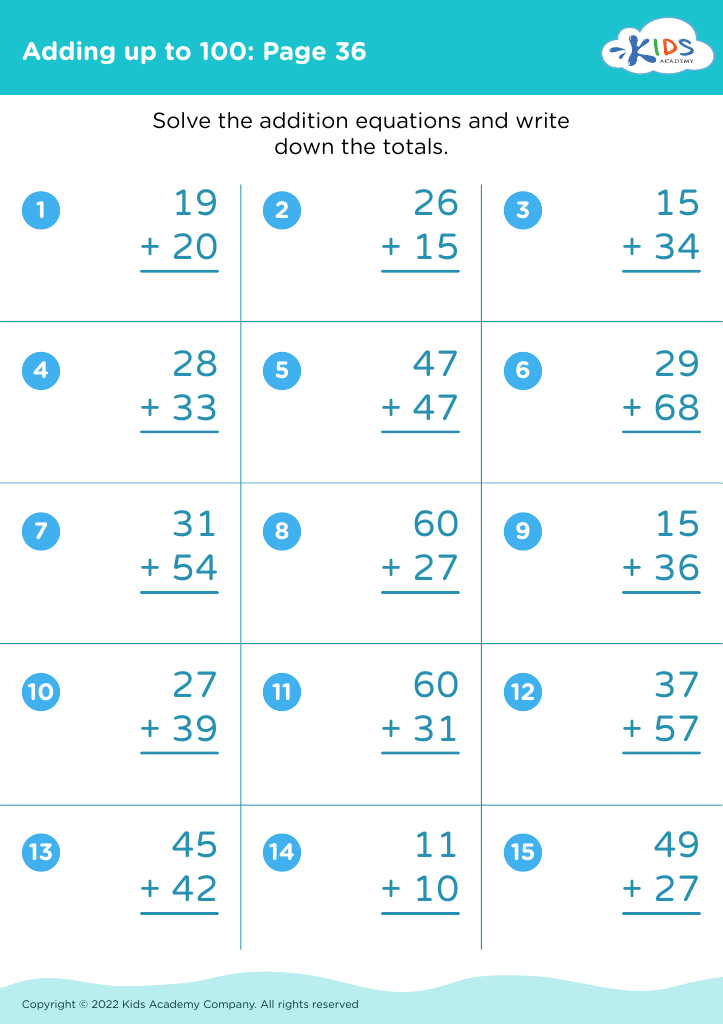
Adding up to 100: Page 36

Adding up to 100: Page 36

Adding up to 100: Page 36
Worksheet
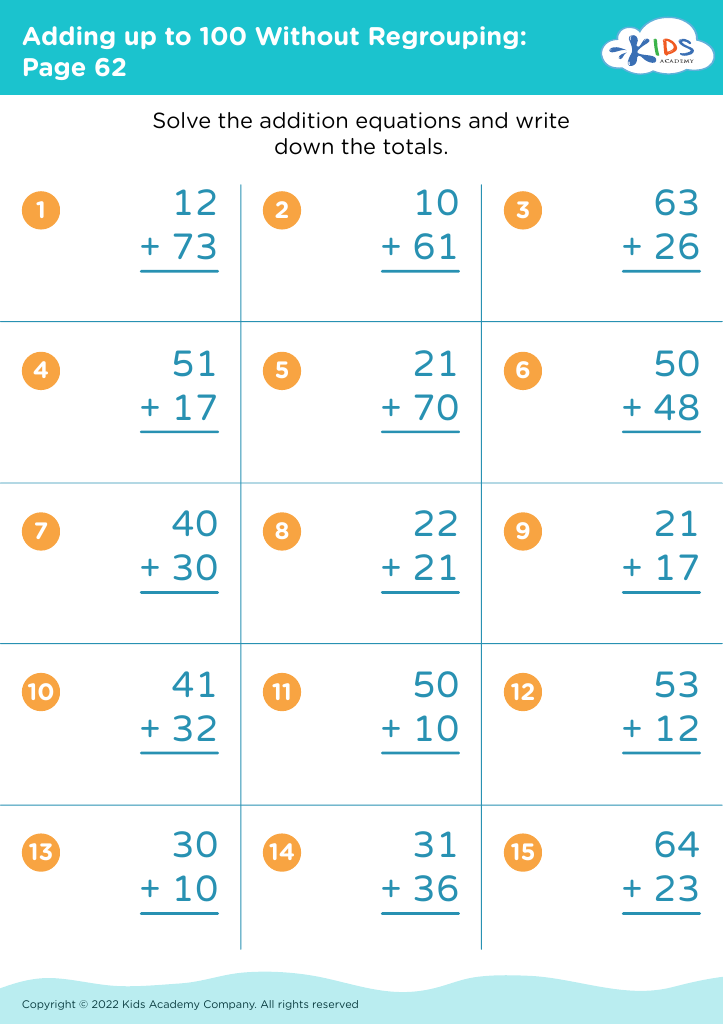
Adding up to 100 Without Regrouping: Page 62
Worksheet
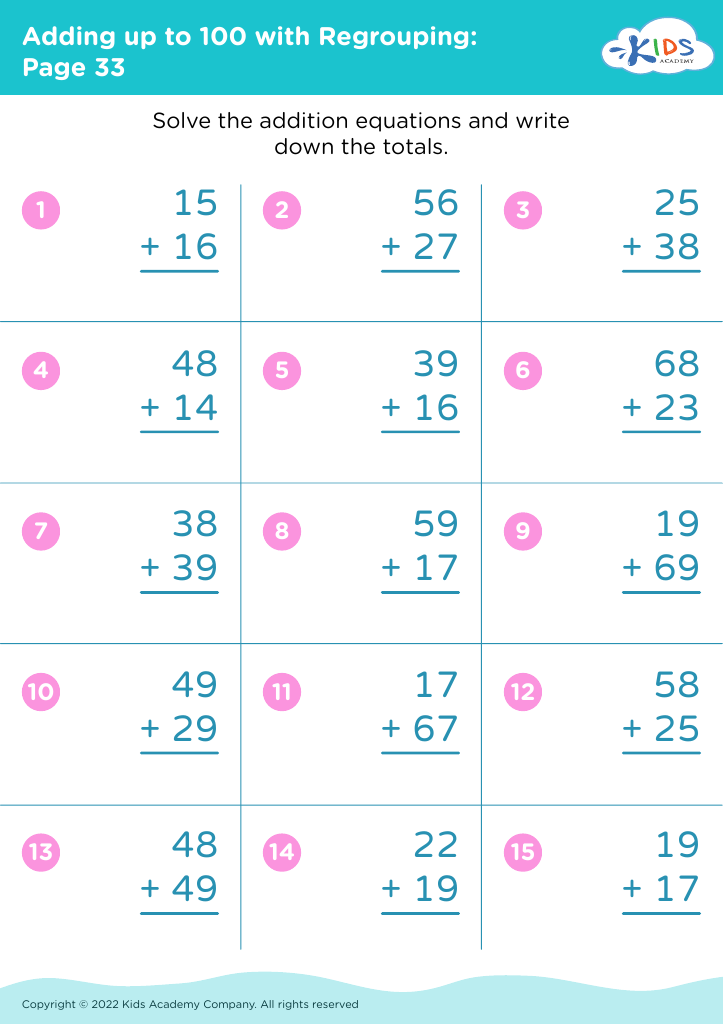
Adding up to 100 with Regrouping: Page 33
Worksheet
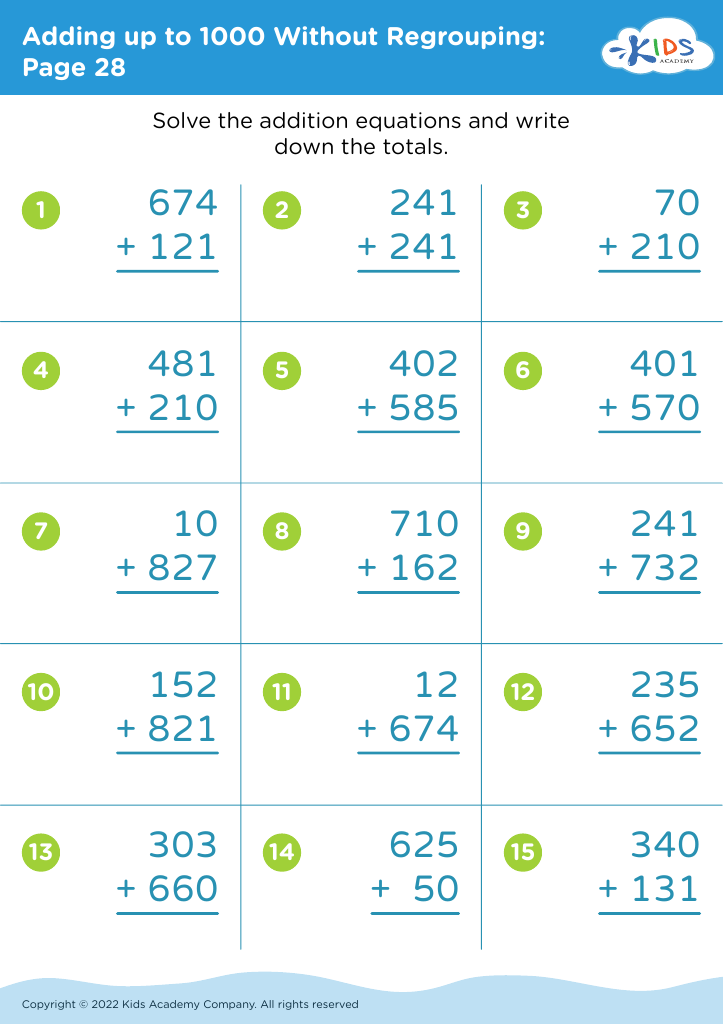
Adding up to 1000 Without Regrouping: Page 28
Worksheet
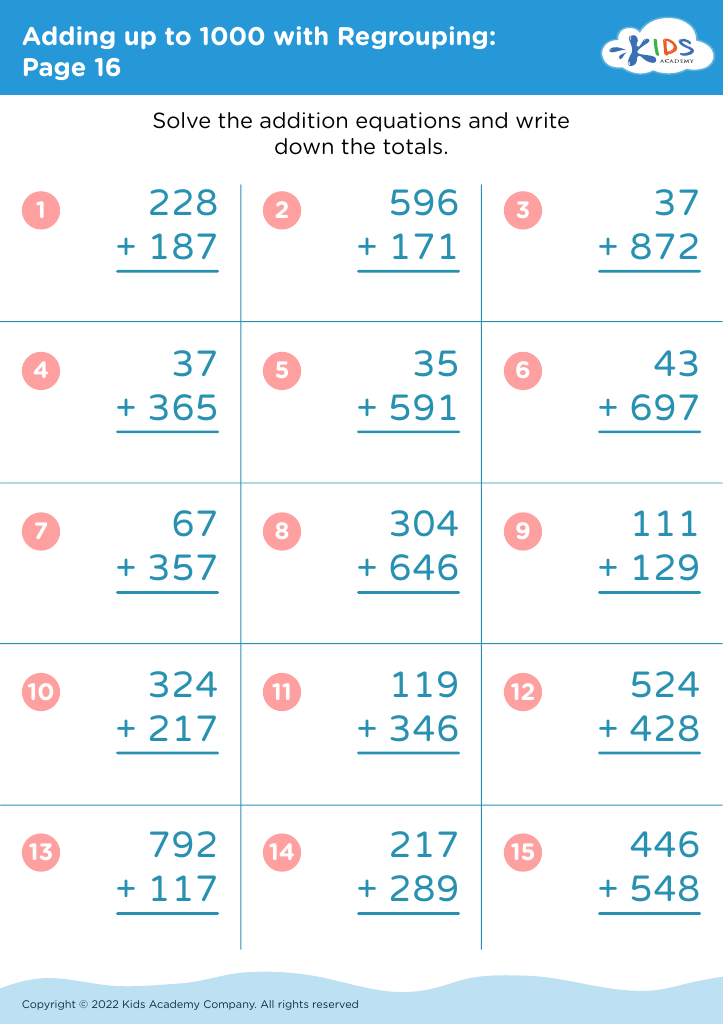
Adding up to 1000 with Regrouping: Page 16
Worksheet
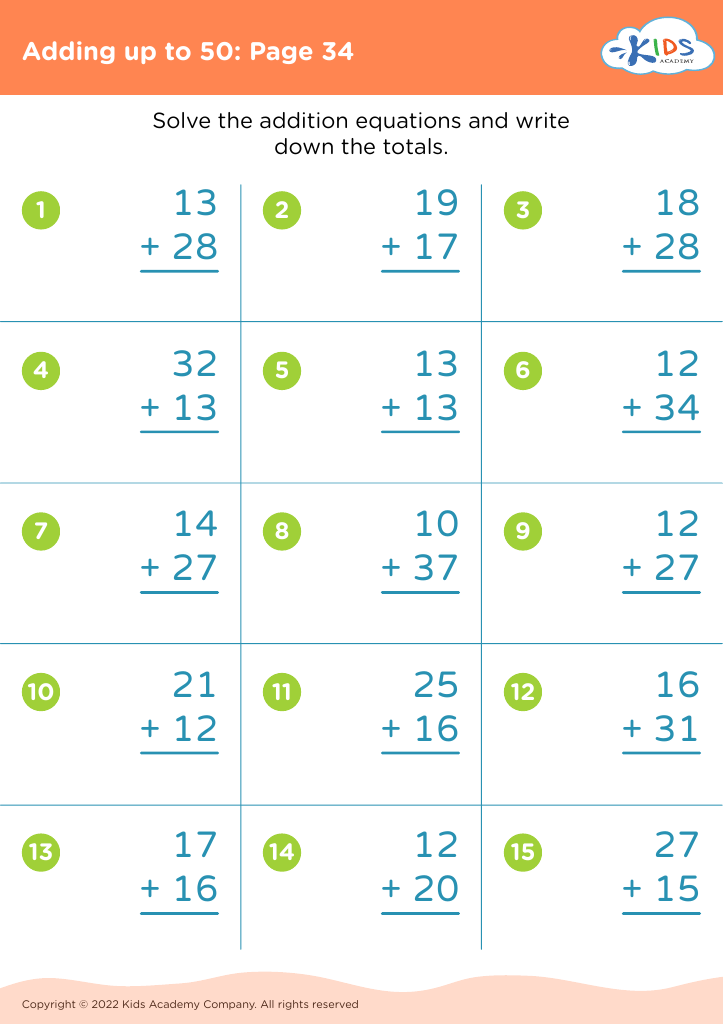
Adding up to 50: Page 34

Adding up to 50: Page 34

Adding up to 50: Page 34
Worksheet
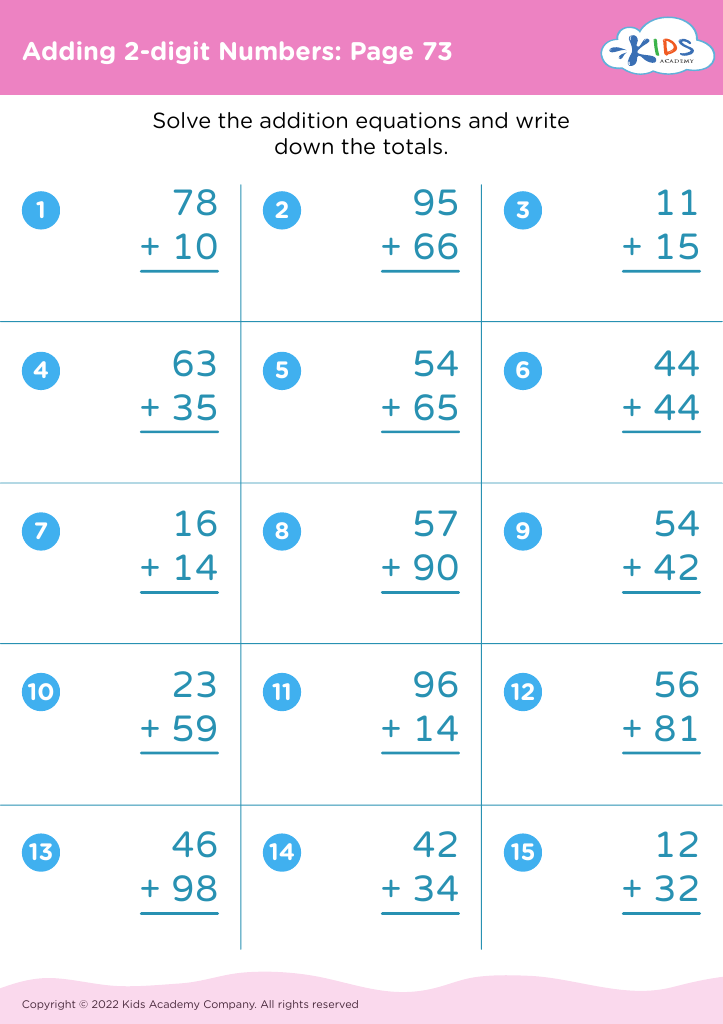
Adding 2-digit Numbers: Page 73

Adding 2-digit Numbers: Page 73

Adding 2-digit Numbers: Page 73
Worksheet
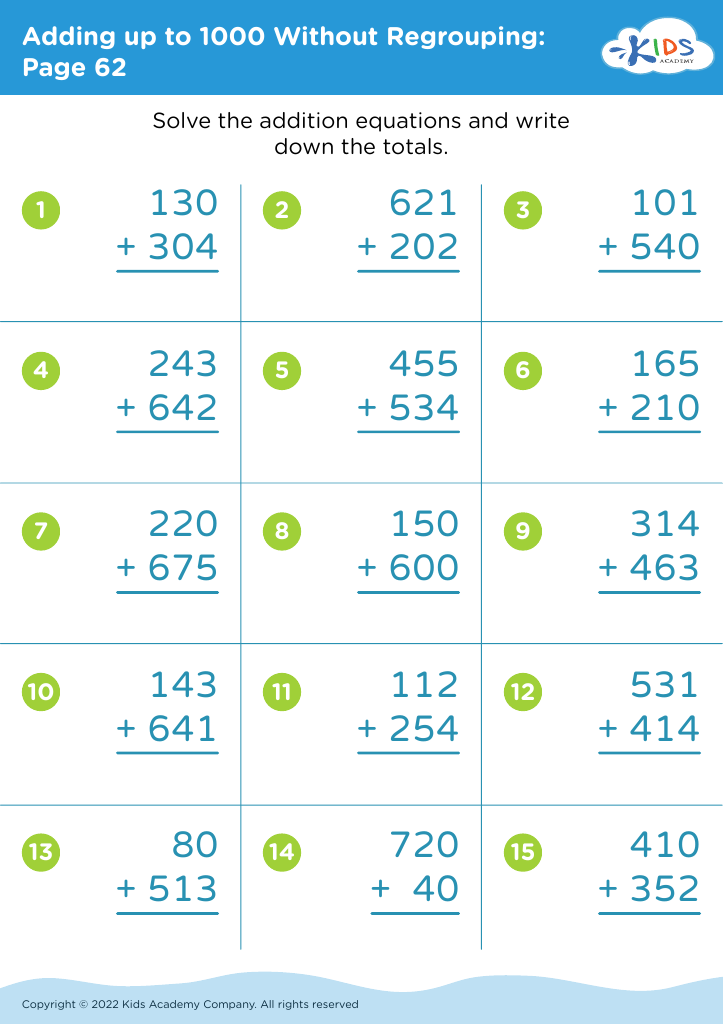
Adding up to 1000 Without Regrouping: Page 62
Worksheet
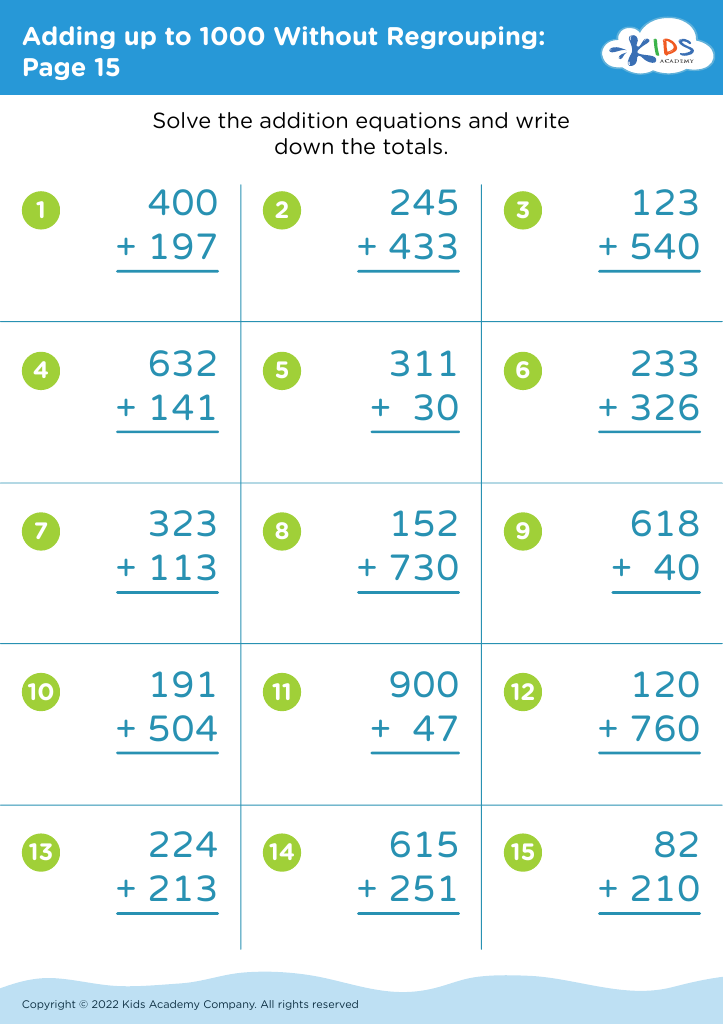
Adding up to 1000 Without Regrouping: Page 15
Worksheet
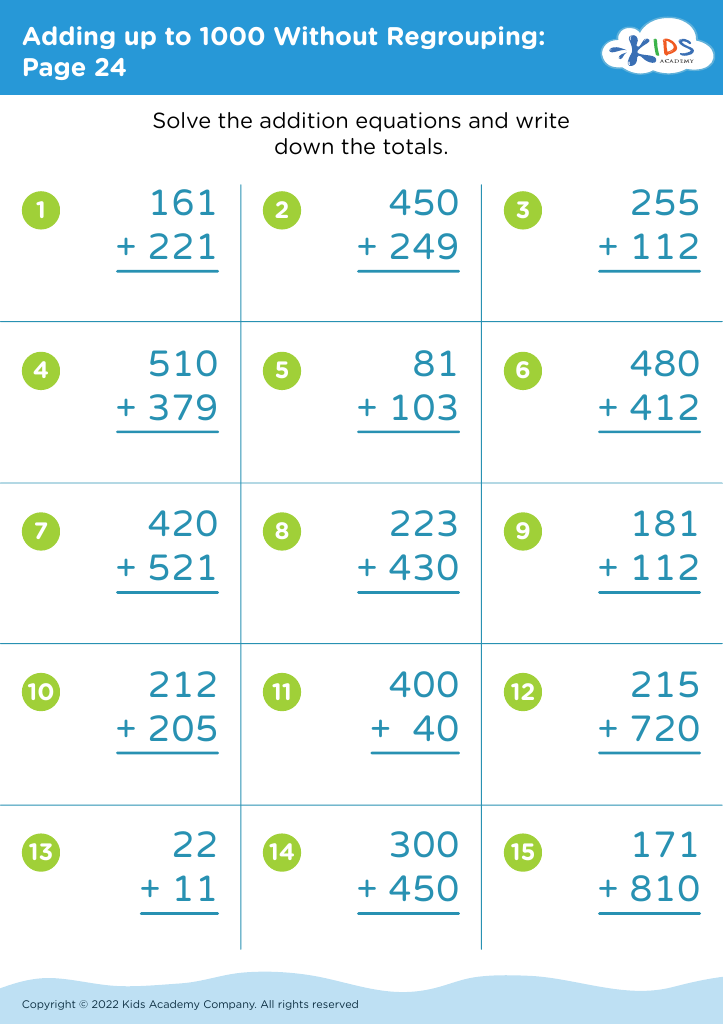
Adding up to 1000 Without Regrouping: Page 24
Worksheet


... 6 7

Understanding fractions, particularly addition and subtraction, is crucial for children aged 5-7 as it lays the foundation for their future mathematical skills. At this developmental stage, children are naturally curious and eager to learn about relationships between numbers, making it an ideal time to introduce the concepts of fractions. These skills enhance their problem-solving abilities and promote analytical thinking.

Parents and teachers should care about teaching fractions because it supports the growth of conceptual understanding beyond whole numbers. Recognizing that fractions represent parts of a whole helps children relate mathematics to real-life situations, such as sharing food or understanding measurements in cooking.

Additionally, early exposure to fractions fosters cognitive development and boosts confidence in math. As children practice adding and subtracting fractions, they build a solid arithmetic base that is essential for more complex mathematical operations in later grades.

Moreover, a strong grasp of fractions significantly supports everyday life skills, encompassing financial literacy and spatial awareness. Overall, investing time and effort in teaching fractions can contribute significantly to a child’s overall academic success and foster a lifelong appreciation for mathematics.