Understanding ordinal numbers Addition & Subtraction Worksheets for Ages 5-7
3 filtered results
-
From - To
Introduce young learners to the fascinating world of math with our "Understanding Ordinal Numbers Addition & Subtraction Worksheets for Ages 5-7." These engaging worksheets are specially designed to help children grasp the concept of ordinal numbers while practicing essential addition and subtraction skills. Vibrant visuals, fun activities, and interactive exercises make learning enjoyable and effective. Ideal for both classroom and home use, our worksheets support early learners in building a strong mathematical foundation. Watch as your child gains confidence and proficiency with each completed worksheet! Visit Kids Academy to download and start learning today.
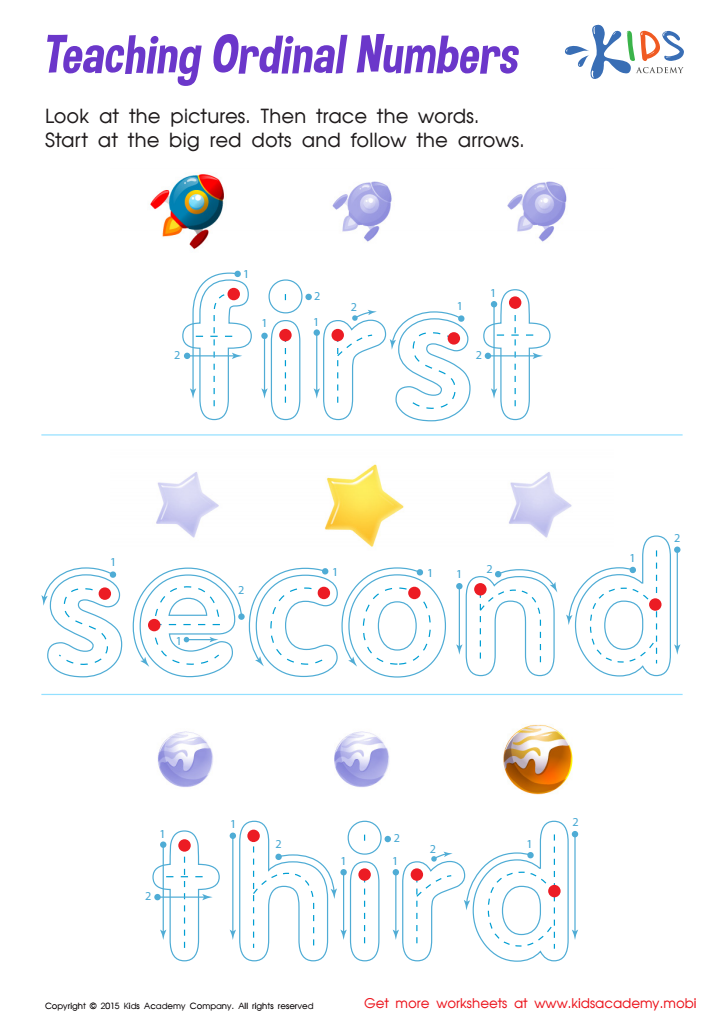
Ordinal Numbers: Teaching Ordinal Numbers Printable
 Assign to My Students
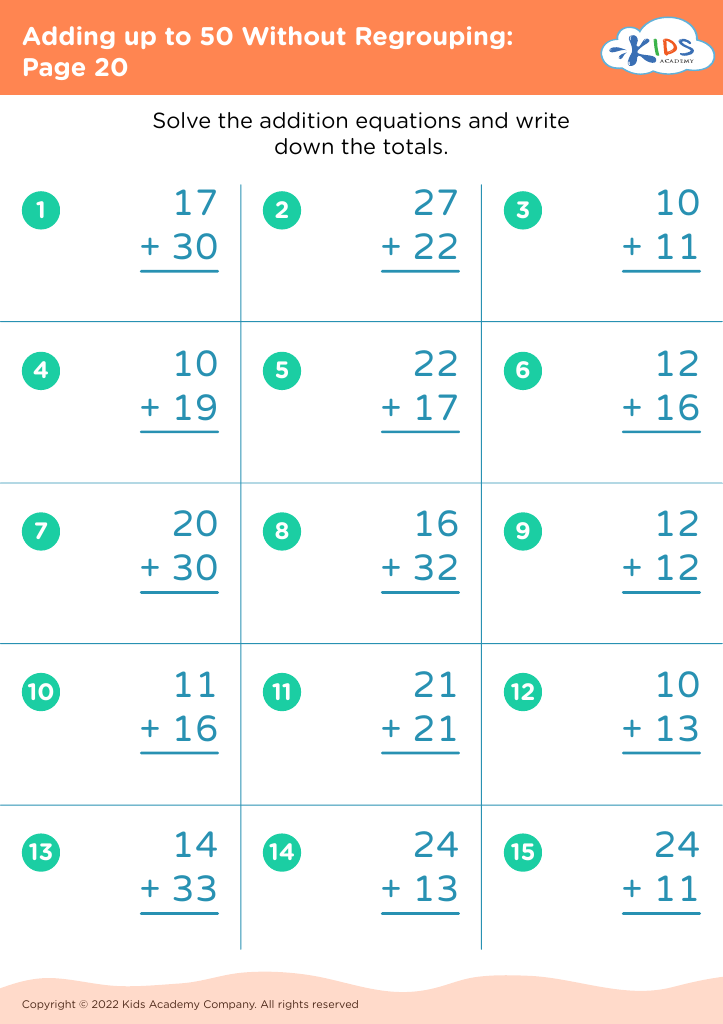
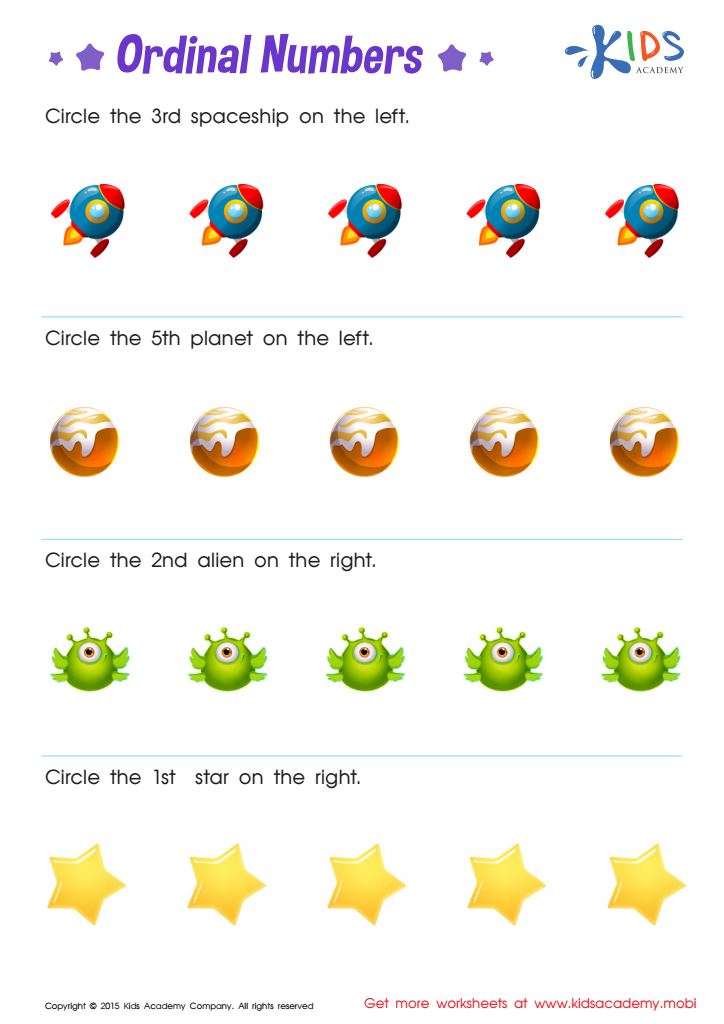
Ordinal Numbers: Space Ordinals Worksheet








Understanding ordinal numbers and basic addition and subtraction is foundational for children aged 5-7 because it acts as a critical stepping stone for future mathematical learning. Ordinal numbers, which specify the position or order of objects (like first, second, third), help children grasp the concept of sequences and order, which is essential for comprehending more complex mathematical concepts later on. Recognizing and using these terms correctly aids children in daily activities and in understanding stories or instructions that involve order.
Basic addition and subtraction are the building blocks of arithmetic. They help children develop numeracy skills, which are crucial for solving real-world problems and for understanding more complicated operations, like multiplication and division, in the future. Mastering these skills at an early age builds confidence and a positive attitude towards mathematics, reducing anxiety and fostering independence in problem-solving.
When parents and teachers effectively support and encourage mastery of these concepts, children are better equipped to progress in their mathematical education with a strong, reliable foundation. Games, practical activities, and constant practice can make learning these concepts enjoyable and engaging, thus cementing their understanding and application. Without a robust grasp on these basics, students may struggle and face challenges in more advanced topics, making early intervention and support critically important.








