Understanding patterns Addition & Subtraction Worksheets for Ages 5-7
34 filtered results
-
From - To
Unlock your child’s mathematical potential with our "Understanding Patterns in Addition & Subtraction Worksheets" designed for ages 5-7. These engaging worksheets focus on recognizing and utilizing patterns to enhance fundamental math skills. Your child will learn how to identify numerical sequences, develop problem-solving strategies, and build confidence in their ability to add and subtract. Each worksheet features age-appropriate exercises that make learning enjoyable and interactive. Perfect for at-home practice or classroom settings, our resources support early mathematical understanding. Start fostering an essential skill set that lays the groundwork for future math success today! Explore our worksheets and watch your child thrive!
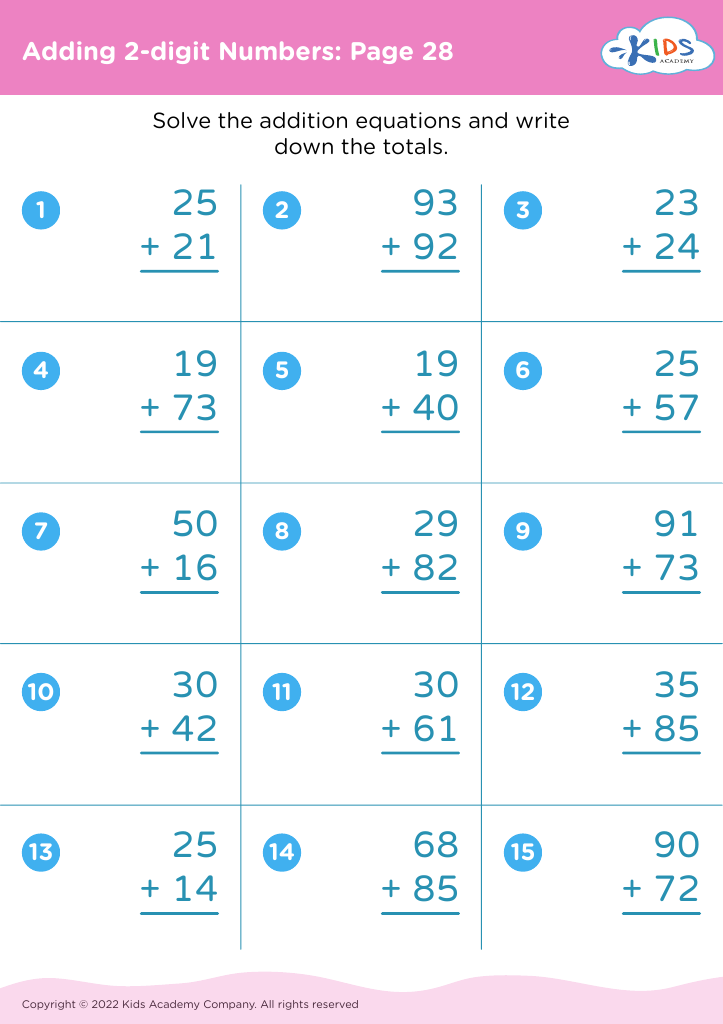
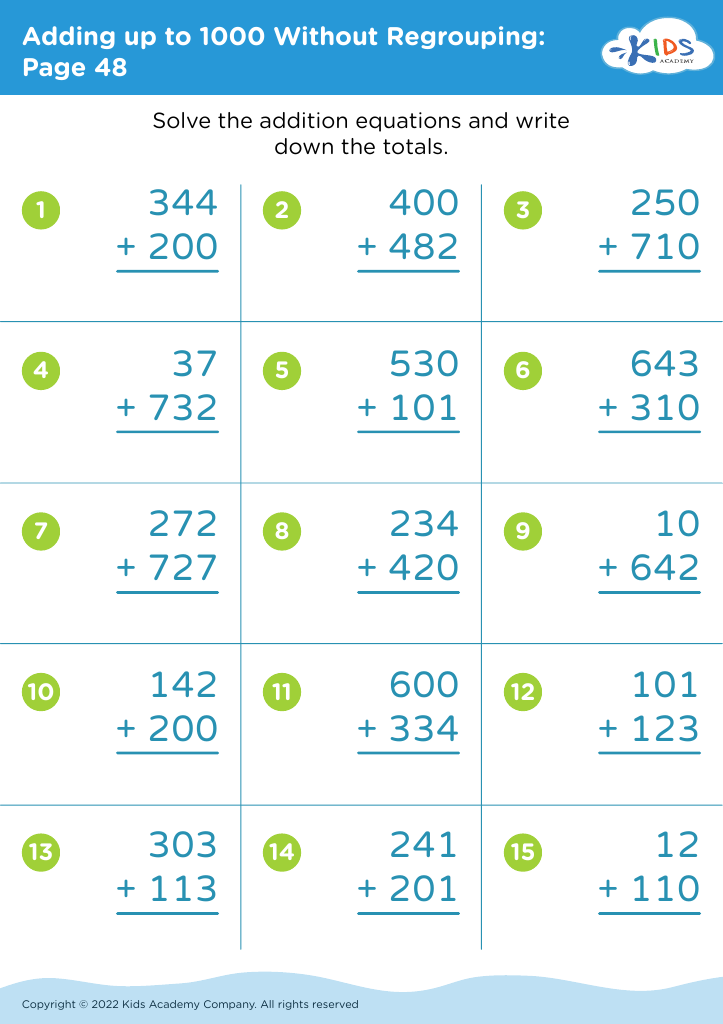
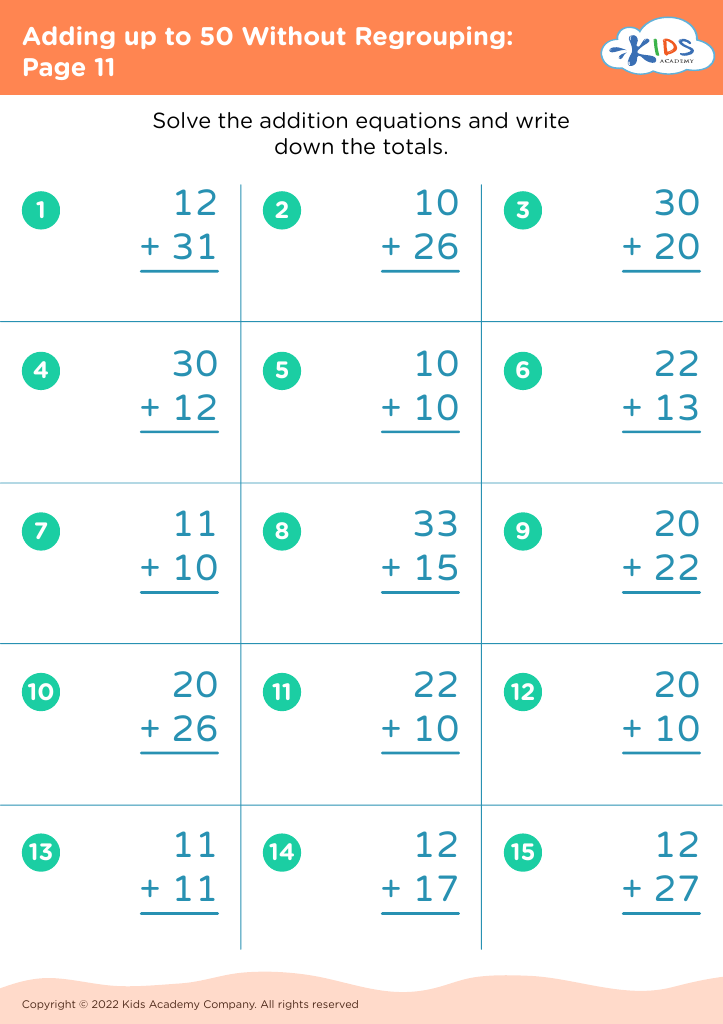
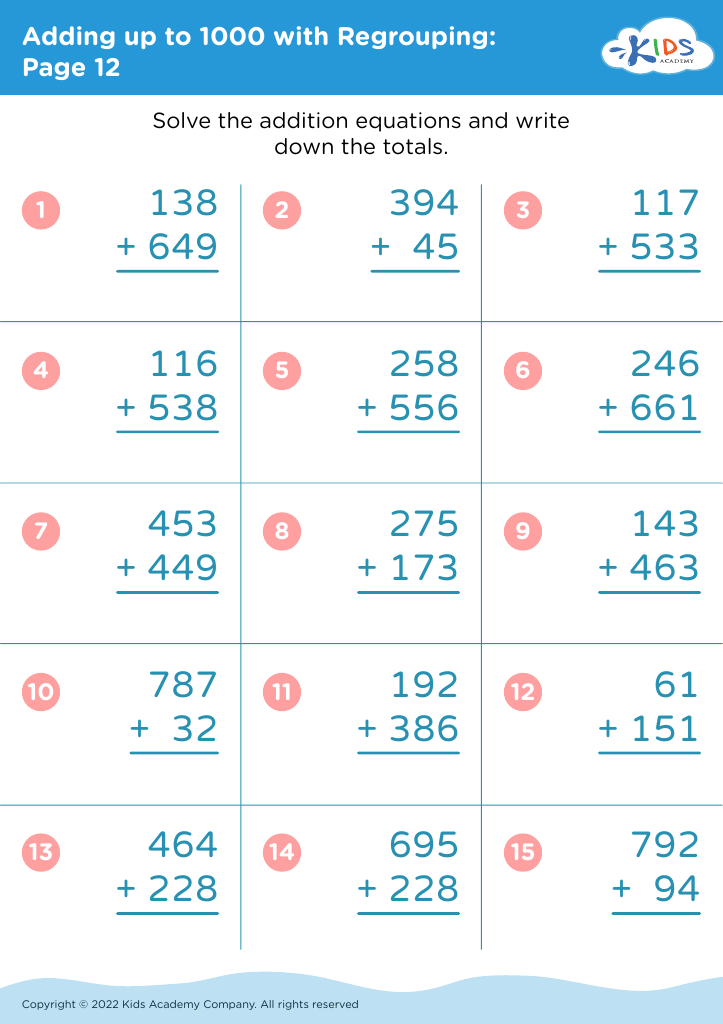
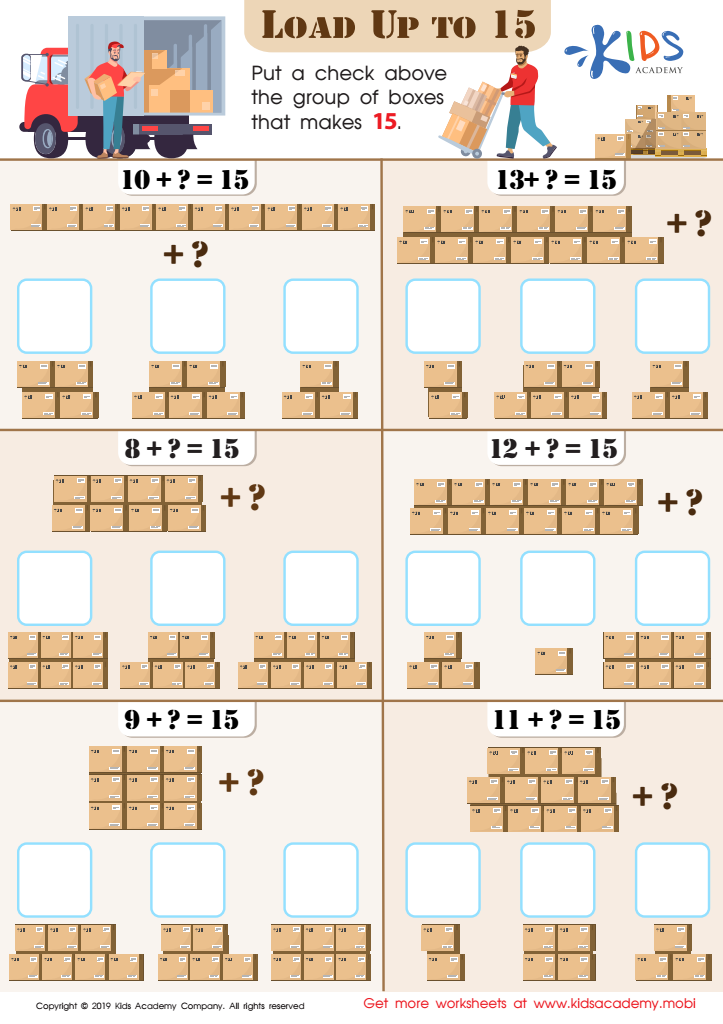
Load up to 15 Worksheet
 Assign to My Students
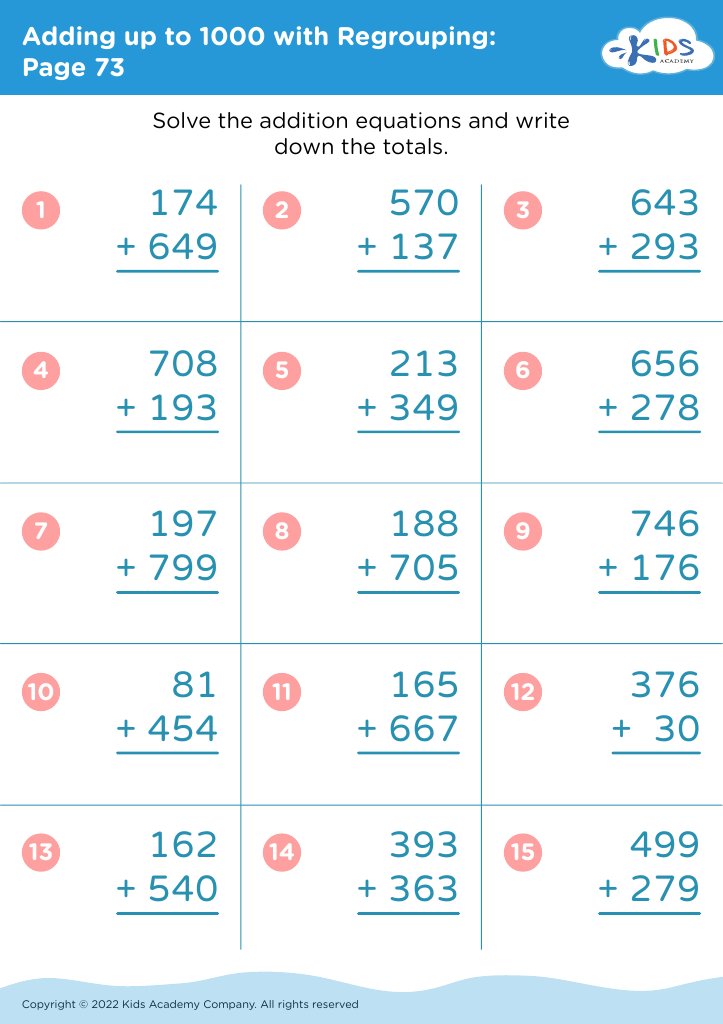
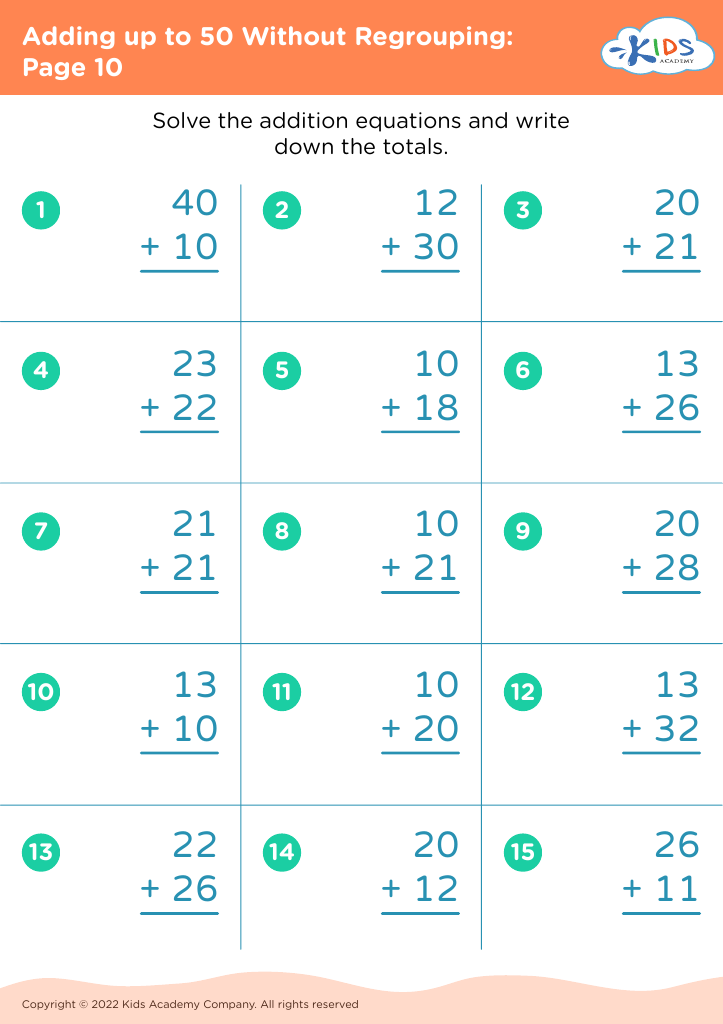
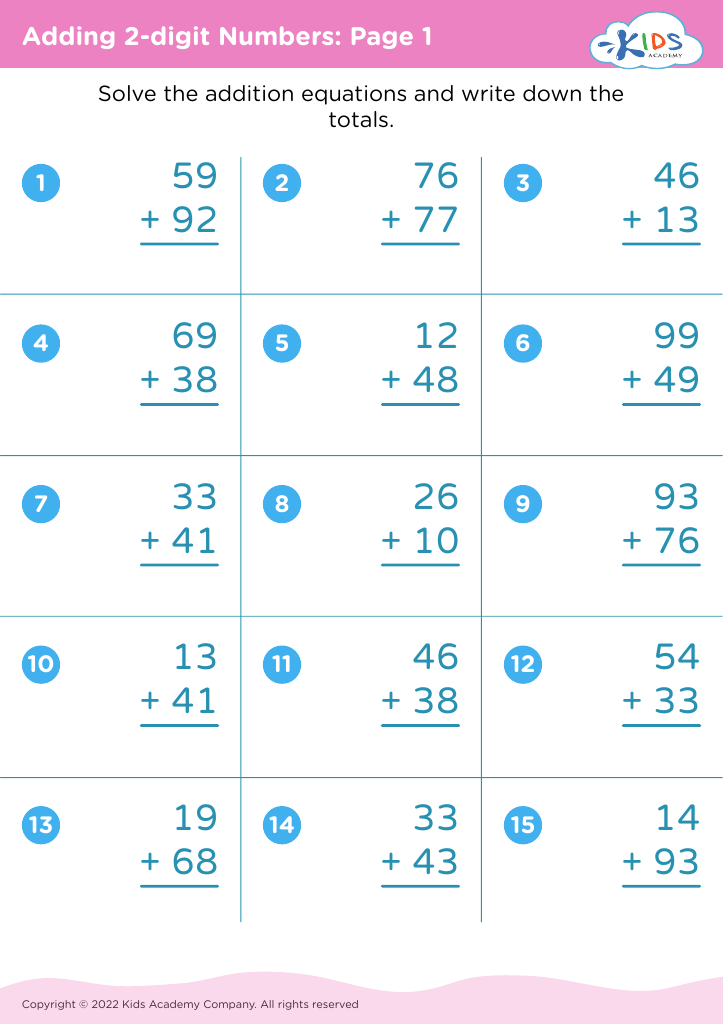
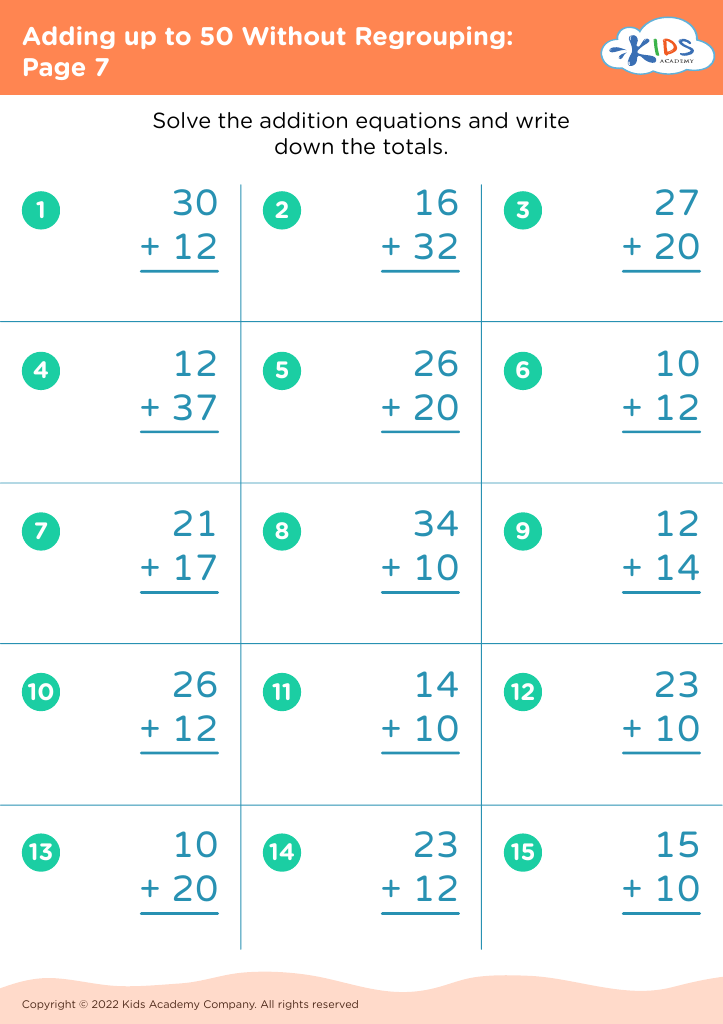
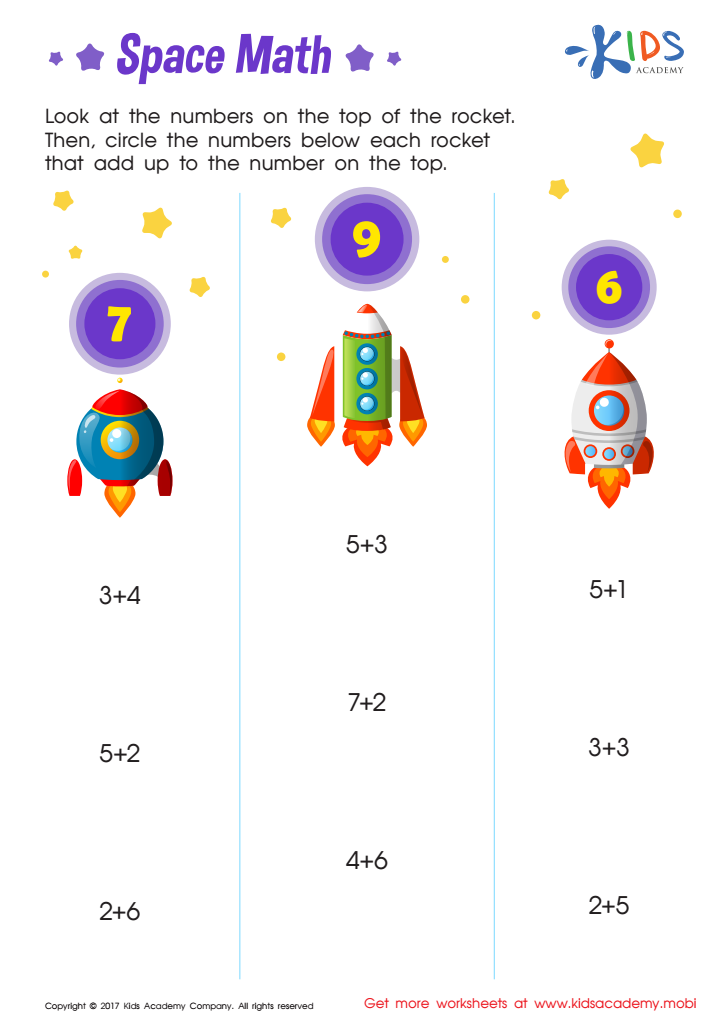
Addition: Space Math Worksheet
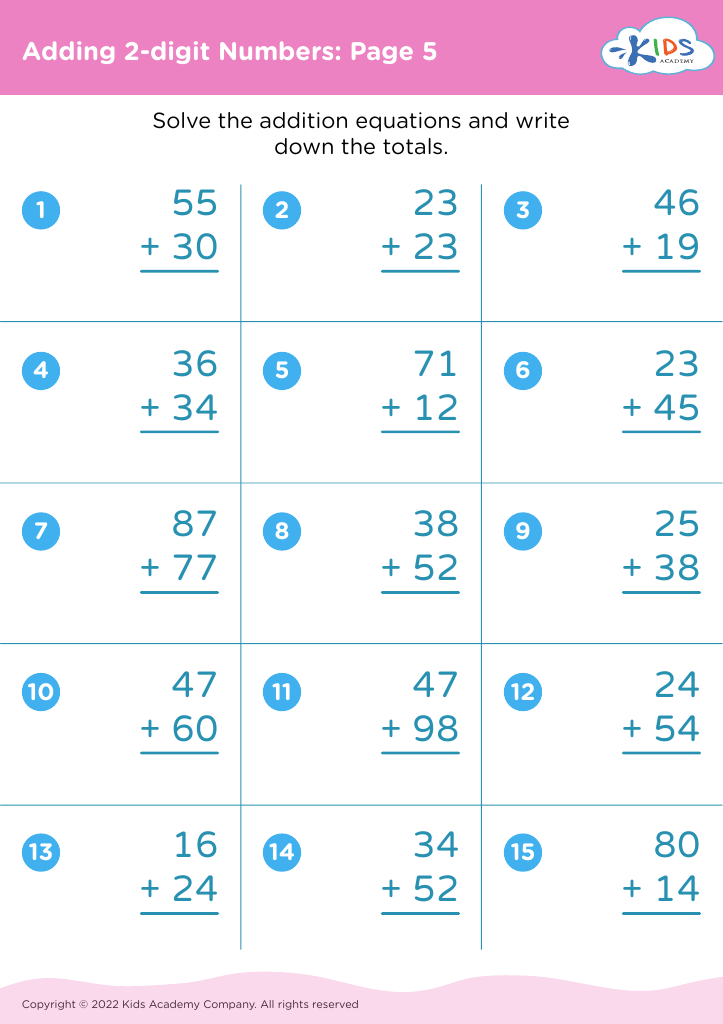
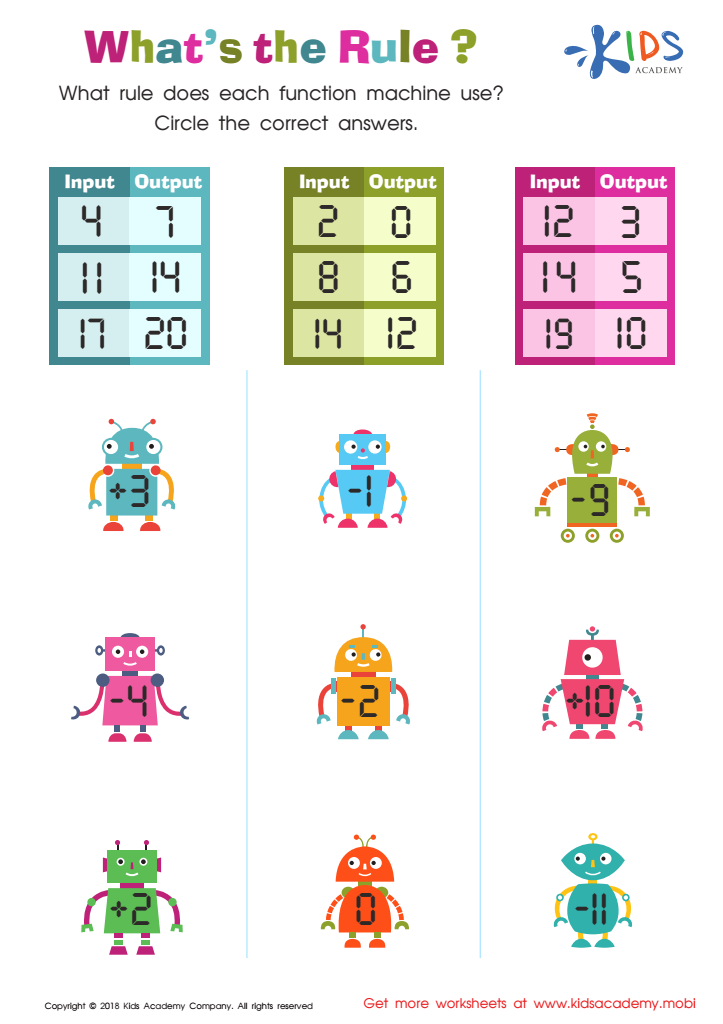
What's the Rule Worksheet
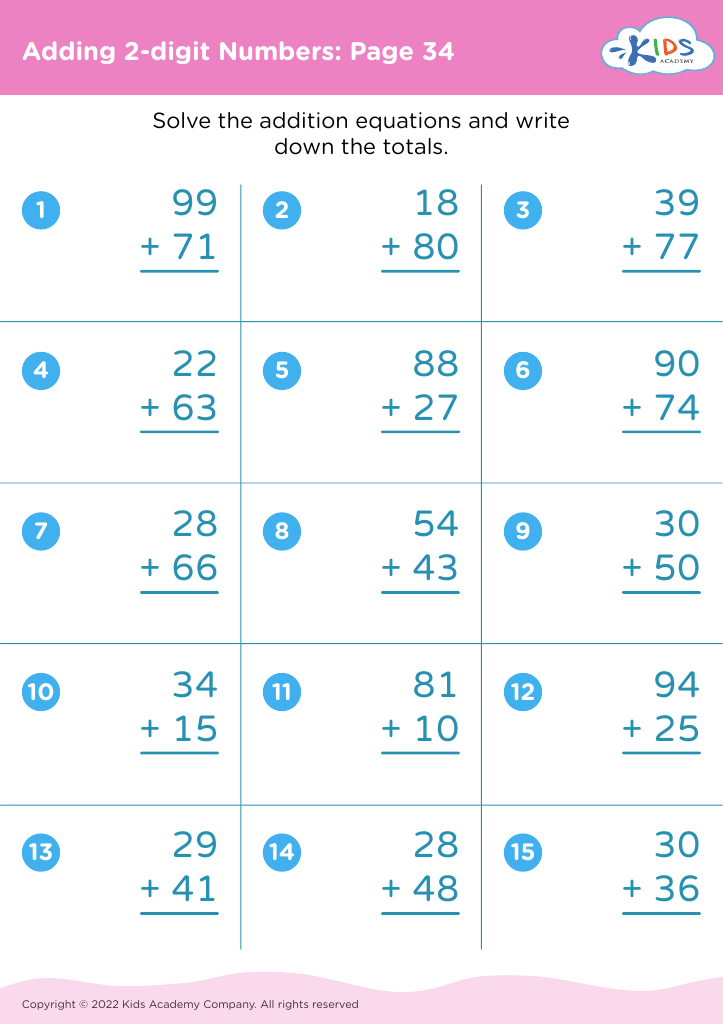
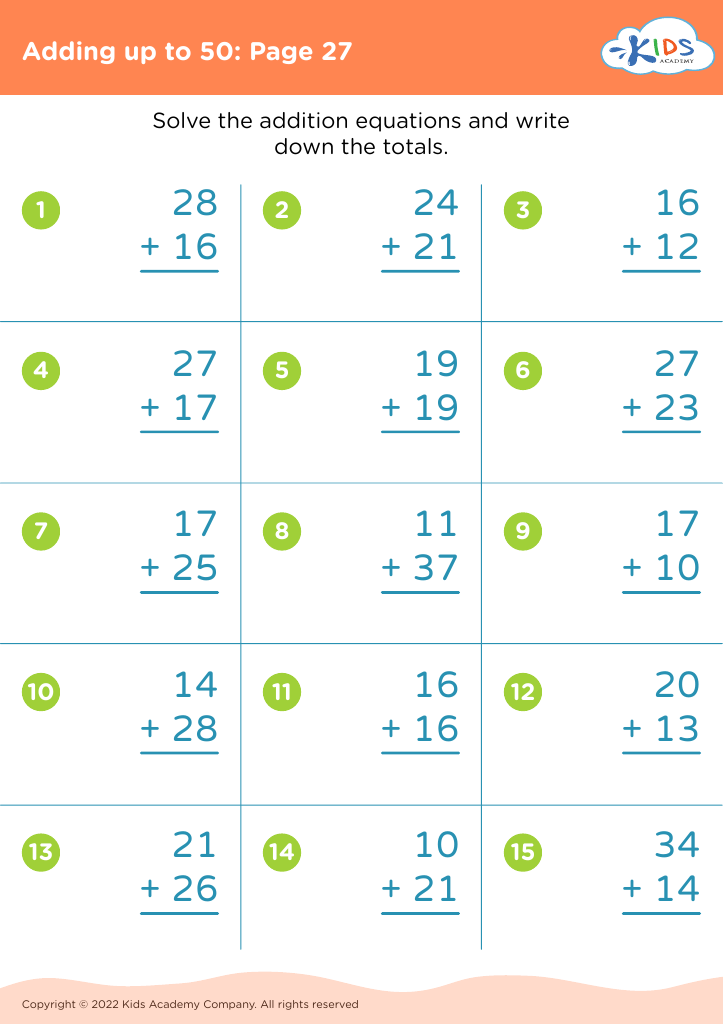
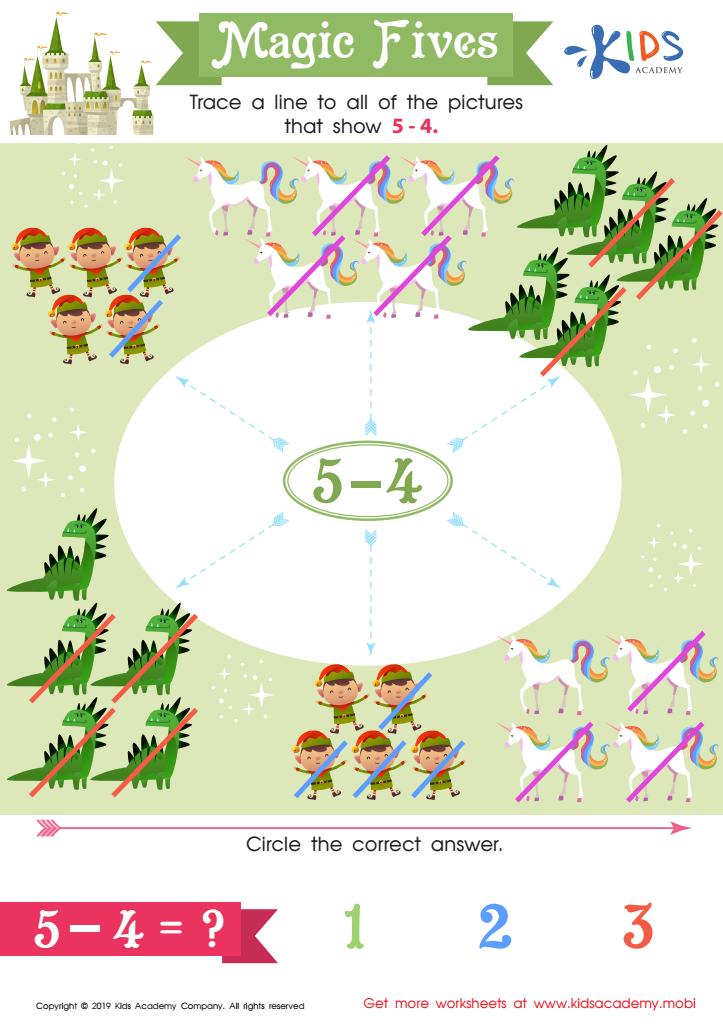
Magic Fives Worksheet
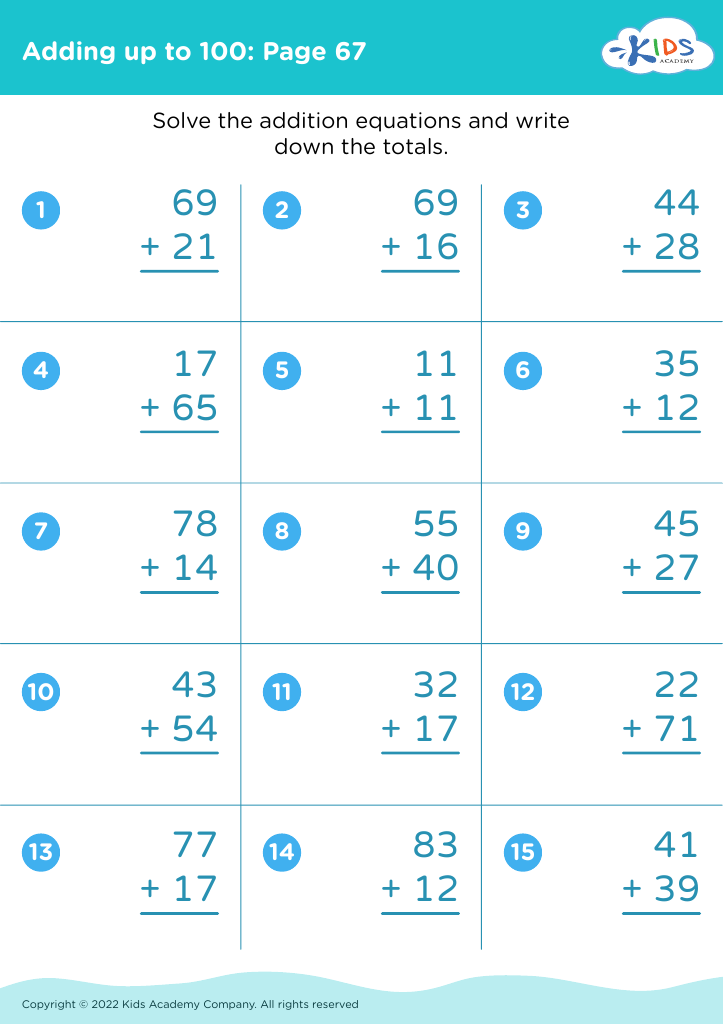
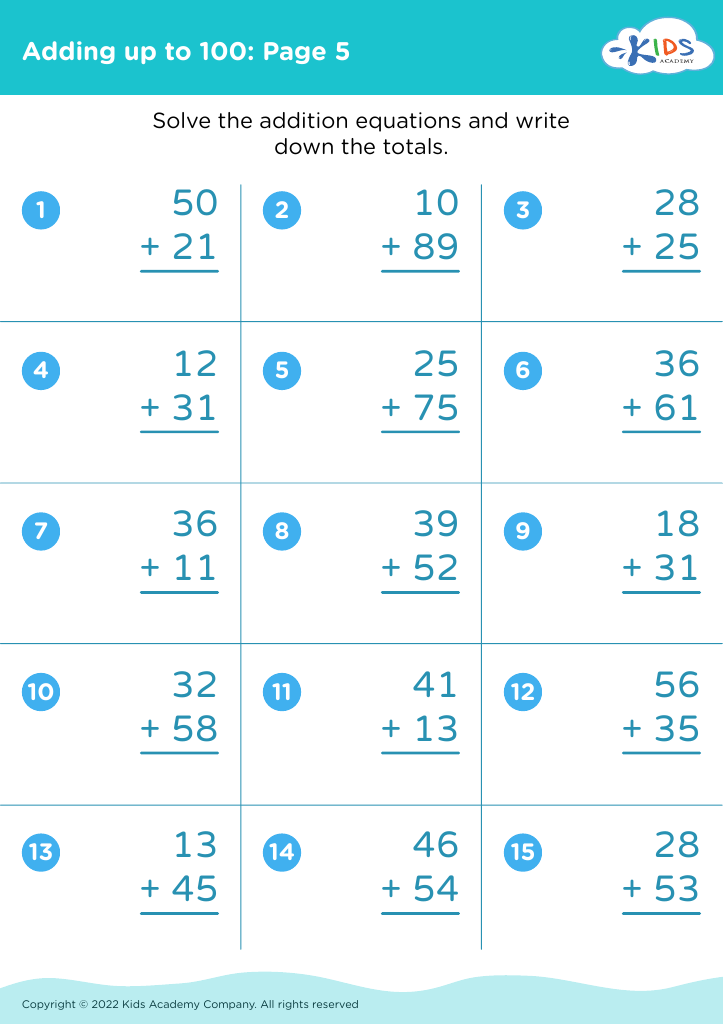
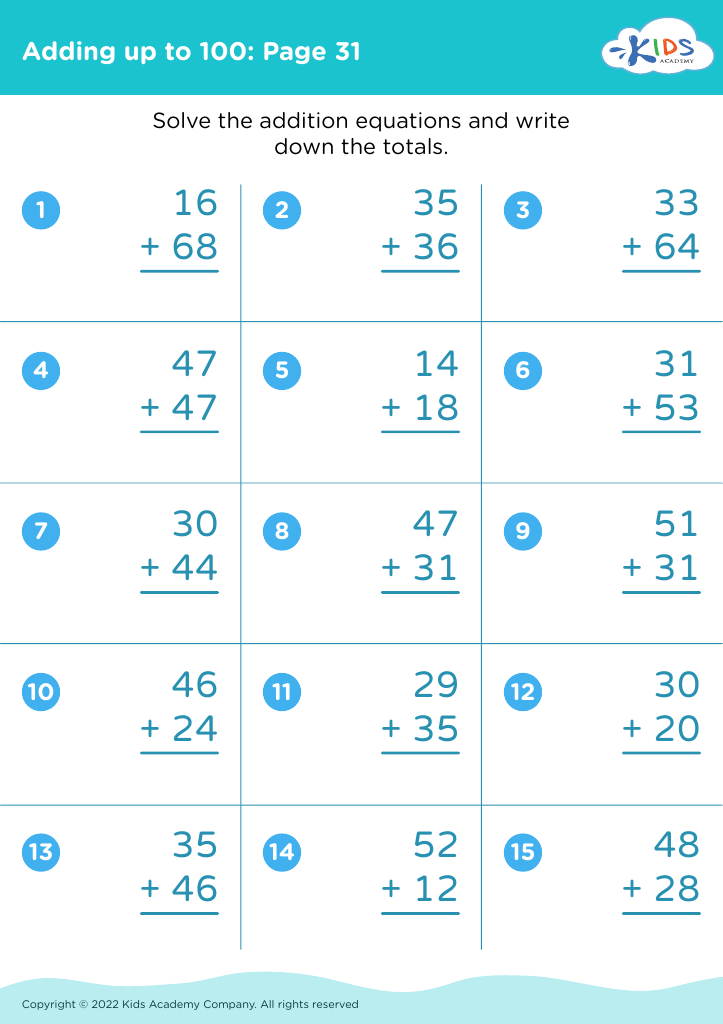
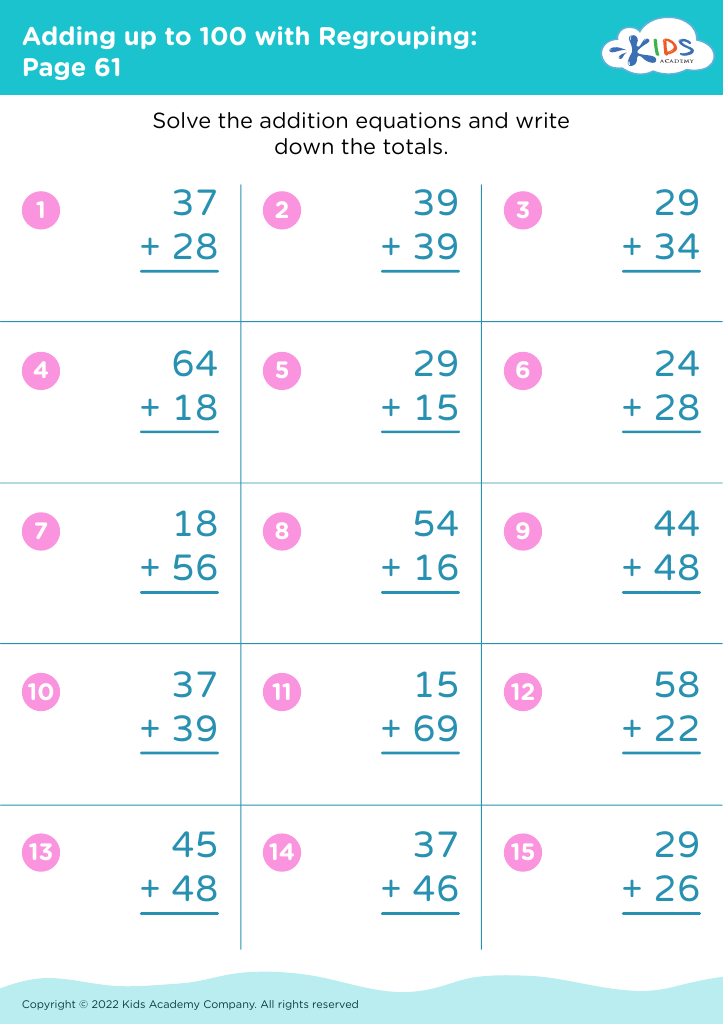
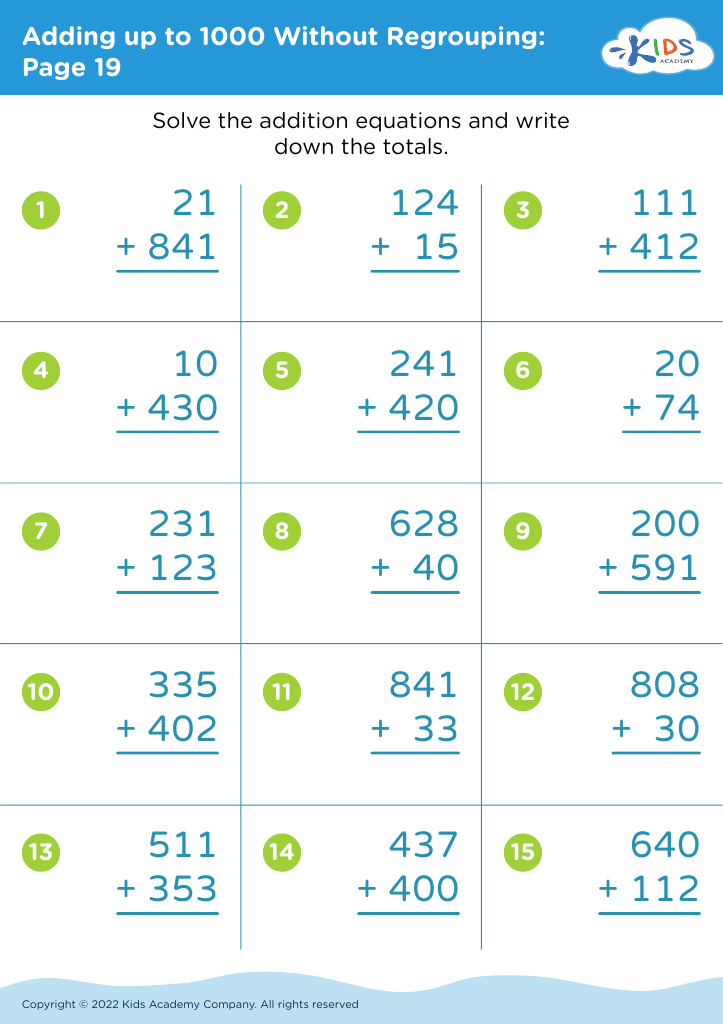
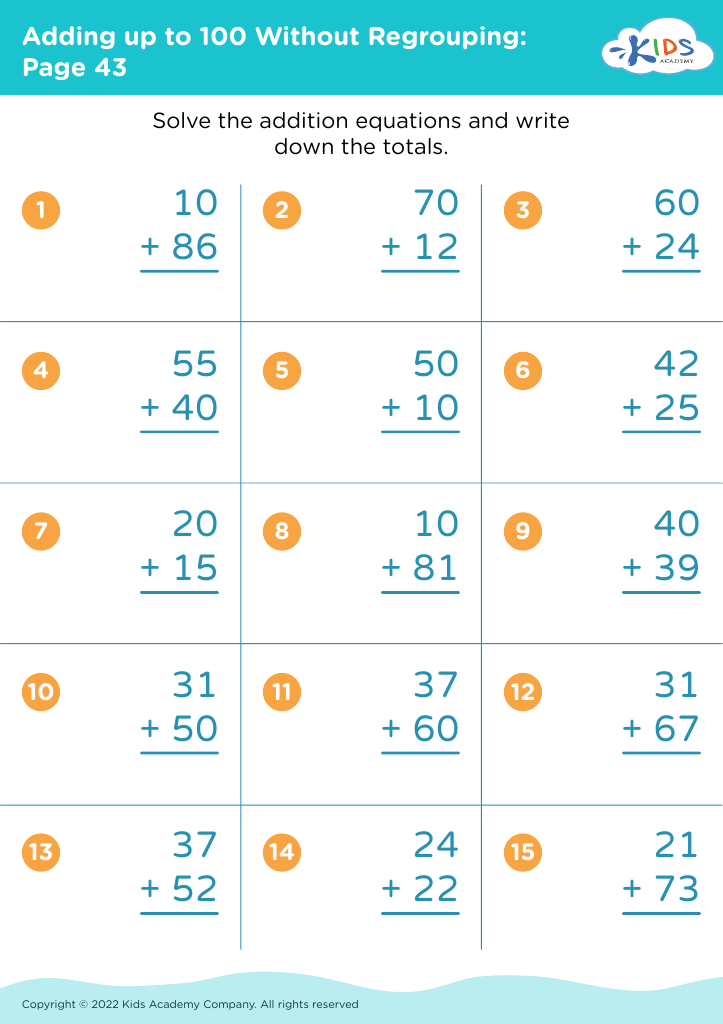
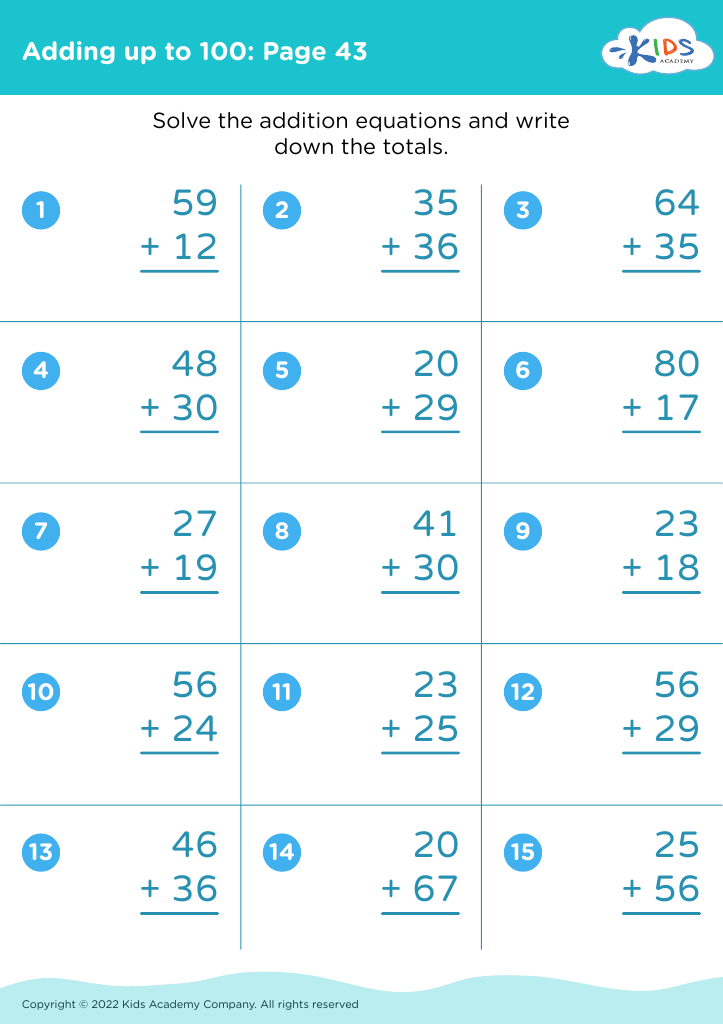
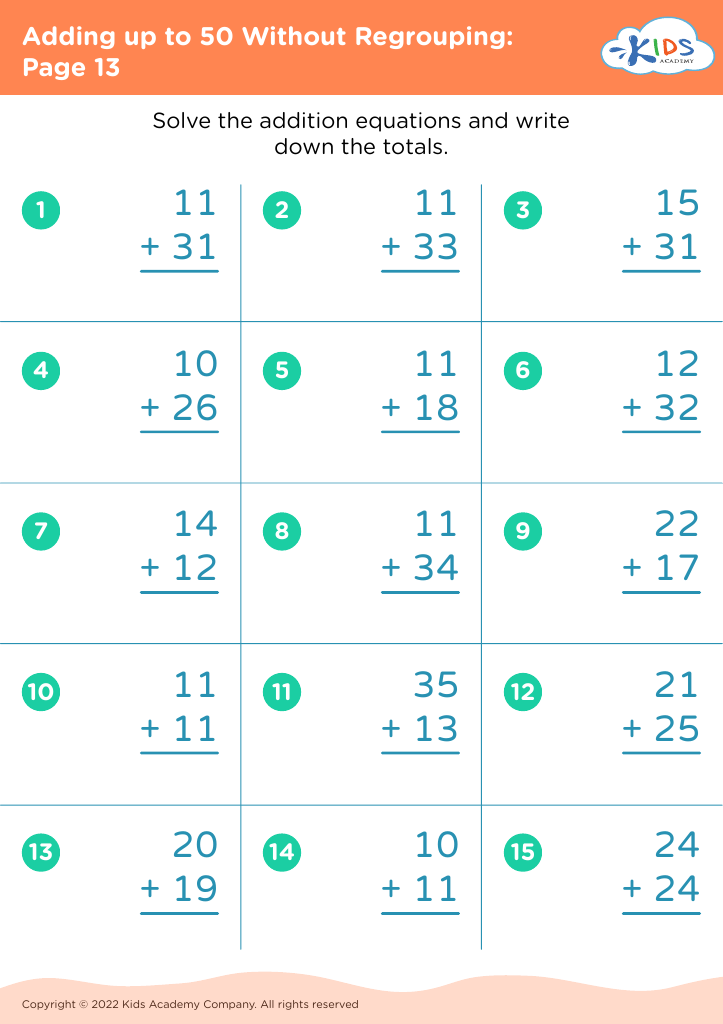
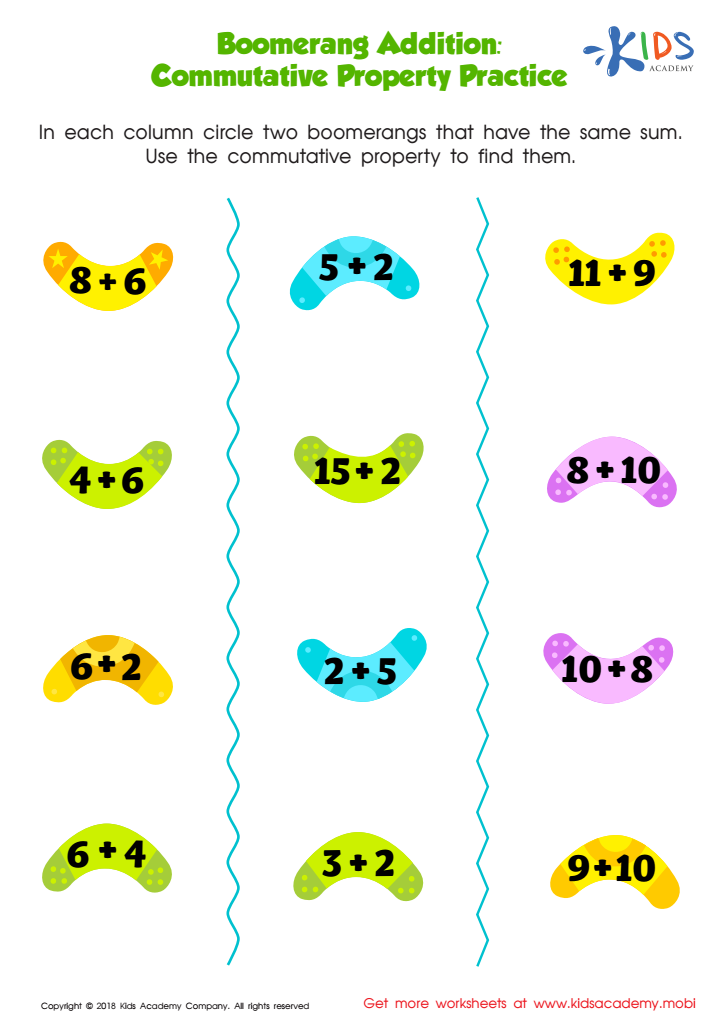
Boomerang Addition Worksheet








Understanding patterns in addition and subtraction is crucial for children aged 5-7 because it lays the foundational skills for more advanced mathematical concepts. Recognizing and working with patterns helps children to develop logical reasoning and critical thinking skills. When children understand how numbers work together through repetitive sequences or rules, they gain confidence in their problem-solving abilities.
For parents and teachers, fostering an ability to see patterns in addition and subtraction also facilitates mental math skills, as kids begin to make connections between numbers. This understanding reduces reliance on memorization and encourages children to think conceptually about relationships within numbers. For instance, recognizing that adding or subtracting the same number multiple times can signal a larger operation simplifies more complex calculations as children advance in their math education.
Additionally, pattern recognition enhances children's comprehension of real-world situations, such as budgeting or measuring, driving home the importance of math in everyday life. By encouraging pattern exploration, parents and teachers equip children with versatile strategies to approach a variety of mathematical challenges, preparing them for future academic success and fostering a lifelong appreciation for math.








