Filters

19 filtered results

Clear all filters
Favorites
With answer key
Interactive

19 filtered results

Difficulty Level

Grade


Discover our engaging Counting Objects Addition Worksheets designed specifically for children ages 5-7! These worksheets provide a fun and interactive way to help young learners grasp foundational math concepts through hands-on counting and addition activities. Each worksheet encourages students to count various objects, developing their number recognition and problem-solving skills. Perfect for home or classroom use, our printable resources promote independent learning while keeping kids entertained. From colorful illustrations to step-by-step instructions, these worksheets make mastering simple addition a delightful experience. Explore our collection today and watch your child gain confidence in their math abilities as they learn through play!
Check out this FREE Trial Lesson on Addition for age 5-7!

Match Objects that Fit Together

Favorites
With answer key
Interactive
  • 5-7
  • Counting objects
  • Addition
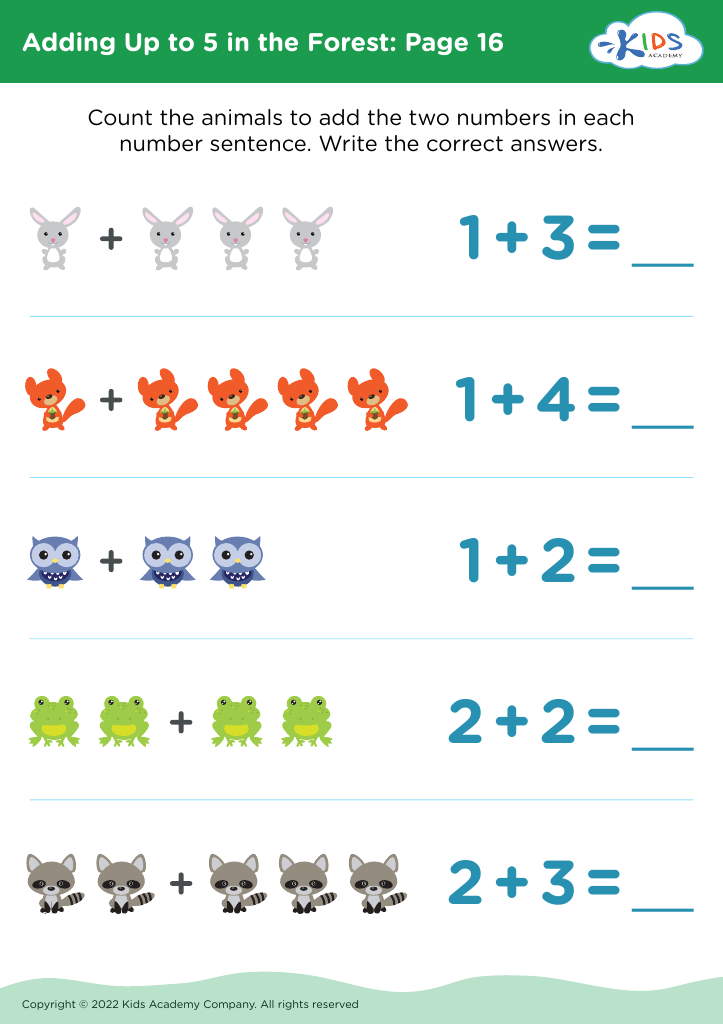
Adding Up to 5 in the Forest: Page 16
Worksheet
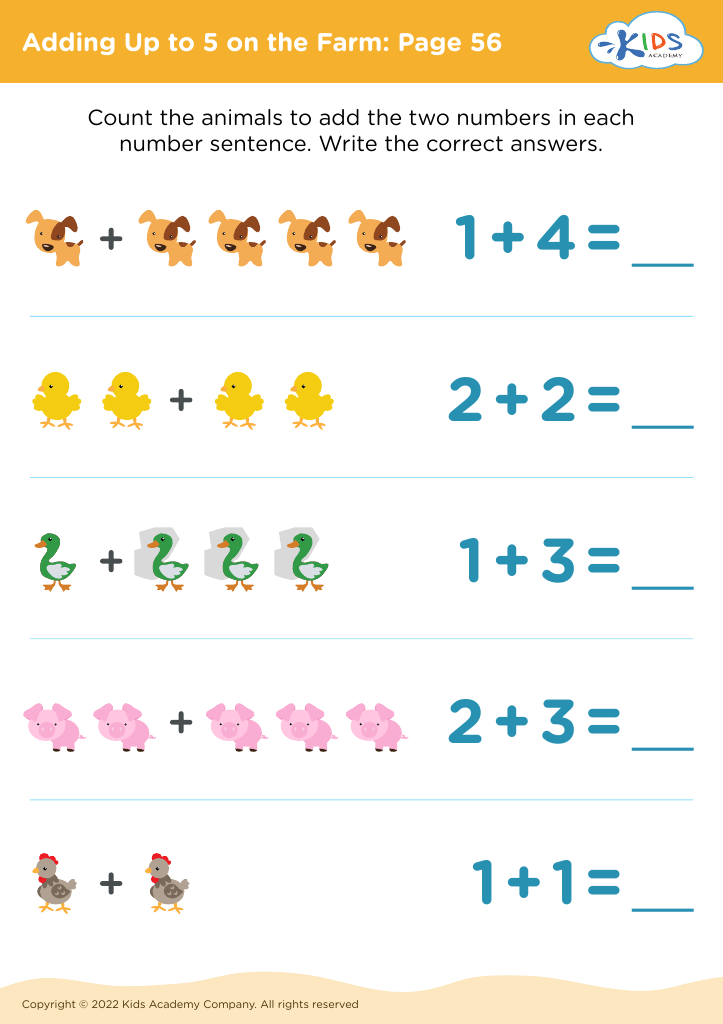
Adding Up to 5 on the Farm: Page 56
Worksheet
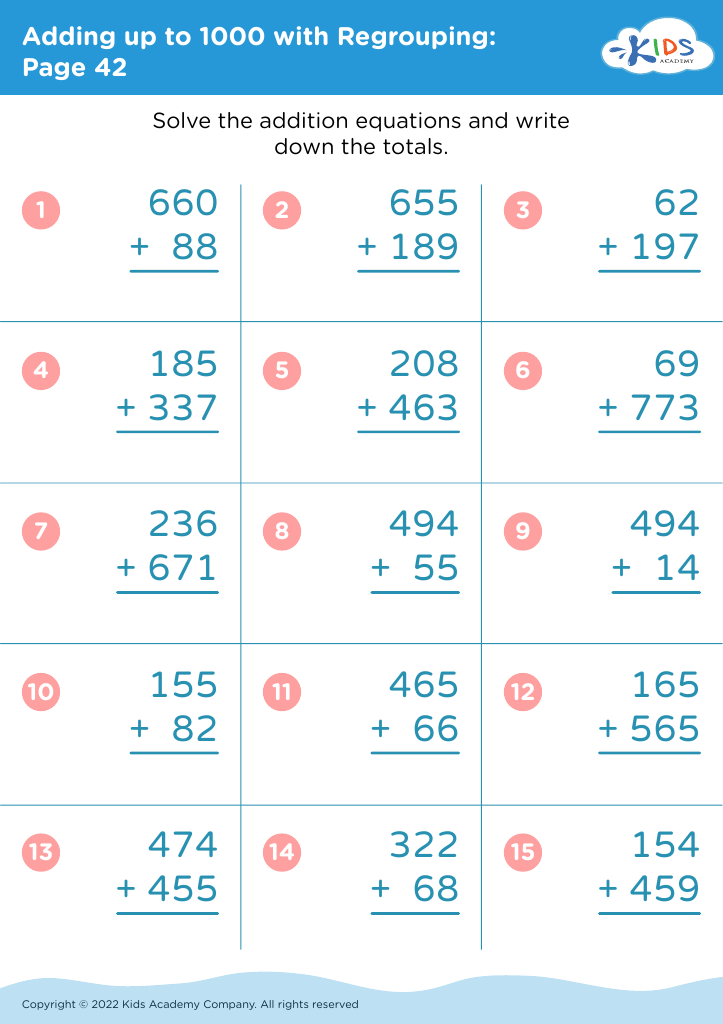
Adding up to 1000 with Regrouping: Page 42
Worksheet
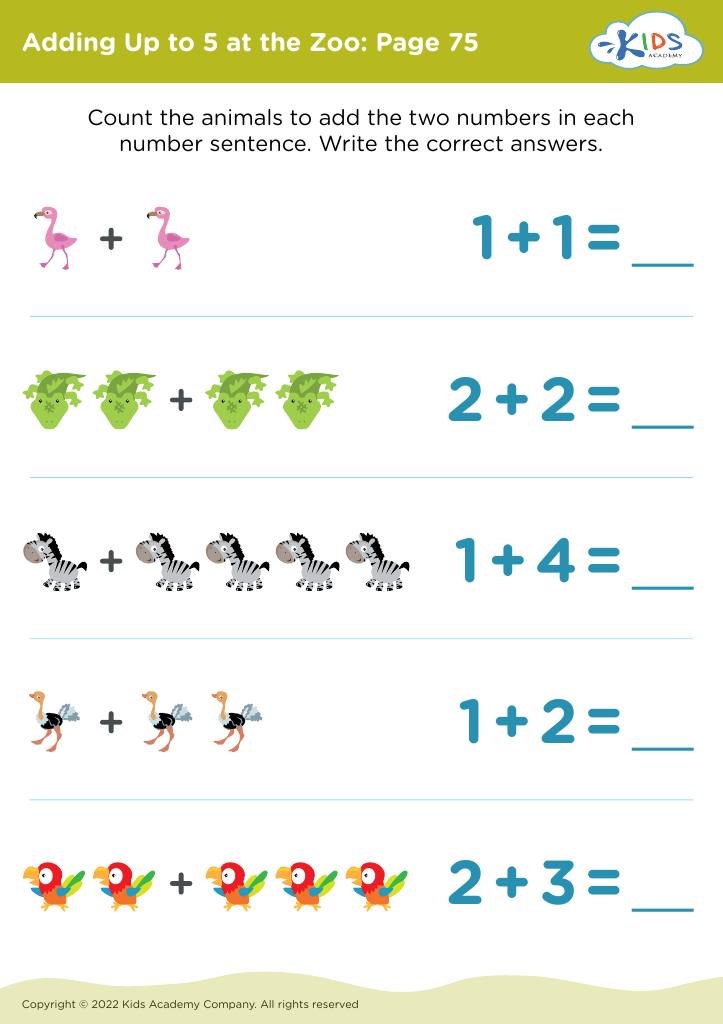
Adding Up to 5 at the Zoo: Page 75
Worksheet
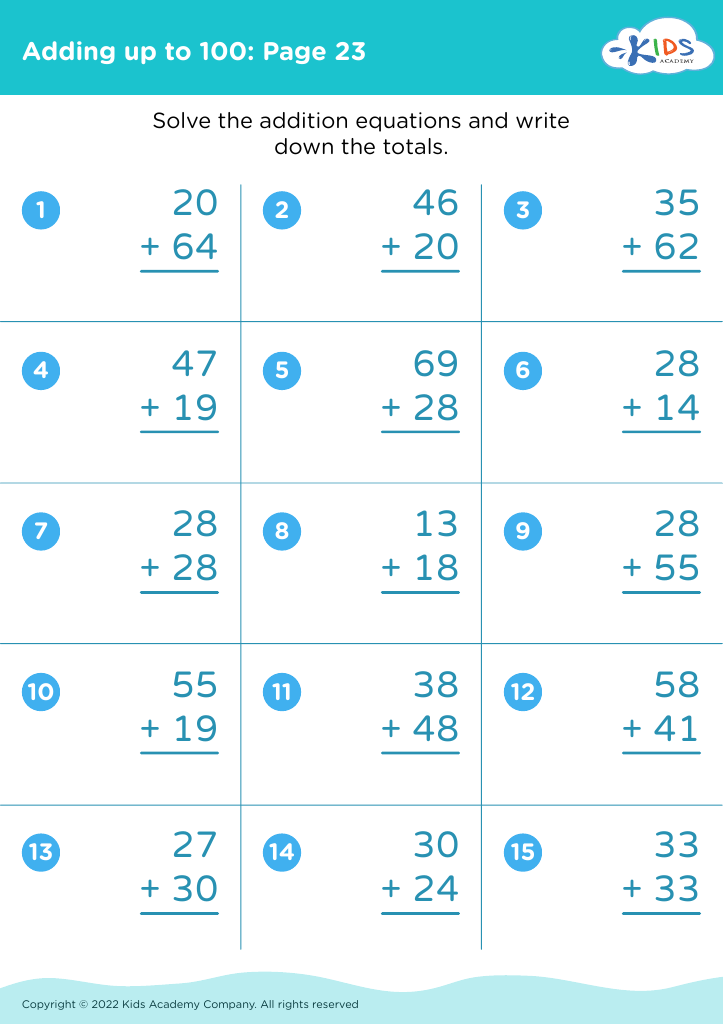
Adding up to 100: Page 23

Adding up to 100: Page 23

Adding up to 100: Page 23
Worksheet
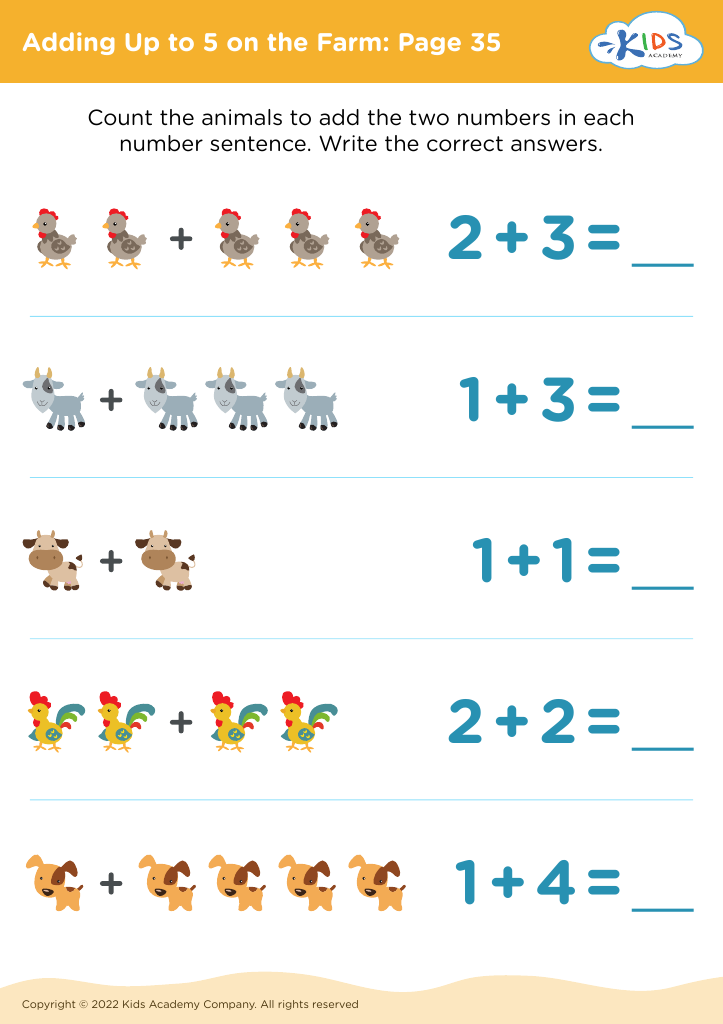
Adding Up to 5 on the Farm: Page 35
Worksheet
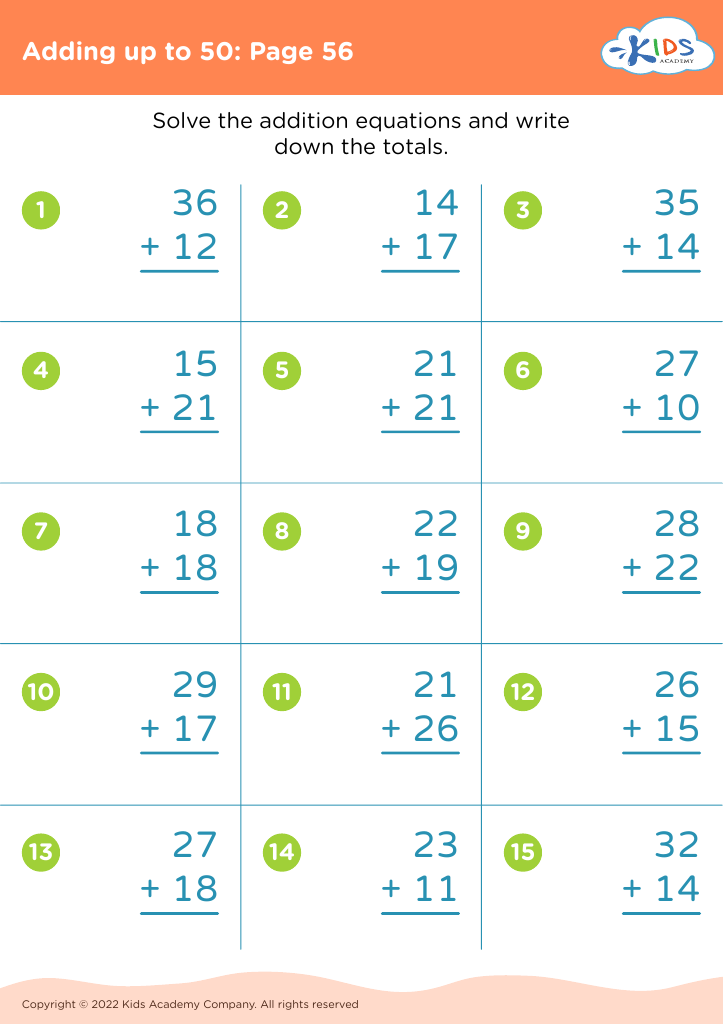
Adding up to 50: Page 56

Adding up to 50: Page 56

Adding up to 50: Page 56
Worksheet
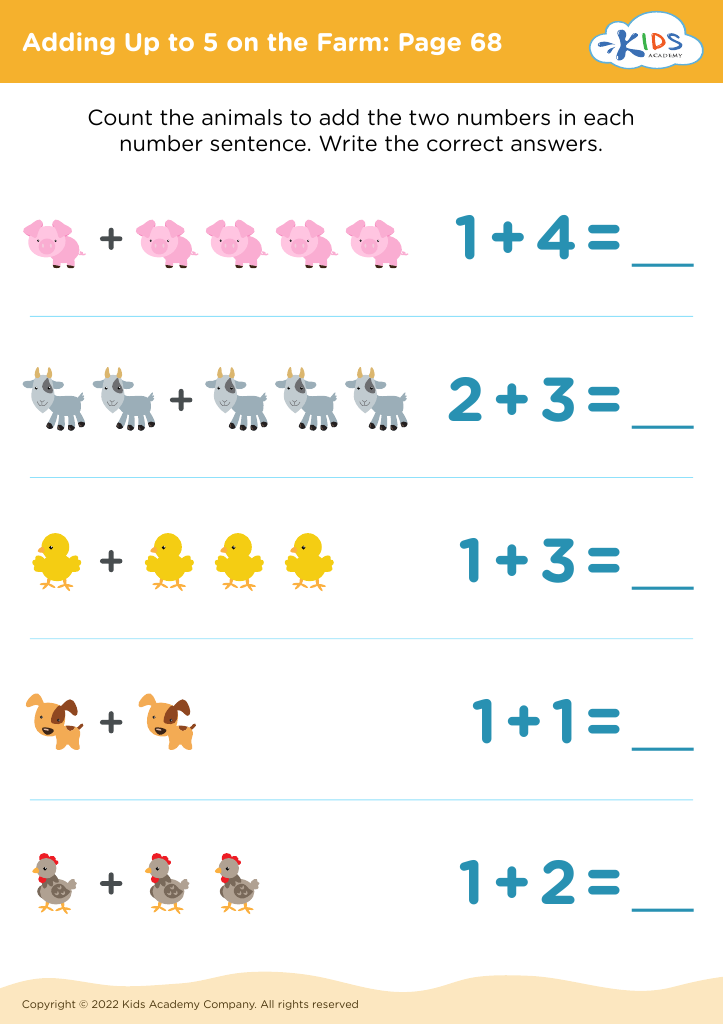
Adding Up to 5 on the Farm: Page 68
Worksheet
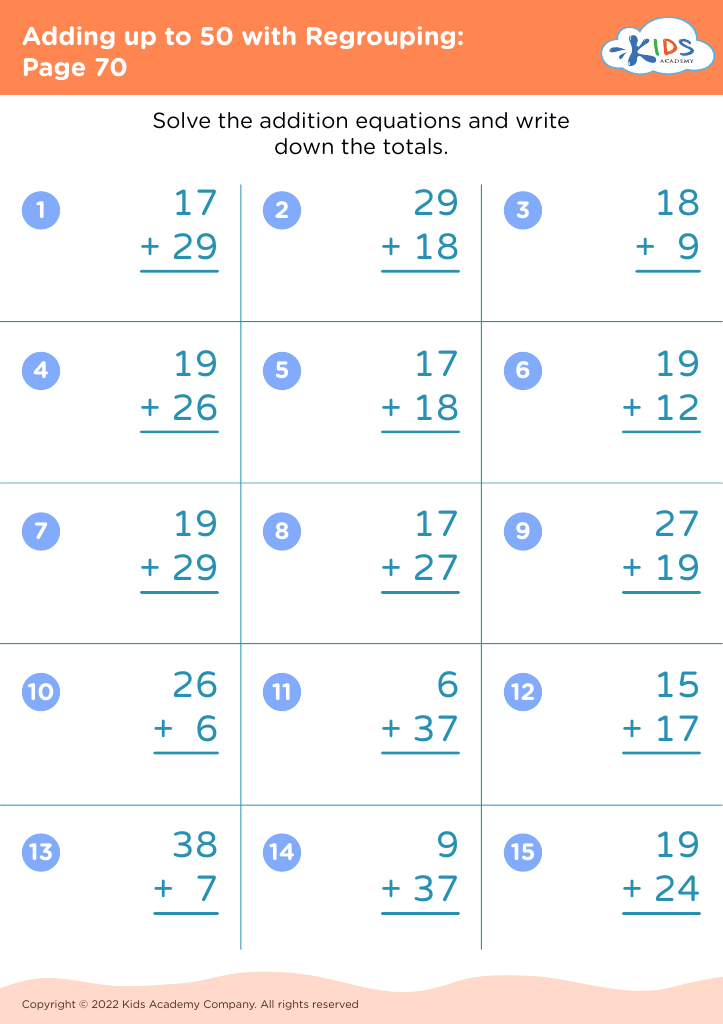
Adding up to 50 with Regrouping: Page 70
Worksheet
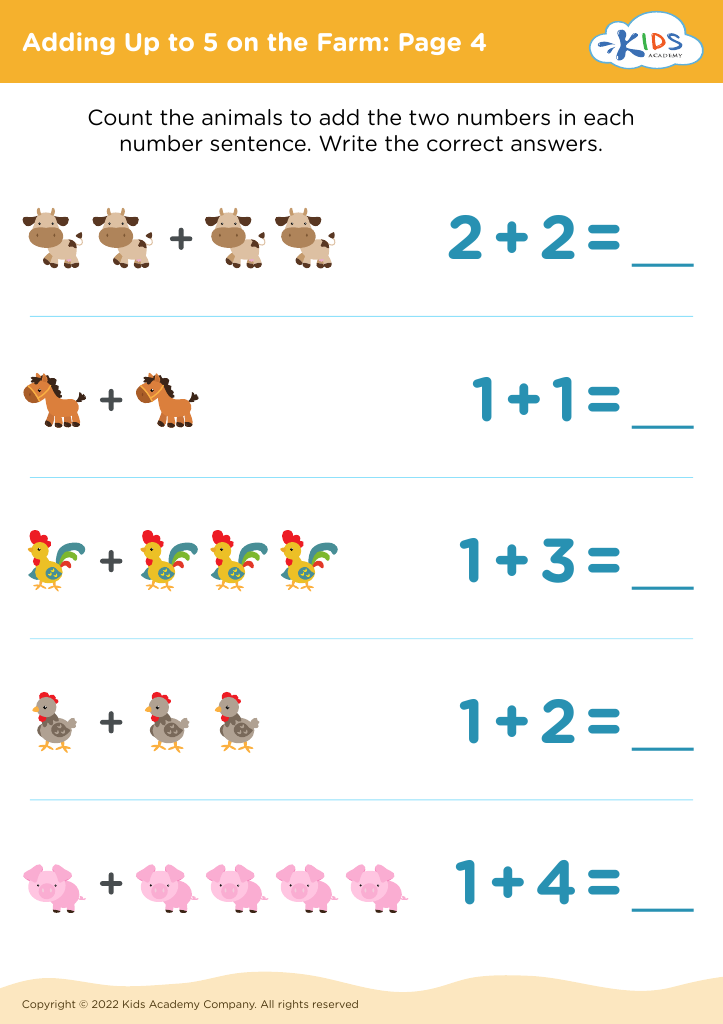
Adding Up to 5 on the Farm: Page 4
Worksheet
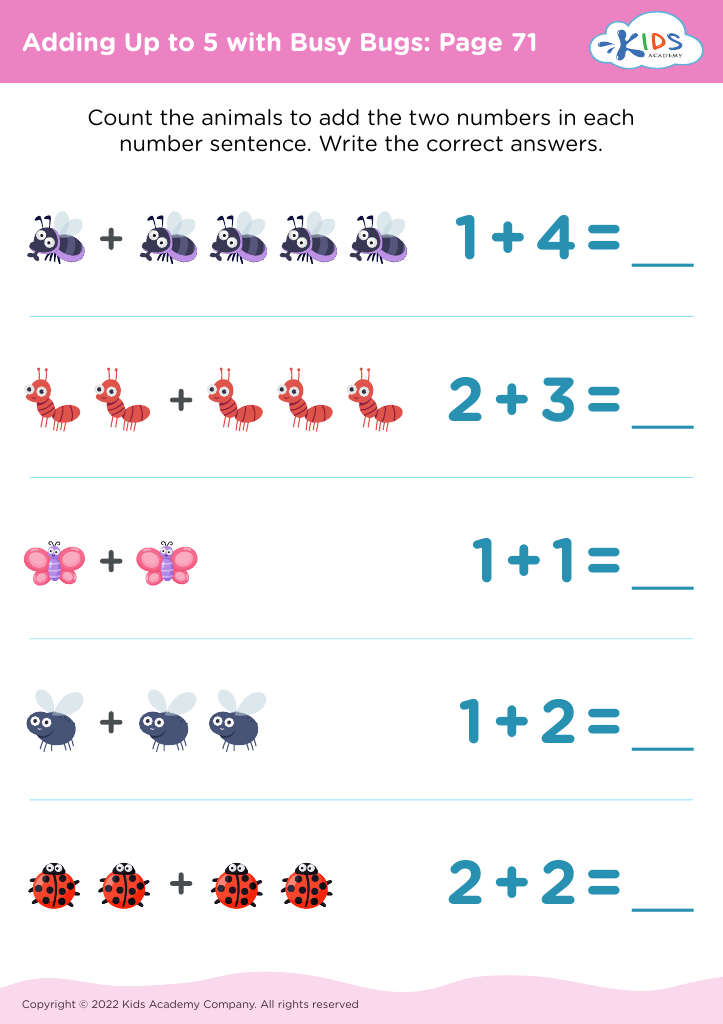
Adding Up to 5 with Busy Bugs: Page 71
Worksheet
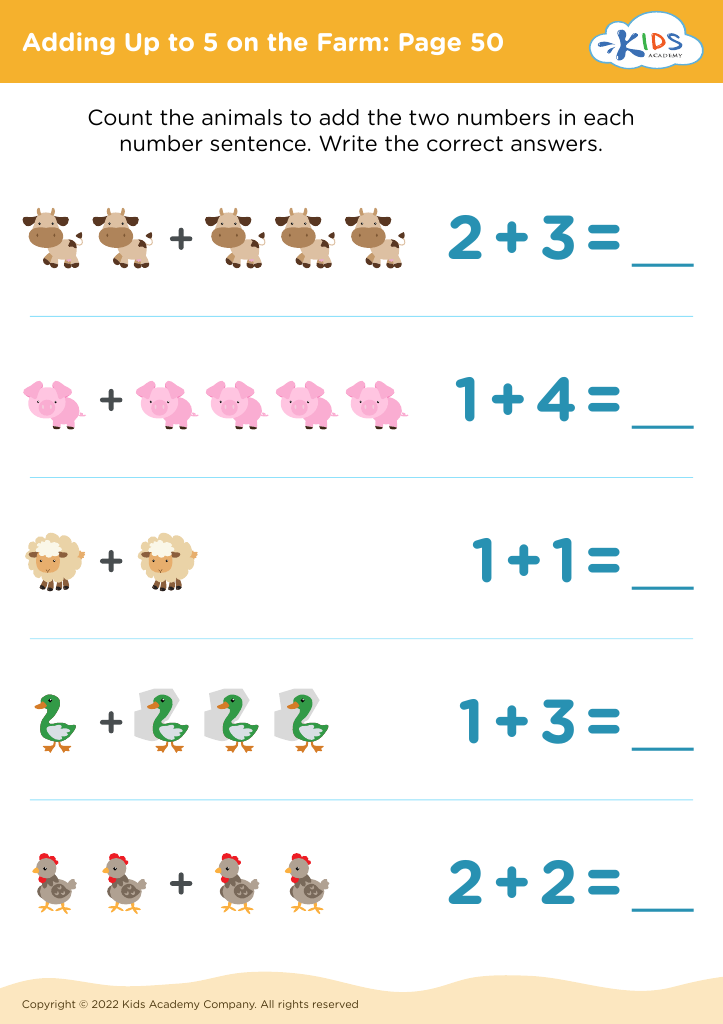
Adding Up to 5 on the Farm: Page 50
Worksheet
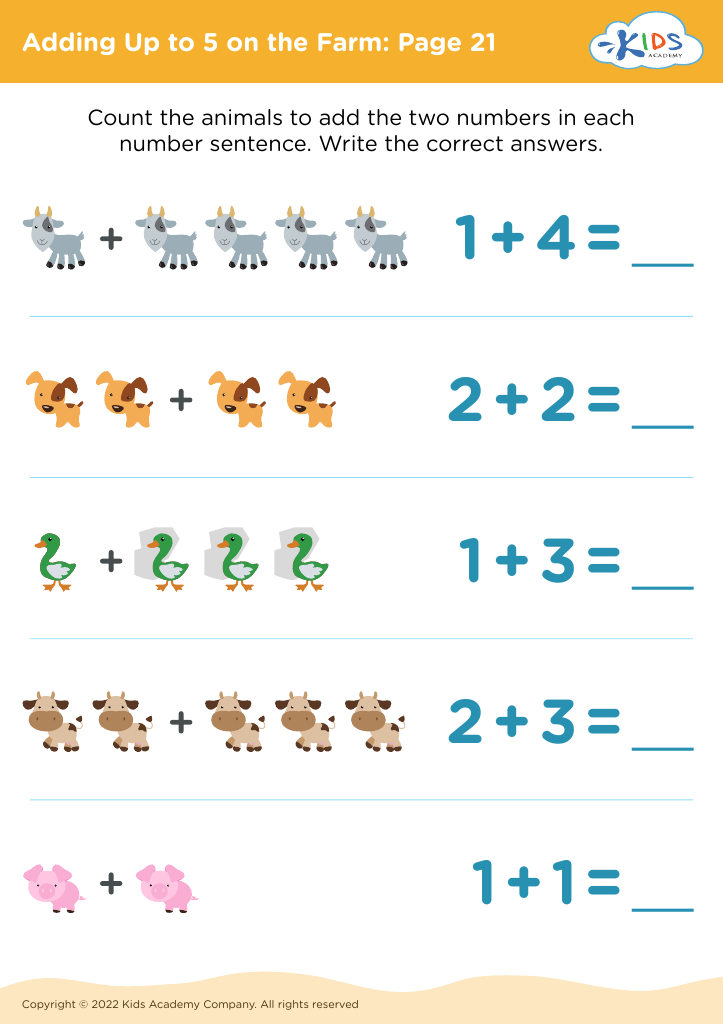
Adding Up to 5 on the Farm: Page 21
Worksheet
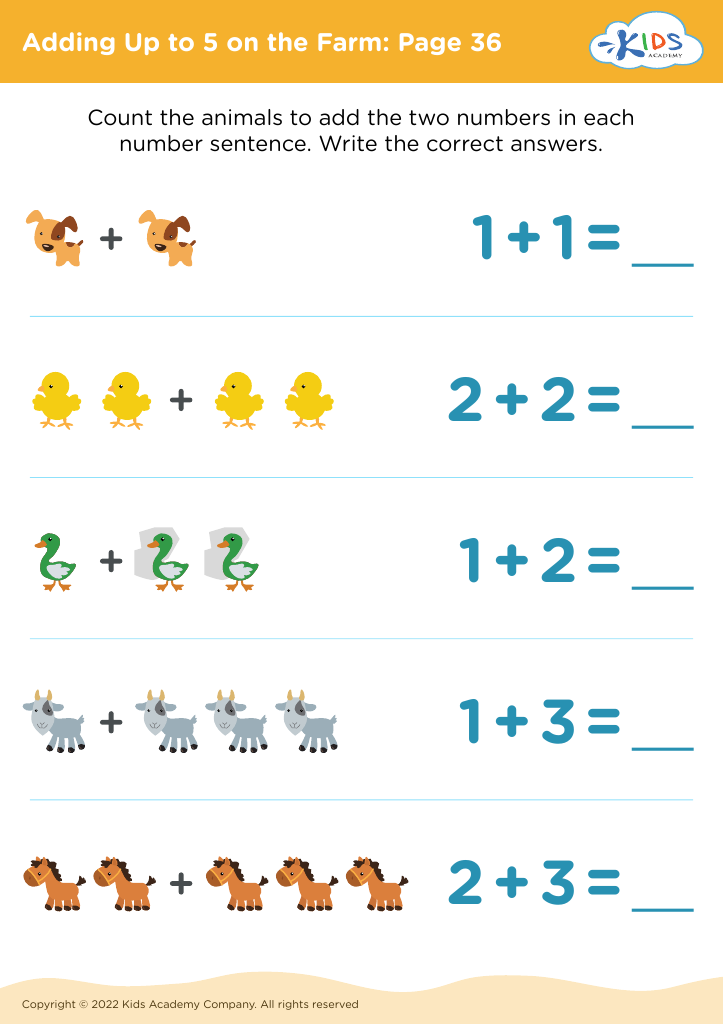
Adding Up to 5 on the Farm: Page 36
Worksheet
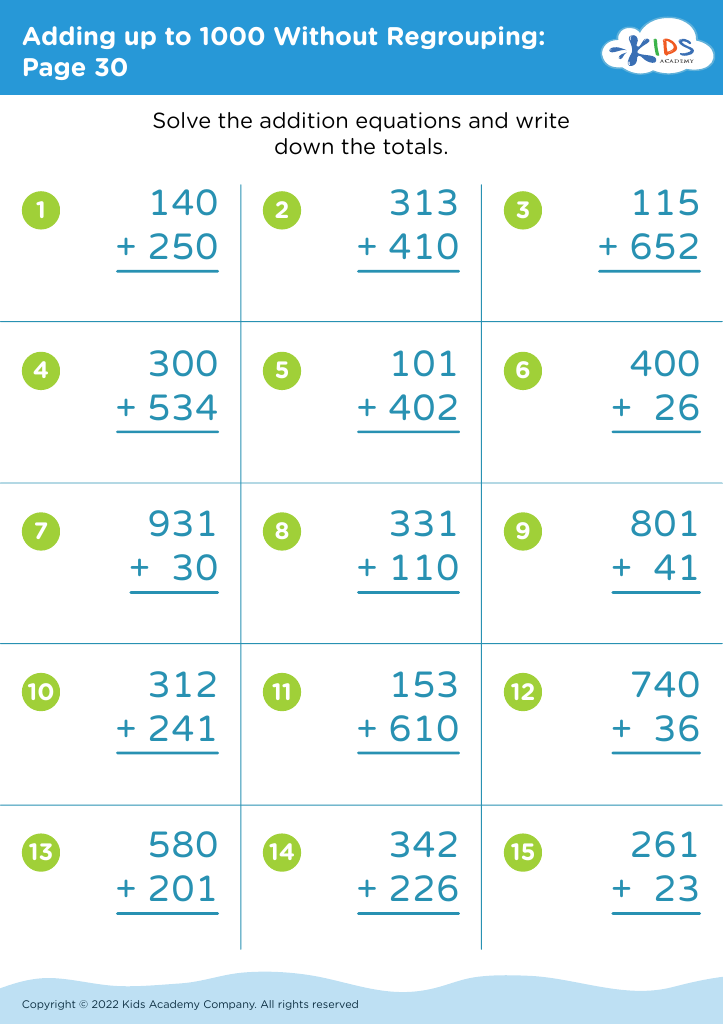
Adding up to 1000 Without Regrouping: Page 30
Worksheet
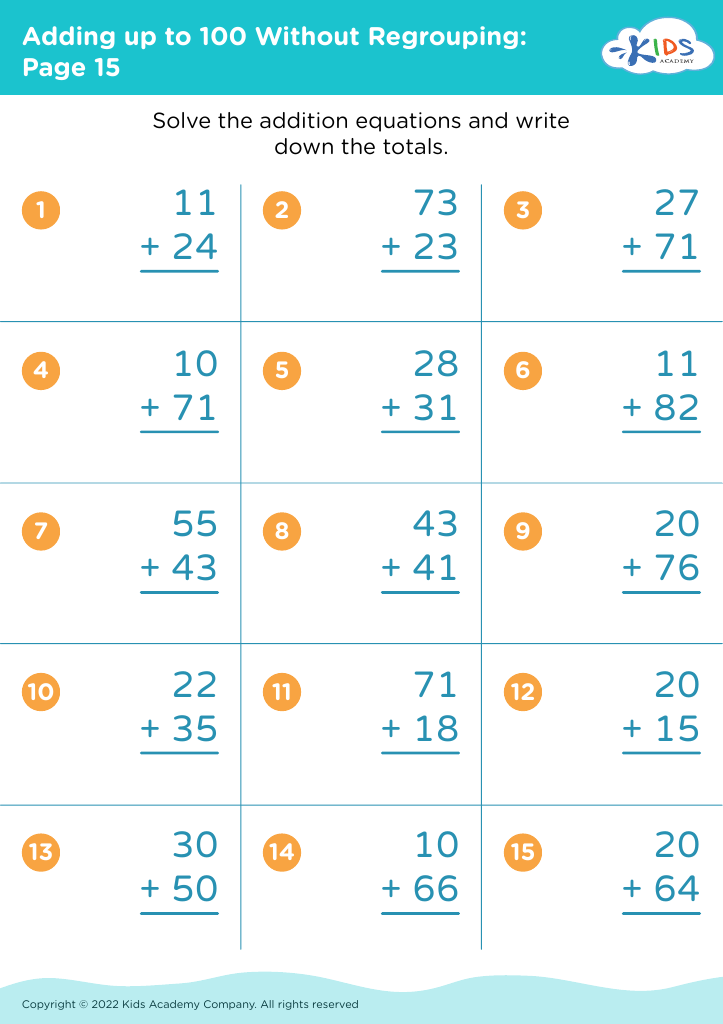
Adding up to 100 Without Regrouping: Page 15
Worksheet
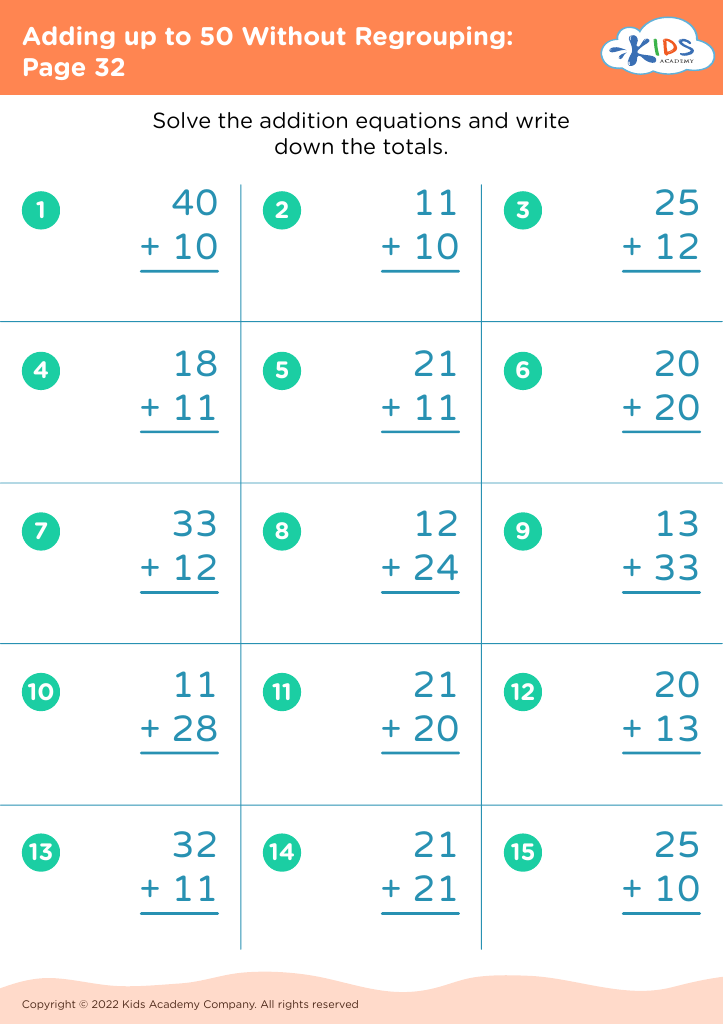
Adding up to 50 Without Regrouping: Page 32
Worksheet
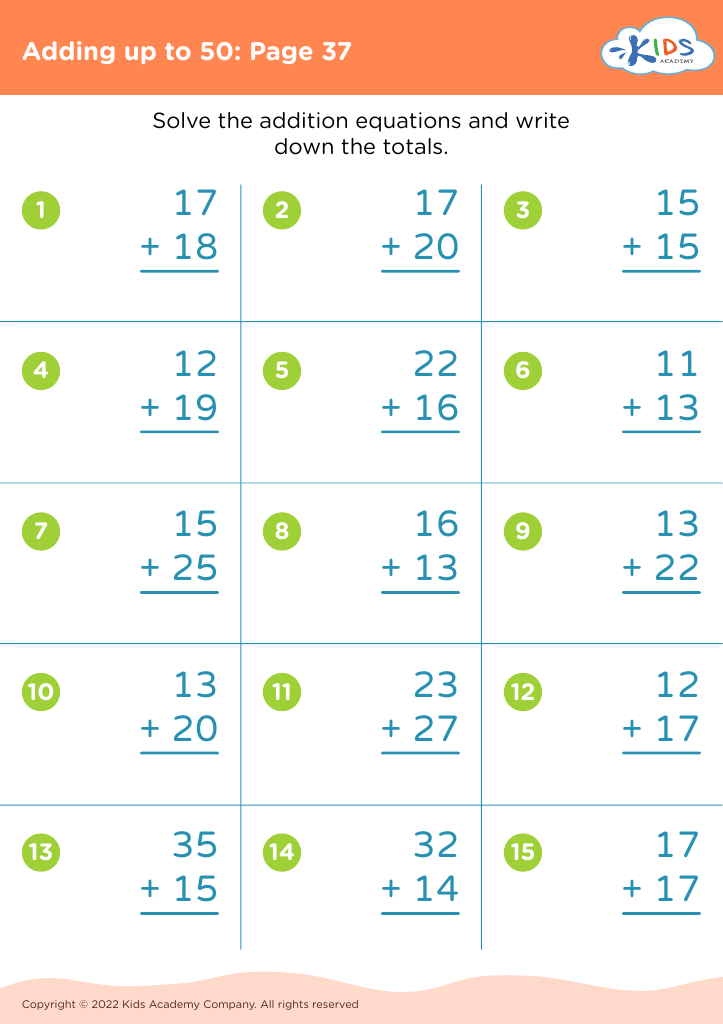
Adding up to 50: Page 37

Adding up to 50: Page 37

Adding up to 50: Page 37
Worksheet
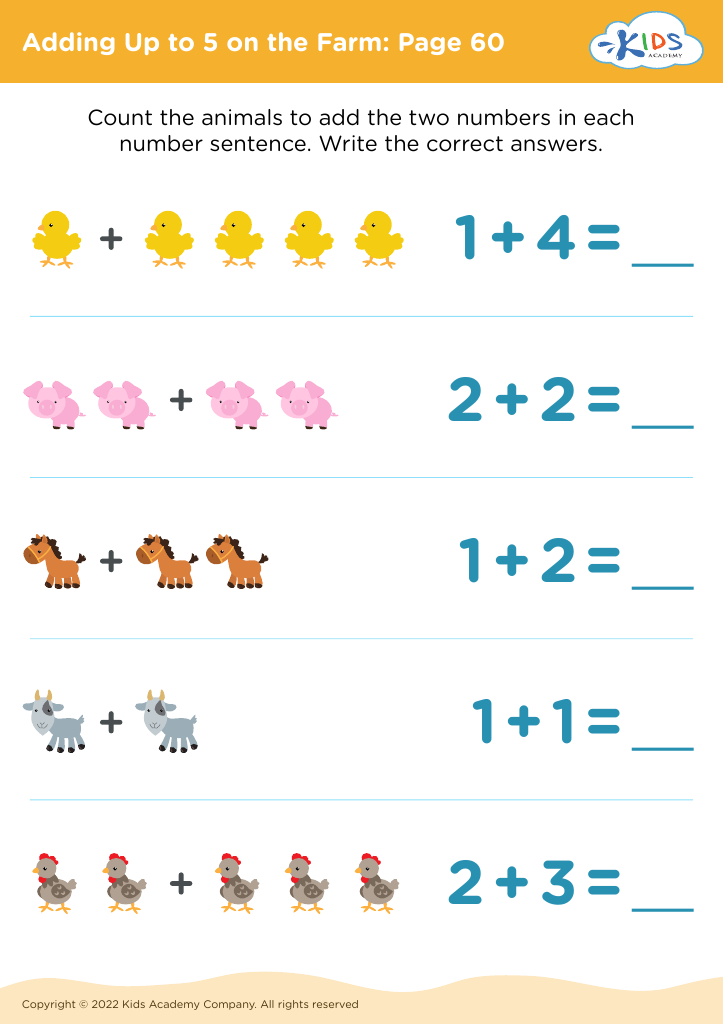
Adding Up to 5 on the Farm: Page 60
Worksheet


Counting objects and understanding addition are foundational skills for children aged 5-7, critical for their overall mathematical development. First, these skills enhance cognitive abilities, helping children learn to recognize patterns and concepts of quantity. By counting objects, children learn to associate numbers with physical items, fostering a concrete understanding of numbers as they transition to abstract mathematical concepts.

Additionally, addition introduces basic problem-solving skills, allowing children to engage in critical thinking. When they combine groups of objects, they practice logical reasoning, which is transferable to various other subjects. These early mathematical experiences significantly shape their attitudes toward math; positive early experiences can lead to greater confidence, avoiding math anxiety in later years.

Moreover, counting and addition activities can be highly engaging and interactive, making learning enjoyable. Parents and teachers can establish a strong collaboration by integrating fun activities at home or in the classroom, such as using everyday objects to encourage participation and curiosity. This teamwork not only supports a child's academic growth but also strengthens parent-teacher relationships.

Finally, developing these skills early sets the foundation for future learning in mathematics and other disciplines, ultimately preparing children for more complex concepts as they advance in their education.