Numeracy development Addition Worksheets for Ages 5-7
3 filtered results
-
From - To
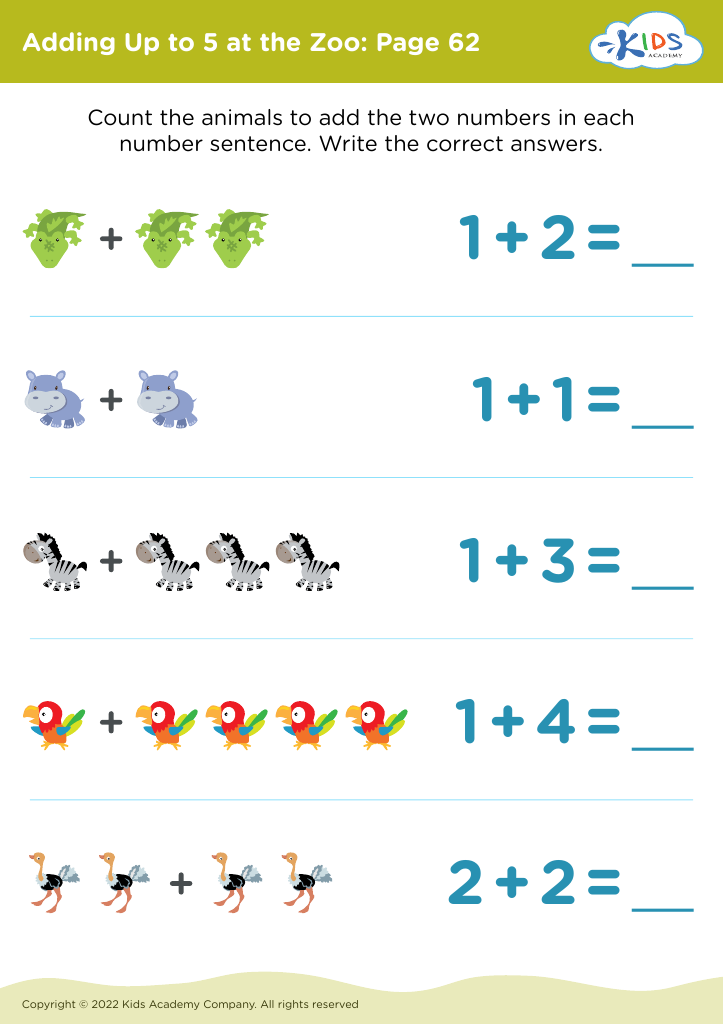
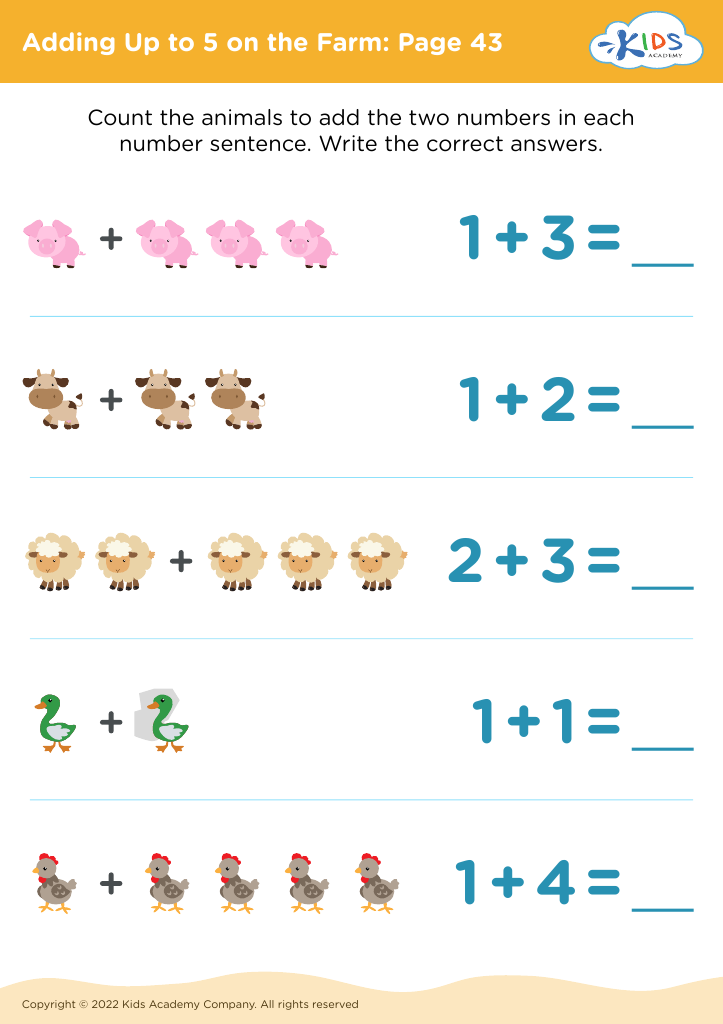
Enhance your child's numeracy skills with our engaging Addition Worksheets designed for ages 5-7. These worksheets provide a fun and interactive way for young learners to practice addition, building confidence in their mathematical abilities. Our carefully crafted activities include colorful visuals, games, and step-by-step challenges that make learning enjoyable. Perfect for both classroom and home use, these resources cater to various learning styles. Encourage your child's love for math while laying a strong foundation for future academic success. Download our Addition Worksheets today and watch your child's numeracy skills thrive as they embark on their educational journey!
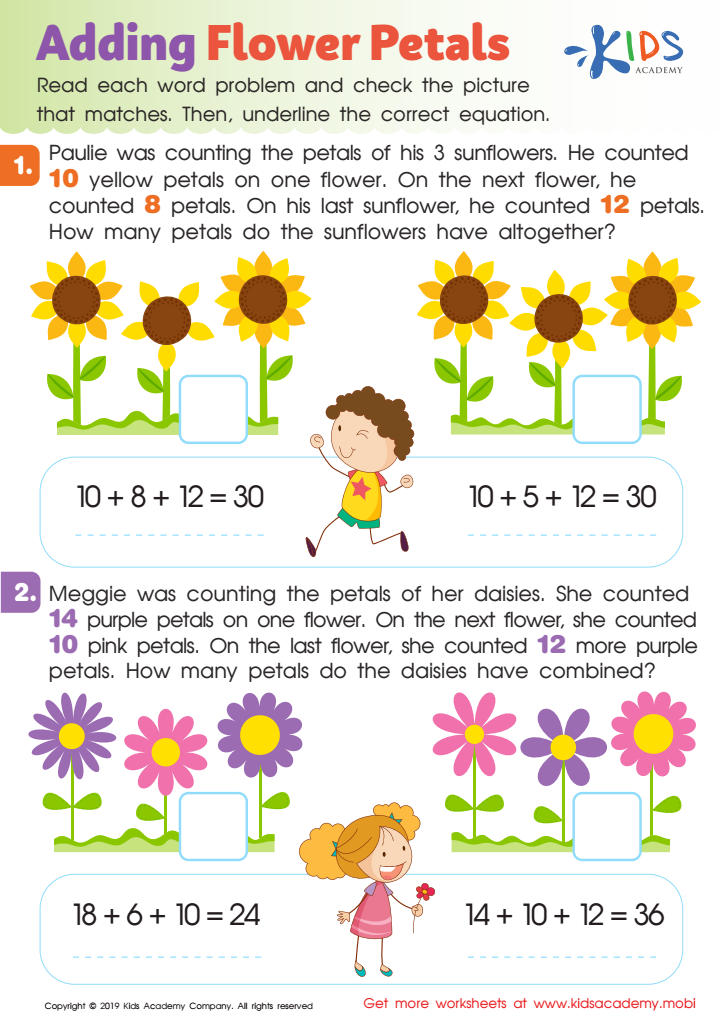
Adding Flower Petals Worksheet
 Assign to My Students




.jpg)



Numeracy development, particularly in addition, is crucial for children aged 5-7 as it lays the foundation for their mathematical understanding and overall cognitive growth. This stage in a child's life is characterized by significant brain development, making it an opportune time to introduce and reinforce mathematical concepts. Effective addition skills enhance a child's ability to think critically, solve problems, and understand the world around them.
Parents and teachers should care about promoting addition skills because these foundational skills have far-reaching implications. Mastery of basic addition helps children build confidence in their mathematical abilities, fostering a positive attitude toward learning. Furthermore, proficient addition skills are essential as children progress in their education; advanced mathematical concepts, such as subtraction, multiplication, and division, rely on a solid understanding of addition.
Moreover, numeracy development is closely linked to better performance in various academic subjects, as it enhances reasoning skills and logical thinking. Parents and teachers play a vital role in creating a nurturing environment where children explore numbers through engaging activities, games, and real-life applications. By prioritizing numeracy development in early education, they help children develop lifelong skills that will serve them well beyond the classroom.








