Filters

12 filtered results

Clear all filters
Favorites
With answer key
Interactive

12 filtered results

Difficulty Level

Grade


Enhance your child's math abilities with our Subtraction Skills Addition Worksheets, designed for ages 5-7. These engaging and interactive worksheets aim to build a strong foundation in subtraction concepts while reinforcing addition skills. Tailored to meet young learners' developmental needs, our activities foster critical thinking and problem-solving. With vibrant illustrations and fun exercises, children will enjoy exploring math while naturally enhancing their confidence. Each worksheet allows for progressive learning, making it easy for parents and teachers to track progress. Start your child on a path to math excellence and watch them thrive in basic arithmetic with our captivating worksheets!
Check out this FREE Trial Lesson on Addition for age 5-7!

T

Favorites
With answer key
Interactive
  • 5-7
  • Subtraction skills
  • Addition
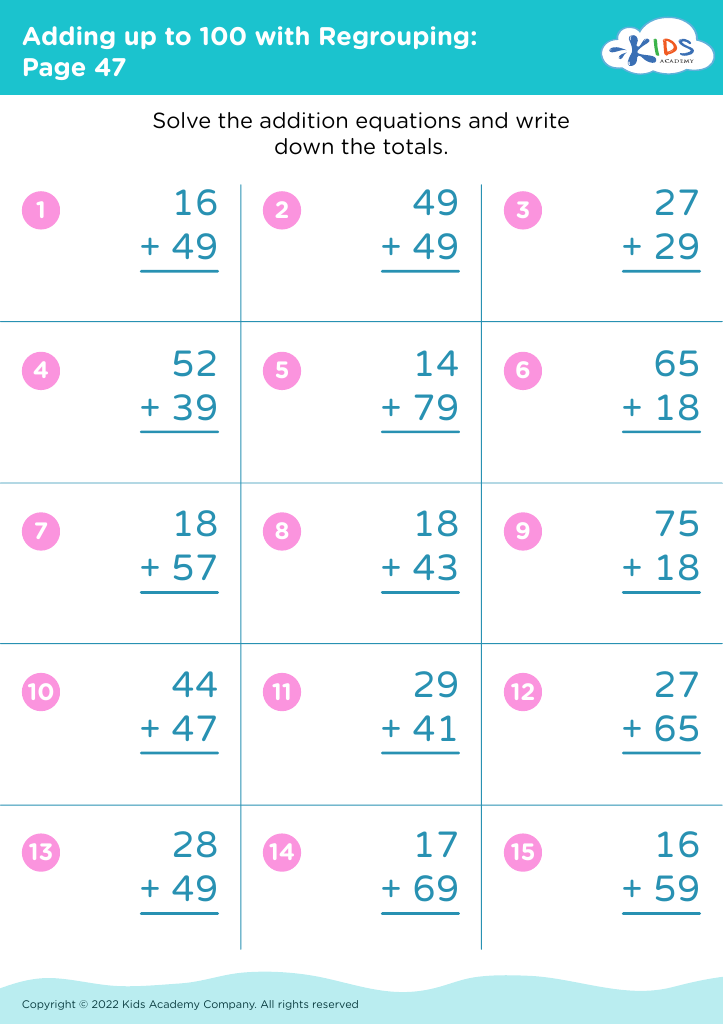
Adding up to 100 with Regrouping: Page 47
Worksheet
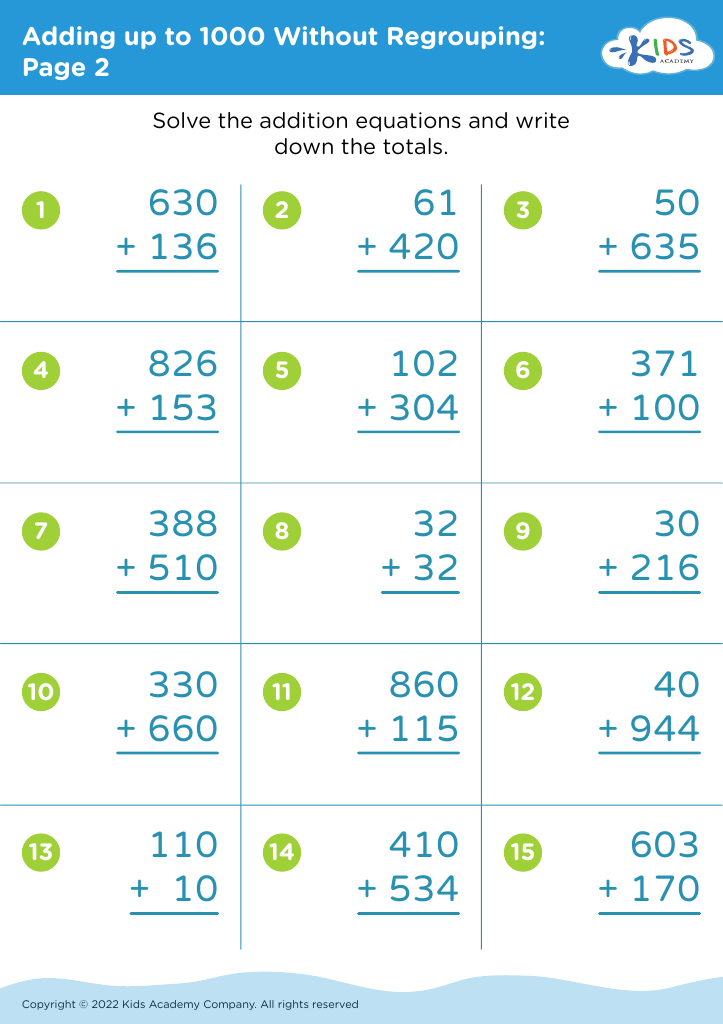
Adding up to 1000 Without Regrouping: Page 2
Worksheet
Sums and Differences Within 1 - Assessment 2 Worksheet

Sums and Differences Within 1 - Assessment 2 Worksheet

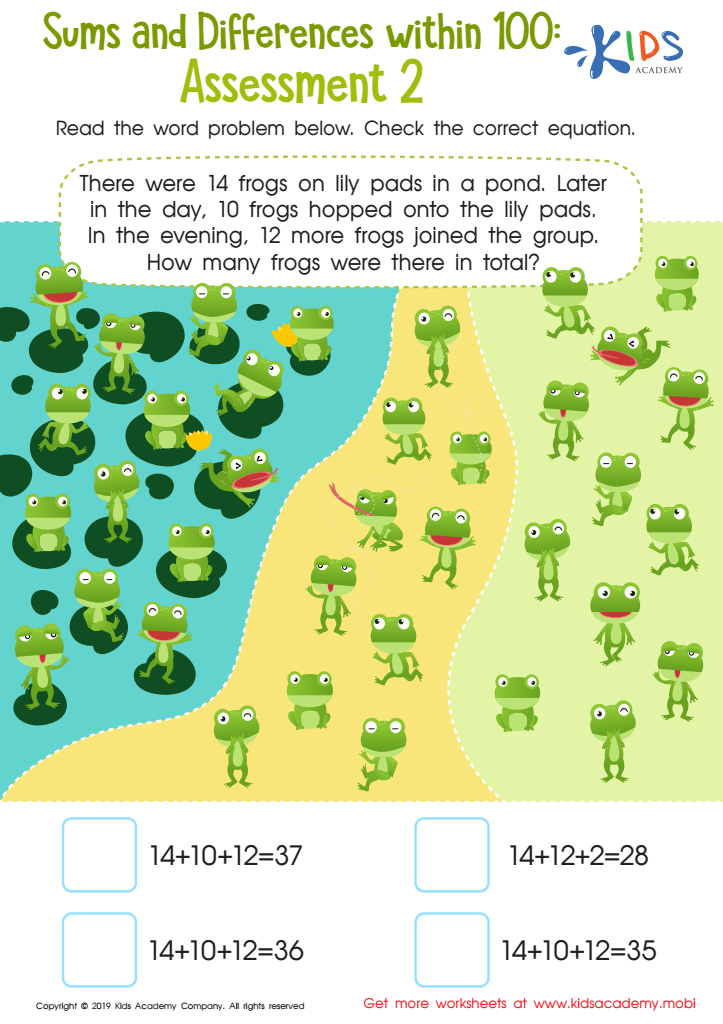
Help your kids practice math with these simple word problems. Read the question, discuss with them to form the equation and then check the answer. Give them a chance to sharpen their math skills!
Sums and Differences Within 1 - Assessment 2 Worksheet
Worksheet
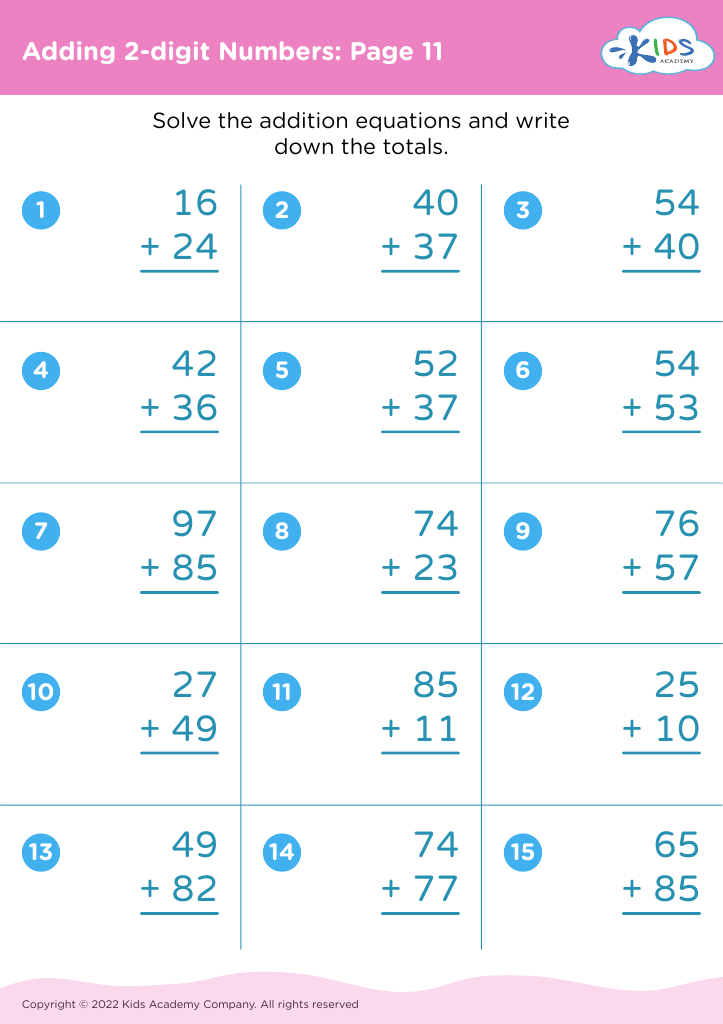
Adding 2-digit Numbers: Page 11

Adding 2-digit Numbers: Page 11

Adding 2-digit Numbers: Page 11
Worksheet
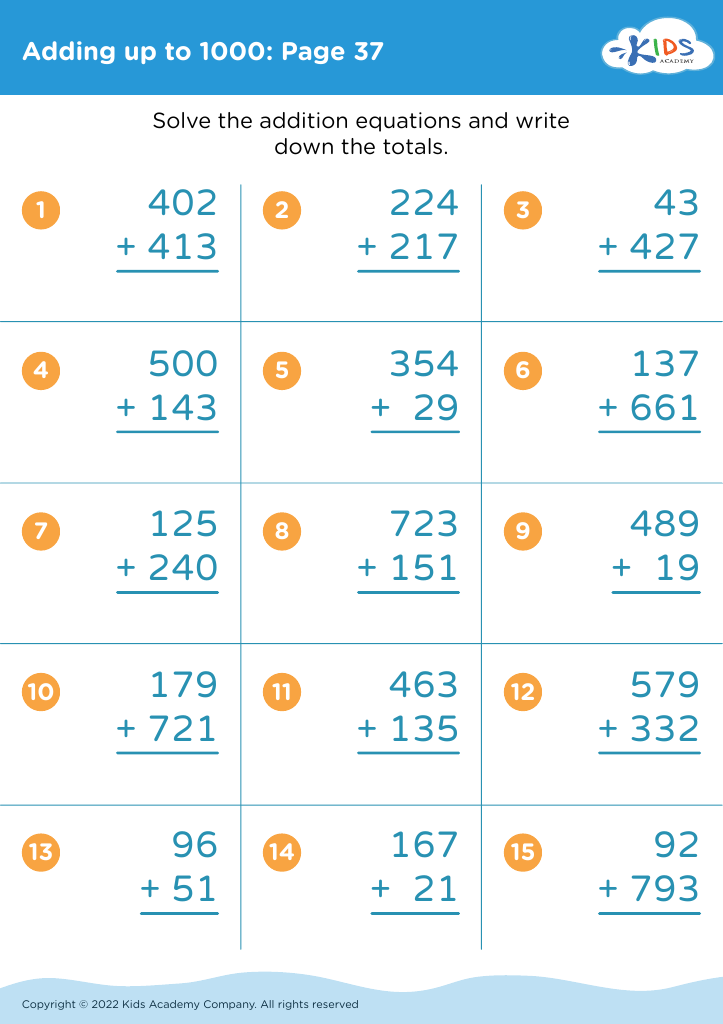
Adding up to 1000: Page 37

Adding up to 1000: Page 37

Adding up to 1000: Page 37
Worksheet
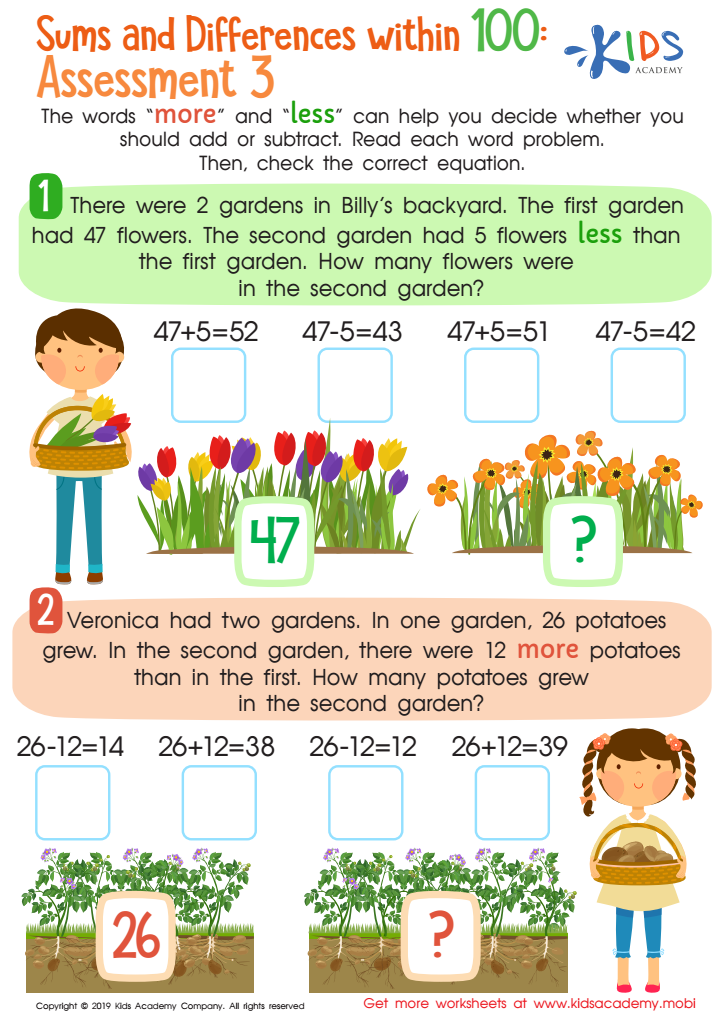
Sums and Differences Within 1 - Assessment 3 Worksheet
Sums and Differences Within 1 - Assessment 3 Worksheet
When we see 'more' or 'less', they usually refer to quantity. In Math, they indicate addition or subtraction. Help kids read aloud two simple word problems and figure out the correct equations for each. Check the correct equation afterwards.
Sums and Differences Within 1 - Assessment 3 Worksheet
Worksheet
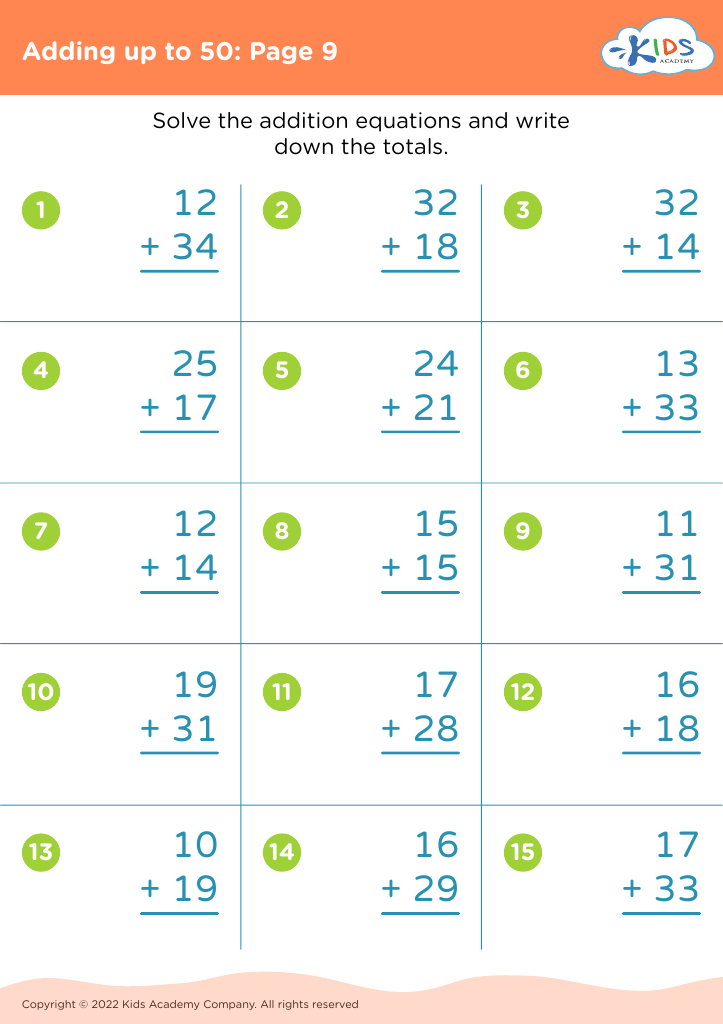
Adding up to 50: Page 9

Adding up to 50: Page 9

Adding up to 50: Page 9
Worksheet
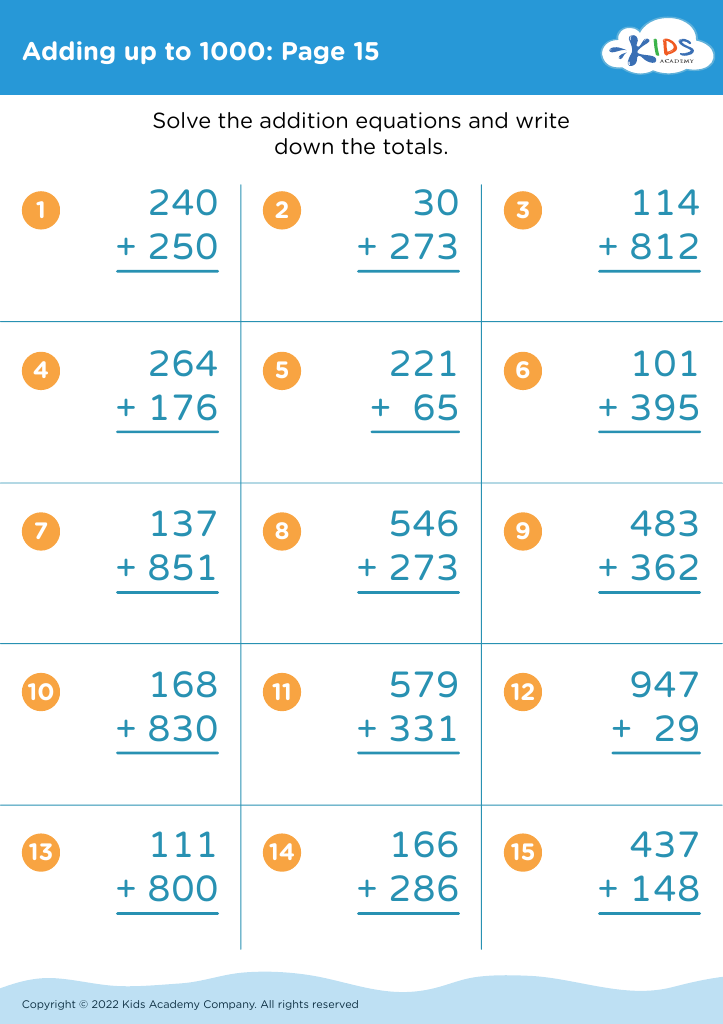
Adding up to 1000: Page 15

Adding up to 1000: Page 15

Adding up to 1000: Page 15
Worksheet
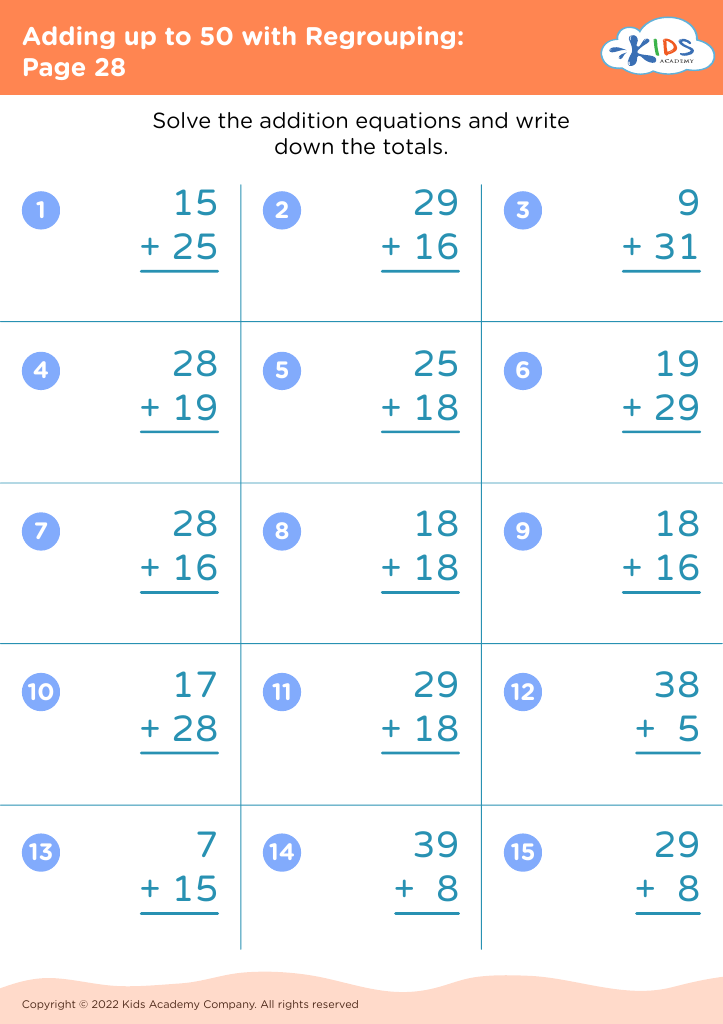
Adding up to 50 with Regrouping: Page 28
Worksheet
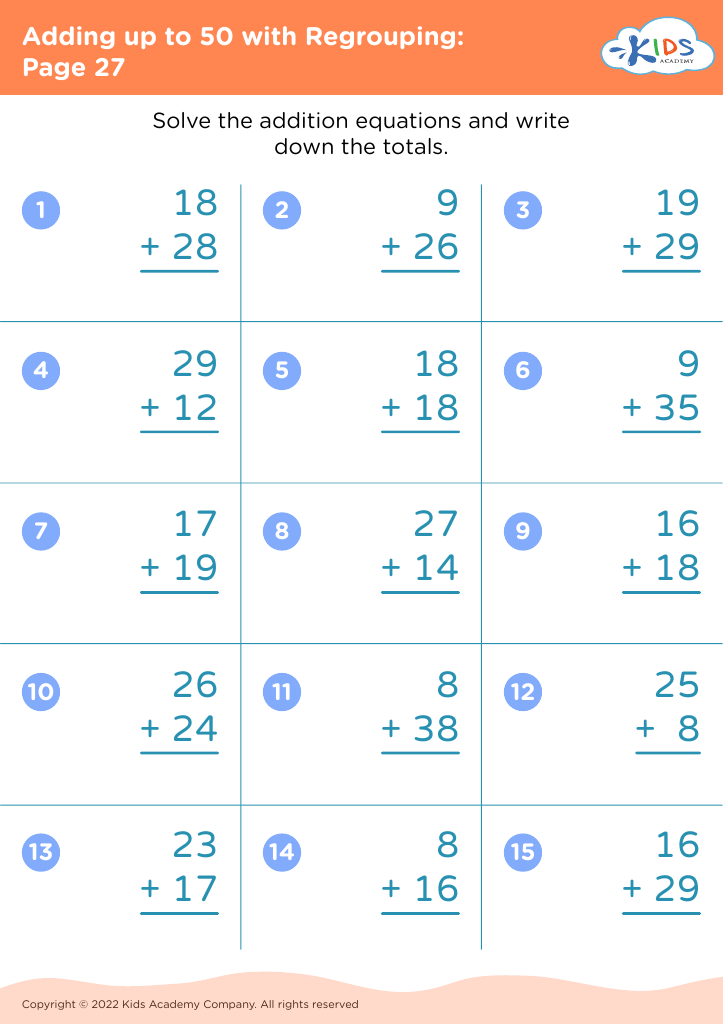
Adding up to 50 with Regrouping: Page 27
Worksheet
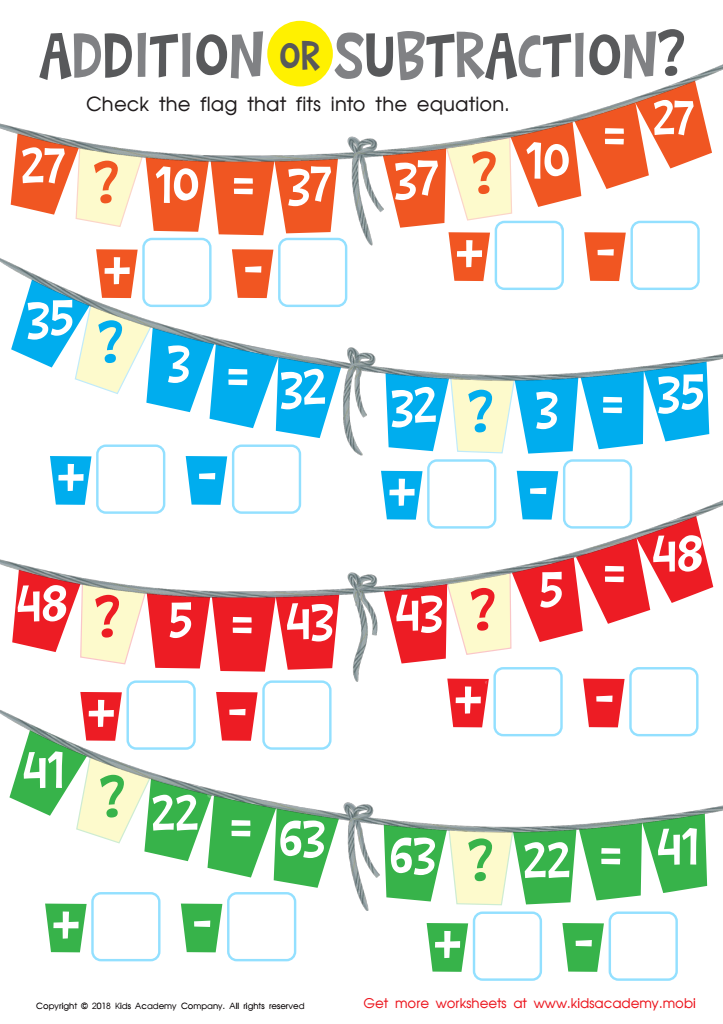
Addition or Subtraction? Worksheet

Addition or Subtraction? Worksheet

Help your math whiz's number skills advance with these colorful flag equations! With the free PDF, they'll learn to solve addition and subtraction facts by following the correct orders of operation. And the best part? They'll develop a deeper understanding of how the different operations work together within equations. Give it a try and watch their skills soar!
Addition or Subtraction? Worksheet

Worksheet
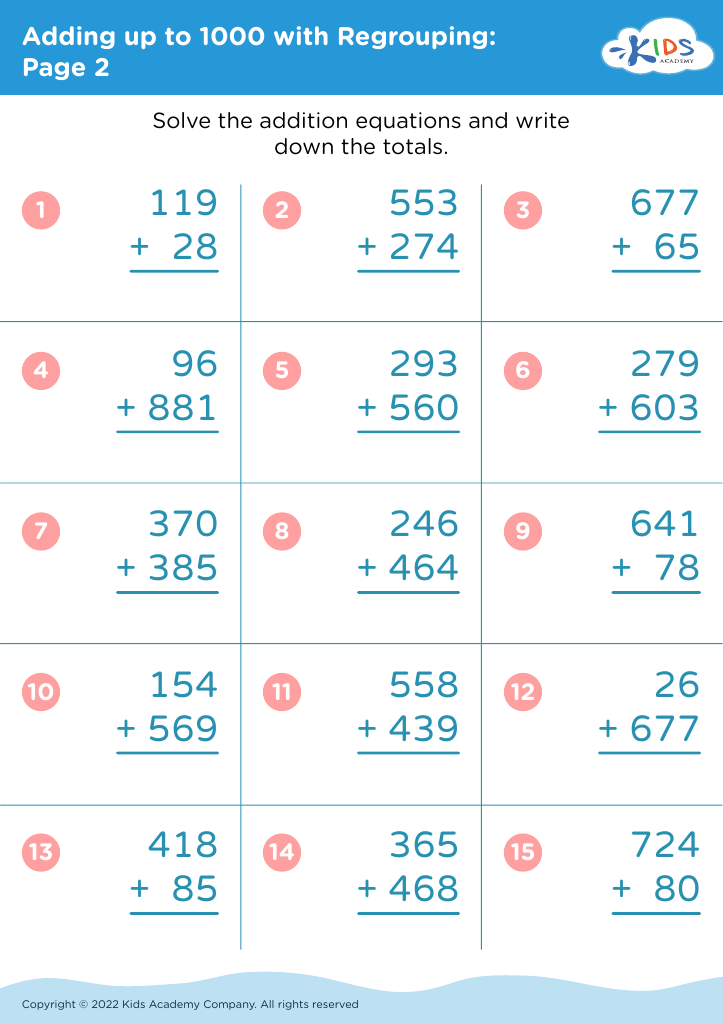
Adding up to 1000 with Regrouping: Page 2
Worksheet


Subtraction skills are crucial for children aged 5-7, as they form the foundation for more advanced mathematical concepts. At this stage, children learn to understand the relationship between addition and subtraction, recognizing how these operations are intertwined. Mastering subtraction helps develop critical thinking and problem-solving abilities. For parents and teachers, fostering these skills is essential because they not only enhance mathematical understanding but also build confidence in young learners.

By focusing on subtraction, children learn to analyze situations, such as determining how many items are left after some have been taken away. This practical application helps them make sense of everyday situations, such as sharing snacks or counting toys. Furthermore, strong subtraction skills are linked to better performance in future math learning, as they help establish a solid numerical foundation.

A strong understanding of subtraction also supports emotional resilience; mastering difficult concepts can encourage a growth mindset, where children learn that challenges can be overcome with effort and practice. Consequently, parents and teachers play a vital role in guiding children through engaging and interactive subtraction activities, fostering a positive attitude towards math that benefits lifelong learning.