Understanding subtraction Addition Worksheets for Ages 5-7
7 filtered results
-
From - To
Discover "Understanding Subtraction: Addition Worksheets for Ages 5-7," designed to help young learners grasp fundamental math concepts. These engaging worksheets combine colorful visuals and interactive exercises, making the learning of addition and subtraction intuitive and fun. Perfect for children ages 5-7, each worksheet enhances problem-solving skills while reinforcing basic math principles. Whether used in the classroom or at home, these worksheets aim to build a strong mathematical foundation in your child, encouraging confidence and a positive attitude towards math. Dive into our collection and support your child's journey to mastering essential arithmetic skills with ease!
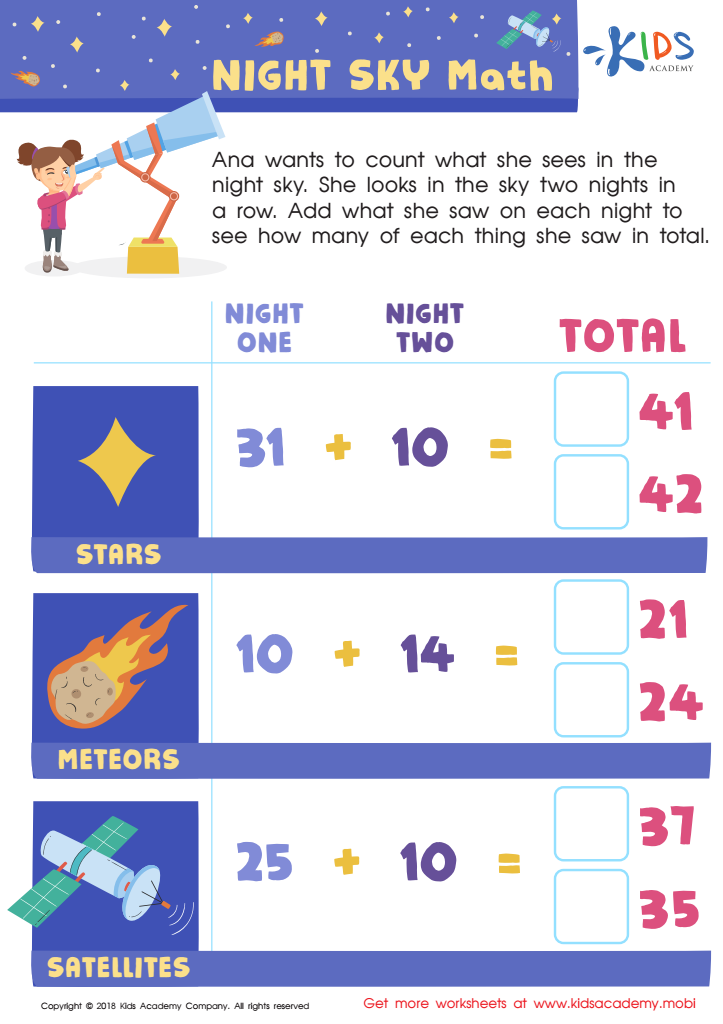
Night Sky Math Worksheet
 Assign to My Students
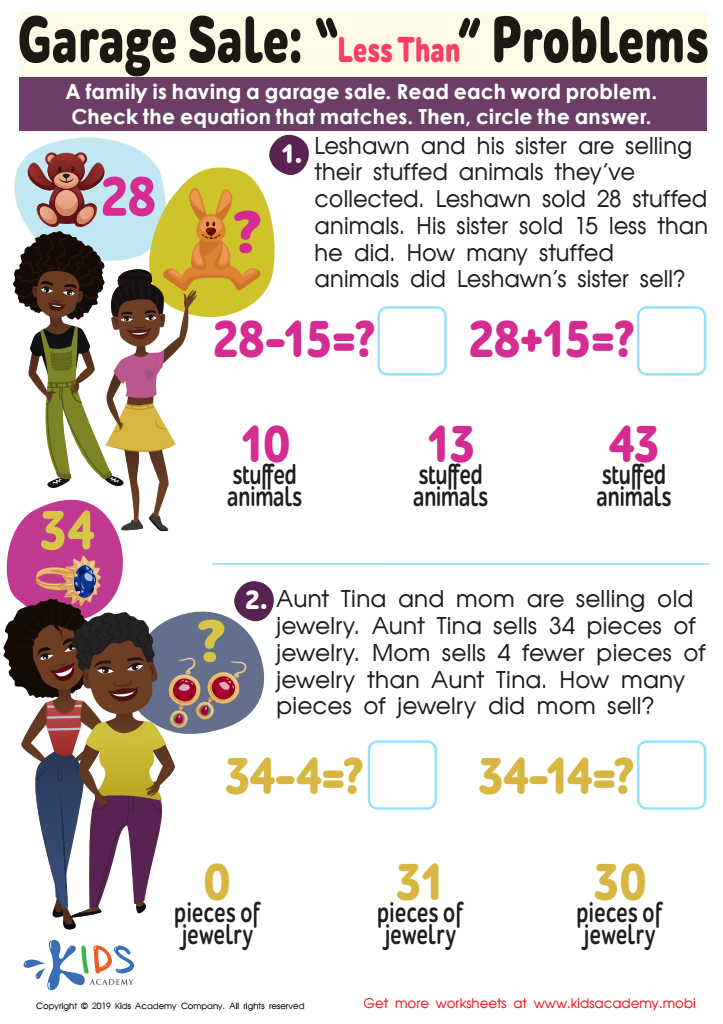
Garage Sale Less Than Worksheet
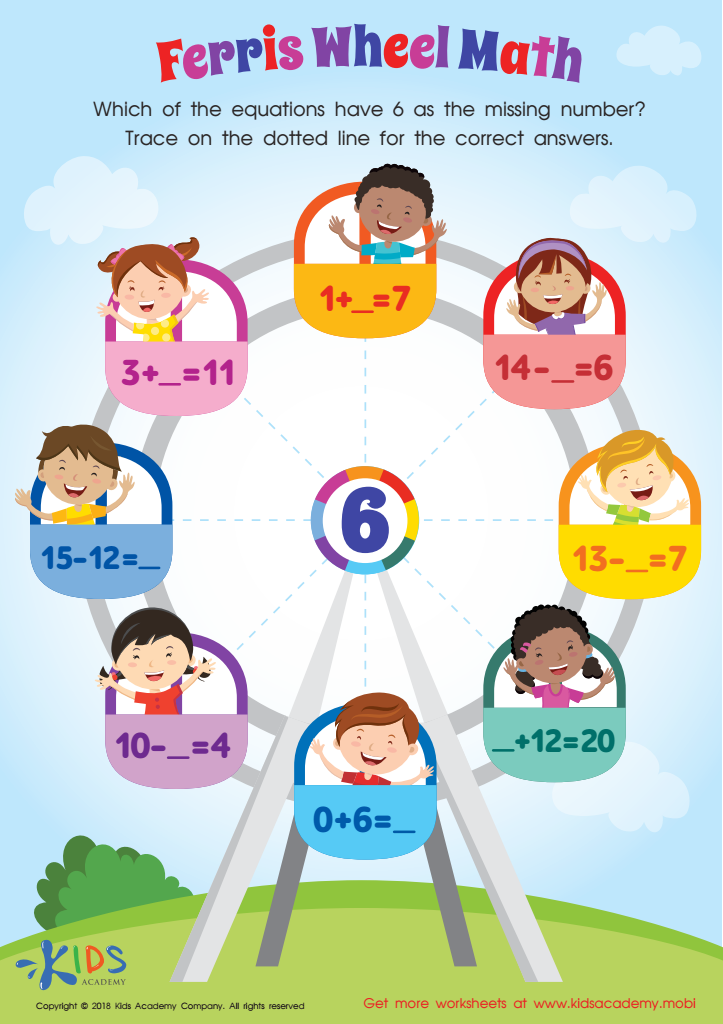
Missing Number: Ferris Wheel Math Worksheet
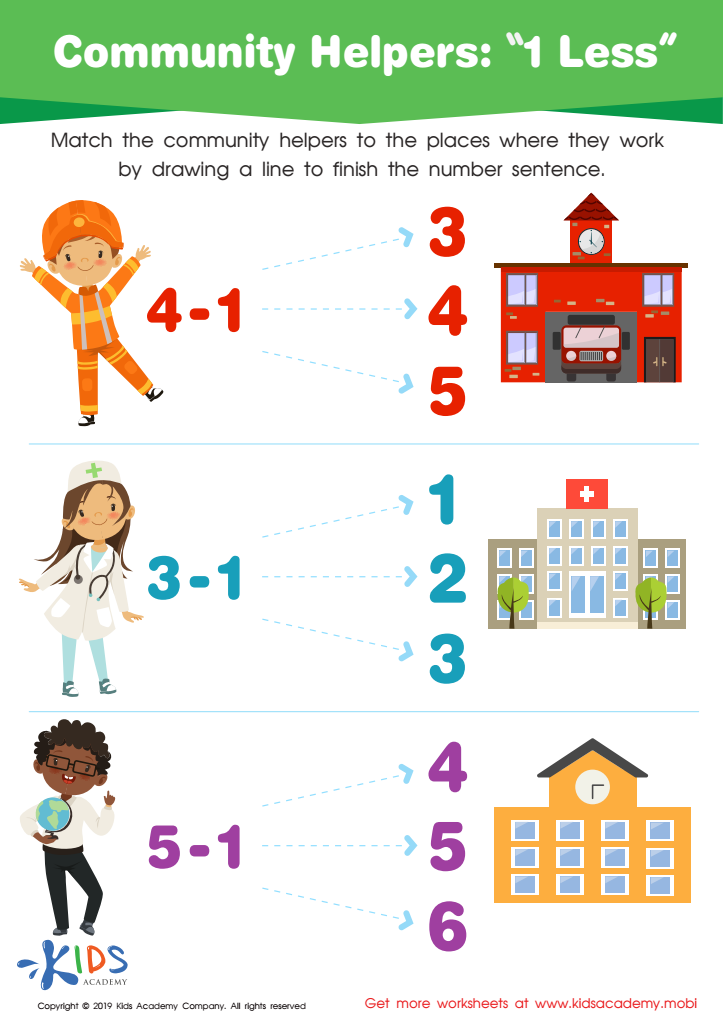
Community Helpers: 1 less Worksheet
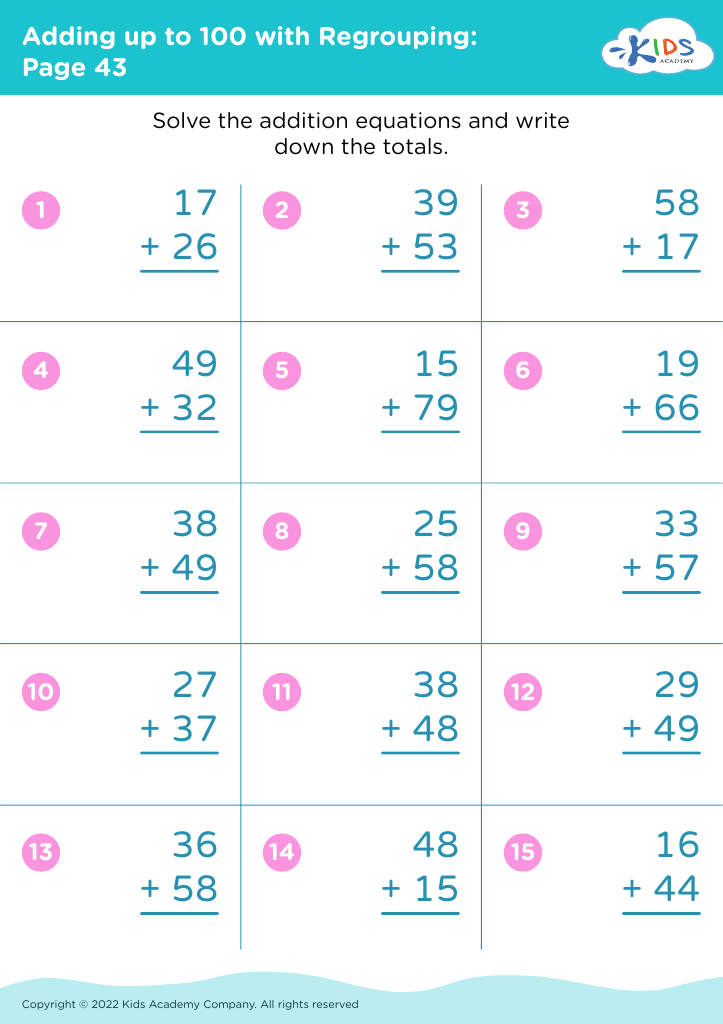



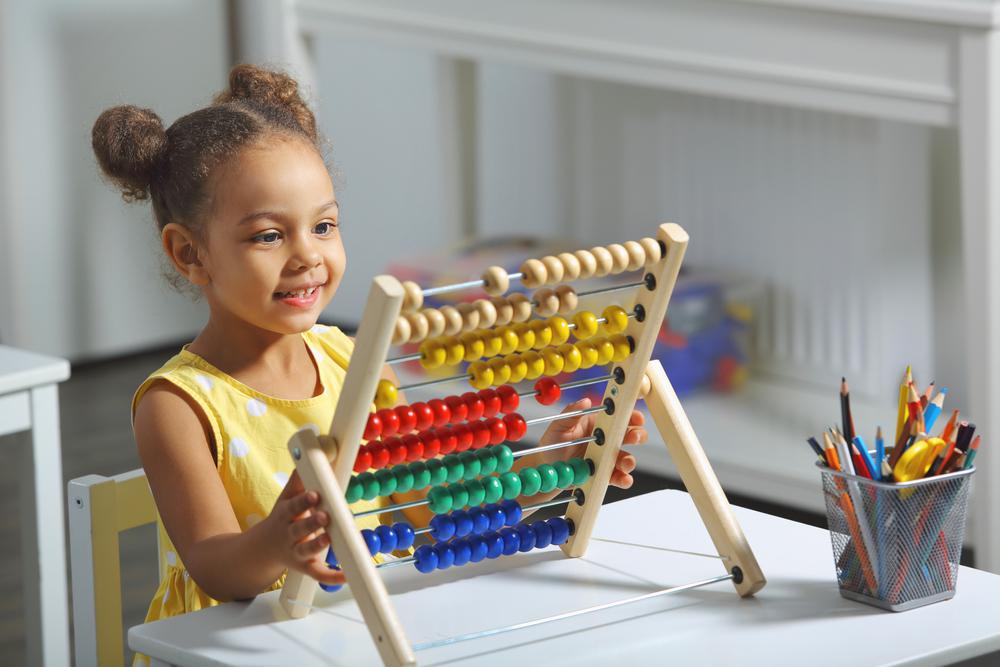




Understanding subtraction and addition at ages 5-7 is critical as these basic arithmetic skills form the foundation of a child’s future mathematical understanding. During these early years, children are developing cognitive abilities that will support more complex problem-solving skills later on. Thus, secure knowledge in addition and subtraction is key.
Addition and subtraction are often incorporated into daily activities, such as determining how many apples are left after eating one or counting toys. Engaging in these practices helps solidify numerical concepts in practical, relatable contexts, thereby strengthening a child's reasoning and critical thinking skills.
Furthermore, mastering these skills boosts a child’s confidence and fosters a positive attitude towards learning mathematics, which can have long-term academic benefits. Early proficiency makes children more likely to enjoy math and approach more advanced topics with a can-do attitude.
Finally, early arithmetic skills are strong predictors of later academic success. They can enhance performance in subjects beyond math, such as science and engineering, by nurturing logical thinking and problem-solving abilities. Thus, it’s incumbent upon parents and teachers to emphasize and encourage a firm grasp of these foundational skills. Every counting activity or playful math game contributes to a child’s growing mathematical proficiency and academic self-assurance.








