
Addition Practice Counting Worksheets for Ages 5-7
4 filtered results
Difficulty Level
Grade
Age
-
From - To
Subject
Activity
Standards
Boost your child's math skills with our engaging Addition Practice Counting Worksheets designed specifically for ages 5-7! These worksheets provide a fun and interactive way for young learners to master addition through colorful visuals and hands-on activities. Each worksheet is tailored to reinforce counting concepts while introducing early arithmetic, making learning both effective and enjoyable. With a variety of exercises ranging from simple sums to more challenging problems, children will love practicing math with our resources. Ideal for home or classroom use, these worksheets help build a strong foundation in addition, preparing kids for future academic success. Start your counting adventure today!
Favorites
With answer key
Interactive
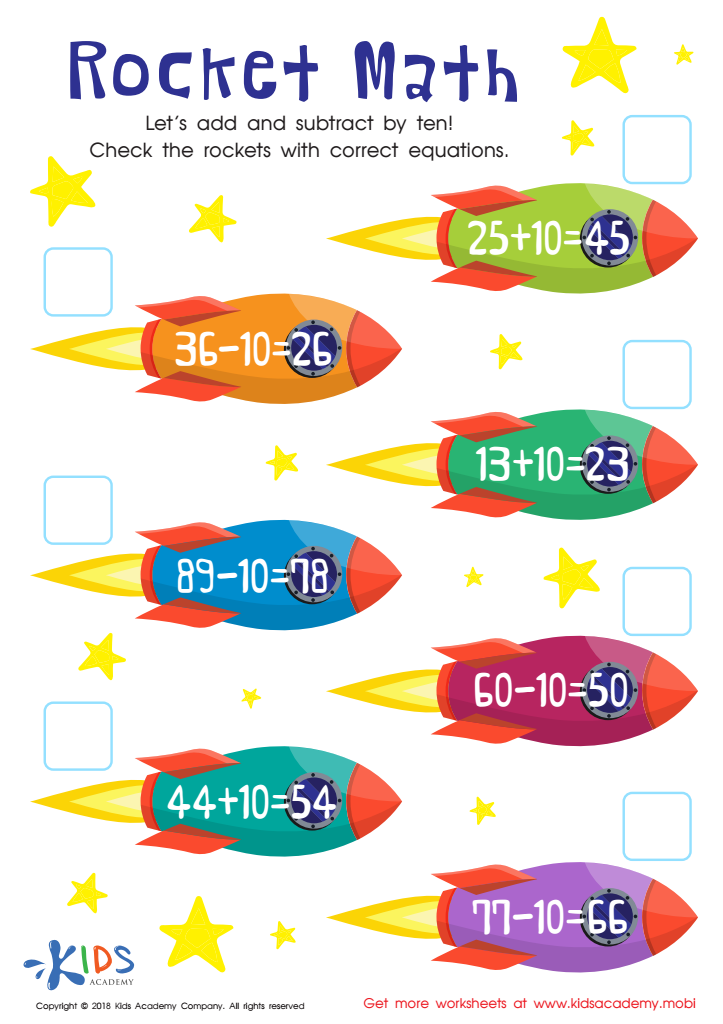
Rocket Math Worksheet
Your students will be math wizards in no time as they blast off on this exciting and colorful PDF worksheet. They'll use the 10s strategy to practice addition and subtraction, and they'll learn to skip count forwards and backwards. Keep them engaged and make learning fun!
 Assign to My Students
Rocket Math Worksheet
Worksheet


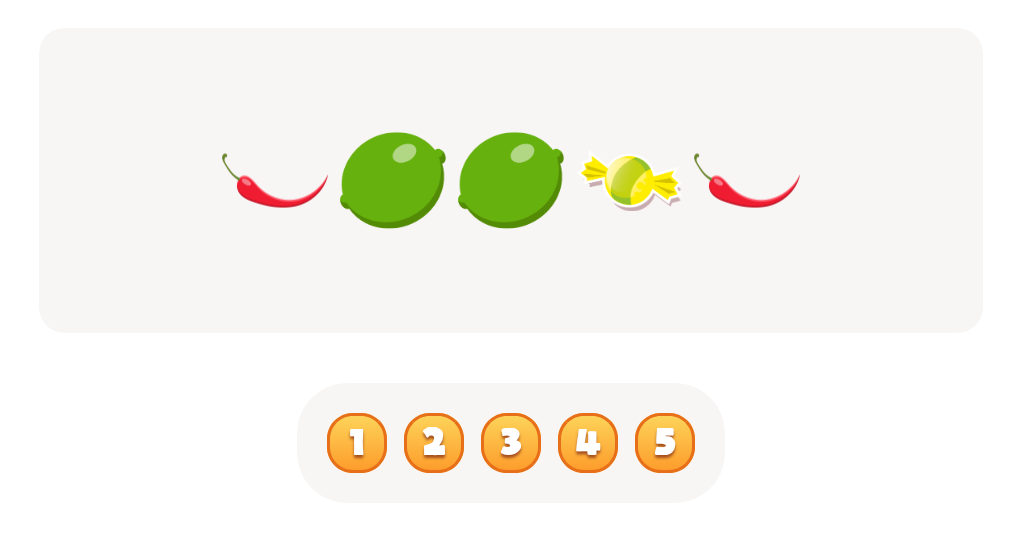
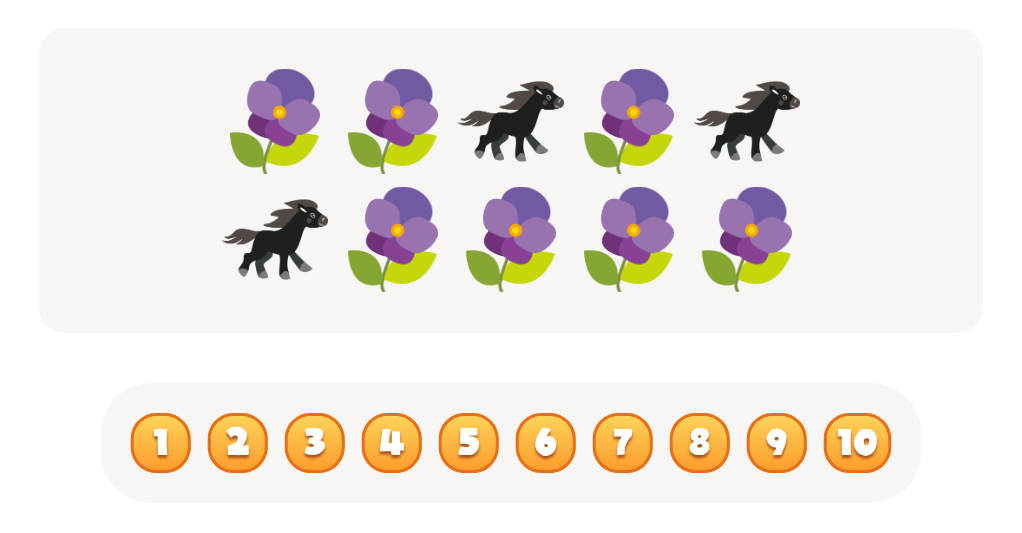

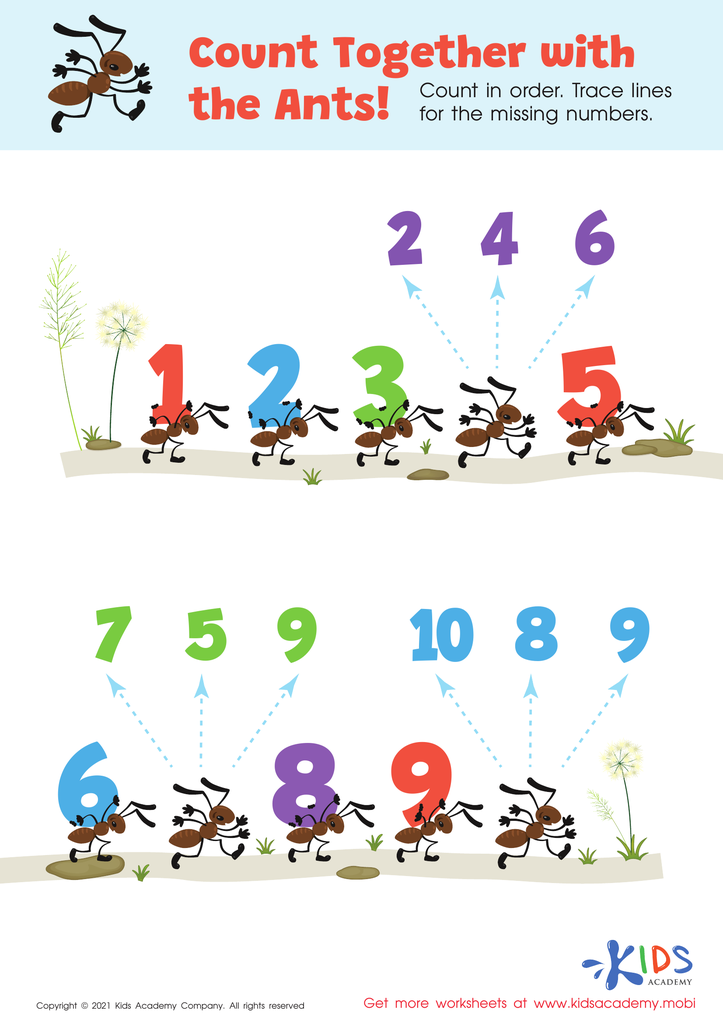
Count Together with the Ants Worksheet
Rather than letting kids get too deep in online games, keep them engaged with learning worksheets. Ask them to identify the insect in the picture, then count the ants. Help them trace lines to the missing numbers. It's simple and straightforward for young children to comprehend.
Count Together with the Ants Worksheet
Worksheet
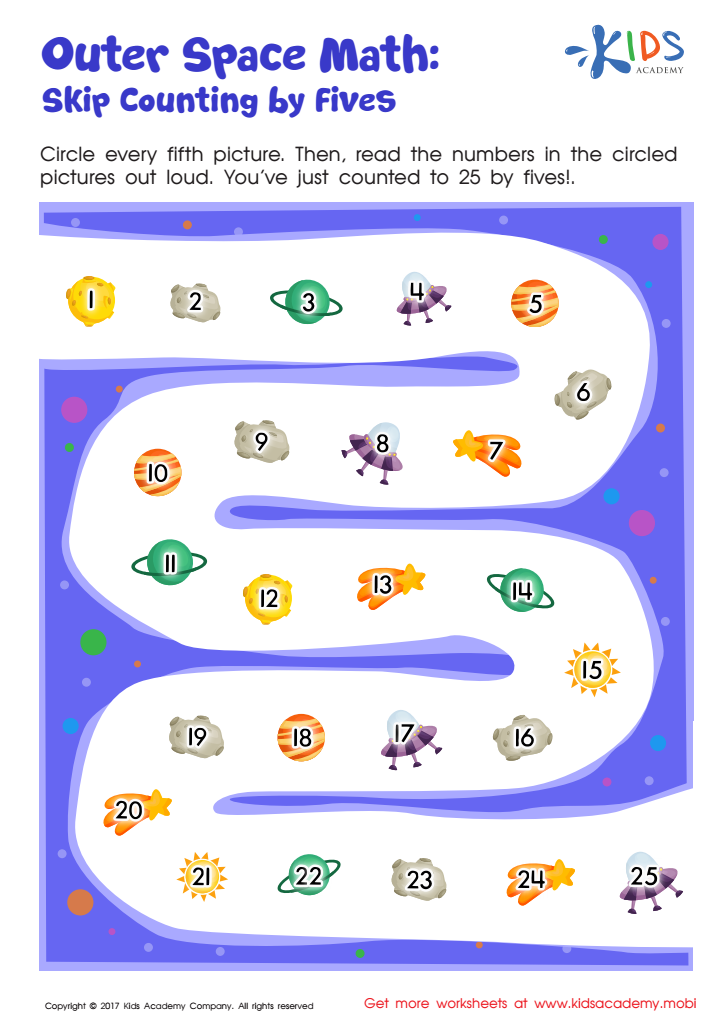
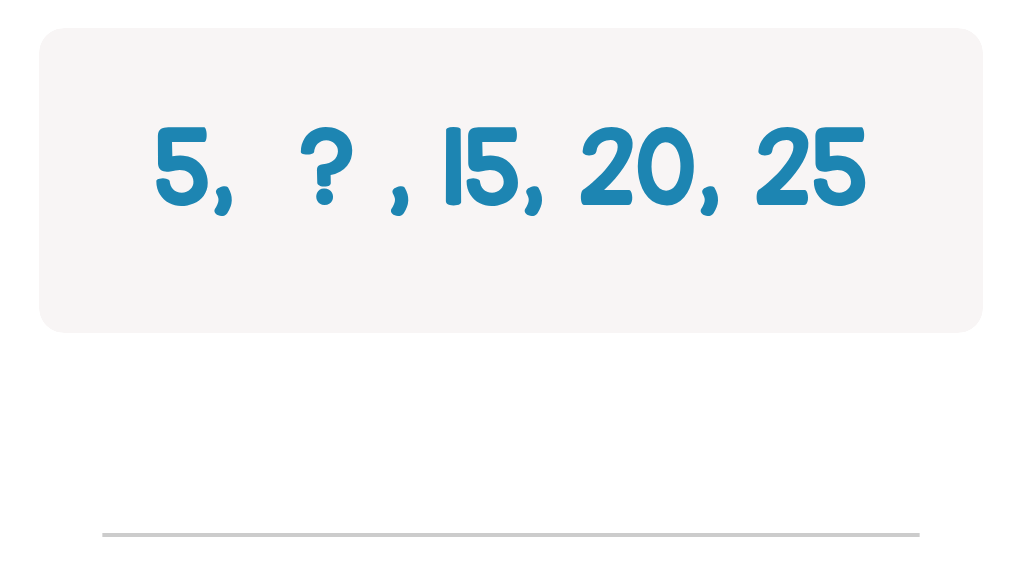
Skip Counting by 5s: Outer Space Math Printable
Let your kid learn skip counting by fives with this fun space-themed worksheet! With simple instructions, cute graphics, and an independent approach, your child will have a blast and gain a key skill for math success. Counting answers and learning numeracy, they'll sharpen cognitive and problem solving skills while having fun! A great way to introduce skip counting, they'll discover the concept through minimal assistance. Blast off!
Skip Counting by 5s: Outer Space Math Printable
Worksheet
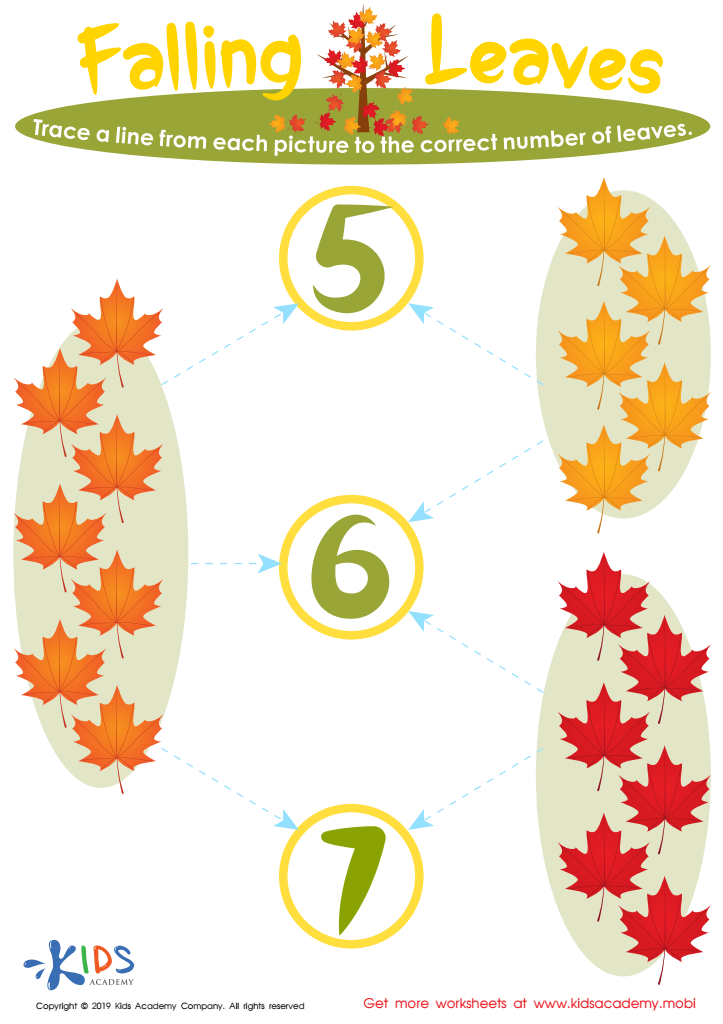
Falling Leaves Worksheet
Do your kids know the seasons? Ask them to name each one, then test their counting skills with a fun worksheet. Have them count from 1 to 10, then trace a line from each picture to the corresponding number of leaves. It's a great way to check their counting ability!
Falling Leaves Worksheet
Worksheet
Join Kids Academy for Free
Who is primarily going to use this learning content?








Addition practice and counting are foundational skills for children aged 5-7, serving as the building blocks of mathematics and critical thinking. Early mastery of these skills not only aids in academic success but also fosters confidence in young learners. By engaging in addition practice, children learn to recognize numbers, comprehend quantities, and develop problem-solving capabilities, all of which are essential for future mathematical concepts.
For parents and teachers, investing time in addition practice is crucial, as it lays the groundwork for higher-level math skills encountered in later grades. Activities such as counting objects, using number lines, or playing math games not only make learning enjoyable but also promote cognitive skills such as memory, concentration, and spatial understanding. Moreover, positive reinforcement through practice enhances children’s self-esteem and enthusiasm for learning.
By encouraging regular addition practice and counting, parents and teachers play a vital role in nurturing children’s mathematical literacy, equipping them with skills that extend beyond the classroom. In a world where numeracy is increasingly important, fostering solid math foundations ensures children are prepared for academic challenges and everyday problem-solving as they grow. Engaging young learners in math today helps create confident, capable individuals for tomorrow’s complexities.








